


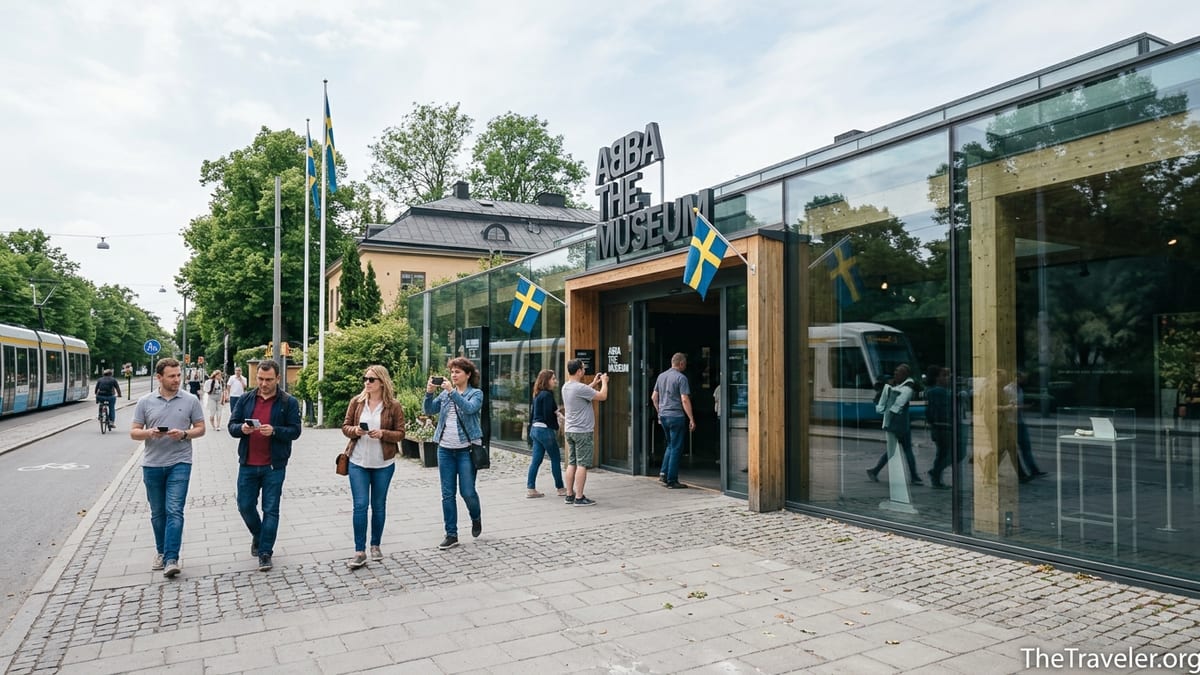
For ABBA fans, Stockholm’s ABBA The Museum is less a museum and more a pilgrimage site. Even casual listeners tend to walk out humming Dancing Queen under their breath. Located on the green island of Djurgården, the museum combines classic displays with hands-on experiences that let you sing, dance and even “join” the band. This guide walks you through how to visit, what to expect and how to make the most of the museum’s most popular exhibits.
Get the latest updates straight to your inbox!
Understanding ABBA The Museum and Planning Your Visit
ABBA The Museum opened in Stockholm in 2013 as the permanent home for the traveling ABBAWORLD exhibition and has since become one of the city’s star attractions. Rather than focusing only on glass cases and labels, it aims to put you inside the band’s story, from small-town Swedish beginnings to global pop phenomenon. Expect an experience that feels closer to a themed attraction than a traditional museum, with music, lights and interactive stations throughout.
The museum sits at Djurgårdsvägen 68 on Royal Djurgården, the same island as the Vasa Museum, Skansen and Gröna Lund amusement park. Many travelers combine ABBA The Museum with one or two nearby attractions in a single day. From central Stockholm, a common real-world route is to take tram 7 from Sergels torg or Kungsträdgården and get off at Liljevalchs/Gröna Lund, then walk a few minutes along Djurgårdsvägen to the museum entrance.
Opening hours vary by season and day of the week, with longer hours in the busy summer months and shorter, more limited hours in winter. Schedules can change for private events and holidays, so it is wise to confirm the day’s times on the official site the week you visit. Many visitors report spending 2 to 3 hours inside; serious fans who try every interactive station sometimes stay closer to half a day.
Tickets are dated and often timed, especially in high season. While same-day tickets may be available on quieter winter mornings, summer and school holiday slots can sell out, particularly late mornings and early afternoons. Booking online in advance helps you lock in a time that coordinates with your other Stockholm plans, whether that is an 11:00 a.m. visit before lunch at Djurgården’s cafés or a late-afternoon tour after a few hours at the Vasa Museum.
Tickets, Costs and Smart Ways to Save
Ticket prices are updated regularly and vary between adults, students, children and family bundles. As a rough guide, adult admission for major Stockholm attractions such as ABBA The Museum typically sits in the mid-hundreds of Swedish kronor; travelers in recent seasons often report paying in the area of 300 to 400 SEK for an adult ticket, with reduced rates for children and teenagers. Expect slight seasonal adjustments, occasional promotional offers and different options for flexible or dated tickets.
Many visitors purchase their tickets directly from the museum’s own booking system to avoid reseller markups and to ensure they receive the correct confirmation for timed entry. Others choose to bundle admission into a city sightseeing pass that includes multiple Stockholm attractions. These passes sometimes fold in ABBA The Museum with hop-on hop-off bus or boat tours, which can represent meaningful savings if you plan to visit several museums in two or three days.
If you are traveling as a family or small group, compare the cost of individual tickets against family or group packages when you book. A group of two adults and two children, for example, may find that a family ticket or city pass quickly becomes better value than four separate standard admissions. Note, too, that the audio guide may be priced separately from the base ticket, so factor that into your total budget, particularly if everyone in your party wants their own guide.
For budget-conscious travelers, visiting in the shoulder seasons of late spring or early autumn can help. Stockholm hotels and flights are often slightly cheaper outside the peak summer weeks, and the museum is less crowded, which can make a standard ticket feel like better value. Students should carry valid ID, as museums in Sweden periodically offer student discounts or reduced pricing, which can shave a noticeable amount off your total cultural spend in the city.
Getting to ABBA The Museum: Real-World Transport Options
From central Stockholm, the easiest way to reach ABBA The Museum is usually by tram or bus. Tram line 7 runs from the city center toward Djurgården; hop on at stops such as Sergels torg or Kungsträdgården, and get off at Liljevalchs/Gröna Lund. From this stop, you will see signs for the museum and can walk along the waterfront in just a few minutes. Many visitors describe this as a scenic ride, passing the Royal Dramatic Theatre and the boats along Strandvägen.
Bus route 67 is another common choice and also stops at Liljevalchs/Gröna Lund, a short walk from the entrance. If you are staying near Karlaplan or in Östermalm, this bus can be particularly convenient. Both the tram and bus are part of the SL public transport network, so they accept the same tickets and travel cards; a 24- or 72-hour SL pass often makes sense if you plan to explore widely across the city by metro, tram, buses and ferries.
Arriving by water is a memorable option, especially in good weather. Regular Djurgården ferries cross from central quays like Slussen to Allmänna gränd, from where you can walk to ABBA The Museum in under ten minutes. Travelers flying into Stockholm Arlanda Airport often take the Arlanda Express train or an airport coach to the central station, then connect to tram 7 from nearby stops. Taxis and ride-hailing services can drop you directly outside the entrance on Djurgårdsvägen, which is handy if you are carrying luggage before or after checking in at a hotel.
Accessibility is relatively strong. The tram and bus lines that serve Djurgården use low-floor vehicles, and the museum itself has lifts to each floor and step-free routes through the core exhibits. According to recent accessibility guides, visitors who use wheelchairs can navigate from the tram stop at Liljevalchs/Gröna Lund to the museum entrance in just a few minutes, and assistants accompanying visitors with mobility needs are often eligible for free or reduced admission when booked correctly.
Making the Most of the Audio Guide and Interactive Technology
One of the standout features of ABBA The Museum is the audio guide, which uses QR codes at different points in the exhibition. Visitors scan codes on their own phones and listen through personal headphones as the story unfolds. The experience is unusually intimate because in Swedish and English you hear the voices of Agnetha, Björn, Benny and Frida themselves telling stories from their careers, from early gigs to worldwide tours.
The audio guide is also available in a wide range of languages including German, French, Spanish, Italian, Finnish, Dutch, Russian, Polish, Chinese and Japanese, with advanced voice technology used in several of these to recreate the band members’ voices. This makes a tangible difference for non-English speakers, who can follow along in their own language instead of relying on written labels. Families often comment that teenagers who might normally ignore wall texts end up engaged by the band’s anecdotes and jokes.
A particularly practical detail is that you use your own phone. Rather than juggling museum devices, you simply connect your headphones or earbuds, scan the next QR code and listen. To prepare, bring a fully charged phone and wired or wireless headphones, and activate roaming or download an offline translation app if you are concerned about connectivity. The audio guide is self-paced, so you can linger at favorite sections or skip ahead if a particular era of ABBA’s history speaks to you more than others.
Beyond the audio, many of the exhibits incorporate screens, motion sensors and recording equipment. Performance booths capture your voice as you sing along to songs such as Mamma Mia or Dancing Queen with virtual avatars of the band on a large screen. Elsewhere, mixing consoles allow you to adjust the levels on familiar tracks, boosting vocals or isolating guitar lines. In practice, these features turn what might have been a passive gallery visit into something active and often very funny, especially for groups of friends comparing their “studio” takes.
Unmissable Exhibits: From “Ring Ring” to the Polar Studio
While every visitor finds a different favorite corner, several exhibits consistently top must-see lists. Early in the exhibition, you will encounter the legendary Ring Ring telephone. This simple-looking phone is wired so that only the four members of ABBA know its number; on very rare occasions one of them has been known to call, making it a minor rite of passage for fans to stand nearby for a moment in case it actually rings. Even if it remains silent during your visit, it neatly symbolizes the band’s direct connection with their audience.
Further in, the recreated Polar Music Studio is a highlight for anyone interested in how ABBA’s sound came together. The space evokes the original Stockholm studio in which much of the band’s later music was recorded, with period equipment, mixing desks and instruments. Visitors can see how layered harmonies, string arrangements and pop hooks were crafted in a relatively modest room that shaped global hits. Producers and musicians often linger here, comparing the setup to modern digital recording and appreciating how much was achieved with analog technology.
The Waterloo section transports you to Brighton in 1974, when ABBA won the Eurovision Song Contest and burst onto the international stage. Mannequins display the flamboyant Waterloo costumes, and screens loop footage of the performance that changed the band’s career. Nearby exhibits cover their early attempts at Eurovision, their evolving style and the way Sweden embraced and later re-evaluated their success. For many visitors, seeing the costumes and staging up close underscores how bold their look was for the era.
Other visitor favorites include Benny’s self-playing piano, which is electronically linked to one of his own pianos so that it can start playing when he does, even if he is somewhere else in the world. There is also a recreation of the rustic cabin on the island of Viggsö, where Björn and Benny wrote many of ABBA’s classic songs. Stepping into this space gives fans a sense of the quiet, everyday surroundings that produced some of pop music’s most enduring melodies.
Costumes, Stage Sets and Themed Photo Moments
ABBA’s fashion is as central to their story as the music, and the museum showcases an array of original and replica stage outfits. These range from the shiny ensembles of their early years to the flowing kimonos and tailored suits of later tours. Designers such as Owe Sandström helped craft looks that were bright, theatrical and, under Swedish tax rules at the time, definitively “not suitable for everyday wear,” which allowed the band to treat them as performance expenses. Standing inches from these costumes, you appreciate the detailing, sequins and stitching in a way that album covers never quite convey.
Sophisticated lighting and carefully arranged mannequins mean the costume displays feel dramatic without being fragile or off-limits. Many visitors describe recognizing specific outfits from music videos and television appearances, whether the star-patterned Waterloo jumpsuits or the iconic cat dresses from the mid-1970s. For fashion lovers, it becomes a timeline of stagewear trends across a decade, showing how the band’s look matured in parallel with their sound.
The museum also offers several themed photo opportunities that have become almost obligatory for fans. One of the most popular is the life-size replica of the Arrival helicopter from the 1976 album cover. Visitors can climb in and pose as the “fifth member” while friends or family snap pictures. Elsewhere, stage sets place you under concert lights with microphones and instruments, creating the illusion of stepping into a 1970s TV studio or arena show.
Importantly, staff are generally relaxed and used to guests taking plentiful photos, though flash may be restricted in sensitive areas. If you are traveling solo, do not hesitate to ask a fellow visitor or staff member to take your picture in the helicopter or on stage; many fans mention that these shared moments with strangers are part of the fun, especially when everyone bursts into spontaneous singalongs of Thank You for the Music or Take a Chance on Me.
Singing, Dancing and Saving Your Performances
Where ABBA The Museum really distinguishes itself is in how much it invites you to participate. Dedicated singing booths allow you to record yourself performing ABBA hits, often with lyrics on a screen and an instrumental track in your headphones. Outside the booths, a big screen sometimes plays back clips of visitors’ performances, creating an ever-changing backdrop of guests from around the world belting out Super Trouper and The Winner Takes It All.
Another highlight is the virtual stage where you perform “with” ABBA’s digital avatars. Motion capture technology and projected images put you alongside the group, following simple choreography while a camera records your moves. For many guests, this is the closest they will come to sharing a stage with the band. Families with children often spend far longer here than they planned, as kids improvise dance routines and encourage shy parents to join in.
In most cases, your performances are linked to a unique ticket or code, which you can later access online or via an email link, depending on the system in use at the time of your visit. This means that long after you have left Stockholm, you can replay your vocal takes or show friends the moment you stepped into the spotlight. Because technology platforms evolve, check at the entrance or with staff during your visit to confirm exactly how recordings will be stored and how long they will remain available.
If you are nervous about singing in public, aim for early or late time slots when the museum is quieter, or choose smaller booths where only your immediate group can hear you. Visitors often report that the atmosphere is friendly and unpretentious; people applaud one another and laugh together at missed notes, which makes it easier to relax and enjoy the experience instead of worrying about sounding perfect.
On-Site Practicalities: Time, Food, Shopping and Accessibility
Time management is key to enjoying ABBA The Museum without feeling rushed. A practical approach for many travelers is to book a late-morning or early-afternoon slot, arriving having already had a substantial breakfast. Plan at least two full hours inside, more if you intend to listen to every audio track, watch all video segments and record several songs. If you are combining your visit with other Djurgården attractions, consider a flexible itinerary: start wherever your timed ticket requires, then leave room later in the day for a stroll or café break.
The museum is housed in the same building complex as Pop House Hotel and a restaurant and café. This makes it easy to pair your visit with lunch, coffee or a glass of wine without leaving the immediate area. Menus typically include Swedish staples such as meatballs and salmon alongside international dishes and light snacks. Prices are in line with central Stockholm norms, so expect to pay a moderate amount for a main course and drink, with pastries and coffee at a more casual price point for a quick mid-visit break.
The museum shop is accessible from the lobby and, in some cases, without a ticket, which allows non-visitors or repeat shoppers to browse. Stock changes over time but usually includes T-shirts with classic album art, tote bags, mugs, vinyl reissues, CDs, posters and smaller souvenirs like keyrings and magnets. Many fans also look for exclusive items tied to current exhibitions or anniversaries, so if you are interested in limited editions, ask staff what is new when you arrive.
Accessibility considerations extend beyond step-free entrances. Current visitor information highlights lifts connecting each level, accessible restrooms and clear routes around exhibits for wheelchair users and those with limited mobility. Public transport links serving Djurgården use low-floor vehicles, and taxi companies in Stockholm can provide accessible cabs if requested in advance. Visitors with sensory sensitivities may prefer less crowded time slots, such as early weekday mornings in the off-season, when background music and crowds are less intense.
The Takeaway
ABBA The Museum succeeds because it lets you inhabit the world behind the songs rather than simply reading about it. From the Ring Ring telephone and the recreated Polar Studio to the Eurovision-winning Waterloo costumes and the Arrival helicopter, the exhibits make decades-old pop history feel immediate and alive. The audio guide, narrated by the band members themselves in several languages, deepens that connection with personal stories and reflections.
With a bit of planning around tickets, timing and transport, a visit can slot smoothly into any Stockholm itinerary, whether you are a dedicated fan crossing an item off your bucket list or a curious traveler discovering ABBA’s legacy for the first time. Leave space in your schedule to sing, dance, browse the shop and simply soak up the atmosphere; most visitors find that the experience lingers long after the final chorus has faded.
FAQ
Q1. Where is ABBA The Museum located in Stockholm?
ABBA The Museum is on Djurgårdsvägen 68 on the island of Djurgården, close to other major attractions such as the Vasa Museum, Skansen and Gröna Lund amusement park.
Q2. How long should I plan to spend at ABBA The Museum?
Most visitors spend around 2 to 3 hours exploring the exhibits, using the audio guide and trying interactive features. Dedicated fans who record multiple songs or go slowly through every section may stay closer to 4 hours.
Q3. Do I need to book tickets for ABBA The Museum in advance?
Advance booking is strongly recommended, especially in summer, on weekends and during school holidays. Timed entry slots can sell out for popular hours, and buying online lets you coordinate your visit with other Stockholm plans.
Q4. What is the best way to get to ABBA The Museum by public transport?
The most common route is tram 7 from central Stockholm to the Liljevalchs/Gröna Lund stop, followed by a short walk. Bus 67 also serves the same stop, and regular ferries to Djurgården arrive at Allmänna gränd, about a ten-minute walk away.
Q5. Is ABBA The Museum suitable for children?
Yes. The museum’s interactive exhibits, singing booths, digital stage and colorful costumes are popular with children, and many families report that even kids who do not know ABBA’s music enjoy the hands-on elements and lively atmosphere.
Q6. Are there audio guides available and which languages do they support?
Yes. The audio guide is available via your own smartphone and headphones, with narration in Swedish and English by the band members, plus additional languages such as German, French, Spanish, Italian, Dutch, Finnish, Russian, Polish, Chinese and Japanese.
Q7. Can I visit the museum shop or café without a ticket?
In many cases the shop and on-site café or restaurant can be accessed from the lobby area without entering the paid exhibition space, allowing non-ticketed visitors to browse merchandise or have a meal. Check current on-site signage or ask staff on arrival.
Q8. Is the museum accessible for visitors with reduced mobility?
Yes. The museum offers step-free access, lifts to each floor and accessible restrooms. The nearby tram and bus stops use low-floor vehicles, and accessible taxis can drop visitors directly at the entrance on Djurgårdsvägen.
Q9. Are photos and videos allowed inside ABBA The Museum?
Personal photography is generally allowed, particularly at popular photo spots like the Arrival helicopter and stage sets, though flash or tripods may be restricted. Always follow on-site signage and staff instructions regarding specific areas.
Q10. Can I keep recordings of my performances from the interactive exhibits?
Yes, many singing booths and virtual stage experiences allow you to save your performance by linking it to a ticket number or unique code. You can usually access and download these recordings online for a limited time after your visit; ask staff for current details.