


Few attractions in Stockholm divide opinion quite like ABBA The Museum. For some travelers it is a joyful, immersive celebration of Sweden’s biggest pop export. For others it is an expensive, crowded stop that feels skippable in a city packed with world-class museums. If you are trying to decide whether to reserve a time slot and budget a chunk of your day on Djurgården, it helps to look past the hype and into what recent visitors actually say.
Get the latest updates straight to your inbox!
What Exactly Is ABBA The Museum?
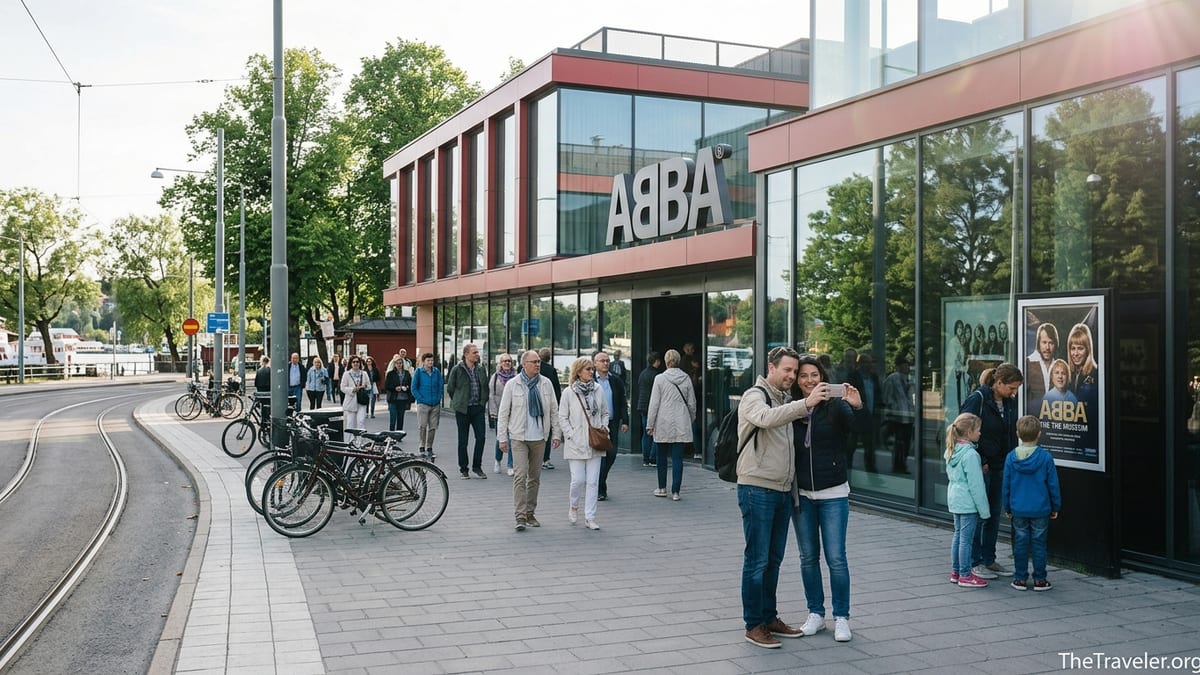
ABBA The Museum is a permanent interactive exhibition dedicated to the band behind Waterloo and Dancing Queen, located on Djurgården island in central Stockholm. Opened in 2013, it occupies a modern building at Djurgårdsvägen 68, next to other big-name attractions such as the Vasa Museum, Skansen open-air museum and Gröna Lund amusement park. Inside, it combines traditional exhibits like costumes and gold records with digital experiences where you can sing, mix tracks and perform virtually on stage alongside ABBA.
The museum is set up as a self-guided visit, typically lasting around 1.5 to 2 hours according to the official guidance. You book a timed-entry ticket and scan a QR code at the entrance, then move at your own pace through themed rooms that tell the story of the band members, their early struggle, their Eurovision breakthrough and their global fame. Much of the content is presented in Swedish and English, but the audio guide adds a wide range of languages, which international visitors appreciate.
Unlike many traditional museums, ABBA The Museum leans heavily on participation. Visitors can step into replica recording booths, try on digital versions of iconic costumes via motion capture, dance on a flashing floor and appear as a fifth member of the group on a large stage screen. For some people this makes the experience feel less like a museum and more like a polished pop attraction, which is exactly why it is a highlight of their Stockholm stay.
It is worth noting that the ABBA Museum ticket also covers the Swedish Music Hall of Fame housed in the same building, where exhibits showcase decades of Swedish music history beyond the group. Travelers who are only casual ABBA listeners often find this extra section unexpectedly interesting, with displays on artists from Roxette to Avicii.
Current Prices, Opening Hours and How That Feels in Practice
As of mid 2026, standard adult tickets booked online typically fall in the range of roughly 239 to 299 Swedish kronor, depending on the date and season. Student and senior tickets usually sit a bit lower, and children aged 7 to 15 are significantly cheaper, with kids under 7 entering free with an adult. Families can buy a combined ticket for two adults and two children that comes out a little cheaper per person than buying individually. Precise prices fluctuate during the year, so travelers are encouraged to check current rates when planning.
For a visitor from the United States, those adult prices often translate to somewhere in the low to mid 20s in US dollars at recent exchange rates, which puts ABBA The Museum in the same general price bracket as other blockbuster attractions in Stockholm such as the Vasa Museum. Some travelers feel the cost is fully justified by the amount of interactive content and the uniqueness of the subject. Others, especially those on a tight city-break budget, feel it is one of the pricier museums in town for what you actually see.
The museum generally opens daily, often from morning until early evening, though hours shift slightly by season and for special events. Because entry is based on timed tickets, you are assigned a time slot on your chosen day and asked to arrive then. In reality, many visitors report that once you are inside you can stay as long as you like during opening hours, but the timed entry controls the number of people in the building at any one time.
In peak summer, when Stockholm is busy with cruise ships and European vacationers, travelers frequently mention crowds. It is not unusual to find queues at the photo spots, the digital stage and the karaoke booths. A couple on a July visit, for example, described spending several minutes waiting for a chance to “perform” on stage and skipping some interactive elements because families with children were lined up ahead of them. In contrast, winter and shoulder-season visitors often report a much calmer experience, where they can replay songs and try several booths without feeling rushed.
What Travelers Love: Immersion, Nostalgia and Pure Fun
Travelers who come away raving about ABBA The Museum tend to highlight how immersive the experience feels, even for people who are not hardcore fans. Many appreciate the audio guide, which features the voices of the band members in Swedish and English, telling their own story as you wander past original stage outfits, hand-written lyrics and personal photos. Visitors often mention feeling as if they are walking through a chronological biography, from the members’ solo careers to ABBA’s formation and eventual breakup.
Nostalgia is one of the museum’s biggest selling points. Middle‑aged travelers who grew up with ABBA on vinyl and cassette frequently describe being transported back to their childhood living rooms or school discos. One recent British visitor in her fifties recalled standing in front of the Waterloo Eurovision display with goosebumps, remembering watching the contest as a child. Another couple from Germany said the singing booths, where you can record yourself doing a rough version of Mamma Mia, were a “ridiculous amount of fun” despite not usually enjoying karaoke.
Families find the interactive elements especially valuable. Parents traveling with children aged 8 to 13 often say the kids arrive skeptical and leave buzzing. They might not care much about the backstory, but they enjoy dancing on the illuminated floor, stepping into the “Arrival” helicopter photo set or trying out drums and keyboards linked to ABBA tracks. For parents who have already dragged their children through more traditional galleries, the chance to play and move around here can feel like a welcome break.
Solo travelers and groups of friends sometimes treat the museum as a lighthearted social activity rather than a serious cultural outing. It is common to see groups of twenty‑somethings filming each other at the virtual stage, laughing at the digital costumes that appear on screen, or buying glittery tote bags and vinyl reissues in the gift shop afterward. For city-break travelers seeking a memorable, Instagram‑friendly experience, this playful atmosphere is a major part of the appeal.
Common Complaints: Price, Crowds and “Only for Big Fans”
The most frequent criticism in traveler reviews is that ABBA The Museum feels expensive for what you get if you are not already invested in the band. Visitors who only know a couple of songs sometimes describe it as “just okay” or even “overpriced,” particularly if they spent less than an hour inside. Several describe walking quickly through the exhibits, snapping some photos and leaving with the sense that the ticket could have been better spent on another museum or a nice restaurant meal in Södermalm.
Crowding is another recurring theme. At busy times of year, travelers report that narrow corridors and small rooms can feel congested, especially when groups try to take photos with mannequins wearing the original costumes. Parents with strollers mention bottlenecks around the virtual stage and karaoke booths, where people tend to linger. Some travelers say they skipped popular photo opportunities because they did not want to spend their limited time in Stockholm waiting in yet another line.
There is also a divide between those who like the highly interactive, almost theme‑park feel and those who prefer a quieter, more contemplative museum style. Travelers who had just come from the Vasa Museum, with its preserved 17th‑century warship and detailed historical displays, sometimes describe ABBA The Museum as “light” on substance by comparison. They would have liked more context about the music industry, Swedish society in the 1970s or the band’s impact beyond hit singles.
A final complaint, albeit a smaller one, concerns the gift shop and add‑on costs. Some visitors feel that after paying a substantial entry fee, the large retail area at the exit and the premium prices on T‑shirts, mugs and vinyl records give the experience a commercial tone. Others do not mind the merchandising but note that it is easy to spend far more here than you expected if you travel with teenagers or are an avid collector.
How It Compares to Other Stockholm Museums
Stockholm has a dense concentration of museums, especially on and around Djurgården. When travelers ask whether the ABBA Museum is worth it, they often compare it directly with the Vasa Museum, Skansen, the Nordic Museum and Fotografiska, all of which can fit into a long weekend itinerary. The Vasa Museum, with its enormous salvaged warship, is commonly cited as the single most essential museum in the city, praised for its astonishing main exhibit and clear storytelling. Many reviewers who liked ABBA The Museum still say that if you can only afford one admission fee, Vasa should probably be it.
Skansen, the open‑air museum and zoo, is another big competitor for time and budget, particularly for families. With its historic farmhouses, Scandinavian animals and sweeping city views, it offers a full‑day experience compared with the two or so hours at ABBA The Museum. Parents sometimes say they chose Skansen over ABBA because it provided more value and allowed their kids to run around outside, especially in good weather.
On the other hand, ABBA The Museum stands out as one of Stockholm’s most distinctive and “only here” attractions. Maritime history, photography and ethnography museums can be found in many European capitals, but an entire interactive space devoted to Sweden’s most famous pop group is unique to Stockholm. Travelers who are indifferent to old ships or historical buildings often find ABBA The Museum a more engaging use of their time.
In practical terms, it is possible to combine ABBA The Museum with another attraction on Djurgården in a single day, thanks to the compact size of the island and the frequent tram and bus services to the area. For example, some visitors book a late‑morning time slot at the ABBA Museum, have lunch at a nearby café and then walk ten minutes to the Vasa Museum for an afternoon visit. Others start with Vasa when it opens and then book an early afternoon slot at ABBA, finishing with an evening stroll back toward the city center or a ferry ride.
Who Will Get the Most Value Out of a Visit?
Based on recent traveler experiences, the people most likely to consider ABBA The Museum “absolutely worth it” fall into a few clear groups. At the top of the list are dedicated ABBA fans of any age, many of whom describe the museum as a dream fulfilled. For them, seeing original costumes, gold records, instruments and behind‑the‑scenes video clips is deeply meaningful, and the chance to hear Björn, Benny, Agnetha and Anni‑Frid tell their own story through the audio guide adds emotional weight to the visit.
The next group includes casual music lovers who appreciate pop culture and interactive museums. Travelers who enjoy places like the Beatles Story in Liverpool or the ABBA Voyage show in London tend to warm quickly to the mix of memorabilia and digital experiences. They may not know every B‑side, but they recognize that the museum captures the look and feel of 1970s and early 1980s pop, from the colorful stage outfits to the studio mixing decks.
Families with school‑age children are another demographic that often finds good value here, especially if they visit during a quieter part of the day. The combination of music, movement and vivid visuals means younger visitors rarely get bored. Several parents describe ABBA The Museum as a “bribe museum,” using it as a reward after their kids have endured more serious historical sights elsewhere in the city.
On the flip side, travelers who might want to skip or downgrade ABBA The Museum to a “maybe” include those on very short visits, tight budgets or who simply do not like the band’s music. If you only have one full day in Stockholm and are eager to see Gamla Stan, Vasa and Skansen, it may be hard to justify a timed slot and a premium ticket for an attraction you are ambivalent about. Similarly, visitors who prefer quiet galleries and in‑depth historical context might find the flashy, interactive format not quite to their taste.
Tips to Make the Most of Your Ticket
For travelers who decide to go, a few strategic choices can significantly improve the experience. Booking tickets online in advance is highly recommended, especially in summer and during school holidays, to secure a preferred time slot and avoid disappointment. Choosing an early morning or late afternoon entry often means slightly thinner crowds than the midday peak, which in turn makes it easier to spend time in the interactive booths without pressure.
Using the audio guide is another tip that comes up frequently in positive reviews. Available in numerous languages, it features commentary that many visitors describe as personal and engaging, including memories from the band members themselves in Swedish and English. If you are visiting with companions who are not fluent in those languages, it is worth checking that their preferred language is available before you go, so everyone can follow along.
Because the museum sits in the heart of Djurgården’s cultural zone, it is sensible to plan your day around it rather than making a special out‑and‑back trip. Many visitors arrive via tram 7 or bus 67 from central Stockholm, or by one of the small ferries that cross the harbor. Pairing the museum with nearby sights or a stroll along the waterfront can make the ticket feel like part of a wider Djurgården experience rather than a standalone expense.
Finally, manage your own expectations. If you go in expecting a lighthearted, music‑driven attraction rather than a deeply scholarly museum, you are more likely to enjoy what ABBA The Museum does well: nostalgia, participation and fun. Decide in advance how much you are comfortable spending in the gift shop, and remind yourself that you do not need to queue for every photo opportunity to get value from the visit.
The Takeaway
So, is the ABBA Museum worth visiting? For many travelers, the answer is a clear yes, especially if they enjoy the band’s music or are looking for a lively, interactive break from more traditional museums. The combination of original memorabilia, personal stories and playful digital experiences leaves a strong impression, and the location on Djurgården makes it easy to fold into a wider day of sightseeing.
At the same time, the museum’s relatively high ticket price, popularity and entertainment‑focused format mean it is not a universal must‑see. Visitors who are indifferent to ABBA, pressed for time or prioritizing heavier historical content often come away feeling that their money might have been better spent elsewhere in Stockholm.
The most realistic way to think about ABBA The Museum is as a premium, niche attraction. If singing along to Dancing Queen, standing in front of the original Waterloo costumes and goofing around on a virtual stage sounds like your idea of fun, you are likely to find it memorable and worth the cost. If not, you can confidently focus on the city’s many other highlights, knowing you are not missing an essential piece of Stockholm’s story.
FAQ
Q1. How long does a visit to ABBA The Museum usually take?
Most travelers spend around 1.5 to 2 hours inside, though big fans who listen to the full audio guide or repeat interactive activities may stay longer.
Q2. Do I need to be a huge ABBA fan to enjoy the museum?
No, but it helps. Casual listeners who like pop music and interactive exhibits usually enjoy it, while those who dislike the band often feel it is skippable.
Q3. Is the ABBA Museum suitable for children?
Yes. Many families report that children 7 and older enjoy the dancing floor, virtual stage and singing booths, even if they do not know the songs beforehand.
Q4. Are tickets cheaper if I buy them at the door?
Not usually. Prices are similar, and timed entry means popular slots can sell out, so most visitors prefer to book online in advance to secure a time.
Q5. Can I visit the gift shop without buying a museum ticket?
Policies can vary over time, but travelers often report being able to access the gift shop area without an admission ticket. It is best to ask staff on the day.
Q6. How does the ABBA Museum compare with the Vasa Museum?
The Vasa Museum is a more traditional, historically focused museum centered on a 17th‑century ship, while ABBA The Museum is lighter, more interactive and devoted to pop music.
Q7. Is the museum accessible for visitors with limited mobility?
The building has lifts and ramps, and wheelchair users do visit, though some interactive elements may be easier to use than others. Staff can usually offer guidance.
Q8. What is the best time of day to avoid crowds?
Early morning and late afternoon slots are often a bit quieter than midday, especially outside peak summer and school holidays, according to recent visitor reports.
Q9. Is photography allowed inside the museum?
Yes, personal photography is generally allowed in most areas, and many interactive stations are designed for photos, though flash may be restricted near some displays.
Q10. Can I combine the ABBA Museum with other nearby attractions in one day?
Yes. Many travelers pair it with the Vasa Museum, Skansen or a walk along Djurgården’s waterfront, since all are within a short walk or tram ride of each other.