


Landing at Lynden Pindling International Airport in Nassau, most Baha Mar guests are only 15 to 25 minutes away from a poolside drink. The short distance can feel deceptively simple, yet your choice of airport transfer affects how quickly you reach the resort, what you pay and how much hassle you face with luggage and peak-hour crowds. This guide walks through the real-world options between the airport and Baha Mar so you can choose the right route for your style and budget.
Get the latest updates straight to your inbox!
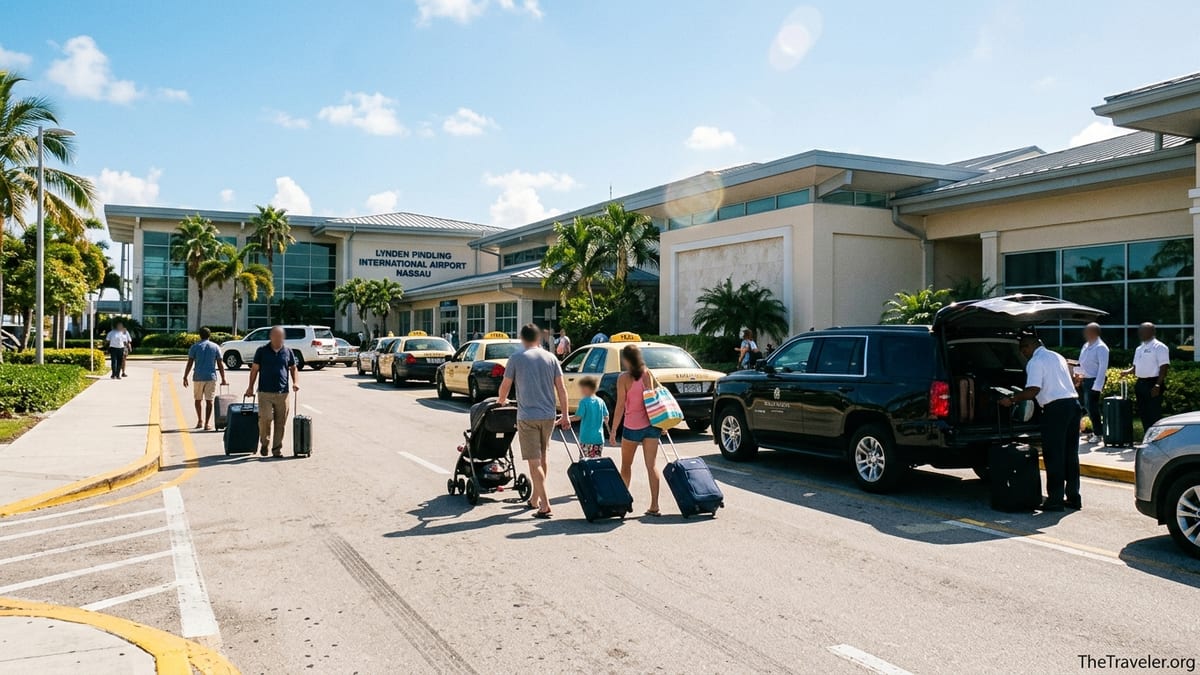
Understanding the Route from LPIA to Baha Mar
Lynden Pindling International Airport (NAS) sits on the western side of New Providence Island, while Baha Mar anchors the Cable Beach hotel strip on the north shore. By road, the distance between the airport and the resort is roughly 6 to 7 miles, or about 10 kilometers. In normal traffic, the drive typically takes 15 to 20 minutes, stretching to around 25 minutes when several flights have landed close together or during local rush hours.
Most routes for airport transfers follow a straightforward path along JFK Drive or West Bay Street toward Cable Beach before turning into the Baha Mar complex. Drivers know the route well because Baha Mar, with its Grand Hyatt, SLS and Rosewood properties, is one of the island’s most requested stops for airport taxis and private transfers. Even first-time visitors rarely need to give detailed directions. You can simply say “Baha Mar” or the specific hotel brand at the taxi stand or to your driver and they will know exactly where to go.
Because the journey is short and direct, cost and comfort tend to matter more than route efficiency. Unlike many island destinations where a long highway or winding coastal road can add 45 minutes or more to your transfer, Nassau’s main airport-to-resort corridor is compact. That is good news if you are arriving with tired children, bulky dive gear or simply want to get checked in quickly and head to the beach.
The flip side of that convenience is that transport prices can feel high relative to the distance. Official zone-based taxi fares and private transfer rates are set at levels that reflect tourism demand rather than mileage. Planning ahead, knowing expected price ranges and choosing the right service tier helps avoid both sticker shock and awkward bargaining right as you step into the Bahamian heat.
Taking a Taxi: The Default Choice for Most Travelers
For many visitors, a standard taxi from the official airport stand is the simplest and most flexible way to reach Baha Mar. The taxi rank is directly outside the arrivals area, and there is usually a steady line of licensed cabs meeting each bank of incoming flights. You do not reserve these taxis in advance; you walk to the stand, tell the dispatcher or driver your destination and you are on your way.
Nassau operates with zone-based government fares between the airport and popular areas like Cable Beach. In practice, that means a taxi from LPIA to Baha Mar generally falls in the range of about 30 to 40 US dollars for one or two passengers, with a small supplement for additional people and large or oversized bags. Travelers in recent seasons report paying amounts in that ballpark, with a typical family of four plus luggage often quoted between the mid-30s and mid-40s in US dollars, especially if they request an extra grocery stop on the way.
Real-world experiences underscore the importance of confirming the fare before you get in. Several regular visitors to Nassau note that asking clearly, “How much to Baha Mar for all of us, including bags?” at the taxi line removes confusion later. The official fares are intended to be per taxi for up to two passengers rather than per person, but misunderstandings happen when this is not clarified in advance. If a quoted price feels significantly above the expected range, you can politely confirm that it reflects the standard airport rate to Cable Beach and includes everyone in your party.
Once on the road, the taxi ride itself is usually straightforward. Sedans and minivans are the most common vehicles, and many can comfortably take four to six passengers with standard luggage. If you have golf clubs, scuba gear or a stroller, mentioning that at the stand helps the dispatcher assign a larger cab. There is no metering involved on this route; instead, the pre-agreed zone fare governs the final price. Taxis accept US dollars widely, and many drivers also accept major credit cards, but it is wise to confirm payment method before departure to avoid searching for an ATM at the resort.
Pre-Booked Private Transfers and VIP Services
Travelers who want a smoother arrival, guaranteed vehicle size or amenities like child seats often opt for pre-booked private transfers rather than walk-up taxis. Several Nassau-based companies specialize in airport to resort transport, offering sedans, SUVs and vans sized for couples, families or small groups. Some focus on basic point-to-point service, while others market themselves as premium or VIP with higher-end vehicles and meet-and-greet staff inside the terminal.
Rates for these services vary by vehicle category, but a private SUV or luxury sedan from LPIA to Baha Mar commonly starts around the equivalent of a high-end taxi fare and climbs from there. For example, an airport transfer company might quote approximately 75 to 120 US dollars each way for a private SUV, depending on inclusions like a brief grocery stop, bottled water or an on-board welcome drink. For small groups or wedding parties, vans and sprinter-style vehicles cost more but can be cost-effective per person when fully occupied.
Baha Mar itself partners with transportation providers to offer pre-arranged luxury transfers for guests of Grand Hyatt, SLS and Rosewood. These official resort-linked services typically feature late-model vehicles such as large SUVs or premium sedans with professional chauffeurs who wait just outside customs. Guests book them in advance through their hotel or a dedicated booking link during the reservation process. While the per-ride cost is higher than a standard taxi, the experience is curated: staff track your flight, adjust for delays and handle bags quickly so you move from baggage carousel to air-conditioned car with minimal waiting.
VIP-style services can also include optional extras such as airport fast-track assistance, where a representative meets you at the gate, escorts you through immigration and customs queues and coordinates directly with your driver outside. This level of service appeals to travelers arriving at peak times on Saturdays or holidays, those with mobility concerns, and anyone who simply wants to start a special occasion trip feeling unhurried. If your group includes small children and you need guaranteed car seats, specifying this requirement at the time of booking private transfers usually yields more reliable results than trying to arrange them ad hoc with a taxi at the curb.
Rental Cars: When Driving Yourself Makes Sense
Although many resort guests are happy to rely on taxis or private transfers, some travelers prefer the freedom of a rental car. Several international and regional car hire brands operate at Lynden Pindling International Airport, with desks in or just outside the arrivals hall. From a driving perspective, the route to Baha Mar is one of the easiest on the island. You exit the airport, follow signs toward Nassau along JFK Drive or West Bay Street and in about 15 to 20 minutes, you reach the Cable Beach area and the clearly marked Baha Mar entrance.
The main adjustment for visitors from North America is that Bahamians drive on the left side of the road. Vehicles are a mix of left-hand and right-hand-drive, and road conditions on this corridor are generally good, although traffic can briefly bunch up near roundabouts and intersections during commuter hours. If you are comfortable driving on the left and expect to explore beyond the resort, a rental car can be practical. It allows ad hoc trips to local restaurants in the West Bay area, downtown Nassau visits or grocery runs without repeatedly paying for taxis.
However, for guests planning to stay mainly within the Baha Mar complex, the cost and hassle of a rental car may outweigh the benefits. Daily rates, insurance add-ons and fuel quickly exceed the price of two short taxi rides between airport and resort if you do not use the car elsewhere. Parking is available at Baha Mar, but you will still be navigating unfamiliar roads, roundabouts and local driving habits right after a flight. Families arriving in the evening or after dark may find it more relaxing to take a taxi or private transfer on arrival and only rent a car later in the stay if they decide to tour the island.
A hybrid strategy some visitors adopt is to book a one-way airport transfer to Baha Mar, settle in for a day or two, then rent a car from a city location for a mid-trip road exploration before returning it and using a taxi back to the airport. This approach keeps arrival and departure days simple while still giving you the flexibility of independent travel when you are rested and familiar with the surroundings.
Hotel Shuttles, Shared Vans and Budget-Friendly Options
Unlike some all-inclusive resorts in other Caribbean destinations, Baha Mar does not routinely include a free airport shuttle in most room rates. Instead, it relies on partnerships with licensed transportation companies for pre-arranged private or shared services. These can sometimes be booked on a per-seat basis, functioning like a shared van shuttle where several parties going to the same general area ride together, with stops at different hotels along Cable Beach or nearby resorts.
Shared services can be a budget-friendly middle ground between taxis and full private transfers, especially for solo travelers or couples who do not mind a few extra minutes on the road while other guests are dropped off. Typical rates run lower per person than a private car, but because pricing is variable and demand-driven, it is wise to compare the per-seat cost with the fixed taxi zone fare for up to two people. In some cases, especially for a couple with two suitcases, a standard taxi may end up being similar in price and faster door to door.
Travelers watching their budgets sometimes ask about public buses, known locally as jitneys, between the airport and Cable Beach. At present, these services are designed primarily for local commuters and do not reliably serve the airport terminal in a luggage-friendly way. Connections can involve walking with bags to the main road and boarding crowded minibuses not set up for multiple suitcases. Given the short distance to Baha Mar and the value of starting a resort stay without logistical stress, taxis and organized transfers remain the practical choices for almost all visitors.
For groups that prioritize affordability but still want some structure, pre-booked shared vans from established airport transportation providers can make sense. They usually operate on fixed schedules timed around common arrival and departure windows, minimizing wait times while still consolidating passengers. These are often favored by small conference groups or wedding guests whose organizers have negotiated rates with a local transport partner serving Baha Mar.
Luggage, Special Requests and Traveling at Peak Times
Luggage plays a bigger role in choosing your transfer than the short driving distance might suggest. Standard airport taxis in Nassau can handle typical vacation gear without issue, but oversized items such as golf bags, fishing rods, dive equipment or multiple large suitcases may incur small surcharges or require a minivan. The official taxi guidelines mention extra fees for oversized bags and boxes, so it is sensible to point out anything bulky before loading and confirm whether it affects the final fare.
Families with young children or travelers with mobility needs should think about their transfer details at the same time as they book flights. While some taxis can provide child seats or additional assistance, availability on a walk-up basis is not guaranteed. Private transfer companies, including those used by Baha Mar, are more likely to confirm car seats, step stools or extra help for wheelchairs if requested at the time of booking. For example, a family of four arriving with a stroller and needing two child seats might reserve an SUV through a local transfer firm and receive written confirmation of seat types and placement before departure from home.
Peak arrival periods at Lynden Pindling International Airport tend to cluster around midday and early afternoon on Saturdays and other weekend days, particularly in high season from roughly December through April. On those days, the taxi stand can become busy right after several large flights land from major US hubs. Even though taxis arrive in waves to meet demand, queues can form and waiting 20 to 30 minutes for a cab is not unusual in the busiest windows.
If your flight lands during those peak times and you prefer to walk straight out of customs into a waiting vehicle, pre-booking a transfer is worth serious consideration. Private drivers monitor flight times and move their vehicles into position as you clear immigration, reducing uncertainty. Conversely, if you land midweek, early morning or late evening outside typical rush windows, the taxi line is usually manageable and a pre-booked vehicle is more about comfort and predictability than necessity.
Should You Pre-Book or Decide on Arrival?
Deciding whether to arrange transportation in advance or rely on the airport taxi line comes down to a few practical factors: your arrival time, group size, budget and tolerance for minor delays. For many couples arriving in the afternoon or evening, especially outside the absolute peak of holiday season, walking to the taxi rank and taking the next available cab to Baha Mar is perfectly reasonable. The route is short, the process is simple and the price range is well established.
Pre-booking shines in specific scenarios. If you are part of a larger family group with five or six people and multiple checked bags, reserving a van or SUV ensures you are not split across vehicles and that space is adequate. Guests celebrating honeymoons, milestone birthdays or destination weddings often value the smoother, more curated feel of a private transfer where a driver greets them by name and handles every bag. Travelers on tight schedules, such as those heading straight into a business meeting or event at Baha Mar’s convention facilities, similarly appreciate the predictability of having transport locked in.
Price differences between pre-booked transfers and walk-up taxis are not always dramatic but can be significant at the premium end. A standard private SUV service may cost notably more than a taxi but deliver added comfort, a guaranteed vehicle class and sometimes small conveniences like cold bottled water and a brief supermarket stop. On the other hand, some shared shuttle options sold through travel agencies or online platforms can be close in price to a taxi for one person, while taking longer due to multiple stops.
One practical approach for many visitors is to pre-book only if at least one key factor applies: arrival in a known busy window, specific mobility or child seat needs, a large group, or a strong preference for a higher-end arrival experience. Otherwise, building in a little time for the taxi line and using the official airport stand is a sensible and economical default that suits the majority of Baha Mar guests.
The Takeaway
Reaching Baha Mar from Lynden Pindling International Airport is logistically simple, but the experience varies depending on how you choose to travel that short distance. Taxis from the airport stand offer a flexible, well-understood option at predictable zone-based fares, and for many couples or small families they strike the best balance between cost and convenience. The vast majority of visitors will be checked in at the resort within 30 to 45 minutes of landing, even with a short wait at the taxi line.
For those seeking extra comfort, guaranteed vehicle types or special assistance, pre-booked private transfers and resort-linked services provide a higher-touch alternative. They are particularly attractive during busy weekend arrival waves or for travelers with young children, bulky sports equipment or mobility considerations. While the price premium is real, the value of stepping into a waiting SUV or sedan the moment you clear customs can be meaningful after a long day of travel.
Rental cars and shared shuttles each fill narrower niches. Self-driving works best for guests who intend to explore beyond Baha Mar and are comfortable adjusting to left-side driving. Shared vans and hotel-arranged shuttles can save money for solo travelers or those whose trip organizers have coordinated group transport, though they may add a few minutes to the journey.
Whatever option you choose, planning your airport transfer with the same care as your flight and room reservation pays off. A little preparation on fares, luggage needs and peak times turns what could be a stressful first hour on the island into a smooth glide from airplane seat to resort lounge chair, setting the tone for the rest of your stay at Baha Mar.
FAQ
Q1. How long does it usually take to get from Lynden Pindling International Airport to Baha Mar?
The drive typically takes about 15 to 20 minutes in normal traffic, and up to around 25 minutes when the roads are busy or several flights arrive at once.
Q2. How much should I expect to pay for a taxi from the airport to Baha Mar?
Most visitors report paying roughly 30 to 40 US dollars for a taxi from the airport to Baha Mar for one or two passengers, with small supplements for extra people or oversized luggage.
Q3. Do I need to book transportation in advance, or can I just take a taxi when I arrive?
You can usually take a taxi from the official airport stand without advance booking. Pre-booking is most useful for larger groups, guests needing car seats or assistance, or arrivals during peak weekend and holiday times.
Q4. Are private transfers worth the extra cost compared with a standard taxi?
Private transfers cost more but offer benefits such as guaranteed vehicle type, meet-and-greet service, help with bags and, in some cases, added comforts like bottled water or a brief grocery stop. They are especially appealing for special occasions or families with specific needs.
Q5. Can I use public buses or jitneys to travel between the airport and Baha Mar?
Public buses in Nassau are not designed for airport transfers and typically do not serve the terminal in a luggage-friendly way. For most travelers with suitcases, taxis or organized transfers are far more practical and much less stressful.
Q6. Is renting a car a good idea if I am staying at Baha Mar?
Renting a car makes sense if you plan to explore more of New Providence Island and are comfortable driving on the left. If you expect to stay mostly within the resort, taxis or transfers are usually simpler and more cost-effective.
Q7. Do taxis and transfer services accept US dollars and credit cards?
US dollars are widely accepted by taxis and transfer companies in Nassau. Many drivers and providers also accept major credit cards, but it is always best to confirm the payment method before you start your journey.
Q8. What should I do if I am traveling with young children who need car seats?
If you need car seats, arranging a private transfer in advance is usually the safest option. Many transfer companies and resort-linked services can confirm appropriate seats when you book, which is more reliable than trying to secure them at the taxi stand.
Q9. Are grocery or liquor store stops possible on the way from the airport to Baha Mar?
Yes, many taxi drivers and private transfer companies will include a short grocery or liquor store stop on the way to Baha Mar, often for a modest additional fee. It is important to agree on any extra charges before you leave the airport.
Q10. When are the busiest times to arrive at Nassau if I want to avoid long waits for transportation?
The airport is busiest on Saturdays and other weekend days in high season, especially from late morning through mid-afternoon. Arriving on weekdays or during early morning and late evening hours typically means shorter lines at the taxi stand and less congestion on the road.