


More news on this day
Hundreds of flight delays and a cluster of cancellations at Paris area airports have disrupted schedules for thousands of travelers, leaving Air France, Ryanair and EasyJet passengers facing long queues, missed connections and overnight waits as operations struggle to recover.
Get the latest news straight to your inbox!
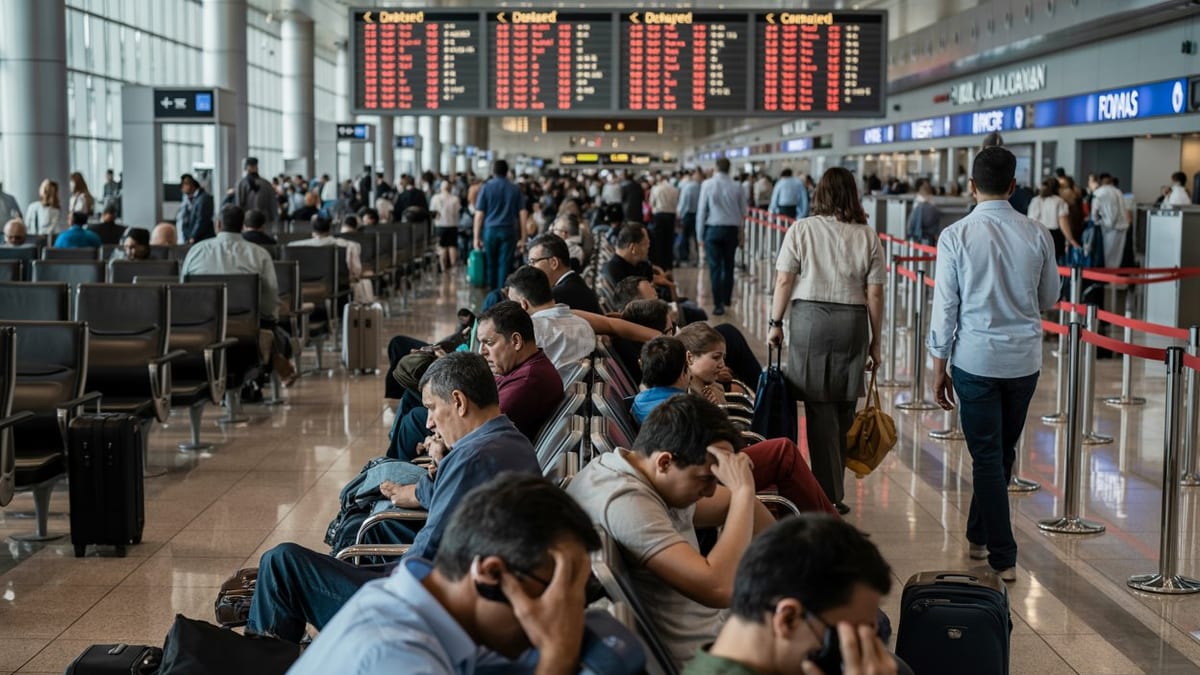
Widespread Disruption at Charles de Gaulle and Orly
Operational data from real time trackers and airport performance dashboards on 3 and 4 June indicate that Paris Charles de Gaulle and Orly experienced an unusually high volume of late-running services, with around 549 flights affected by significant delays and at least 12 departures or arrivals canceled outright. The disruption rippled through both domestic and European routes, affecting morning and evening peak traffic.
Charles de Gaulle, the region’s main international hub, typically handles several hundred daily departures to more than 250 destinations. When a large proportion of those flights depart late, knock on effects quickly appear in connection banks, baggage handling and aircraft rotations. Arrivals data show clusters of flights arriving well behind schedule, compressing turnaround times and creating pressure on gates and ground crews.
Orly, which concentrates more domestic and short haul services, also recorded elevated delay levels. Even modest schedule changes there can be felt across France’s high density intra European network, particularly on routes linking Paris with regional cities such as Lyon, Toulouse and Nice, as well as key leisure destinations around the Mediterranean.
The combined effect at both airports has been a day of rolling disruption rather than a brief, isolated interruption. Passengers have reported extended waits at departure gates, repeated boarding time revisions and difficulty rebooking after cancellations.
Air France at the Center of the Network Strain
As the largest operator at both Paris airports, Air France has been at the heart of the disruption. Publicly available flight status information shows a high number of its departures leaving late or being rescheduled, particularly on busy trunk routes connecting Paris with major European cities and long haul destinations in the Americas, Africa and Asia.
When Air France flights depart late from Paris, the impact is magnified by their role as feeders for onward connections. Missed links in Paris can strand passengers far from their final destination, while aircraft and crews arriving late from overseas are often unable to turn around on time for their next legs. Travelers on multi segment itineraries have reported being separated from their luggage or arriving a full day later than planned.
Recent analyses of European punctuality trends already position Paris Charles de Gaulle and Orly in the middle of the pack for on time performance. On days when conditions are challenging, this margin can quickly erode, leading to spikes in the number of flights that miss their scheduled times by 30 minutes or more. The latest disruption appears to follow that pattern, with a large cohort of Air France services sliding from minor to severe delay as the day progressed.
Customer information channels have been heavily used as travelers attempt to track changing departure times and explore rebooking options. Guidance from consumer groups continues to emphasize the importance of monitoring official airline status updates and retaining documentation related to delays, which can be essential for any later compensation claims under European air passenger regulations.
Low Cost Carriers Ryanair and EasyJet Hit on Key Routes
Ryanair and EasyJet, two of Europe’s largest low cost carriers, also experienced knock on delays and cancellations on flights into and out of the Paris area. Their point to point business models are particularly sensitive to disruptions at busy airports, since a late arriving aircraft can quickly undermine multiple subsequent rotations.
Tracking services show late departures on a range of Ryanair and EasyJet routes serving Paris, including links to the United Kingdom, Ireland, Italy and Spain. Some aircraft remained on the ground well beyond their planned turnaround windows, while a limited number of flights were canceled when schedules could no longer be recovered within crew duty limits.
Budget carriers typically rely on tight scheduling to keep costs low and fares competitive. When that precision is interrupted by congested airspace, slot restrictions or ground handling bottlenecks, there is little spare capacity to absorb delays. The result is a cascading effect in which a problem that begins in Paris can later appear at outstations across the network.
Passengers traveling with low cost airlines have reported crowded departure halls, long lines at service desks and difficulty securing same day alternatives, especially on busy leisure routes. For travelers with non refundable hotel bookings or time sensitive plans, even a delay of a few hours can carry noticeable financial and personal consequences.
Causes Range from Congested Skies to Staffing Pressures
While a single, clearly defined cause has not been identified, available reporting and historical patterns around French air travel disruptions point to a combination of factors likely contributing to the most recent wave of delays and cancellations in Paris. High seasonal demand, constrained air traffic control capacity over parts of France and neighboring countries, and localized staffing challenges on the ground can all interact to slow the flow of aircraft.
France has experienced repeated periods of strain in its air traffic control system in recent years, including industrial action and chronic staffing shortages at certain centers. On peak days, any restrictions on overflights or reduced arrival rates at Paris hubs can rapidly build queues in the sky and on the ground. Airlines are then forced to adjust schedules, hold departures, reroute flights or cancel individual services.
At airport level, ground handling operations may also face pressure, particularly during overlapping banks of arrivals and departures. When aircraft arrive out of sequence or all at once after earlier airborne holding, there can be insufficient gates, ramp staff or baggage handlers available at the precise moment they are needed, generating further delay.
Weather has not appeared to be the primary driver in this instance, but even minor reductions in visibility or wind related runway constraints can exacerbate an already tight operating environment. Together, these variables create a setting in which relatively modest disruptions early in the day snowball into a widespread operational challenge by evening.
What Stranded Passengers in Paris Can Do Next
For travelers caught up in the latest disruption at Paris airports, consumer organizations continue to highlight a few practical steps. First, passengers are encouraged to track their flight status through official airline channels and airport displays, since third party trackers may not always reflect last minute operational decisions. Having confirmation of the precise reason for a delay or cancellation can be important for any later claim.
Under European passenger rights rules, many travelers affected by long delays or cancellations may be entitled to assistance such as meals, refreshments and hotel accommodation when an overnight stay becomes unavoidable. In some circumstances, fixed sum financial compensation may also be available, depending on the length of the delay, the route and whether the disruption was considered within the airline’s control.
Travelers are advised to retain boarding passes, booking confirmations and receipts for any additional expenses incurred while stranded in Paris, including meals or alternative transport. Written records of revised arrival times and any rerouting offered by the airline can also support later reimbursement requests.
The latest disruption at Paris’s airports underscores how vulnerable tightly interconnected European air networks remain to surges in delays on a single busy day. With the summer travel period approaching, passengers planning itineraries through Charles de Gaulle or Orly may wish to build in additional buffer time for connections and consider flexible arrangements for hotels and ground transport in case schedules shift at short notice.