


More news on this day
Ground stops imposed at three of the busiest airports on the U.S. East Coast have triggered hundreds of flight cancellations and delays, disrupting peak summer travel and forcing airlines and passengers into a day of rapid rebooking and schedule changes.
Get the latest news straight to your inbox!
Weather and Congestion Trigger Ground Stop Orders
Operational summaries and advisory data from the Federal Aviation Administration show that a combination of severe summer thunderstorms and heavy traffic led to ground stop programs affecting three major East Coast hubs. Recent FAA planning advisories for the Northeast indicate that airports serving the New York City and Mid Atlantic markets have been subject to staggered ground stops and ground delay programs when convective weather builds along the coast and over key arrival corridors.
On affected days, command center advisories describe constrained airspace over the New York region and along heavily traveled East Coast routes, with traffic management initiatives implemented to meter arrivals and temporarily halt some departures. In several cases, airports such as John F. Kennedy International, LaGuardia and Philadelphia International have appeared in FAA planning documents as being placed into ground stop status while storms passed through critical approach and departure paths.
Ground stops are a traffic management tool used to hold flights at their departure airports when arrival capacity at the destination is sharply reduced. According to publicly available FAA explanations, these orders may be issued for reasons including thunderstorms, low visibility, airspace congestion or downline disruptions, and can escalate quickly from short pauses to multi hour programs when adverse weather is slow moving.
Travelers and airline employees posting on public forums in recent days have reported extended pauses on departures bound for New York area and Washington region airports, describing long tarmac waits followed by cancellations when weather and traffic conditions failed to improve within required crew duty time limits.
Hundreds of Flights Canceled Across the Network
While exact tallies vary by carrier and airport, airline status boards and widely used flight tracking services showed hundreds of cancellations and delays rippling out from the three impacted hubs once the ground stops were in place. Network structures that rely on tight connections through major coastal hubs meant that a halt to arrivals and departures in one region quickly affected flights nationwide.
In several recent Northeast weather events, public coverage has documented days in which a significant share of flights at the largest New York airports were canceled or heavily delayed, with some reports indicating that nearly half of scheduled operations at certain fields were disrupted during peak thunderstorm windows. Similar patterns have been noted at Washington area and Philadelphia airports when strong storms or volume constraints led to pauses on inbound traffic.
Ground stops do not automatically cancel every affected flight, but they compress schedules and reduce flexibility. Flights already in the air are usually allowed to continue, while those still at the gate may be held for extended periods, re timed into later arrival slots or canceled outright when crew and aircraft rotations become misaligned. Once a large block of flights is removed from the schedule, airlines can struggle to reposition crews and aircraft in time for subsequent departures, amplifying the impact beyond the initial weather event.
According to recent analyses of airline operations during major disruptions, the most severe effects occur when high cancellation rates coincide with busy travel days such as summer weekends, leaving limited spare capacity across the system to absorb rebooked passengers.
Passengers Face Long Lines, Tight Rebooking Options
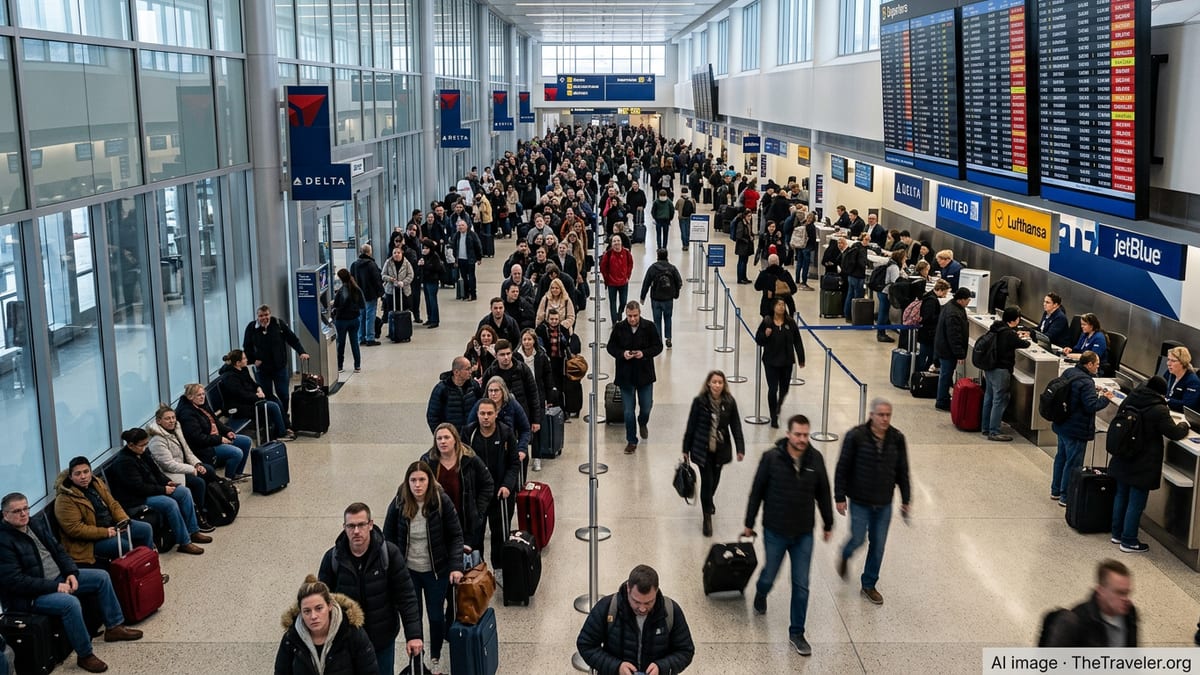
For travelers, the ground stops translated into long lines at customer service desks, crowded gate areas and scarce near term rebooking options. Messages shared on social media and travel forums described passengers being offered itineraries with lengthy layovers, overnight delays or routings through secondary airports in order to bypass the most affected hubs.
Some travelers reported being advised to consider alternative departure points along the East Coast, including airports farther south or inland that were not under the most restrictive traffic management measures. Others described being shifted from nonstop itineraries to multi stop journeys, or being moved onto flights leaving a day or more later when same day options were no longer available.
Disruptions of this scale also create challenges for travelers whose trips involve cruise departures, tours or major events, where missing a single outbound flight can mean forfeiting downstream bookings. Travel insurance policies, credit card protections and airline waivers for weather related disruptions play an important role in determining what costs can be recovered, but coverage and flexibility vary significantly by provider and fare type.
Consumer advocates often recommend that passengers traveling in peak storm seasons build in extra connection time, favor earlier departures, and monitor both their airline app and the FAA’s publicly available system status pages to spot emerging ground stops or ground delay programs before arriving at the airport.
Airlines Lean on Waivers, Larger Aircraft and Schedule Tweaks
To manage the fallout, several major carriers serving the impacted East Coast airports have published travel waivers covering a wide swath of itineraries, according to airline advisory pages and public communications. These waivers typically allow customers scheduled to travel through specified airports and dates to change flights without standard change fees, provided they remain in the same cabin and complete travel within a defined window.
Reports from recent weather related disruptions indicate that some airlines have also deployed larger aircraft on key trunk routes once ground stops are lifted, in order to accommodate stranded passengers more quickly. Others have adjusted schedules by trimming less critical frequencies and consolidating lightly booked flights, freeing crews and aircraft for routes with high numbers of displaced travelers.
However, the ability of airlines to recover from a large scale ground stop is constrained by crew duty time rules and pre existing schedule density at major hubs. After prolonged pauses, many pilots and flight attendants reach the legal limits on their shifts, triggering further cancellations even after weather improves. When this occurs simultaneously at multiple East Coast hubs, the recovery period can extend over several days.
Industry analysts note that carriers continue to refine disruption playbooks developed during earlier mass cancellation events, including enhanced text and app notifications, proactive rebooking and expanded self service tools. Even so, the combination of weather volatility and tight summer schedules leaves little margin when multiple hubs are constrained at once.
What Travelers Should Watch in the Coming Days
With the heart of the Atlantic storm season approaching, operational planning documents and daily system summaries suggest that additional ground stops remain possible at major East Coast airports whenever strong convective systems align with peak demand periods. FAA traffic management outlooks regularly highlight the corridor from Washington through New York and Boston as particularly sensitive to afternoon and evening thunderstorms.
Travelers with upcoming itineraries through the affected hubs are being encouraged, through airline and airport advisories, to monitor forecasts, sign up for flight status alerts and review the terms of any weather related waivers in effect for their travel dates. Checking in early via airline apps and arriving at the airport with flexible seating and routing preferences can improve the chances of securing an earlier rebooking option if schedules deteriorate.
Operational data and recent research on flight patterns show that while summer storm disruptions are a predictable feature of U.S. aviation, the specific timing and location of the most severe impacts vary from day to day. For passengers, that means staying informed, allowing extra time, and understanding that even short ground stops at a handful of critical hubs can cascade into widespread cancellations across the national network.