


More news on this day
Hundreds of Lufthansa passengers were forced to spend the night on parked aircraft after flight cancellations and long delays in recent months, according to multiple passenger accounts that have drawn renewed scrutiny of how European airlines handle disruption and overnight curfews.
Get the latest news straight to your inbox!
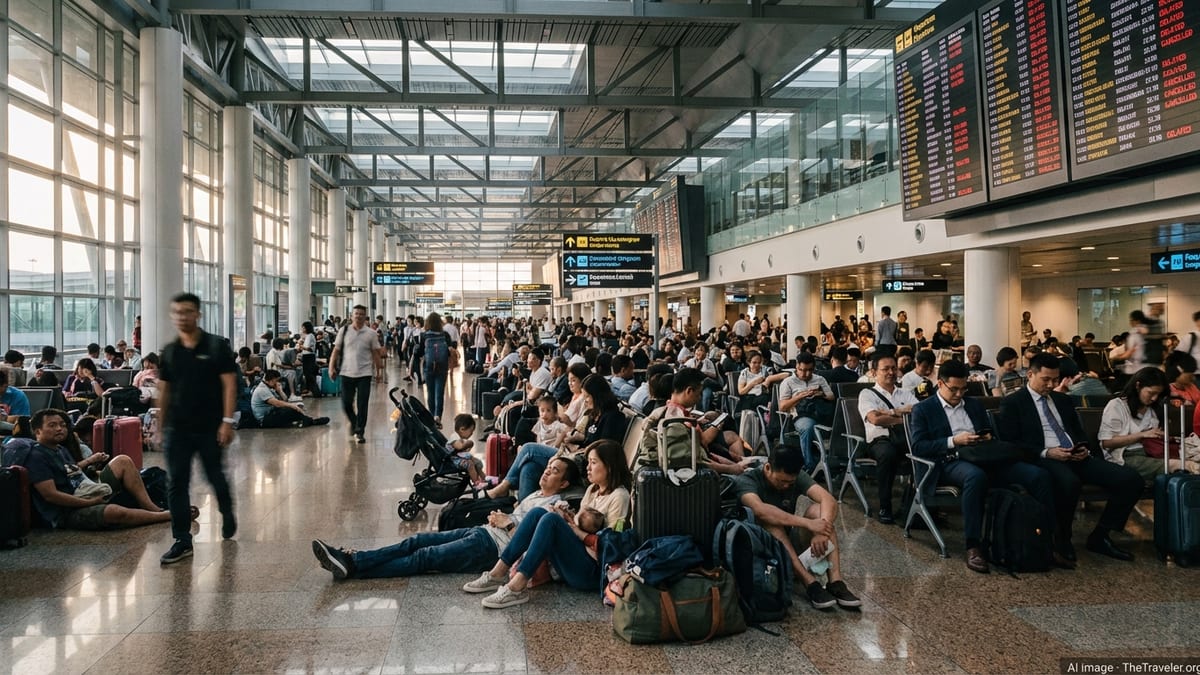
Overnight ordeals on grounded Lufthansa flights
Recent reports from travelers describe several incidents in which Lufthansa passengers remained stuck on aircraft for many hours after flights were cancelled or significantly delayed. In at least one widely discussed case, involving an Airbus A320neo, passengers said they were instructed to stay on board through the night because airport ground operations had already shut down, leaving no buses or stairs available to safely deplane the aircraft on a remote stand.
Accounts shared by affected travelers describe cabin lights dimmed, limited food and water, and passengers trying to sleep in economy seats while the aircraft sat on the apron. Some passengers reported back pain, anxiety and concern about access to medical help during the overnight confinement. The episodes have generated particular criticism because Lufthansa is a full service carrier and because the disruptions occurred at major European hubs where passengers expected robust contingency plans.
While the exact number of people affected is difficult to verify, available descriptions suggest that each incident involved a nearly full single aisle aircraft, meaning well over one hundred passengers per flight. With several similar reports surfacing in recent months, travel industry observers say the number of travelers who have spent a night on grounded Lufthansa jets this year likely reaches into the hundreds.
The airline has not issued a detailed public timeline of each overnight event, but online statements and passenger testimonies indicate that a combination of missed airport operating windows, crew duty limits and lack of available ground staff played a central role in keeping passengers onboard long after their flights were canceled.
Airport curfews and operational cut offs
One of the key factors behind the overnight strandings appears to be the strict night curfews and ground handling cut offs in place at several German airports. Once a curfew begins, movements such as towing aircraft to a gate, positioning mobile stairs or operating buses to and from remote stands can become heavily restricted. In some cases, the airport itself closes parts of its infrastructure, meaning that even if passengers leave an aircraft, they may have nowhere in the terminal to go.
Reports indicate that affected Lufthansa flights often pushed up against these curfew limits after earlier delays related to weather, air traffic congestion or industrial action. By the time it became clear that a departure would not be possible, the window to deboard passengers in an orderly way had narrowed sharply. In at least one case, passengers say they were informed in the early morning hours that deplaning was no longer feasible because bus drivers and other ground staff had finished their shifts and left the airport.
Operational experts note that airlines and airports usually have procedures to manage late running flights, but those processes can break down under pressure. When multiple services are disrupted at once, buses, stairs and gates become scarce resources. If a flight is parked far from the terminal or jet bridges are already in use by other delayed aircraft, passengers may be stuck waiting for equipment that never arrives before curfew rules fully take effect.
For travelers caught on board, these operational nuances are little comfort. Many have expressed frustration that they were not allowed to return to the terminal to sleep in the building, access restrooms and food more freely, or seek hotel vouchers, arguing that a night in a seat should be a last resort, not a default solution when schedules unravel.
Passenger rights under European rules
The overnight strandings have also intensified discussion about passenger protections under European Regulation EC 261, which governs compensation and care for travelers facing long delays, cancellations and denied boarding. Under those rules, airlines operating from European airports are expected to provide meals, refreshments and, where necessary, hotel accommodation and transport between the airport and lodging when passengers are forced to wait overnight because of disruption.
Travel rights specialists point out that keeping passengers inside an aircraft all night does not remove those obligations. Even if hotel capacity is tight or ground handling is constrained by curfews, airlines are generally still required to offer practical assistance and clear information about available options. In some of the recent Lufthansa cases, passengers have publicly questioned whether they received the level of support that the regulation envisions, particularly regarding accommodation and rebooking flexibility.
In situations where operational or safety issues are deemed beyond the airline’s control, carriers may not owe financial compensation. However, consumer advocates emphasize that the obligation to provide care, such as drinks, food and reasonable rest facilities, usually still applies. For travelers, documenting their experience, keeping receipts and following up in writing after the fact can be crucial steps in seeking reimbursement or additional goodwill gestures.
For international visitors unfamiliar with European rules, the contrast between the protections on paper and the reality of spending a night inside a parked aircraft can be striking. The recent Lufthansa incidents are prompting renewed calls from consumer groups for clearer enforcement and for airlines to adopt more conservative cut off times that prioritize getting passengers off the plane and into accommodation before curfews trap them onboard.
Strain on hubs during a busy travel year
The overnight episodes are unfolding against a backdrop of broader operational strain at major Lufthansa hubs such as Frankfurt and Munich. The carrier has implemented schedule adjustments this year, including the cancellation of thousands of short haul flights, in part to stabilize operations and cope with staffing and fleet constraints. At the same time, demand for summer travel within Europe and on transatlantic routes remains strong, leaving aircraft and crews operating close to their limits.
Earlier disruptions involving ground handling bottlenecks, strikes among cabin crews and pilots, and isolated technical incidents on aircraft have all contributed to a more fragile system in which minor schedule shocks can escalate quickly. When severe weather or air traffic control restrictions hit on already busy days, the result can be a chain reaction of missed connections, aircraft out of position, and crews approaching their legal duty time limits at the worst possible moment.
For Lufthansa, each high profile case of passengers stranded on planes overnight risks eroding a brand built on reliability and premium service. Travel analysts note that social media posts, photos from inside the cabin and detailed first person accounts tend to spread quickly, shaping perceptions far beyond the relatively small number of passengers directly involved in each incident.
The airline has been working to refresh its product, introduce new cabins and streamline its network to compete with both low cost rivals and Gulf carriers. However, consumer sentiment often hinges less on in flight amenities and more on how an airline responds when things go wrong. The recent overnight strandings have become a test of that response in the eyes of many travelers.
What travelers can do if stuck on board
For passengers, the recent Lufthansa incidents offer several practical lessons. Travel experts recommend that when a flight is delayed late into the evening at a curfew constrained airport, travelers should pay close attention to announcements about the status of ground handling and terminal operations. If it appears likely that a departure will be scrubbed, some advisers suggest proactively asking gate staff about the possibility of deplaning and rebooking before curfew windows close.
If passengers do find themselves confined to an aircraft for many hours, documenting the experience can be important. Notes about times, photos showing cabin conditions and any written communication from the airline can later support claims under European regulations or national consumer protection laws. Travelers are also encouraged to keep receipts for any extra expenses, such as onward transport or accommodation booked independently after eventually leaving the airport.
Booking travel with sufficient connection times, especially when transiting busy hubs at peak travel periods, can provide an extra buffer against missed flights that push itineraries into the late night curfew zone. Some frequent flyers also recommend travel insurance policies that specifically cover missed connections and extended delays, which can help cover hotel costs and rebookings when airline provided assistance falls short or is slow to materialize.
Ultimately, the experiences reported by hundreds of Lufthansa passengers spending nights on parked aircraft highlight the complex interplay between airport rules, airline operations and passenger rights. As airlines across Europe continue to rebuild their networks and manage tight resources, how they prepare for and respond to worst case disruption scenarios is likely to remain a central concern for travelers choosing routes and carriers.