


More news on this day
Hundreds of travellers across Europe are facing missed connections, overnight airport stays and rapidly changing itineraries after a fresh wave of disruption led to scores of delayed and cancelled flights affecting major carriers such as Lufthansa, Finnair and KLM at hubs including Frankfurt and Amsterdam.
Get the latest news straight to your inbox!
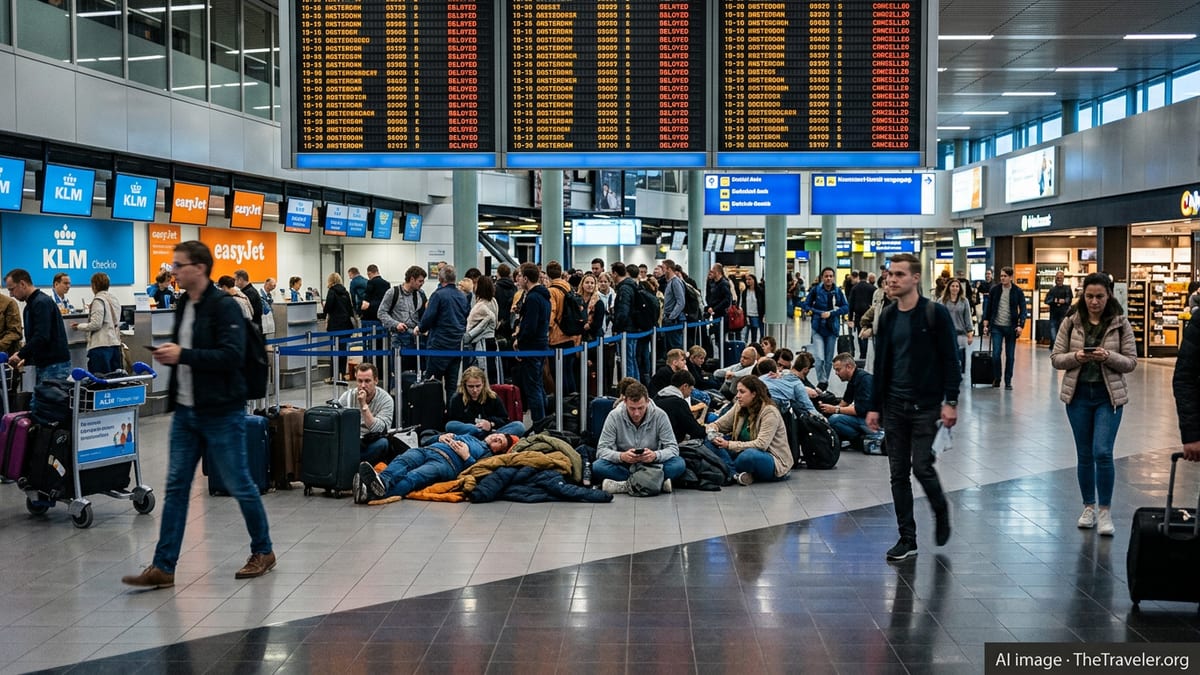
Delays and Cancellations Ripple Across Key European Hubs
Publicly available tracking data and operational updates from industry platforms indicate that almost 200 flights were affected across parts of Germany, Norway, the Netherlands and several neighbouring countries within a single operating day, with around 199 services delayed and at least 147 flights cancelled. The knock-on impact left travellers stranded not only at primary hubs such as Frankfurt and Amsterdam, but also at smaller regional airports that depend heavily on feeder traffic.
The pattern mirrors wider turbulence in Europe’s aviation network in recent weeks, with earlier operational snapshots showing more than 2,000 flights delayed and dozens cancelled in a single day across Spain, France, Germany, the Netherlands and other markets. Those ongoing strains meant that when the latest wave of schedule changes hit, airlines had limited spare aircraft and crew available to protect connections and rebook disrupted passengers.
For many travellers, the disruption manifested as a cascade of missed links. A delayed departure from a regional airport in Norway or Germany could easily cause a missed long haul connection in Frankfurt or Amsterdam, with later flights already heavily booked and alternative routings constrained by crew duty limits and aircraft positioning.
In Frankfurt, one of Europe’s busiest transfer hubs, recent data has consistently shown elevated levels of delay and small but significant clusters of cancellations. Combined with Amsterdam Schiphol’s own capacity challenges, this has created a fragile network in which relatively modest operational shocks can quickly strand connecting passengers across multiple countries.
Major Carriers Under Pressure, From Lufthansa to KLM and Finnair
The latest disruption has again placed large European airlines under scrutiny, particularly network carriers whose business models depend on complex webs of connecting flights. Publicly available information from previous days already showed Lufthansa contending with industrial action and structural schedule cuts, while KLM and other airlines have been trimming flights in response to higher fuel costs and airspace restrictions.
Recent weeks have seen Lufthansa cancel significant numbers of services following pilot strikes and a broader restructuring of its regional operations, leaving Frankfurt and Munich especially exposed during peak periods. At the same time, industry coverage has highlighted KLM’s decision to cut dozens of flights in response to higher operating costs and slot constraints, focusing many of those reductions at Amsterdam Schiphol, one of Europe’s most connection-dependent airports.
Finnair, although based in Helsinki rather than at the current epicentres of disruption, has also been touched by the wider turbulence. Operational summaries referenced Finnair among the carriers affected during earlier spikes in Europe-wide delays and cancellations, underscoring how issues at central hubs can radiate outward across the continent’s tightly interconnected network.
Travellers booked on these airlines have encountered a mix of late-notice cancellations, lengthy queues at transfer desks and limited options for same day rebooking. In some cases, passengers have been routed via alternative hubs, adding extra stops and hours to journeys that were originally planned as straightforward one-connection itineraries.
Weather, Staffing and Airspace Constraints Create a Fragile System
While no single cause explains the latest cluster of 199 delays and 147 cancellations, recently published coverage of Europe’s aviation sector points to a combination of factors that have steadily eroded operational resilience. Periodic winter weather, even outside the coldest months, continues to trigger temporary ground stops and de-icing backlogs at northern airports, particularly in Norway and parts of Germany.
At the same time, staffing pressures at airports and among ground-handling providers have not fully eased since the pandemic. Previous strike actions at major German airports produced hundreds of cancellations in a matter of days, and although those particular stoppages have ended, the system remains sensitive to any renewed labour disputes or localised shortages in key roles such as security screening and baggage handling.
Compounding these local challenges are wider geopolitical and airspace issues. Airlines including Lufthansa and KLM have already adjusted routes or suspended certain services in response to security concerns and regional conflicts, while separate industry reporting highlights how higher jet fuel prices have led some European carriers to proactively reduce their schedules. The result is fewer spare aircraft and crews to absorb disruption, leaving passengers more exposed when irregular operations occur.
Network analysts note that Europe’s hub-and-spoke model means even minor disturbances can quickly have cross-border effects. A temporary hold on departures in Germany can produce bottlenecks in Amsterdam, Paris or Helsinki within hours, as incoming aircraft arrive late and outbound flights wait for connecting passengers who are still stuck in queues at another airport.
Passengers Face Long Waits but May Have Strong Protection Under EU Rules
For stranded travellers in Frankfurt, Amsterdam and other affected airports, the immediate reality has been long waits at service counters, uncertainty over replacement flights and, in some cases, last minute overnight stays in airport hotels. Social media posts and anecdotal accounts describe passengers sleeping in terminal seating, juggling onward train or ferry reservations and trying to rebook on rival carriers when their original airline had no quick alternatives.
Consumer-rights organisations point out that, despite the disruption, many passengers in Europe benefit from relatively strong legal protections. Under European air passenger rights regulations, travellers on eligible itineraries may be entitled to meals, refreshments, hotel accommodation and, in some circumstances, financial compensation when flights are significantly delayed or cancelled for reasons within an airline’s control.
Specialist platforms that track flight disruptions have been actively encouraging affected passengers to document their experience, retain boarding passes and booking confirmations, and check whether their particular delay or cancellation qualifies under the rules. In earlier episodes of disruption this year, some travellers have successfully claimed compensation after demonstrating that operational or staffing issues, rather than severe weather or airspace closures, were the primary cause of their missed journeys.
However, the process is rarely quick. Publicly available guidance stresses that claims can take weeks or even months to resolve, and outcomes may vary depending on the exact circumstances surrounding each flight. For passengers currently stranded by the latest wave of delays and cancellations, the more pressing concern is often simply securing a workable route home, even if that involves additional connections or overnight stops.
What Travellers Should Do If Their Flight Is Affected
With disruption continuing to flare up across Europe’s aviation network, travel experts consistently advise passengers to take a proactive approach when flights appear at risk. Published recommendations emphasise checking real time flight status through airline apps or airport information systems well before leaving for the airport, as late schedule changes have become increasingly common.
When a flight is cancelled outright, travellers are generally urged to seek written confirmation of the change, including the stated reason, and to request rebooking on the next available service, even if this involves a partner or competing airline. Some consumer advocacy materials suggest that, during major disruption events, online tools and call centres may provide faster options than joining long queues at physical service desks.
Experts also highlight the importance of building buffer time into itineraries that rely on tight connections through busy hubs such as Frankfurt and Amsterdam. As the latest wave of 199 delays and 147 cancellations demonstrates, even a relatively small proportion of disrupted flights can leave hundreds of travellers stranded when aircraft and crew are already stretched thin.
For those yet to travel, flexible tickets and comprehensive travel insurance can provide additional protection against unexpected overnight stays or missed events at the destination. With Europe’s aviation system still contending with a mix of operational, economic and geopolitical challenges, passengers booking trips through the coming weeks may find that a cautious, well prepared approach offers the best chance of keeping complex journeys on track.