


More news on this day
Hybrid trains combining batteries, hydrogen fuel cells and efficient diesel engines are emerging as one of the fastest growing segments of global rolling stock, with new research indicating they could replace up to 30 per cent of existing diesel units by 2030 on non-electrified lines.
Get the latest news straight to your inbox!
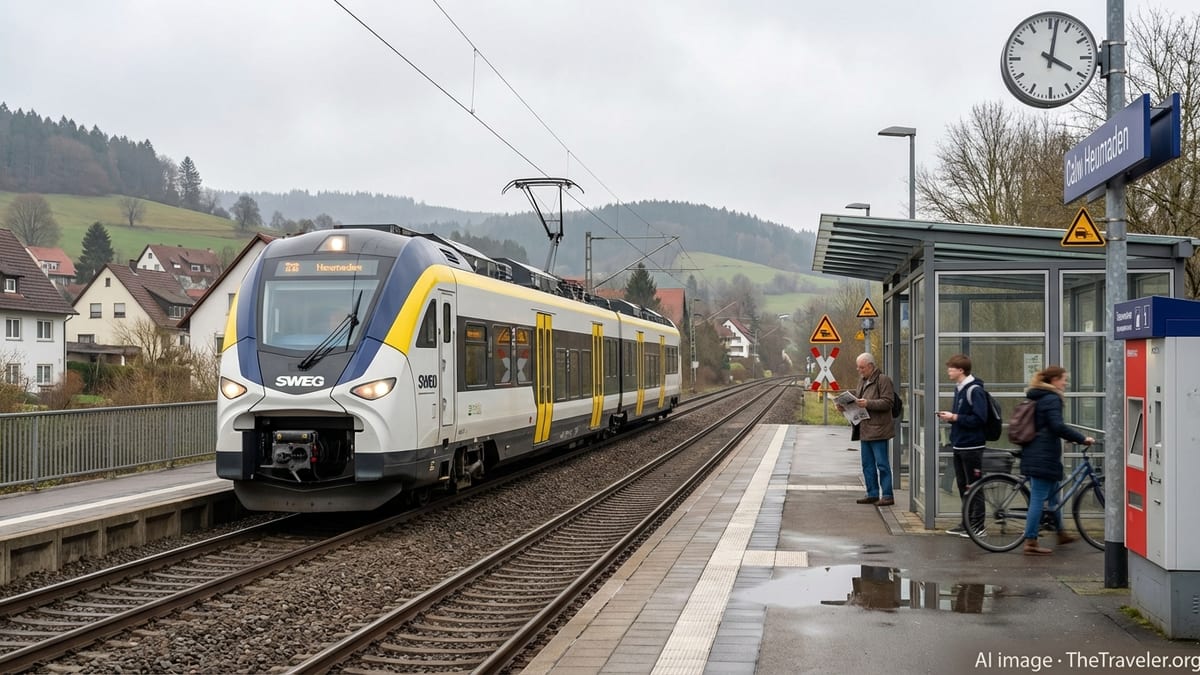
New studies point to rapid shift away from pure diesel
Recent technical assessments of rail decarbonisation pathways suggest that hybrid multiple units are now central to plans for phasing down diesel traction on regional routes that are unlikely to be fully electrified within the decade. A European study cited in a Canadian rail roadmap notes that hydrogen multiple units alone could replace as much as 30 per cent of existing diesel locomotives by 2030, particularly on lines with suitable refuelling infrastructure and longer-range duty cycles.
More broadly, market outlooks for hybrid trains forecast steady growth in deliveries to 2030, driven by regulatory pressure on emissions and tightening climate targets in the transport sector. Industry research to 2030 and beyond highlights a mix of electro-diesel, battery-electric and hydrogen hybrid platforms entering service, with operators using them as transitional technology while overhead wiring is extended only on the busiest corridors.
Hybrid traction is seen as complementary to conventional electrification rather than a rival to it. Energy agencies and rail sector analyses consistently rank rail as one of the most efficient transport modes by emissions, but stress that remaining diesel pockets must be addressed if national net-zero commitments are to be met, especially in Europe, North America and parts of Asia-Pacific where regional and commuter networks still depend heavily on older diesel fleets.
Analysts say the 30 per cent replacement figure by 2030 is ambitious but attainable, provided that current pilot projects scale up into series orders and that governments maintain clear policy signals on carbon pricing, clean fuel incentives and rail investment.
Battery and hydrogen hybrids move from trials to fleet orders
Manufacturers across Europe and Asia are now fielding second and third generation hybrid platforms, reflecting lessons learned from early demonstration projects. Battery-electric multiple units are being ordered for regional networks that combine short electrified sections with longer non-electrified stretches, allowing trains to recharge under overhead wires and then run on stored energy where catenary is absent.
In parallel, hydrogen fuel cell multiple units are being developed for longer regional routes where battery-only operation would require excessive energy storage. Several European regions have commissioned or trialled hydrogen hybrids for non-electrified lines, positioning them as replacements for mid-life diesel units that are costly to retrofit and increasingly constrained by air quality rules.
Hybrid locomotives serving freight and intercity markets are also emerging. Industry forecasts for hybrid locomotives between 2025 and 2030 describe growing interest from freight operators seeking to cut fuel consumption on partially electrified corridors and to comply with stricter emissions standards without sacrificing range or haulage capability.
Together, these developments support projections that hybrid technologies, in both multiple unit and locomotive form, could account for a significant share of new rolling stock purchases in the next decade, particularly where traditional electrification is difficult to justify on cost or engineering grounds.
Policy pressure accelerates diesel phase-out plans
The policy environment is becoming a major catalyst for hybrid deployment. Climate frameworks in Europe, including the Green Deal and supporting legislation, have encouraged member states to publish rail decarbonisation strategies that set clear timelines for reducing or ending the use of diesel traction on passenger services. Regional transport authorities are increasingly specifying low- or zero-emission rolling stock in new tenders, creating a ready market for hybrid trains.
Several national rail operators have publicly stated ambitions to withdraw large portions of their diesel multiple unit fleets in the 2030s, with some regional networks bringing that target forward to 2030 for shorter-distance services. Hybrid trains are being positioned as an interim solution that delivers immediate emission cuts while enabling later transition to full electrification or to cleaner fuels as technology matures.
Outside Europe, rail decarbonisation roadmaps in countries such as Canada and various Asia-Pacific markets reference hybrid and alternative propulsion as key tools for cutting emissions on long rural routes and in areas where grid capacity or terrain make electrification slow to roll out. These plans echo findings that a mix of solutions will be required, including targeted electrification, hybrid trains and continued efficiency improvements in any remaining diesel traction.
Analysts note that aligning infrastructure planning with rolling stock procurement will be critical. Refuelling depots for hydrogen, high-capacity charging points for batteries and upgraded maintenance facilities must be delivered on similar timelines if the projected 30 per cent diesel replacement by 2030 is to be realised.
Economic case strengthens as technology matures
While hybrid trains typically involve higher upfront purchase costs than conventional diesel units, industry research suggests that lower fuel use, reduced maintenance needs and improved asset flexibility can narrow or even reverse the cost gap over a train’s life cycle. Studies of hybrid traction indicate fuel savings of around 20 to 30 per cent compared with comparable diesel-only units on regional duty cycles, driven by regenerative braking and smarter energy management.
Rolling stock suppliers are standardising modular platforms that can be tailored to different markets, combining batteries, fuel cells and efficient diesel engines in varying proportions. This modularity allows operators to specify configurations that match local infrastructure and service profiles, enhancing utilisation and residual value. As production volumes rise, the unit cost of battery packs and fuel cell systems is expected to fall further, improving the economics of hybrid orders placed later in the decade.
A stronger business case also supports the prospect of replacing older diesel fleets earlier than originally planned. With many regional diesel multiple units and locomotives approaching or exceeding 30 years of service, operators face rising maintenance costs and reliability challenges. Choosing hybrids for fleet renewals can deliver both operational savings and measurable emissions reductions that contribute to corporate climate targets and reporting requirements.
Financial institutions and green investment funds are increasingly interested in rail decarbonisation projects, opening up new financing structures for hybrid trains, including green bonds and sustainability-linked loans. This additional capital could help bridge any remaining cost difference between hybrid and conventional diesel assets during the transition period to 2030.
Implications for passengers, tourism and regional connectivity
For travellers, the shift towards hybrid trains is likely to be most visible in quieter, smoother journeys and reduced local air pollution, particularly at stations in towns and tourist hubs served by regional diesel services today. Battery and hydrogen hybrids produce less noise and vibration than older diesel units, while their ability to operate in electric mode through dense urban areas or environmentally sensitive regions can improve local air quality.
Tourism regions that rely heavily on scenic branch lines and heritage routes are watching these developments closely. Introducing hybrid rolling stock on such lines can help preserve rail access while aligning with regional sustainability strategies and national climate targets. For destinations marketing themselves as low-carbon or nature-focused, cleaner trains can reinforce that positioning and support new tourism products built around rail travel.
Regional authorities also see potential gains in connectivity. The flexibility of hybrid trains to run under wires, on batteries or using hydrogen and efficient diesel engines allows planners to extend through services without complex infrastructure upgrades, reducing the need for passengers to change trains at electrification boundaries. This can make rail more attractive compared with car or coach travel on medium-distance routes.
If projections hold and hybrid trains replace around 30 per cent of diesel units by 2030, the effect on global transport emissions will still be modest in absolute terms, given rail’s already small share of total transport emissions. However, analysts argue that success in rail can set an important precedent for decarbonising harder-to-abate modes, demonstrating how coordinated technology deployment, policy support and targeted investment can transform an entire segment of the transport system within a single fleet renewal cycle.