


More news on this day
Austrian Federal Railways is expanding its battery train fleet, placing a follow up order with Stadler for seven additional FLIRT Akku units as part of a long term strategy to phase out diesel traction on regional lines and reduce emissions across Austria.
Get the latest news straight to your inbox!
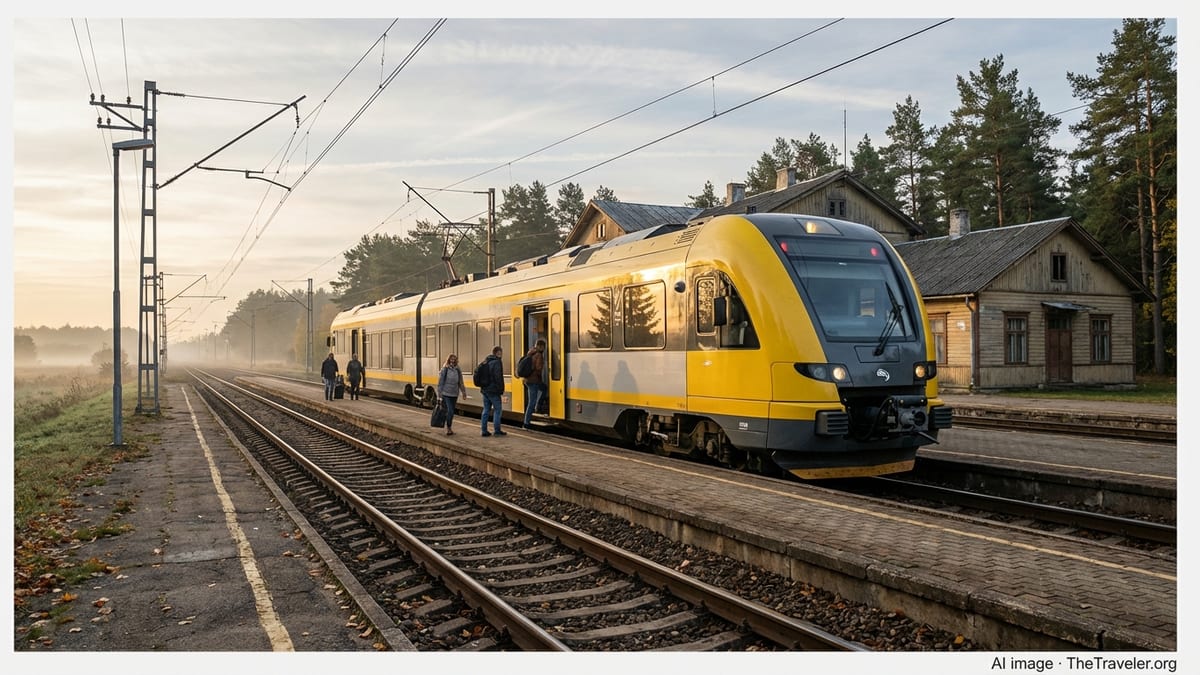
Second call-off under major battery train framework
According to publicly available information from Stadler and ÖBB, the new order is a second call-off under a framework agreement signed in 2023 for up to 120 FLIRT Akku battery electric multiple units. The latest batch of seven trains adds to an initial series already on order, underlining the railway’s confidence in the technology and its role in the country’s decarbonisation plans.
The additional trains are intended for use on non electrified or partially electrified regional routes where installing continuous overhead wires would be complex or costly. By expanding its battery fleet, the operator is seeking to replace legacy diesel multiple units while still serving rural areas and secondary lines that are important for local mobility.
Industry reports indicate that the contract extension keeps Stadler among the leading manufacturers in the European battery train market, alongside other builders supplying similar battery electric units to railways in Germany, the Nordic countries and the Baltic region. The Austrian order is viewed within the sector as a significant reference project, given the scale of the framework and the countrywide deployment planned for the coming years.
How FLIRT Akku battery trains operate on mixed routes
The FLIRT Akku model is designed to run under overhead wires where available and then switch to battery power on unelectrified sections. On electrified stretches the trains draw current from the catenary while simultaneously charging their onboard batteries, a configuration that allows seamless operation across mixed infrastructure without changing trains or locomotives.
Technical data published by Stadler for comparable fleets in Germany and other markets points to typical top speeds of up to 140 or 160 km/h and ranges in the order of dozens of kilometres on battery power, depending on route profile and operating conditions. These characteristics make the units suitable for regional stopping services and semi fast connections that combine main line and branch line segments.
Inside, ÖBB’s FLIRT Akku trains are expected to offer a similar passenger environment to the operator’s latest electric multiple units, with low floor access, dedicated spaces for wheelchairs and bicycles, air conditioning and real time passenger information. The focus is on making regional services more attractive compared with private car travel, in line with national climate and transport policy goals.
Phasing out diesel on regional Austrian rail
Publicly available planning documents and academic studies on Austria’s rail decarbonisation strategy highlight that a significant share of regional rail kilometres is still operated by diesel powered rolling stock, especially on branch lines away from the main electrified corridors. Full network electrification would require extensive investment in infrastructure, including substations, masts and overhead wires in remote or sensitive landscapes.
Battery electric multiple units are being deployed as a targeted alternative, aimed at lines where electrifying short gaps or end sections is not economically justified. By combining existing electrified main lines with limited battery operation on non electrified branches, traffic can be shifted from diesel to low carbon traction without major infrastructure works along the entire route.
The seven additional FLIRT Akku trains for ÖBB are expected to contribute to this transition by increasing the number of diagrams that can be operated without diesel units, both in eastern Austria and on selected regional routes elsewhere in the country. As successive timetables are introduced toward the end of the decade, more regional services are projected to move to battery operation, cutting local air pollutants and noise levels alongside reductions in greenhouse gas emissions.
Part of a wider European shift to battery rail
The expansion of ÖBB’s battery fleet forms part of a broader European trend toward alternative traction in regional rail. In Germany, several states have already ordered Stadler FLIRT Akku or similar battery electric trains to replace diesel services, with initial fleets entering traffic in the mid 2020s. Nordic operators and Baltic railways have also committed to battery units for lines where cold climates and long distances complicate full electrification.
International coverage of the rolling stock market shows that battery trains are increasingly seen as a complement to hydrogen and conventional electrification, each technology serving different operating niches. Battery units tend to be favoured on routes with a mix of wired and unwired segments, where trains can recharge frequently and thus avoid the need for very large onboard energy storage or extensive refuelling infrastructure.
For Stadler, the latest Austrian order confirms the company’s position in this segment alongside other major manufacturers that are developing battery capable variants of their established regional train platforms. Analysts of the rail supply industry note that such contracts can be stepping stones to larger fleets if the initial deployments perform reliably and deliver the expected savings in fuel and maintenance costs.
Implications for travelers and regional communities
For passengers, the introduction of additional battery trains is expected to bring quieter journeys and a more modern onboard experience, particularly in areas that have long relied on older diesel rolling stock. Regional travelers could benefit from smoother acceleration, reduced vibration and a more comfortable interior, aligning rural and small town services more closely with the standards already familiar on Austria’s mainline routes.
Communities along the lines scheduled to transition to battery operation may also see environmental advantages, including lower local emissions at stations and in residential districts close to the tracks. While the overall climate impact depends on the electricity mix used to recharge the trains, Austria’s relatively high share of renewable power suggests a favourable emissions balance compared with diesel.
As delivery of the seven additional FLIRT Akku units progresses and fleet deployment plans are refined, travelers can expect timetable adjustments over the coming years as diesel operated diagrams are converted to battery operation. The expansion of ÖBB’s battery fleet signals that regional rail in Austria is entering a new phase, in which cleaner traction technologies are set to become a standard part of everyday mobility.