


I used to scroll straight past Ibis when hunting for hotels, assuming the red logo meant bare-bones basics and soulless roadside boxes. Then a string of trips across Europe and the UK forced me to tighten my budget, and I finally gave in. What I found was not luxury, but a kind of smart, quietly confident comfort that kept surprising me: better beds than mid-range brands, thoughtful social spaces, and consistently fair prices in cities where a bed can easily cost as much as a flight.
Get the latest updates straight to your inbox!
From “Too Basic” to a Global Benchmark for Budget Travel
Ibis is part of the French hotel group Accor, which runs everything from luxury names like Sofitel and Fairmont to midscale staples like Novotel and Mercure. Within that portfolio, Ibis is positioned clearly in the economy segment, yet its reach is anything but small: the brand now counts well over a thousand hotels worldwide, with additional properties under the Ibis Styles and Ibis Budget flags. In practice, this means that in many major cities you are rarely more than a metro ride away from an Ibis marquee above a lobby door.
The brand’s mission has been the same since the first Ibis opened in Bordeaux in the 1970s: to make a reliable night’s sleep accessible at a fair price. Over time, that has evolved into a tightly defined experience, from room layouts to mattresses to the way lobbies are designed as social spaces. Accor’s own materials highlight the “Sweet Bed by Ibis,” a proprietary bed concept specified right down to mattress toppers and pillowcases, and rolled out across the three Ibis brands. Instead of leaving comfort to local owners, the company standardised it, so a bed in an Ibis in São Paulo feels remarkably similar to one in Porto or Barcelona.
On the ground, this plays out as something simple but powerful: you walk into a city you do not know, check into an Ibis you found for a reasonable rate, and you can be almost certain about the baseline experience. The room might not be huge, and the decor might be minimal, but the bed will be solid, the shower hot and functional, and the Wi-Fi reliable. When nights in some European capitals can soar past 250 euros in peak season for very average three-star options, Ibis often hovers closer to the 120–180 euro range for central properties booked in advance, and significantly lower in shoulder seasons or secondary cities.
The Sweet Bed: Where Ibis Quietly Beats Fancier Hotels
The biggest surprise with Ibis is the bed. Accor invested heavily in the Sweet Bed by Ibis, a system that combines a supportive mattress, a specific style of topper, and standardised pillows and linens. The goal is not to compete with five-star pillow menus, but to outperform typical economy and even midscale beds on simple comfort. Independent reviews for hotels like Ibis London City – Shoreditch frequently mention comfortable beds and quiet sleep despite busy urban locations, which is not always a given at this price point.
On a recent London stay, I moved from a trendier, design-driven hotel in Holborn, where the bed looked great on Instagram but felt oddly saggy, to an Ibis in Shoreditch at nearly half the nightly rate. The difference was immediate: firmer support, no mysterious springs, and linens that felt fresh rather than decorative. After a long-haul flight, that mattered far more than a designer headboard or curated coffee-table books. Several guests in public reviews of the same Shoreditch property echo this sentiment, citing the “good bed and pillows” as a standout feature even when they describe the room as compact.
This focus on sleep quality is especially valuable in expensive cities where many travellers compromise on comfort to stay within budget. In Paris or Geneva, for example, travellers often end up in aging two-star hotels with narrow beds and thin mattresses simply to be close to the centre. In those same neighbourhoods, an Ibis or Ibis Styles may price slightly higher than a bare-bones pension, but the uplift in sleep quality can transform your stay. When your days involve long walks, museum lines, and late dinners, a reliable bed is not a luxury; it is core infrastructure.
Design, Lobbies and the Social Side of an “Economy” Brand
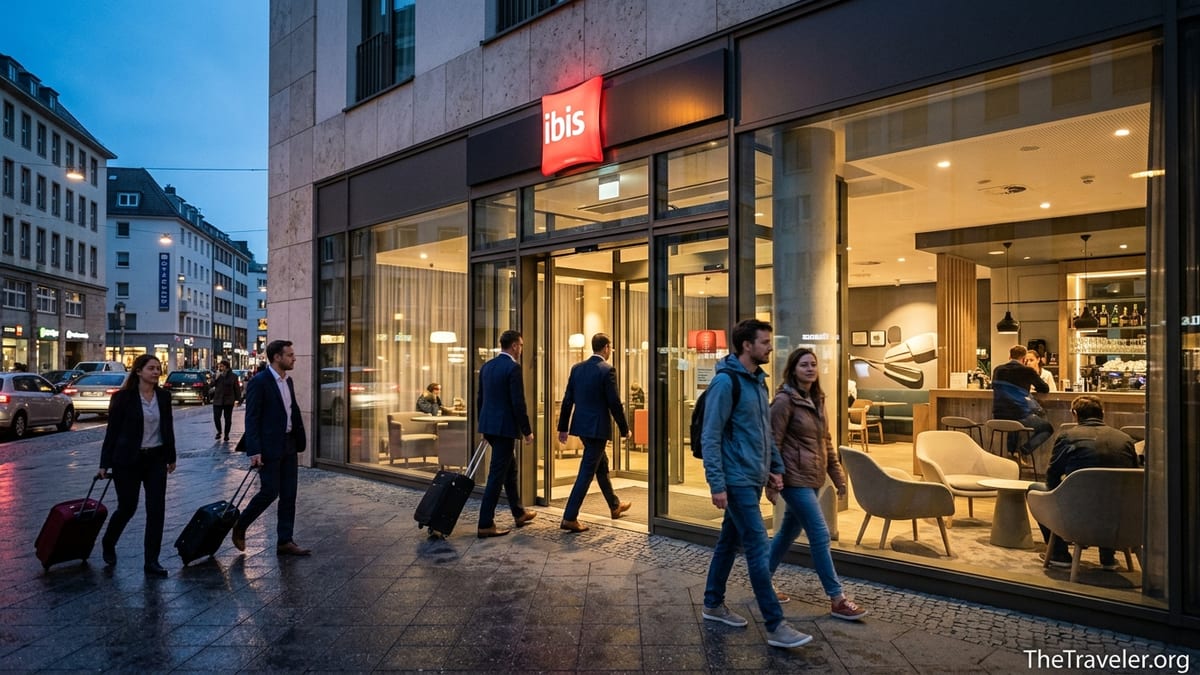
Another area where Ibis defies expectations is in its shared spaces. Accor’s current guidelines describe Ibis lobbies as open and social, designed to flow naturally from the street into the bar, check-in area and informal work or lounge zones. In practice, this means that instead of a dark corridor leading to a lonely reception desk, you often walk straight into a bright, buzzy space where locals might be meeting for a drink and business travellers are working over coffee.
At Ibis London City – Shoreditch, this manifests as a bar-and-lounge combination where you can grab a reasonably priced beer, plug in a laptop, or simply watch the constant movement of people heading in and out of nearby Aldgate East underground station. In continental Europe, Ibis properties in districts like Barcelona’s 22@ tech area or Porto’s historic centre follow a similar formula, mixing check-in counters with cafe-style seating and small nooks ideal for planning a day’s sightseeing. The point is not high drama but approachable sociability, and it makes arriving alone late at night feel less intimidating.
This casual, open-lobby concept suits modern travellers who no longer treat hotels as purely places to sleep. Digital nomads and remote workers increasingly use hotel lobbies as informal co-working spaces, and even leisure travellers value somewhere to send a few emails without being confined to a guest room. While some high-concept lifestyle hotels can feel like crowded co-working hubs first and hotels second, Ibis tends to strike a more balanced note: enough energy to feel safe and welcome, but not so much noise that you cannot hear yourself think.
Ibis, Ibis Styles and Ibis Budget: What’s the Real Difference?
One surprise for first-time guests is that “Ibis” is actually a small family of brands rather than a single product. Traditional red-logo Ibis is the core, offering classic economy rooms with the Sweet Bed, a compact but practical bathroom, and typically a bar or 24/7 snack service. This is the version you see most often in business districts, near railway stations, or in inner-city neighbourhoods.
Ibis Styles is the more playful sibling. Officially also in the economy category, these hotels are design-led, usually with a strong theme connecting the lobby, corridors and rooms: think street-art-inspired spaces in Berlin, bright maritime colours near coastal towns, or retro patterns in revitalised industrial areas. They nearly always include breakfast in the room rate, which can significantly change the value proposition in cities where a cafe breakfast for two easily reaches 20 to 30 euros. Reviews of Ibis Styles properties often highlight the included breakfast buffet and quirkier design as reasons families and city-breakers choose them over generic three-star competitors.
Ibis Budget sits at the most stripped-back end of the spectrum. Rooms are smaller, storage is minimal, and layouts can be quite basic, sometimes with a combined shower-and-toilet module and a simple bunk or double bed setup. Prices, however, are correspondingly lower, and in many markets an Ibis Budget can come in only marginally higher than a hostel for two people sharing. That said, real-world experiences vary: some travellers report excellent value and cleanliness, while others describe issues like flimsy doors or less attentive staff. In one widely discussed account near Disneyland Paris, a guest noted that for only a modest increase in nightly rate the standard Ibis next door offered noticeably better beds and a more reassuring environment.
The key takeaway is to read the suffix carefully when booking. If you want reliable comfort and do not mind simple design, the classic Ibis is often the sweet spot. If you care about a fun aesthetic and included breakfast, Ibis Styles is worth a small price premium. If you are on the strictest of budgets and plan to spend almost no time in the room, Ibis Budget can make sense, but it is worth checking recent reviews and weighing whether a standard Ibis nearby offers better value for just a little more.
Location, Convenience and the Value Equation
Where Ibis really starts to surprise is in the combination of location and price. Because the brand has been expanding steadily across Accor’s “economy, midscale and premium” division, you now find it not just on ring roads and airport zones but in genuinely useful city locations. Ibis London City – Shoreditch, for example, sits steps from Aldgate East station, putting you within a short ride of the City, Shoreditch, and the West End. Travellers frequently praise this particular property for its convenience when they have early trains or meetings in the financial district, yet on many dates it still prices below newer lifestyle hotels a few tube stops away.
In continental Europe, the pattern repeats. An Ibis in central Porto can place you within walking distance of the Ribeira riverfront and São Bento station for much less than a boutique hotel in the same streets. Around Barcelona’s 22@ district, Ibis and Ibis Budget properties give quick access to the metro and tram network, making it easy to reach both the beach and the Gothic Quarter without paying old-town premiums. In many cases, these hotels have enough competition nearby that pricing stays relatively disciplined, especially outside of major festival periods or trade fairs.
Of course, rates fluctuate. Around big events or peak holidays, an Ibis near an airport or exhibition centre can spike sharply, occasionally approaching 200 euros a night in markets like London or Frankfurt. Regular guests often mention that the trick is timing and flexibility: book earlier where possible, target shoulder seasons, and check nearby Ibis Styles or Novotel options if your chosen property jumps unexpectedly. Even when prices climb, the baseline proposition remains clearer than with some competitors: you know what you are paying for, and surprise fees for basics like Wi-Fi are rare.
Real-World Stays: Hits, Misses and How to Book Smart
Across hundreds of public reviews and trip reports, a consistent picture emerges of what Ibis tends to get right. Cleanliness is frequently praised, especially in properties that have been refurbished in the past few years. Many travellers appreciate the straightforward self-check-in kiosks that complement a staffed reception, making late arrivals easier. Others highlight small touches such as 24/7 snack availability, adjustable reading lights near the bed, and soundproofing that keeps out street noise even in lively areas.
There are, of course, occasional misses. Some older properties, particularly under the Ibis Budget flag, can show wear in bathrooms or hallways. In high-demand airport locations, guests sometimes feel that nightly rates outpace the overall feel of the building. A minority of travellers report inconsistent air conditioning performance in very hot weather, something that is not unique to Ibis but worth considering if you are travelling in peak summer. The lesson is not to treat the brand name as a guarantee of perfection, but as a strong baseline that still benefits from a quick scan of recent reviews before you commit.
For booking, Accor’s loyalty ecosystem is another quiet advantage. The ALL loyalty programme often offers year-round discounts for members, and there is even a dedicated “ALL Plus Ibis” subscription that gives regular guests a fixed discount and guaranteed room availability windows. For occasional travellers, simply signing up as a free member can unlock slightly better rates than public listings, and periodic sales can make city stays at centrally located Ibis hotels feel like genuine bargains compared to independent three-star properties nearby.
The Takeaway
If you still assume that Ibis equals “too basic,” it may be worth updating that mental file. You will not find glamorous lobbies, rooftop pools, or destination restaurants under the red logo, and you should not expect the kind of personalised service you might receive at a small boutique hotel. What you can reasonably expect, however, is a clean, compact room with a genuinely comfortable bed, a hot shower, usable Wi-Fi, and a lobby where you will not feel out of place working on a laptop or nursing a drink after a long day.
In a travel landscape where accommodation costs in major cities have climbed steadily, that combination of predictability and fair value is powerful. Ibis has refined the art of doing a few things well for a broad spectrum of travellers: solo city-breakers, small families, business travellers on tight expense policies, and even long-haul passengers looking for a reliable airport overnight. Once you experience that balance for yourself, the brand stops feeling like a downgrade and starts feeling like a smart, grown-up choice.
The surprise, in the end, is not that Ibis is perfect, but that an economy chain can be this consistently decent in so many places. When a hotel brand manages to make “good enough” feel quietly reassuring, night after night, it earns a place in your travel toolkit. For many modern travellers, Ibis has already done exactly that.
FAQ
Q1. What is the main difference between Ibis, Ibis Styles and Ibis Budget?
Ibis is the classic economy option focused on a reliable bed and simple rooms, Ibis Styles adds themed design and usually breakfast, while Ibis Budget is the most basic and usually cheapest.
Q2. Are Ibis hotels generally clean and safe for solo travellers?
Yes, most Ibis properties score well on cleanliness and feel secure, especially in busy urban locations, though it is still wise to read recent reviews for each hotel.
Q3. How much does a night at an Ibis typically cost in Europe?
Prices vary widely by city and season, but many central Ibis hotels in major European cities fall roughly in the 100 to 180 euro range when booked in advance, with lower rates in smaller cities or off-peak periods.
Q4. Is breakfast included at Ibis hotels?
Breakfast is usually an optional extra at classic Ibis and Ibis Budget, but it is often included in the nightly rate at Ibis Styles properties, which can be good value where eating out is expensive.
Q5. Are Ibis hotels suitable for families with children?
Yes, many Ibis and Ibis Styles hotels offer family rooms or connecting rooms, and Ibis Styles in particular can be appealing to children thanks to playful design and inclusive breakfast.
Q6. Do Ibis hotels have good Wi-Fi for remote work?
Most Ibis properties provide free Wi-Fi that is adequate for email, browsing and video calls, and the open lobby layouts often include comfortable seating and power outlets for working.
Q7. How do I find the best deals at Ibis hotels?
Booking early, travelling in shoulder seasons, joining Accor’s free loyalty programme and being flexible with dates usually helps secure lower rates, especially in big cities.
Q8. Are Ibis Budget hotels worth it compared with hostels?
Ibis Budget can be a strong upgrade from a hostel for couples or friends who want a private room, though bedrooms are simple, so it is important to weigh small price differences against comfort needs.
Q9. Do Ibis hotels usually have 24-hour reception?
Yes, most Ibis properties operate a 24-hour reception or have staff available overnight, which makes late arrivals and early departures straightforward for travellers.
Q10. Can I earn or use loyalty points when staying at Ibis?
Yes, Ibis, Ibis Styles and Ibis Budget participate in Accor’s ALL loyalty programme, allowing guests to earn points on stays and redeem them for discounts at participating hotels.