


Rising in bright white above Senate Square, Helsinki Cathedral is often the first landmark travelers recognize when they picture Finland’s capital. Whether you want to slip inside for a quiet moment between meetings, photograph its neoclassical façade in the evening light, or attend a Lutheran service with locals, a bit of planning will help you make the most of your visit. This guide brings together current opening hours, a concise history and practical visitor information so you can experience the cathedral with confidence.
Get the latest updates straight to your inbox!
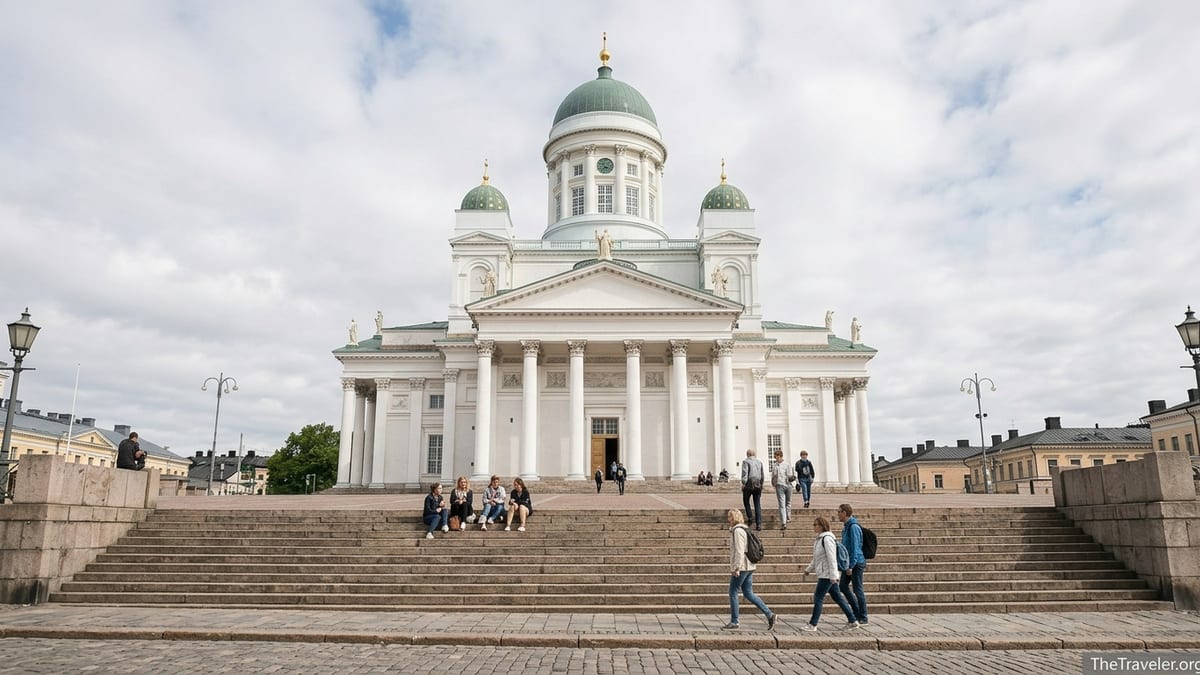
Helsinki Cathedral at a Glance
Helsinki Cathedral, or Helsingin tuomiokirkko, is the main Lutheran cathedral of the Diocese of Helsinki and the architectural centerpiece of Senate Square in the Kruununhaka district. Completed in 1852, it was originally known as St Nicholas Church and crowned a grand urban plan that turned Helsinki into the capital of the Grand Duchy of Finland. Today it serves a double role as an active parish church and one of the city’s most visited attractions, with well over half a million visitors in a typical year.
The building’s bright white walls, tall central dome and four smaller corner domes make it easy to pick out from the harbor ferries and rooftop bars around the city center. Wide granite steps lead up from Senate Square, where visitors and locals gather in every season. In summer these steps become an informal grandstand for open air events and simply for watching city life play out below.
For travelers, the cathedral is as convenient as it is photogenic. It is less than a 10 minute walk from Helsinki Central Railway Station, and tram routes stop close to Senate Square. That makes it an easy first stop on a short city break or even during a tight layover, especially if you are walking a loop that also includes Market Square and the waterfront.
Opening Hours in 2026: When You Can Visit
Helsinki Cathedral is generally open every day of the week, with hours that shift slightly between the darker winter months and the busier summer season. As of mid 2026 the cathedral usually opens around 9:00 in the morning and closes between 18:00 and 20:00, with the longest hours in June, July and August when cruise passengers and independent travelers are most numerous. During services, concerts and private ceremonies the nave remains reserved for worship or events, although you can usually still enter and sit quietly at the back if there are seats available.
Seasonal events have a strong impact on opening hours. On major Christian holidays such as Christmas, New Year, Easter and Pentecost, the cathedral prioritizes worship and liturgy, and visiting hours are sometimes shorter or broken into windows between services. For example, during Easter 2026 the city’s tourism board published special timetables for attractions that showed modified hours for Helsinki Cathedral over the long weekend, a pattern that repeats each year. If you visit during a Finnish public holiday, allow extra flexibility in your schedule and check the latest hours shortly before your trip.
In practice, most visitors report that arriving between 10:00 and 16:00 on weekdays provides reliable access outside of rare closures for state ceremonies or large services. If you are taking an organized city tour, mid morning stops at Senate Square are common because they avoid early morning worship and the evening concert schedule. Travelers with tight timings, such as a six hour airport layover, often plan a simple walking route that passes the cathedral around midday when it is almost always open to the public.
Tickets, Donations and What It Costs to Visit
Entry to Helsinki Cathedral itself is free of charge for individual visitors. This reflects its primary role as a place of worship in the Evangelical Lutheran Church of Finland, which is funded through a combination of church tax and other income. At the main doors inside, however, you will usually see a discreet donation box. Many travelers choose to leave a few euros here in appreciation of the open access and the upkeep required to maintain a nineteenth century landmark in a northern climate.
Even though entrance is free, there can be small fees for certain add ons. When the crypt is open for exhibitions or seasonal events, for example, there may be a modest admission charge at a staffed desk below street level. Special organ recitals, guided architectural tours or evening concerts can also carry ticket prices that are comparable to small cultural venues elsewhere in the city. As a simple benchmark, expect a typical paid concert ticket inside the cathedral to fall in roughly the 10 to 25 euro range depending on the ensemble and program.
If you are traveling on a tight budget, it is entirely possible to enjoy Helsinki Cathedral at no cost. You can climb the Senate Square steps, photograph the exterior, step into the nave for a quiet look at the altar and statues, and then continue to other free attractions nearby such as the harborfront and City Hall area. Visitors who hold a city sightseeing pass or ride a hop on hop off bus will often have Helsinki Cathedral scheduled as a stop, but the pass price covers transport and commentary rather than an entrance fee to the church itself.
Worship Schedule and Experiencing a Service
Helsinki Cathedral is not just a museum piece. It functions as the main church of the Cathedral Parish, with regular Lutheran services, concerts and parish events in Finnish, Swedish and sometimes English. On a typical week, there is a main Sunday communion service late in the morning, an evening mass on selected days, and short weekday devotions or organ moments listed on the parish calendar. The exact times shift seasonally and according to special liturgical events, so the best practice is to consult the parish’s current schedule shortly before you visit.
Travelers who are curious about local religious life are welcome to attend a service. Dress codes are based on respect rather than strict rules: neat casual clothing is perfectly acceptable, but loud slogans, beachwear and uncovered shoulders in winter coats can feel out of place. Arrive a few minutes early to find a seat without disturbing others, turn off your phone, and follow the example of the congregation. Liturgies are usually conducted in Finnish, but hymn numbers are displayed and printed orders of service sometimes include English translations of key parts, especially around major feasts.
If you prefer to avoid services and simply visit as a sightseer, the most reliable quiet times tend to be mid afternoon on weekdays outside of the main tourist season. During June and July cruise days, the nave can fill quickly with tour groups, especially around late morning. On the other hand, a winter visit in January or February often means you share the cathedral with only a handful of locals lighting candles, which allows for a very different, more meditative experience.
A Brief History and Architecture of the Cathedral
The story of Helsinki Cathedral is intertwined with the rise of Helsinki itself as Finland’s capital. After Finland became an autonomous Grand Duchy in the Russian Empire in 1809, the authorities chose Helsinki to replace Turku as capital. Architect Carl Ludvig Engel was commissioned to design a new neoclassical city center focused on Senate Square, and the main church was a crucial part of this project. Construction of the cathedral began in the 1830s and continued after Engel’s death under architects including Ernst Lohrmann, who added many of the rooftop statues and small domes that give the building its present silhouette.
Originally named St Nicholas Church, in honor of the Russian emperor Nicholas I, the cathedral was completed in 1852. Its name changed to Helsinki Cathedral after Finland gained independence in the early twentieth century. The design reflects Protestant values in its relative simplicity and focus on the pulpit and altar rather than lavish side chapels. At the same time, the exterior scale and prominent position at the head of Senate Square make it a statement piece, signaling both religious and civic authority.
Inside, the architecture is restrained and bright, with a high central dome that lets in soft daylight even during the short winter days. Statues of key Lutheran reformers, including Martin Luther and Mikael Agricola, line the interior and emphasize the cathedral’s roots in the Reformation. For visitors used to heavily decorated Catholic or Orthodox cathedrals, the Finnish Lutheran aesthetic can feel minimalist, but many travelers find that this simplicity highlights the play of light and the geometry of the space.
Planning Your Visit: Best Times, Seasons and Practical Tips
Helsinki’s climate shapes the experience of visiting the cathedral as much as its opening hours do. In summer, especially from late June to early August, long days and milder temperatures make the wide steps a natural meeting place. If you want classic photographs of the white façade against a deep blue sky, aim for an evening visit around 20:00 in July, when the light softens and the crowds from bus tours have often thinned. Travelers arriving on Baltic cruises typically encounter the cathedral during guided walking tours that start around mid morning at the harbor and wind up to Senate Square.
Winter visits are very different but equally memorable. Snow often collects on the steps and roofline, and the early afternoon twilight can give the building a faint glow, especially when the city’s streetlights and Christmas decorations are up in December. In practical terms, this means packing shoes with good grip for icy conditions and allowing a few extra minutes to climb the steps carefully. Inside, the cathedral is heated but still feels cool by many visitors’ standards, so keeping a light layer or scarf handy helps if you plan to sit for a longer service or concert.
From a planning perspective, most travelers only need 20 to 40 minutes for a visit focused on the interior, plus extra time on the steps and around Senate Square for photographs. If you combine the cathedral with the nearby University of Helsinki buildings, the National Library and a coffee at one of the cafés facing the square, you can easily turn it into a relaxed half day circuit. Those with limited mobility should be aware that the main approach involves a long flight of steps, though side entrances with fewer stairs and handrails are available when the cathedral is open.
How to Get There and What’s Nearby
Reaching Helsinki Cathedral is straightforward from almost anywhere in the city center. From the Central Railway Station, it is about a 10 minute walk along Keskuskatu and Aleksanterinkatu, two of the main pedestrian thoroughfares. Several tram lines stop near Senate Square, and city buses serving the eastern districts also pass close by. Travelers arriving from Helsinki Airport can ride the commuter train into the center and walk from there, or transfer to tram services if they prefer not to walk with luggage.
Because the cathedral stands at the top of Senate Square, it is surrounded by other significant public buildings. To one side is the Government Palace, while the main building of the University of Helsinki and the National Library occupy other edges of the square. A few minutes’ walk downhill brings you to Market Square and the harborfront, where ferries depart for Suomenlinna Sea Fortress and harbor cruises. Many visitors choose to combine a morning at the cathedral and Senate Square with an afternoon on the water, especially in summer when ferries run frequently.
The immediate area is also convenient for refreshment breaks. Across the square and on side streets like Sofiankatu you will find cafés and casual lunch spots where locals mix with tour groups. These are useful places to warm up after a winter visit or to pause between sightseeing stops. Because Senate Square is such a central landmark, it also works well as a meeting point for small group walking tours, photography workshops and themed city walks that often begin under the shadow of the cathedral’s dome.
The Takeaway
Helsinki Cathedral is more than just the white church on the postcard. It is a living Lutheran parish, an anchor of the city’s neoclassical center and a place where visitors can experience both quiet reflection and the everyday rhythm of local life. With generally generous daily opening hours, free entry and a location that is easy to reach on foot or by tram, it slots naturally into almost any Helsinki itinerary.
To make the most of your visit, plan to stop by during mid morning or mid afternoon on a weekday, allow enough time to climb the steps and linger on Senate Square, and remember that services and special events may slightly adjust access on major holidays. Respectful dress, a few euros set aside for a voluntary donation and a readiness to slow your pace once inside will go a long way. Whether you stay for ten minutes between meetings or join a full Sunday service, Helsinki Cathedral offers a clear window into the history, architecture and spiritual life of Finland’s capital.
FAQ
Q1. Do I need a ticket to visit Helsinki Cathedral?
Entry to Helsinki Cathedral is free for individual visitors, and you do not need to buy a ticket. There may be separate charges for special exhibitions in the crypt or for concerts and guided tours.
Q2. What are the usual opening hours of Helsinki Cathedral?
As of 2026 the cathedral is typically open daily from morning until early evening, roughly from around 9:00 to between 18:00 and 20:00, with slightly longer hours in summer and modified times on major religious holidays.
Q3. Can I visit during a church service?
Yes, visitors are generally allowed to enter quietly during services, but sightseeing and photography should pause so that worship can proceed undisturbed. If you prefer to explore freely, plan your visit between scheduled services.
Q4. How much time should I plan for a visit?
Most travelers are satisfied with 20 to 40 minutes inside the cathedral, plus additional time on the steps and around Senate Square for photographs and views of the city.
Q5. Is there a dress code for Helsinki Cathedral?
There is no strict dress code, but respectful, neat casual clothing is recommended. Avoid beachwear, very revealing outfits and loud slogans out of consideration for those attending worship.
Q6. Are photography and video allowed inside?
Non commercial photography is usually allowed, especially outside of services, but visitors are asked to be discreet, avoid flash and respect any temporary signs or instructions that restrict photography during concerts or liturgies.
Q7. How do I get to Helsinki Cathedral from the city center?
The cathedral is about a 10 minute walk from Helsinki Central Railway Station along central streets, and several tram and bus lines stop near Senate Square, making it easy to reach by public transport.
Q8. Is Helsinki Cathedral accessible for visitors with limited mobility?
The main approach involves a long flight of steps, but side entrances with fewer stairs and handrails are normally available when the cathedral is open. Visitors with mobility concerns may wish to check current access options in advance.
Q9. Can I attend a Lutheran service as a visitor?
Yes, anyone is welcome to attend services. Most are in Finnish, but visitors are free to join, sit quietly, listen to the music and participate as they feel comfortable, following the lead of the congregation.
Q10. What else can I see near Helsinki Cathedral?
Right around the cathedral you will find Senate Square, the Government Palace, the University of Helsinki’s main building and the National Library, and within a few minutes’ walk you can reach Market Square and the harborfront.