


More news on this day
Airline passengers who rely on portable chargers to keep phones and laptops alive in the air will face tighter limits from 2026, as new safety guidelines from the International Civil Aviation Organization (ICAO) reshape how power banks can be carried and used on commercial flights worldwide.
Get the latest news straight to your inbox!
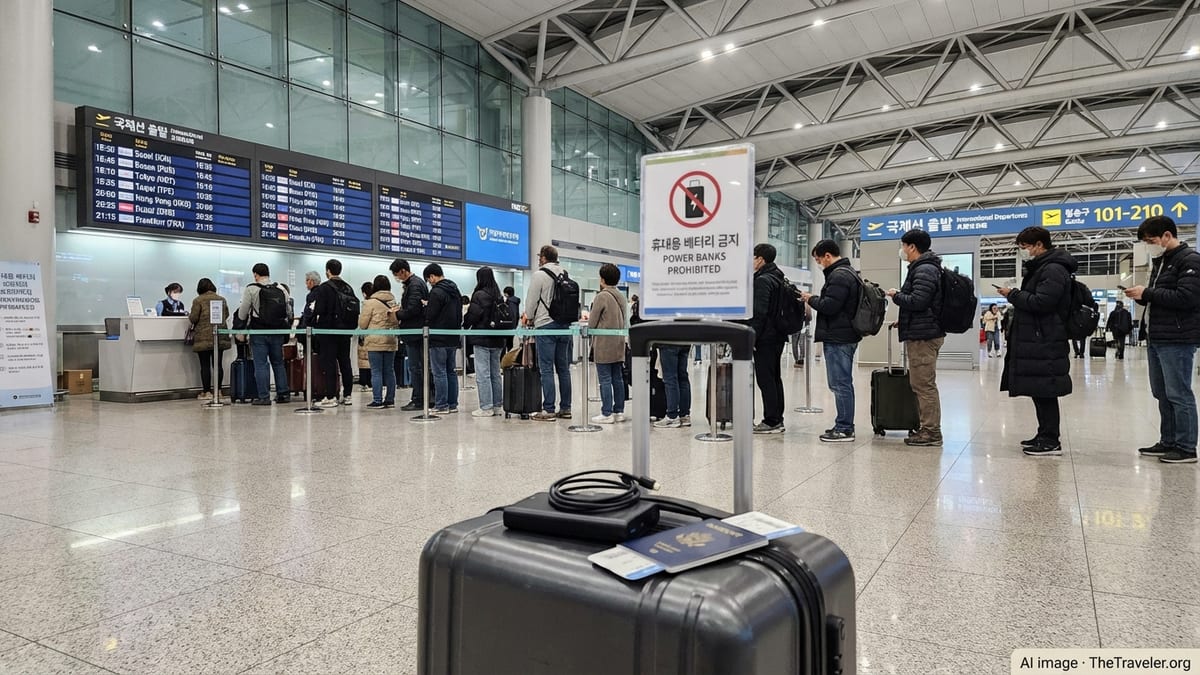
Global Standard Sets Two Power Bank Limit and In‑Flight Charging Ban
New specifications adopted by ICAO in an addendum to its Technical Instructions for the Safe Transport of Dangerous Goods by Air introduce some of the most sweeping restrictions yet on passenger power banks. The guidance, which became effective for member states on 27 March 2026, limits each passenger to a maximum of two lithium battery power banks and prohibits recharging them during flight. Publicly available ICAO information describes the move as a response to emerging fire risks associated with lithium batteries in the cabin.
Under the updated framework, power banks continue to be treated as spare lithium batteries, which means they must travel in carry on baggage rather than checked luggage. However, ICAO has now separated power banks from other spare batteries in its passenger provisions and attached specific conditions on quantity and use. Industry summaries of the addendum note that flight crew can still carry and use power banks where required for aircraft operations, but passengers will be barred from plugging them in once the aircraft doors are closed.
The guidance is not directly binding on travelers, but it shapes how national regulators and airlines write their own rules. Civil aviation authorities in markets such as the United Kingdom, Hong Kong and Singapore have already begun issuing circulars and advisories referencing the 2025–2026 ICAO Technical Instructions and outlining how the new power bank limits will apply to flights under their oversight from 2026 onward.
International industry bodies are aligning in parallel. The International Air Transport Association has updated its Dangerous Goods Regulations and its 2026 passenger lithium battery guidance to reflect a two power bank maximum per traveler, with common watt hour caps of 100 Wh per unit in economy cabins and stricter approval requirements for larger batteries. That harmonisation is expected to help airlines apply the rules consistently across global networks.
Cabin Fire Incidents Push Regulators to Act Faster
The tougher stance comes after several high profile incidents in which portable batteries were linked to smoke and fire in aircraft cabins. Investigation reports and safety briefings describe cases where a power bank or similar device appears to have overheated or been crushed in an overhead bin, prompting emergency responses from cabin crew. A destructive fire on a South Korean aircraft in early 2025, widely reported to be associated with a lithium power bank, intensified pressure for coordinated international action.
Safety data compiled by regulators and industry groups show a steady rise in lithium battery related events on passenger aircraft over recent years. While most are contained quickly, they can require diversions, emergency evacuations and the use of fire containment equipment. Analysts note that growing passenger dependence on personal electronics has driven an increase in the number and capacity of batteries brought on board, amplifying the consequences when something goes wrong.
National authorities in Asia were among the first to experiment with stricter rules, including bans on storing power banks in overhead lockers and outright prohibitions on using or charging them in flight. Those national measures, combined with feedback from airlines and aircraft manufacturers, fed into discussions at ICAO’s Dangerous Goods Panel and regional safety task forces, which ultimately recommended dedicated global provisions for power banks.
Recent safety reports released by aviation organisations also emphasise the importance of improving passenger awareness. They highlight confusion over what counts as a power bank, how to read watt hour ratings and where such devices should be stored on board. The upcoming ICAO provisions are expected to be accompanied by standardised visual materials and pre flight messaging so that travelers can more easily understand and follow the new requirements.
Airlines Begin Rolling Out Stricter Cabin Policies
Although the ICAO specifications set a baseline, individual airlines are starting to go further as they prepare for the 2026 changes. Some carriers in Asia and the Caribbean have already banned the use and charging of power banks entirely, allowing passengers to carry compliant devices on board but requiring them to remain switched off and safely stowed for the duration of the flight. Others have introduced rules that require power banks in use to be kept in plain sight, rather than buried in bags or seat pockets.
Reports from major hubs such as Singapore, Incheon and Hong Kong describe airports and carriers coordinating closely to enforce the new quantity limits. From mid April 2026, passengers departing Singapore, for example, are being advised that only two power banks will be permitted in cabin baggage. Extra units may have to be surrendered at security if travelers arrive at checkpoints carrying more than the allowed number, and non compliant devices may be denied carriage entirely.
U.S. airlines are also reviewing their policies in light of the evolving international guidance. Some large carriers have already trialed restrictions on where portable chargers can be placed and how they may be used, while still allowing passengers to bring multiple power banks that meet existing watt hour thresholds. Industry observers expect those policies to tighten as ICAO’s new specifications are fully incorporated into operator manuals and as insurance and risk management considerations evolve.
Airline notices and passenger advisories commonly stress that existing rules on checked baggage remain unchanged. Power banks and spare lithium batteries continue to be prohibited in checked bags because of the difficulty of detecting and fighting a hidden fire in the hold. Instead, aviation safety campaigns are focusing on stricter control and monitoring of batteries within the cabin, where crew can respond quickly if overheating occurs.
What Travelers Need to Know Before Flying in 2026
For passengers, the most immediate implication of the new ICAO framework is the need to travel with fewer, better documented power banks. Guidance documents for 2026 recommend a maximum of two devices per person, each typically not exceeding 100 Wh, and they stress that power banks should be packed in carry on bags with terminals protected against short circuit. Travelers are also being cautioned that use of power banks in flight may no longer be allowed, even if the devices are within size limits.
Airports and airlines are beginning to update their pre trip instructions, urging customers to check the labeling on their batteries and to leave behind devices that do not clearly indicate capacity or compliance with relevant standards. Some regulators have flagged that uncertified or older power banks may be subject to additional scrutiny, particularly in markets that have introduced local certification schemes for lithium batteries.
Frequent flyers who have grown accustomed to carrying multiple high capacity batteries for cameras, gaming devices or laptops may need to rethink their power strategies. Travel experts suggest consolidating to one or two high quality power banks that clearly display watt hour ratings, making use of seat power where available and planning charging time during layovers on the ground instead of expecting to charge throughout the flight.
Industry commentators note that the new limits may be felt most keenly on long haul routes, where passengers have traditionally packed several power banks to stay connected and entertained. However, as more airlines retrofit cabins with USB charging and AC outlets at each seat, carriers and regulators argue that strict controls on spare batteries are a reasonable trade off for reducing the risk of lithium related fires at altitude.
Regulators Signal This May Be Only the First Step
Aviation safety specialists view ICAO’s 2026 power bank provisions as part of a broader rethinking of how lithium batteries are managed in air transport. Working papers from technical meetings in 2025 and 2026 point to the possibility of future refinements, including clearer differentiation between types of portable battery packs, updated testing standards and potentially tighter rules for higher capacity units.
Some regulators have signalled that they may introduce additional measures on top of the ICAO baseline if incident trends do not improve. These could include stricter pre boarding inspections for battery powered devices, enhanced training for security and cabin staff and greater use of fire resistant containment bags on board. Discussions are also under way about how best to address counterfeit or substandard batteries that may not meet stated specifications.
Manufacturers and retailers of consumer electronics are watching the changes closely. Companies producing power banks are likely to face growing pressure to design products that are more robust against crushing and overheating, with clearer labeling and built in safeguards to reduce fire risk. Industry guidance encourages producers to consider aviation requirements early in the design process so that their products can be carried by air without complex exemptions.
As the 2026 travel season approaches, travelers are being advised to expect more prominent messaging about batteries when booking tickets, checking in online and passing through airport security. While the new limits may require some adjustments to packing habits, aviation authorities and industry groups emphasise that they are intended to keep cabins safer as the number of battery powered devices in the skies continues to climb.