


More news on this day
India has issued an urgent advisory against non-essential travel to Iran as renewed regional tensions and missile activity rattle Gulf airspace, prompting authorities in the United Arab Emirates, Kuwait, Bahrain and Jordan to closely track potential fallout for their roles as major aviation transit hubs.
Get the latest news straight to your inbox!
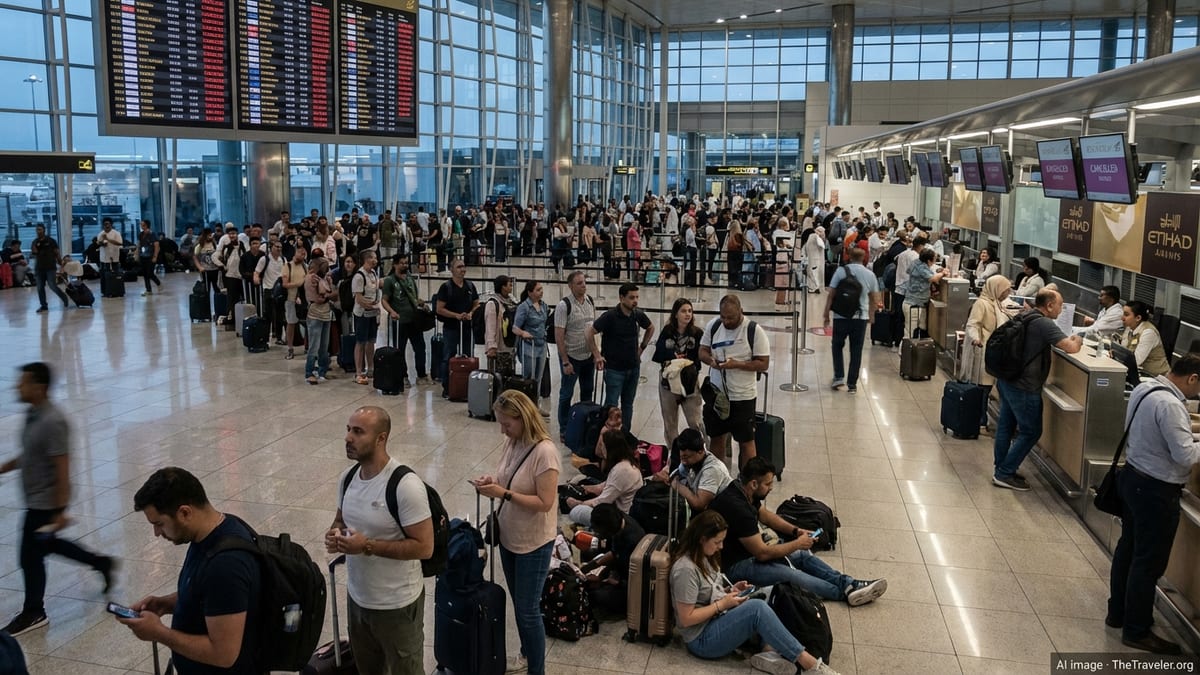
New India Advisory Highlights Rising Risk Profile for Iran Travel
According to publicly available notices from Indian consular channels and regional media coverage, Indian nationals are being urged to defer non-essential trips to Iran and to exercise a high degree of caution if already in the country. The advisory reflects concerns over a fluid security situation linked to the ongoing confrontation between the United States and Iran, which has spilled over into neighboring Gulf states.
Guidance circulating through official Indian information platforms reiterates that Iran’s airspace remains constrained, with previous updates noting only partial openings even for cargo and charter operations. Commercial schedules have been repeatedly adjusted in recent months as airlines weigh overflight risks against route viability, adding uncertainty for travelers planning to connect between India, the Gulf and Europe.
Public information also shows that India has been closely coordinating with Gulf partners since the early phases of the crisis, when evacuations and contingency flights were activated to assist stranded nationals. The latest advisory on Iran is framed as part of a broader posture of heightened vigilance across West Asia, with missions in Bahrain, Kuwait and the UAE already issuing regular updates on flight conditions and local safety guidance.
The message to Indian travelers is clear: discretionary trips to Iran carry elevated risk, and those with essential travel needs should keep flexible itineraries, monitor airline communication channels and remain prepared for sudden schedule changes.
Gulf Aviation Hubs Brace for Aftershocks of Missile and Drone Activity
Recent reporting from Gulf-based outlets indicates that aviation authorities and airlines across the UAE, Kuwait, Bahrain and Jordan are closely monitoring the knock-on effects of renewed missile and drone incidents linked to the US–Iran confrontation. Airports and overflight corridors in these states sit astride some of the world’s busiest east–west routes, making them highly sensitive to changes in regional threat assessments.
European and North American travel advisories updated in mid-July point to the same concern: that any expansion of hostilities affecting Iran can quickly generate disruption for airports and airspace in neighboring states. The European Union Aviation Safety Agency has already reissued a high-risk circular for the broader Gulf region, advising operators to treat the airspace over Bahrain, Kuwait, Qatar and the UAE, as well as parts of the Gulf of Oman, with particular caution.
Local and international media accounts show that major Gulf carriers have responded with a mix of temporary cancellations, rerouted services and adjusted flight levels to avoid sensitive air corridors. Airlines based in the UAE and the wider region have emphasized that operations continue, but stress that schedules remain subject to change as new information emerges from military and civil aviation channels.
The result has been a patchwork of disruptions affecting not only direct services to Kuwait and Bahrain but also through-traffic that depends on Gulf hubs as intermediate stopovers between Asia, Europe and North America.
UAE, Kuwait, Bahrain and Jordan Weigh Impact on Hub Status
Publicly available statements from Gulf governments and civil aviation regulators underscore a balancing act: safeguarding national airspace and critical infrastructure while preserving the connectivity that underpins their hub economies. The UAE, in particular, hosts two of the world’s busiest international airports, and even temporary rerouting around sensitive sectors in the Gulf can have knock-on effects on punctuality and capacity.
Regional coverage from outlets in Dubai and Abu Dhabi notes that the UAE’s aviation authorities have been recalibrating flight paths over the Gulf to mirror measures taken during earlier peaks in the conflict. Radar imagery shared by news organizations shows denser traffic funnels along adjusted corridors, with carriers deliberately avoiding the most exposed areas near the Strait of Hormuz and adjacent maritime zones.
Kuwait and Bahrain, which host key US military facilities that have figured prominently in the current standoff, have experienced intermittent flight suspensions during periods of elevated alert. Reports indicate that services have gradually resumed after recent interruptions, but airlines remain on standby for renewed restrictions if the security environment deteriorates further.
Jordan, meanwhile, is monitoring both overflight risks and the status of its own airports, including the Red Sea gateway of Aqaba and the main international facility serving Amman. International advisories highlight that while core operations continue, debris from intercepted projectiles and shifting risk assessments could prompt temporary diversions or altitude constraints for commercial traffic transiting Jordanian airspace.
Global Advisories Converge on Message of Caution
Travel guidance issued in recent days by governments such as the United States, the United Kingdom and Canada signals a broad international consensus that the regional situation remains volatile. Public advisories from these countries urge travelers to review plans involving the Gulf and adjacent areas, monitor airline notifications and maintain heightened awareness of local conditions.
Coverage in Gulf-focused business and aviation media shows that these Western advisories have contributed to a surge of inquiries from travelers with upcoming connections through Dubai, Abu Dhabi, Doha and other hubs. While most flights are still operating, passengers have been encouraged to allow additional time for transit, to verify that their routes do not traverse newly designated high-risk airspace, and to remain alert to possible last-minute rebookings.
Industry commentary suggests that airlines are now using a layered risk-assessment approach that blends national notices, regional aviation bulletins and real-time intelligence on missile and drone activity. Carriers have increasingly diversified routings across Central Asian and Mediterranean corridors when Gulf airspace comes under scrutiny, even at the cost of longer flight times and higher fuel burn.
For many travelers, the evolving pattern of advisories and route adjustments underscores the importance of flexible tickets and comprehensive travel insurance that explicitly covers security-related disruptions, not only traditional weather or technical delays.
What the New Iran Warning Means for Indian and Connecting Travelers
The combination of India’s sharpened Iran advisory and heightened monitoring of Gulf airspace has immediate implications for passengers whose journeys touch multiple points in West Asia. Travelers flying from India to Europe or North America via Gulf hubs are generally not being advised to cancel trips outright, but to be prepared for possible rerouting and schedule changes with limited notice.
Consumer guidance shared through Indian and Gulf media recommends that passengers check booking conditions, keep airline mobile apps updated and maintain direct contact with carriers rather than relying solely on intermediaries. Travelers with essential reasons to enter Iran, whether for family, humanitarian or business purposes, are being urged to register their presence with Indian missions, track local developments and maintain contingency plans for exit routes that avoid vulnerable air corridors.
Analysts quoted across regional coverage point out that Gulf carriers and airports have become adept at crisis management after previous episodes involving airspace closures and security scares. However, the present stand-off is distinctive in its geographic breadth, touching multiple Gulf states, Iran and nearby waters simultaneously, which complicates efforts to insulate hub operations from external shocks.
For now, the overarching message shaping travel planning is caution without panic: postpone discretionary travel to Iran, stay informed about developments affecting Gulf airspace, and build flexibility into any itinerary that depends on the region’s aviation hubs for crucial connections.