


More news on this day
A pedestrian in Fort Collins is reported to be in stable condition after being struck by a train, an incident that briefly halted rail traffic and disrupted road travel near the tracks, according to publicly available local information shared on July 20.
Get the latest news straight to your inbox!
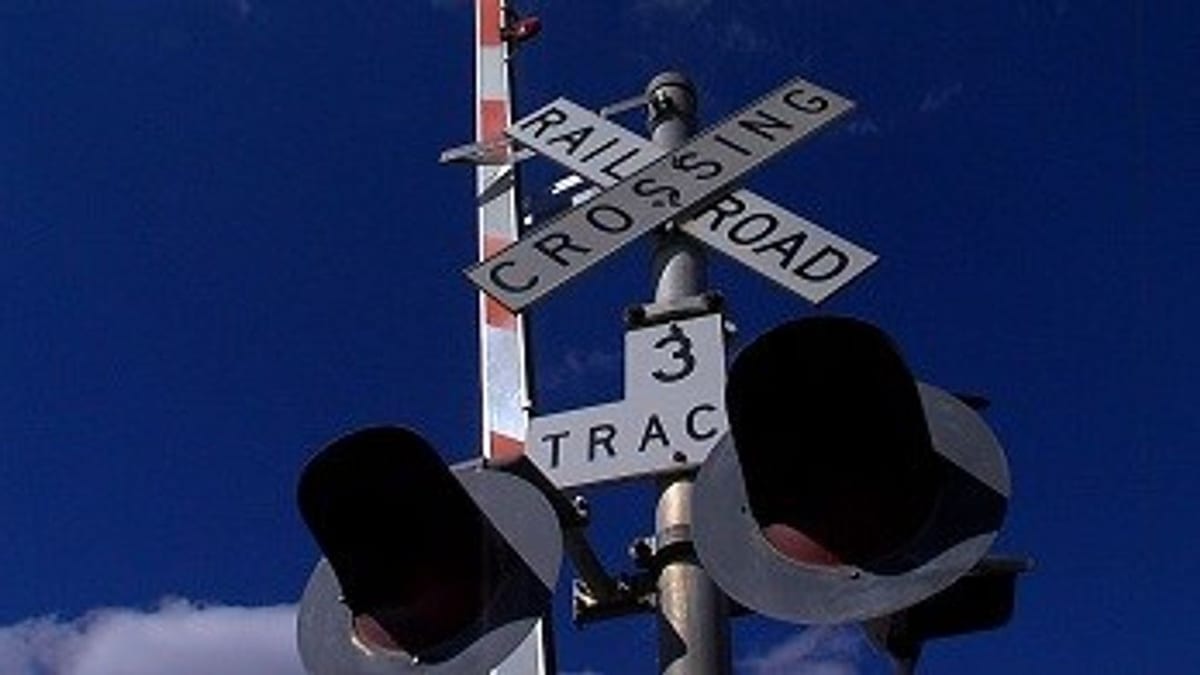
Incident Briefly Halts Rail and Road Traffic
Publicly available information indicates that a train came to an abrupt stop in Fort Collins after a collision involving a pedestrian near a roadway crossing. Witness accounts compiled in local online discussions describe a train blocking at least one major intersection for an extended period while emergency responders and rail personnel assessed the situation.
Comments circulating in community forums suggest that initial rumors referenced a possible fatality. Subsequent details shared from local incident summaries and dispatch-focused platforms, however, indicate that the pedestrian was conscious at the scene and ultimately described as stable, with no immediate indication of life threatening injuries.
Rail traffic was reportedly stationary for a considerable time after the impact, leading to delays for drivers and transit users on key north south and east west corridors. Some residents described waiting behind the stopped train and seeking alternate routes, a common challenge in Fort Collins where rail lines intersect several busy commuter roads.
Available information does not yet specify the exact nature of the pedestrian’s injuries or the full sequence of events leading up to the collision. No major damage to the train itself has been noted in publicly accessible accounts, and there have been no separate reports of injuries among passengers or crew.
Context of Rail Safety in Fort Collins
The collision comes at a time when Fort Collins and surrounding communities are already focused on the safety of people walking and biking near busy transportation corridors. Recent regional discussions have highlighted how long freight trains and frequent crossings can affect both everyday mobility and emergency response when rail traffic intersects major streets.
Local online conversations show that residents are increasingly attentive to how rail lines cut across the city grid and how limited crossing points can add time and uncertainty to routine trips. When trains stop unexpectedly, drivers can face long waits or wide detours to reach alternative overpasses and underpasses, complicating travel for commuters, delivery services, and visitors.
In planning documents and transportation studies, Fort Collins has emphasized a broader “Vision Zero” style goal focused on reducing serious crashes involving pedestrians and cyclists. These efforts typically include analyzing where collisions occur, evaluating crossing designs, and considering infrastructure that separates foot and bike traffic from rail and vehicle movements.
Although full official details on this latest incident have not yet been compiled into a formal summary, the reported outcome that the pedestrian is stable contrasts with other recent serious crashes in the region that have had fatal results. The difference underscores how factors such as train speed, crossing design, and user behavior can significantly influence the severity of a collision.
Travel Disruptions Highlight Dependence on Key Corridors
Reports from the day of the collision describe substantial disruptions for drivers who unexpectedly encountered the stopped train. With the rail line cutting across major routes, a single blocked crossing can ripple through traffic patterns, affecting commuters, service workers, and visitors trying to navigate the city’s core.
Residents posting in local forums noted that delays of several hours are possible when an incident involves a person and a train, due to the need for on scene assessment, documentation, and coordination with rail operators. Travelers caught behind the stopped locomotives often look for side streets or residential cut throughs, which can shift traffic volumes onto smaller neighborhood roads not designed for heavy use.
The disruption has renewed informal calls among locals for better real time information about train blockages and incident related closures. People have expressed interest in tools or services that could warn drivers in advance about long duration rail stoppages, allowing them to choose alternative routes before reaching a closed crossing.
For visitors and newer residents, the incident serves as a reminder that trains play a visible and sometimes unpredictable role in daily travel through Fort Collins. Trip planning that accounts for possible delays at rail lines can help reduce frustration, especially during peak commuting hours.
Community Focus on Walkability and Crossing Design
Fort Collins is widely known for its emphasis on outdoor recreation, cycling, and a walkable downtown, and the latest train pedestrian collision adds to ongoing conversations about how to keep people safe in a multimodal environment. Public planning documents and community feedback have long highlighted the importance of making it safe and comfortable to walk or bike across busy roads and rail corridors.
Recent infrastructure initiatives around the city have focused on wider sidewalks, better marked crossings, and new trail connections that reduce conflicts between vehicles and vulnerable road users. In other parts of northern Colorado, similar projects at rail crossings have introduced raised medians, enhanced pedestrian gates, and clearer channelization to guide people and vehicles along safer paths.
This new incident, in which the pedestrian is reported stable rather than critically injured, may still factor into future safety evaluations. Transportation planners often review each collision to understand whether sightlines, warning systems, or user behavior played a role, and whether design changes or public education could reduce the likelihood of a similar event.
For residents who regularly walk or bike near rail lines, the collision is a reminder to approach crossings with caution, heed warning signals, and avoid attempting to cross when trains are approaching or stationary across the roadway. For drivers, the episode highlights the need to anticipate unexpected rail related delays when planning trips across town.
What Travelers to Fort Collins Should Know
Visitors arriving in Fort Collins by car should be aware that freight trains can intermittently block key roads near downtown and along major north south routes. When a train stops, particularly during or after an incident such as this collision, detours may be necessary and travel times can increase without much advance notice.
Trip planning tools that factor in potential rail delays, along with local traffic maps and navigation apps, can help travelers adapt on the fly. When possible, selecting routes that use bridges or underpasses over the rail lines can reduce the likelihood of being forced to wait at a blocked at grade crossing.
Pedestrians and cyclists exploring Fort Collins’ trail network and neighborhood streets are encouraged, based on available safety recommendations, to use designated crossings whenever possible and to avoid crossing tracks at unmarked locations. Even in a city that strongly promotes active transportation, rail lines remain specialized environments where trains cannot stop quickly and where visibility can be limited.
As more information about the Fort Collins collision becomes available through public channels, it may inform future infrastructure and education efforts. For now, the reported status of the pedestrian as stable provides a measure of relief while the community continues to balance its strong walking and biking culture with the realities of living alongside active freight rail lines.