


More news on this day
India’s once-surging aviation market is entering a more turbulent phase as leading carriers Air India and IndiGo cut flights, even as passengers grapple with higher airfares across key domestic routes.
Get the latest news straight to your inbox!
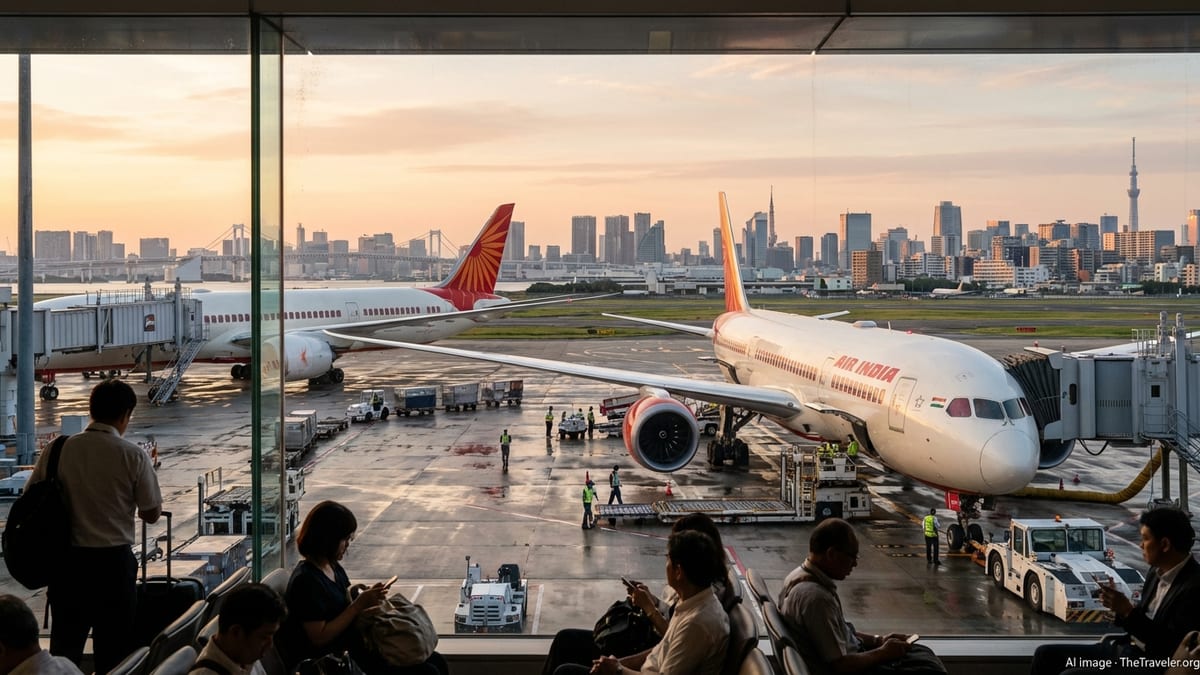
Capacity Cuts Mark a New Phase in India’s Aviation Story
The latest schedule changes by Air India and IndiGo mark a clear shift from the hyper-growth that defined Indian aviation in the years immediately after the pandemic. Publicly available data shows that domestic passenger growth in the current financial year has slowed to its weakest pace since the recovery phase, with traffic in March even slipping marginally year on year. At the same time, airlines are operating with tighter capacity, reflecting both strategic retrenchment and operational constraints.
According to recent coverage in Indian business media, IndiGo and Air India have begun trimming domestic services from June for at least three months, focusing cuts on high-frequency routes that connect key metros such as Delhi, Mumbai, Bengaluru, Hyderabad and Kolkata. IndiGo, the country’s largest airline by market share, is reported to be reducing domestic capacity by roughly 5 to 7 percent, while Air India is making smaller but still notable adjustments to its schedule.
These changes come after a period when airlines ordered record numbers of aircraft and expanded aggressively into smaller cities under India’s regional connectivity push. Analysts now describe the current phase as a “capacity digestion” cycle, in which carriers slow the pace of new flights and try to stabilise operations, yields and balance sheets.
Operational Strain, Grounded Jets and New Duty Rules
Behind the flight cuts lies a complex web of operational challenges. Ratings and regulatory documents indicate that as much as 13 to 17 percent of India’s commercial fleet has periodically been grounded due to global supply chain disruptions and persistent engine issues, particularly related to certain Pratt & Whitney powerplants. With aircraft parked and spare parts in short supply, airlines have had fewer seats to sell than their headline fleet numbers would suggest.
The industry has also had to adapt to more stringent safety and crew-rest rules. A new set of flight duty time limitations for pilots, phased in over the past year, has reduced maximum night-time flying hours and lengthened mandatory rest periods. IndiGo’s high-profile scheduling crisis in late 2025, when thousands of flights were cancelled over several days, drew attention to how thinly stretched pilot rosters had become and prompted closer oversight of airlines’ schedules.
Regulatory actions have reinforced the need for realism in planning. The aviation regulator has already trimmed IndiGo’s approved winter schedules by around 5 percent, citing a gap between the flights the carrier had scheduled and what it could reliably operate. Air India and its low-cost affiliate have also seen modest downward adjustments in their domestic schedules as the authorities push operators to prioritise on-time performance and reliability over raw capacity growth.
Higher Airfares on Key Routes as Supply Tightens
For travellers, the most visible impact of the slowdown is at the ticket counter. With fewer seats available at the same time that input costs such as aviation turbine fuel and airport charges remain elevated, average fares on busy routes have stayed firm and in many cases have risen. Reports tracking fare trends indicate that prices on trunk sectors linking Delhi and Mumbai with Bengaluru, Hyderabad, Chennai and Kolkata have been particularly sticky at higher levels.
Industry analyses suggest that airlines are deliberately using the period of constrained capacity to rebuild pricing power. After years of intense discounting and loss-making growth, carriers are seeking to protect yields, especially during peak travel windows such as long weekends and festival seasons. While competition from newer entrants such as Akasa Air is helping cap fares on some routes, the overall market is more concentrated than in the pre-pandemic era, amplifying the pricing influence of IndiGo and the Tata Group airlines led by Air India.
Ratings agencies have noted that despite robust load factors, profitability remains fragile under the weight of higher fuel, maintenance and financing costs. In this environment, sustaining higher average fares is seen as essential for airlines trying to reduce persistent industry-wide losses and fund massive aircraft order books.
From Breakneck Growth to Measured Expansion
The slowdown in capacity growth does not mean India’s aviation story is over. Market studies still project that the country will remain one of the fastest-growing large aviation markets globally, with passenger volumes expected to trend upward over the long term as incomes rise and regional airports expand. However, the narrative has shifted from breakneck expansion to more measured, profitability-focused growth.
Both IndiGo and Air India are committed to large fleet expansion plans over the next decade, with firm orders that run into hundreds of aircraft. Yet their current scheduling decisions suggest a willingness to pause and consolidate when operational realities demand it. Air India, for instance, has indicated through public statements that its overall capacity for 2026 will remain broadly flat, even as new aircraft arrive and older planes are retired or redeployed.
The restructuring of Air India’s international network after recent safety-related disruptions, along with IndiGo’s recalibration of its domestic schedules, underlines a sector-wide recognition that sustainable growth depends on reliability and financial resilience as much as on adding new routes. Observers see this as an important correction after a period when traffic growth appeared to outpace the industry’s ability to absorb shocks.
What Slower Growth Means for Travellers and the Market
For passengers, the near-term reality is likely to be a trade-off between reliability and affordability. Tighter schedules and regulatory scrutiny may reduce the risk of mass cancellations and last-minute disruptions, but they are also likely to keep fares higher than the ultra-cheap levels many travellers grew accustomed to before and just after the pandemic. Advance planning, flexibility on dates and times, and a willingness to consider secondary airports may become more important strategies for budget-conscious flyers.
For the wider market, the current phase could open space for smaller and new airlines to grow if they can secure aircraft and capital. Carriers such as Akasa Air and upcoming regional operators are positioning themselves to tap underserved routes and secondary cities. Government policy continues to emphasise competition and connectivity, including through the regional connectivity scheme and a push for multiple large-scale carriers to prevent over-concentration.
Industry specialists argue that a slower, more disciplined expansion cycle could ultimately leave Indian aviation on a firmer footing. If airlines can navigate the immediate turbulence of grounded planes, regulatory changes and elevated costs, the recalibration by Air India and IndiGo may be remembered less as the end of a boom and more as the start of a more sustainable era of growth.