


More news on this day
Egypt has pledged a one-year nationwide rail safety drive after the 8 November 2026 El Ayyat collision south of Giza that killed seven people and injured at least 125, with officials insisting that trains will keep running while inspections and enforcement are tightened across the network.
Get the latest news straight to your inbox!
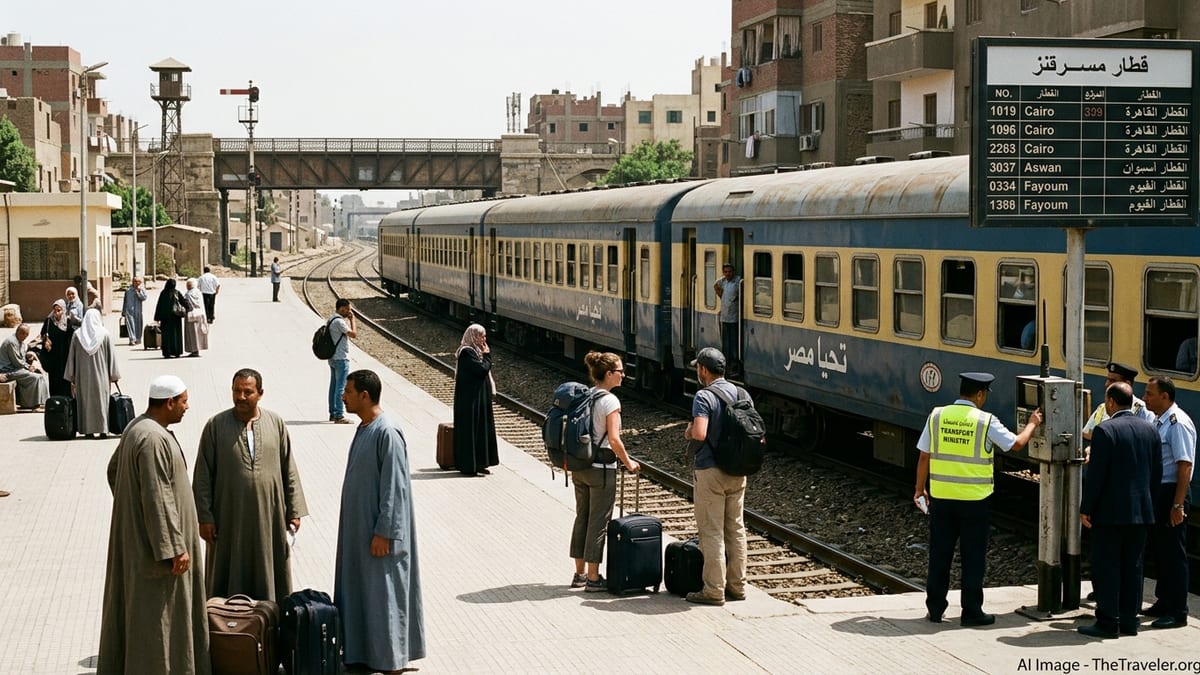
What happened in the El Ayyat collision
On 8 November 2026, passenger train No. 134, a Tahya Misr service running from Giza to Fayoum, collided with the rear carriage of express train No. 2010 from Cairo to Aswan on the Cairo–Upper Egypt corridor between Kafr Ammar and El Raqqa stations in the El Ayyat district of Giza. Egypt’s Ministry of Health reported seven deaths and at least 125 injuries, making it the country’s deadliest rail crash in several years.
The impact derailed several carriages and disrupted services on the Cairo–High Dam and Cairo–Aswan routes, which carry both local travelers and tourists heading to Luxor and Aswan. Authorities deployed cranes and emergency teams to clear the line and gradually restore operations, with Cairo–High Dam services resuming within days, according to official statements.
Egypt’s Public Prosecution has opened a criminal investigation into the circumstances of the crash and has appointed a committee from Cairo University’s Faculty of Engineering to examine signalling systems, Automatic Train Control equipment and other technical factors, alongside possible human error. President Abdel Fattah el Sisi has ordered that anyone found negligent be held accountable, but investigators have not yet released findings on the underlying cause.
Details of the government’s one-year rail safety plan
Within a week of the El Ayyat crash, Transport Minister Kamel Al Wazir announced an urgent nationwide plan to strengthen railway safety, with a target of completing the main measures within one year. The ministry has framed the response as a system-wide tightening of rules and oversight rather than a limited fix for a single stretch of track.
Core elements of the plan include more intensive daily inspections of train crews and surprise checks on locomotives, signalling towers and maintenance workshops, aimed at ensuring that operating rules are followed consistently on both intercity and commuter services. Officials have highlighted stricter enforcement of prohibitions on disabling Automatic Train Control, a system that can automatically slow or stop trains, after acknowledging that drivers have sometimes been allowed to switch it off in constrained sections of the network.
The ministry has also signalled plans to update safety regulations, expand the use of surveillance cameras on locomotives and along key lines, introduce more advanced track and infrastructure inspection technologies, and accelerate ongoing signalling upgrades that have been rolling out in phases in recent years. Authorities have not yet published detailed, line by line implementation schedules, but the one year horizon is intended to cover the core regulatory and enforcement changes as well as priority technology deployments.
What travelers on Egypt’s trains are seeing now
For travelers, the most immediate effect of the El Ayyat crash and the subsequent safety plan is not a change in fares or broad timetable reductions, but more visible checks and, in some cases, operational delays. Trains on the Cairo–Giza–Upper Egypt routes that tourists most often use, including services to Luxor and Aswan, have continued running as authorities completed repairs at the crash site and stepped up inspections across the network.
Railway staff are subject to more frequent spot checks and tighter monitoring of compliance with speed limits and signal aspects, which may contribute to slower running on some sections, particularly where older signalling is in place or where infrastructure work is underway. Travelers may notice staff spending longer on pre departure checks at stations or occasional holds along the line while dispatchers verify conditions.
There have been no nationwide announcements of new passenger facing rules such as mandatory seat reservations or security screening changes in direct response to the El Ayyat crash. Any future adjustments to booking procedures, baggage rules or on board safety briefings have not yet been detailed, so visitors planning rail journeys should verify the latest conditions with operators or booking platforms close to their travel dates.
Safety record context and what to watch next
The El Ayyat collision has renewed scrutiny of Egypt’s railway safety record, which has fluctuated in recent years. Official statistics from the Central Agency for Public Mobilization and Statistics show that reported train accidents increased from 181 incidents in 2023 to 220 in 2024, then fell to 170 in 2025, with a lower overall rate per passenger and a decline in accident severity indicators. Those figures predate the November 2026 crash and are used by the government to argue that structural safety indicators had been improving even before the latest incident.
At the same time, recent derailments and collisions, including the El Ayyat crash, underscore the unevenness of safety performance across different regions and routes. Parliament has called the transport minister to account for the state of the network and the handling of the November collision, and the Public Prosecution’s technical committee is expected to clarify the roles of signalling, rolling stock condition and human factors when it reports.
In the coming months, travelers should watch for concrete updates on where and when specific safety upgrades, such as new signalling sections or expanded camera coverage, are completed, as well as any resulting timetable adjustments. Before booking key journeys like Cairo to Luxor or Aswan, visitors are advised to check for operational notices, allow extra time for potential delays linked to inspections or engineering work, and follow any new safety guidance that rail operators introduce as the one year plan moves from announcement into on the ground implementation.