


More news on this day
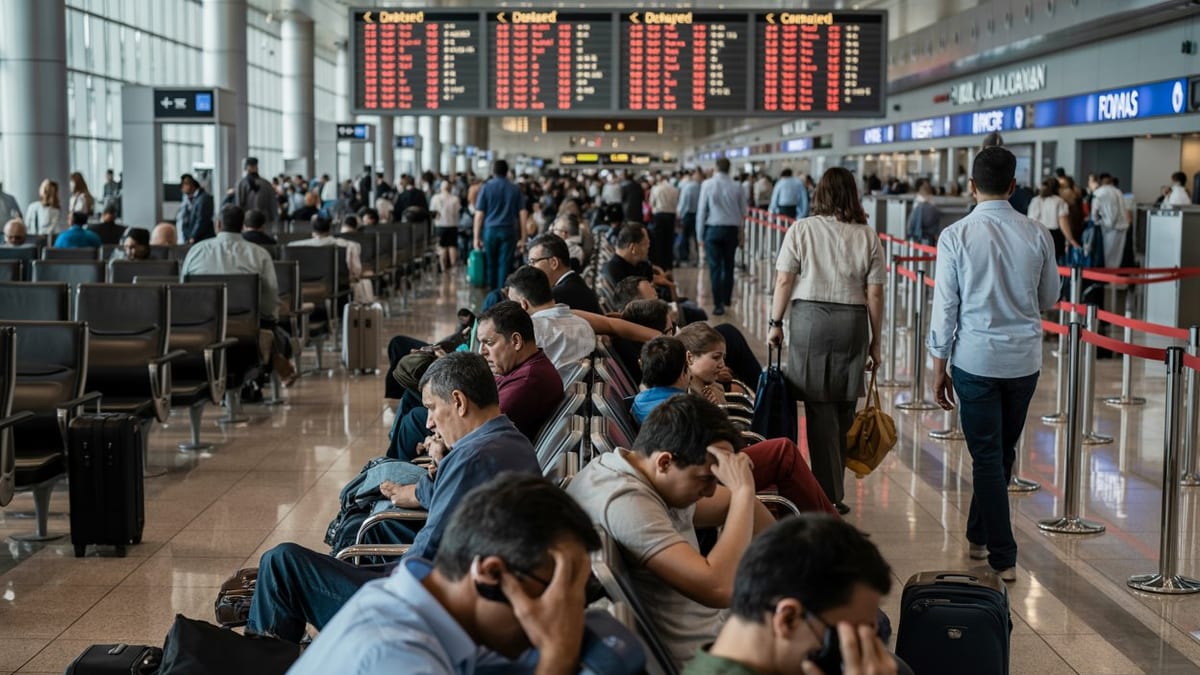
Hundreds of air travellers across Indonesia have been left facing hours-long waits and missed connections as widespread disruption hits flights operated by Batik Air, Citilink, Lion Air and several other carriers on key domestic routes linking Jakarta, Surabaya and Makassar.
Get the latest news straight to your inbox!
Severe Disruption Across Key Indonesian Hubs
Publicly available airport and flight tracking data for services operating on and around May 23 indicate unusually high levels of disruption across Indonesia’s most important domestic corridors, particularly those linking Jakarta with Surabaya and Makassar. Taken together, reports point to at least 276 delayed departures and arrivals and 26 outright cancellations affecting a mix of full service and low cost airlines.
The bulk of the disruption is concentrated at Jakarta’s Soekarno Hatta International Airport and Halim Perdanakusuma, Surabaya’s Juanda International Airport and Makassar’s Sultan Hasanuddin International Airport. These hubs handle much of the country’s east west traffic, and any sustained schedule problems rapidly cascade into missed connections for passengers heading onward to secondary cities and resort destinations.
Domestic airlines including Batik Air, Citilink and Lion Air, along with other group and codeshare operators, are at the centre of the current wave of delays. Flight status feeds show services on core routes such as Jakarta to Surabaya and Jakarta to Makassar departing significantly behind schedule, with knock on effects for later rotations using the same aircraft.
Published coverage of the disruption characterises the overall pattern as one of rolling delays, where a series of relatively modest timetable slippages gradually translate into long waits and aircraft arriving at their next departure points hours behind schedule. Cancellations are then used in some cases to consolidate loads and reset aircraft positioning.
Travellers Stranded And Itineraries Unravel
For travellers, the statistics translate into packed departure lounges and uncertain arrival times. With more than two hundred flights experiencing some form of delay, even modest hold ups of 30 to 60 minutes can leave hundreds of passengers stranded at gates awaiting updated boarding calls and revised departure estimates.
Connections through Jakarta and Surabaya appear to be particularly vulnerable. Domestic and regional itineraries that rely on tight layovers are at heightened risk when feeder flights from Makassar and other eastern cities arrive late. Once minimum transfer windows are breached, travellers can see entire onward journeys collapse, especially where there are limited later services or where separate tickets have been purchased for different legs.
Reports indicate that some passengers have been forced to rebook at short notice on alternative departures or to purchase new tickets entirely when original itineraries became unworkable. Others have opted to wait out extended delays in the hope that aircraft will eventually be reallocated and flights reinstated, a strategy that can turn a planned short domestic hop into an all day ordeal.
The situation has also created pressure on ground transport and accommodation near the affected airports. Taxi ranks and ride hailing services are experiencing surges in demand as stranded travellers abandon flight plans, while nearby hotels are seeing elevated last minute enquiries from those unable to continue their journeys the same day.
Batik Air, Citilink, Lion Air And Peers Under Scrutiny
The disruption has again placed Batik Air, Citilink, Lion Air and other Indonesian carriers under scrutiny over their on time performance. Historical punctuality data for Indonesia’s domestic market show that delay rates are a recurring concern, and the latest wave of schedule problems is reinforcing perceptions among some travellers that reliability on certain routes remains fragile.
Batik Air, the full service arm of the Lion Group, and Lion Air itself are significant operators on the Jakarta Makassar and Jakarta Surabaya sectors. Juanda International Airport in Surabaya and Sultan Hasanuddin International Airport in Makassar list these carriers, alongside Citilink and Garuda Indonesia, as core operators on services to and from the capital, meaning any operational difficulty can have outsized effects across the network.
Public data and prior analyses of Indonesia’s aviation sector have previously highlighted a mix of structural and operational challenges that can drive delays, including tight aircraft utilisation, airspace congestion on busy eastbound routes out of Jakarta and weather related restrictions during the rainy season or localized storms. The current pattern of 276 delays and dozens of cancellations fits within that broader context of a system that can quickly become stretched when confronted with compounding issues.
Consumer sentiment, reflected in travel forums and social media, suggests that frequent delays have become part of the risk calculation for many domestic flyers, who often build additional buffer time into itineraries or preferentially select carriers perceived as more punctual. The latest disruption episode is likely to reinforce that behaviour, particularly among international visitors unfamiliar with Indonesia’s domestic network.
Key Routes Jammed Between Jakarta, Surabaya And Makassar
The routes connecting Jakarta, Surabaya and Makassar are among Indonesia’s busiest and most strategically important, linking the political and economic capital with major population centres in Java and Sulawesi. They also serve as vital connectors for island hopping itineraries to destinations such as Bali, Lombok and eastern Indonesia.
Schedule data for May show dense timetables on these corridors, with multiple daily departures operated by Batik Air, Citilink, Lion Air and other group carriers. When several early morning or mid day flights run late or are cancelled, the downstream effect can be felt well into the evening as aircraft and crew struggle to return to their planned rotations.
Makassar’s position as a transit hub for eastern Indonesia heightens the impact of any disruption there. Late arriving flights from Jakarta can delay onward services to smaller cities, where airport operating hours and limited daily frequencies leave little room to absorb slippage. Surabaya, as the country’s second largest city, faces a similar bottleneck effect when Jakarta services fall significantly behind schedule.
With Indonesia in the midst of a continued recovery in domestic and international air travel, the current episode underscores how sensitive the network remains to disruptions affecting high volume city pairs. Any prolonged difficulty on these trunk routes risks constraining capacity just as demand from both local travellers and overseas visitors is climbing.
What Travellers Can Expect In The Coming Days
Based on the pattern of delays and cancellations reported so far, industry observers expect a period of continued operational volatility as carriers work through aircraft positioning issues, maintenance backlogs and crew scheduling constraints linked to the disruptions. Recovery can take several days, particularly when aircraft have been diverted from their normal base rotations.
Travellers already booked on Batik Air, Citilink, Lion Air and other Indonesian domestic airlines over the next few days are likely to see a mixture of on time departures, moderate delays and occasional last minute schedule changes as airlines seek to rebalance their networks. Same day rebooking, flight consolidations and equipment swaps remain possible on routes linking Jakarta with Surabaya, Makassar and other major cities.
Publicly available guidance for passengers affected by delays and cancellations in Indonesia typically encourages travellers to monitor flight status frequently on the day of departure, to allow extra time for connections, and to maintain flexibility where possible on non essential travel days. Those with critical onward international flights may be advised to consider longer layovers or earlier departures from domestic origins to reduce exposure to missed connections.
While conditions can improve quickly once airlines restore regular rotations, the scale of the current disruption across multiple carriers and busy hubs suggests that Indonesia’s domestic network may continue to experience pockets of instability in the short term, with travellers on affected routes bearing the brunt of ongoing schedule turbulence.