


More news on this day
Iran’s airspace is reopening to international traffic after weeks of conflict-linked restrictions, with flight tracking data showing long-haul routes steadily returning to their pre-crisis paths across the Middle East.
Get the latest news straight to your inbox!
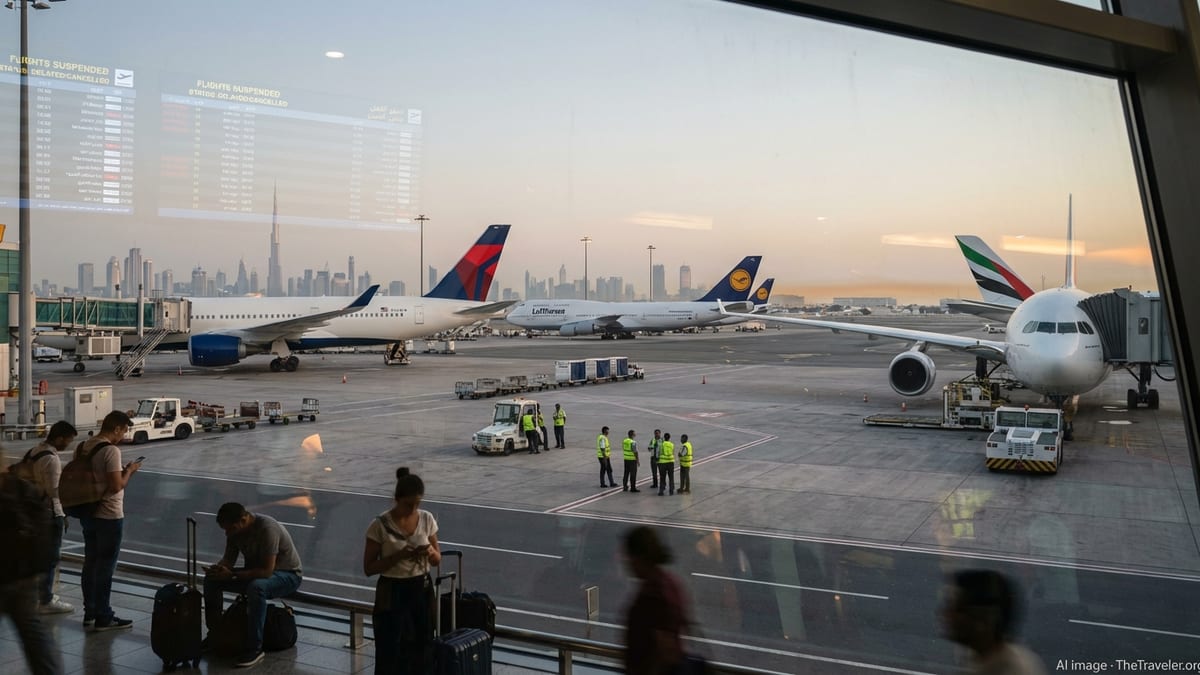
From Sudden Shutdown To Gradual Reopening
Iran’s skies were largely closed to overflights following a sharp escalation in regional tensions in late February 2026, when military operations involving the United States, Israel and Iran triggered widespread security concerns for civil aviation. Publicly available aviation briefings describe a near-total halt to international overflights across the Tehran flight information region, forcing airlines to divert through alternative corridors over the Caucasus, Central Asia and the Eastern Mediterranean.
By mid-January, Iran had already demonstrated a pattern of precautionary closures and reopenings, including a temporary shutdown earlier in the year that briefly pushed airlines to reroute before restrictions were lifted as a specific security window passed. Coverage from international outlets noted that those earlier measures foreshadowed the broader airspace clampdown that followed the later conflict escalation.
In April 2026, as a ceasefire framework began to take hold and regional tensions eased somewhat, Iranian authorities initiated a phased restoration of flight operations. Reports in regional and financial media outline a four-stage plan, starting with carefully controlled transit corridors in the east of the country before expanding access to more airports and routes in subsequent phases.
This staged reopening has now progressed to the point where most long-haul operators are again using Iran’s airspace on core Europe–Asia and Gulf–Asia sectors. Flight tracking platforms show a marked increase in traffic density over Iran compared with early spring, suggesting that carriers and regulators assess the immediate risk to civil aviation as reduced, even as broader geopolitical uncertainties remain.
Key Corridors Reconnect Europe, Asia And The Gulf
As restrictions recede, some of the most commercially important long-haul corridors are returning to more typical routings. Before the shutdown, Iran’s central location made it a critical overflight bridge between Western Europe and destinations in India, Southeast Asia and parts of East Asia. The closure forced airlines to add hundreds of nautical miles to detours via the Black Sea, the Caspian region, or southern paths over the Arabian Peninsula.
Recent flight data now shows widebody jets once again transiting central and eastern Iran on services linking hubs such as London, Frankfurt and Istanbul with cities in India and the wider Asia Pacific. Industry-focused briefings indicate that these restored routings are helping carriers recover schedule reliability and reduce fuel burn after months of operational strain.
In parallel, regional connectivity within the Middle East has started to normalize. Neighboring states including Iraq, Syria and Bahrain have already reopened their own airspace following announcements of a ceasefire arrangement, easing pressure on crowded detour corridors and enabling more direct intra-regional flying. That broader reopening has supported the return of multi-stop itineraries and complex network connections that depend on predictable access to several flight information regions.
Despite the visible improvement, risk assessments from aviation safety organizations still place the wider conflict zone under heightened monitoring. Some carriers continue to route conservatively at higher altitudes or along edges of the Tehran area, reflecting a cautious approach to any residual security concerns.
Impact On Airlines, Travelers And Schedules
The temporary loss of Iranian airspace earlier this year had immediate operational and financial consequences for airlines. Rerouted flights increased block times, pushed up fuel costs and, in some cases, led to payload restrictions on ultra-long-haul services. Travel industry analyses describe a period of rolling delays, missed connections and ad hoc schedule changes that affected passengers flying between Europe, the Gulf and South and East Asia.
With routes now stabilizing, carriers are beginning to unwind contingency timetables and restore more standard departure banks at key hubs. Publicly available schedules show airlines reintroducing previously suspended frequencies and shifting some services back to preferred overnight and early-morning slots that align with global connection waves.
For travelers, the most visible change is a gradual reduction in journey times on itineraries that had been lengthened by diversions. Nonstop flights that were extended by up to an hour or more during the height of the closures are again operating closer to their historical durations. Travel agencies and fare trackers indicate that the easing of operational disruption is also helping to moderate some of the fare spikes seen on heavily affected city pairs.
Even so, industry commentary suggests that airlines remain wary of overcommitting capacity across volatile corridors. Many are maintaining flexible scheduling frameworks and are prepared to revert to alternative routings if security conditions deteriorate, underscoring how closely commercial planning is now tied to geopolitical risk management.
Safety Advisories And Ongoing Risk Management
Regulators and specialist aviation risk consultancies continue to flag the Tehran region as a complex operating environment. Notices and bulletins from agencies in North America and Europe maintain references to the potential hazards posed by missile activity, drone operations and military exercises in and around Iran, even as the airspace reopens to routine civil traffic.
Several national regulators keep in place advisories that recommend caution or restrict certain operators from using portions of Iranian airspace below specified altitudes. These measures are designed to reduce exposure in the unlikely event of misidentification or spillover from military activity. Airlines, in turn, typically integrate such guidance into their internal safety management systems when planning flight paths.
Specialist aviation security firms advise that while the recent ceasefire and reopening are positive developments, the underlying political dispute remains unresolved. Their publicly available assessments describe a scenario in which risk levels can shift quickly in response to events on the ground, making real-time intelligence and robust contingency planning essential for airlines overflying the region.
Travelers are encouraged by industry bodies and consumer advisories to stay alert to schedule changes, particularly on itineraries that traverse multiple Middle Eastern airspaces. While sudden mass reroutings appear less likely in the short term, airlines are expected to retain the option to modify routings at short notice if prompted by new government guidance.
What Returning To “Normal” Looks Like For Global Aviation
Experts in airline network planning caution that a full return to pre-crisis normality may take longer than the visible reopening of the skies suggests. Analyses of traffic flows and capacity allocations show that some carriers are choosing to rebuild cautiously, prioritizing their most profitable trunk routes before restoring secondary connections that rely on stable overflight patterns through Iran and neighboring states.
Industry outlook reports also highlight a broader reshaping of global aviation risk maps, with the 2026 conflict adding to a decade of airspace disruptions in different regions. The latest Iran episode has reinforced the trend toward diversified routing options, investment in extra fuel reserves and more conservative assumptions in long-term fleet and network planning.
For Iran specifically, reopening its airspace restores an important source of overflight fee revenue and repositions the country as a central bridge on Eurasian air corridors. As airlines gradually resume typical routings, the Tehran flight information region is again becoming a key component in the dense web of connections linking Europe, the Gulf, South Asia and beyond.
For travelers and the global aviation industry, the normalization of routes across Iran’s skies represents a significant step away from the acute disruption of recent months, even as the possibility of renewed tension underlines how critical and fragile these aerial corridors remain.