


More news on this day
Fresh Iranian drone and missile fire over Kuwait, described by Kuwaiti forces as a “heinous” aggression, is rippling across Gulf aviation networks, triggering delays, diversions and renewed anxiety for travelers using Dubai and other Middle East hubs.
Get the latest news straight to your inbox!
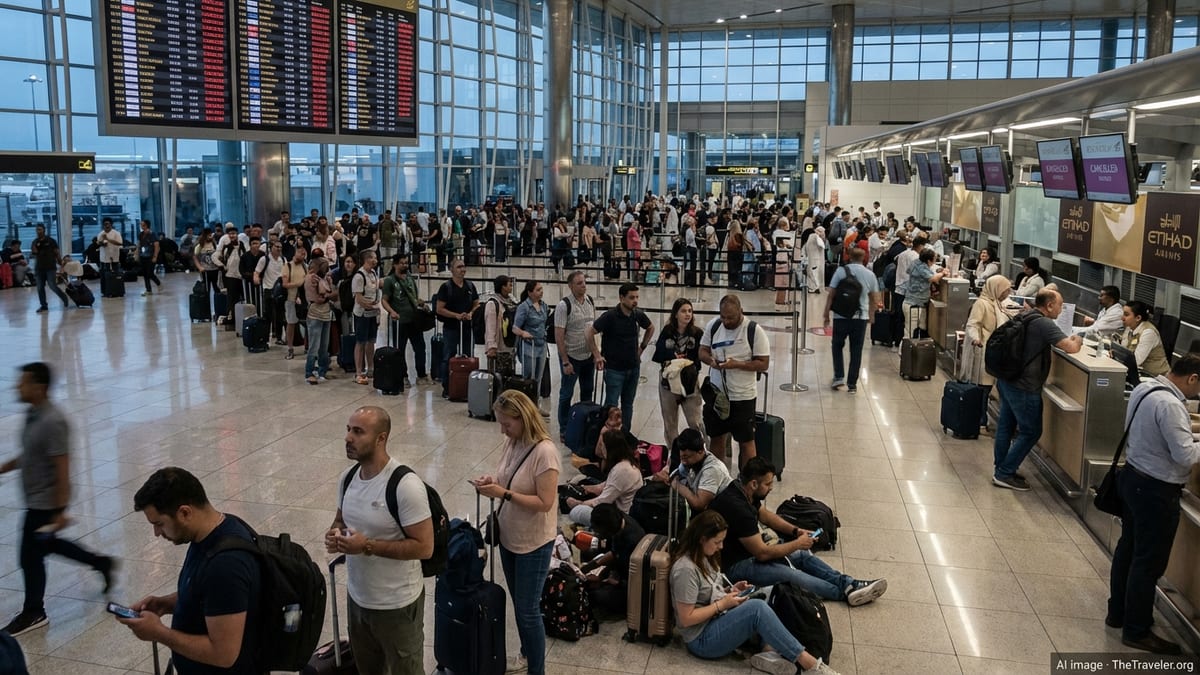
Heightened regional tensions spill into Gulf airspace
Reports from Kuwait on September 3 indicate that air defenses have been engaging incoming Iranian missiles and drones, with the country describing the barrage as a “heinous” act of aggression. The incident marks the latest escalation in a cycle of strikes and counterstrikes involving Iran, the United States and regional partners that has repeatedly unsettled civil aviation across the Gulf.
Publicly available information from regional outlets and international agencies shows that Kuwait has faced multiple rounds of Iranian drone and missile attacks in 2026, several of which have directly affected Kuwait International Airport and surrounding infrastructure. Earlier incidents in June left at least one person dead and dozens injured at the airport, while flight operations were temporarily suspended and aircraft were diverted or delayed.
The latest exchanges follow renewed US strikes on Iranian targets, after a period of relative military pause. Coverage of the evolving conflict suggests that Iran is expanding its focus to states that host US forces or provide logistical support, placing key civilian hubs such as Kuwait International Airport and major Gulf transit centers under intermittent threat.
Regional observers note that each new wave of fire across the Gulf quickly translates into airspace restrictions, temporary closures or ground delays, with Kuwait and its neighbors repeatedly forced to balance security imperatives against the need to keep vital air corridors open.
Dubai and Gulf hubs manage fresh wave of disruptions
Dubai International Airport and other Gulf hubs have again found themselves managing knock-on disruption as events in Kuwait reverberate through the wider network. Travel-focused coverage indicates that intermittent closures of Kuwait’s airspace and airport operations have prompted delays and rerouting for flights linking Dubai with Kuwait City and other regional destinations.
Recent reporting on flight operations into Dubai and Abu Dhabi shows a pattern of delayed arrivals and departures from Kuwait, Bahrain and other nearby states following Iranian strikes. Airlines have been adjusting schedules, holding aircraft on the ground or diverting flights when airspace warnings intensify, contributing to congestion at busy hubs that were already handling late-summer passenger peaks.
Industry analysis notes that Dubai’s role as one of the world’s largest international transfer airports magnifies the impact of even short-lived interruptions. When Kuwait temporarily closes its airspace or reduces capacity for safety reasons, connections through Dubai, Abu Dhabi and Doha are affected, with missed onward flights and extended layovers for passengers traveling between Europe, Asia and Africa.
In the latest round of disruptions, publicly available flight data and local coverage highlight delays for services operating between Kuwait and Dubai, as well as for flights originating in other Gulf states where airspace risk assessments have been tightened. While core operations at Dubai International remain open, the network turbulence underscores how quickly regional security events can ripple through global travel plans.
Kuwait’s “heinous” aggression claim underscores security fears
Statements from Kuwait’s armed forces describe the ongoing Iranian missile and drone attacks as a “heinous” aggression, language that reflects the growing concern over repeated strikes on or near civilian infrastructure. The characterization aligns with earlier diplomatic protests Kuwait has filed with international aviation bodies over what it describes as violations of its airspace and attacks on its main airport.
Earlier this year, Kuwaiti authorities reported that a series of Iranian drone and missile strikes killed at least one person and injured dozens at Kuwait International Airport, severely damaging terminal facilities and forcing extended closures. Subsequent incidents prompted Kuwait to lodge formal complaints with global aviation regulators and to reiterate calls for respect of civilian airspace and infrastructure.
Rights and security organizations monitoring the conflict have documented a broader pattern of Iranian strikes on or near civilian airports and commercial districts across the Gulf, including in the United Arab Emirates and Bahrain. These reports emphasize the heightened risks posed to passengers, aviation workers and residents when drones and missiles are launched into congested air corridors or toward dual-use facilities located close to urban areas.
For Kuwait, the combination of direct infrastructure damage, casualties and repeated airspace shutdowns has intensified domestic debate over civil defense and the country’s exposure to regional power struggles, even as it works to maintain its long-standing role as an energy exporter and transit point.
Airlines adjust schedules and routings across the Middle East
Airlines operating in and out of Dubai, Kuwait and neighboring Gulf states have spent much of 2026 revising schedules in response to the shifting security landscape. Publicly accessible guidance from carriers and airport operators shows a mix of short-notice cancellations, extended delays and aircraft rerouting when missile or drone activity is detected along key corridors.
Travel industry reporting describes how some regional and international airlines have periodically suspended flights to Kuwait or reduced frequencies when airspace closures were announced at short notice. Others have introduced longer routings that avoid specific conflict zones, increasing flight times and operational costs but allowing services to continue.
Aviation regulators beyond the region have also updated their conflict-zone advisories. European authorities, for example, have recently extended warnings related to Gulf airspace, advising airlines to take account of the elevated risk environment in their operational planning. These bulletins do not mandate blanket bans but encourage operators to apply robust risk assessments before scheduling overflights near areas affected by Iranian and US military activity.
For passengers, the result is a travel environment characterized by uncertainty rather than complete shutdown. Flights are largely continuing to operate, particularly through major hubs such as Dubai, but schedules are more vulnerable to disruption when tensions spike. Industry guidance consistently urges travelers to monitor airline channels closely, arrive early at airports and remain flexible about routing options.
Travelers face uncertainty as conflict risk remains elevated
Publicly available coverage of the latest strikes and airspace responses indicates that there is little expectation of an immediate return to stable operating conditions for Gulf aviation. Negotiations aimed at de-escalation have so far delivered only brief lulls, with each new round of attacks quickly reversing gains in confidence among airlines and passengers.
Travel and business publications have highlighted the cumulative effect of repeated incidents on traveler sentiment, particularly among transit passengers who may now view the wider region as a higher-risk connection point. Some corporate travel planners are reported to be reviewing routings for staff, weighing the efficiency of Gulf hubs against the prospect of sudden schedule upheavals.
At the same time, regional carriers and airport operators continue to emphasize the robustness of their safety procedures, citing layers of security coordination and real-time monitoring of military developments. While these measures have allowed most operations to resume relatively quickly after each incident, the pattern of “stop-start” disruptions around Kuwait and its neighbors is likely to persist as long as Iranian missile and drone activity continues.
For now, travelers planning to fly through Dubai, Kuwait or other Gulf hubs in the coming days are being advised, through airline advisories and media reports, to track developments closely and to anticipate longer journey times if airspace restrictions are tightened without warning.
Condé Nast Traveller Middle East: Dubai and Middle East flight disruption
The National: Flight delays and cancellations at UAE airports
The National: Iran strikes on Kuwait and Bahrain
Arab News: Kuwait intercepts Iranian missile and drone attack