


Guarulhos International Airport (GRU) is São Paulo’s main international gateway, and one of the most common destinations for arriving travelers is Avenida Paulista, the city’s key business and hotel corridor. Whether you are headed to a meeting near MASP, a conference at a Paulista business tower, or a hotel around Consolação and Bela Vista, choosing the right route from the airport can save you time, money, and stress, especially if you are carrying luggage or arriving at rush hour.
Get the latest updates straight to your inbox!
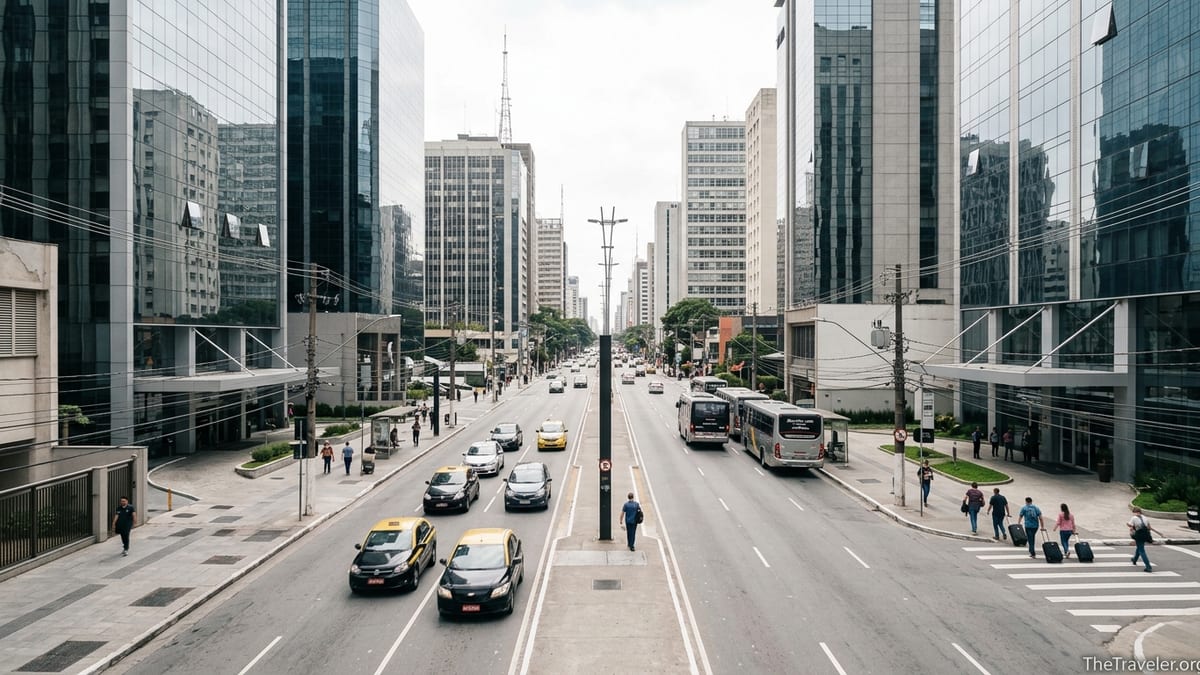
Understanding the GRU to Paulista Avenue Corridor
Guarulhos International Airport sits about 25 to 30 kilometers from Avenida Paulista, depending on your exact destination. In light traffic, a direct car ride can take around 35 to 45 minutes. In typical weekday rush hour, especially between 7:00 and 10:00 in the morning and 5:00 and 8:00 in the evening, that same trip can easily stretch to 60 to 90 minutes as traffic bottlenecks on the main approach roads into São Paulo.
Avenida Paulista itself is a dense urban corridor lined with office towers, banks, consulates, shopping centers, healthcare facilities, and hotels. Popular stops include the area around MASP (the art museum), Trianon-Masp and Consolação metro stations, and the cross streets of Augusta, Haddock Lobo, and Brigadeiro. Many international business travelers stay at hotels such as Renaissance São Paulo Hotel near Consolação, Tivoli Mofarrej near Trianon-Masp, or ibis and Mercure properties around Paraíso and Brigadeiro. The routes from GRU need to account for these specific drop-off points, not just “Paulista Avenue” in the abstract.
Most travelers choose between four main options to get from GRU to Paulista: the Airport Bus Service hotel circuit, ride-hailing or taxi, a combination of commuter train and metro, or a private transfer service. Each has different trade-offs in cost, comfort, walking distance, and how manageable it feels with luggage. The best choice shifts depending on arrival time, number of people in your group, and whether you prioritize speed, budget, or simplicity.
Before you decide, it helps to know that São Paulo authorities and airport operators actively promote several official services. GRU’s own guidance highlights the Airport Bus Service executive buses to the Paulista hotel and Augusta circuit, regular trains on Line 13 Jade connecting the airport to the wider rail network, and licensed taxis based at dedicated airport stands. These are the backbone of safe, predictable transfers for visitors who may be new to the city.
Airport Bus Service: The Paulista & Hotel Circuit
The Airport Bus Service is an official executive bus network designed specifically to connect Guarulhos Airport with key districts inside São Paulo, including the “Circuito dos Hotéis Paulista/Augusta,” or Paulista / Augusta hotel circuit. The service is overseen by the regional transport authority and operated as a premium coach line, with comfortable seats, air conditioning, and luggage storage designed for travelers coming off long flights.
From GRU, the dedicated Paulista route typically runs from the airport terminals towards central São Paulo, making strategic stops close to major hotels along and near Avenida Paulista and Rua Augusta. Common stop areas include Republica and the upper part of Augusta that feeds directly into the Paulista plateau, placing you within walking distance or a short taxi hop to hotels such as the ibis and Mercure properties on Paulista, and larger business hotels in the Consolação and Jardins area. The bus staff are used to international passengers and can guide you on the correct stop to reach a specific hotel address.
In practical terms, the Airport Bus Service is most attractive for solo travelers or couples with moderate luggage who want a direct, predictable ride without navigating the metro with suitcases. The fare is higher than a regular city bus but generally cheaper than a door-to-door taxi, and it does not surge like ride-hailing can during peak demand. Travel time to the Paulista circuit can range from about 60 minutes in light traffic to 90 minutes or more when central corridors are congested.
For example, a business traveler landing from Europe around 7:00 on a weekday and heading to a meeting near Trianon-Masp might choose the Airport Bus Service: after clearing customs in Terminal 3, they follow the airport signs to the bus counters, buy a ticket for the Paulista / hotel circuit, store a medium suitcase in the bus hold, and ride comfortably to a stop a few blocks from their hotel. They avoid having to negotiate a fare in Portuguese or work out line changes in the metro while jet-lagged, trading some door-to-door convenience for a smoother, more structured arrival.
Uber, Taxis, and Private Transfers: Door-to-Door Convenience
For travelers on tight schedules or with heavy luggage, a direct car is often the most straightforward choice. At GRU, you can use official airport taxis, app-based taxis, or ride-hailing platforms such as Uber and similar services. The airport has designated pick-up areas where ride-hailing cars and taxis meet passengers, and the process is well established and widely used by both locals and visitors.
Licensed airport taxis usually have fixed or metered fares depending on the category of service. Many international visitors prefer to book a taxi at an official desk inside the arrivals area, where staff quote a pre-set price to destinations such as Avenida Paulista. This avoids any confusion about routing or pricing and ensures that your driver is authorized to operate from the airport. In real terms, a typical taxi ride for one to three passengers from GRU to a hotel near Consolação or Brigadeiro might cost the equivalent of a mid-range dinner in São Paulo, with the fare increasing in heavy traffic or late-night surcharges.
Ride-hailing services add flexibility and often come in slightly cheaper than official taxis, especially outside peak hours. You can request a standard car class for everyday trips, or a larger vehicle if you are traveling with colleagues and multiple suitcases. Around midday on a weekday, it is common for travelers to report paying in the range of a moderate restaurant meal per car for a direct ride from GRU to the MASP stretch of Paulista, with travel times of 45 to 70 minutes depending on congestion near the central zone.
For corporate groups or travelers attending major events on Paulista, private transfers booked in advance can be worthwhile. These services typically meet you at the arrivals hall with a sign, assist with luggage, and drive directly to your hotel or office tower. Companies often favor this for visiting executives who may not speak Portuguese and need a reliable, traceable service. It also simplifies accounting, since the transfer invoice can be billed to a company rather than reimbursed as an individual taxi receipt. The price per vehicle is higher than app-based rides, but becomes competitive if several passengers share the same car.
Train and Metro Combinations: Budget-Friendly and Predictable Timing
São Paulo’s rail network gives budget-conscious travelers another way to reach Paulista Avenue. Guarulhos Airport is linked to the metropolitan rail grid via Line 13 Jade, known locally as the Guarulhos train line. The dedicated Aeroporto-Guarulhos station sits near the terminals, served by a complimentary airport shuttle bus that circles all three terminals and drops passengers at the station entrance.
From the airport station, regular Line 13 Jade trains connect to Engenheiro Goulart station, where you can transfer to Line 12 Safira and continue toward central hubs such as Tatuapé, Brás, and Luz. From those stations you can connect seamlessly to the São Paulo metro network. Typical integrated fares are structured so that a single ticket or card can cover both urban train and metro segments within a defined transfer window, making this route financially attractive compared to a taxi for solo travelers.
To reach Avenida Paulista specifically, many travelers choose one of two main combinations. The first is to ride Line 13 Jade toward Brás, connect there to the red metro line going to Sé, then transfer to either the blue or green lines to reach stations like Paraíso, Brigadeiro, Trianon-Masp, or Consolação, depending on where along Paulista they are staying. The second option is to continue by train to Luz, a central junction where you can switch to the yellow or blue lines and again connect to the green line towards Paulista. In both cases, you should expect at least two transfers and roughly 60 to 80 minutes of total travel time from airport station to Paulista in normal conditions.
This multimodal route works best for travelers with light, easy-to-handle luggage such as a backpack and small carry-on. During peak hours, trains and metro cars can be crowded, and escalators and walkways may be busy. However, the benefit is a predictable travel time that is less affected by road traffic jams, and a very low per-person cost compared with private cars. A student attending a language school near Paulista, for instance, might routinely make this journey with a single small suitcase, trading some comfort for substantial savings on transport.
Traffic Patterns, Timing, and Safety Considerations
Choosing the right route from GRU to Avenida Paulista depends heavily on when you land. São Paulo’s road congestion is intense on weekday mornings and evenings. A taxi or Uber at 8:30 on a Tuesday can spend a long time crawling through bottlenecks on the main expressways and inner streets as commuters head into or out of the central business district. Local travelers often plan for 60 to 90 minutes door-to-door in these windows, sometimes longer if it rains or there has been an incident on the highway.
Late evening and early morning, the picture changes dramatically. Outside peak hours and in the absence of road closures or accidents, a car can cover the distance from GRU to Paulista in under 40 minutes. Travelers who land around 23:00 and book a car typically find themselves at hotel lobbies near Frei Caneca or Paraíso in around half an hour, benefiting from lighter traffic. This makes taxis and ride-hailing particularly attractive for late-night arrivals, combining speed with door-to-door security.
Safety is an important consideration for any traveler in a large metropolis. Inside GRU, sticking to official services is the simplest rule of thumb. Use the licensed taxi stands, recognized app-based pick-up points, or the official Airport Bus Service counters. Avoid accepting unsolicited ride offers from individuals inside or just outside the terminal. Once on the road, keep valuables out of sight, keep doors locked, and avoid using phones with windows fully down in slow traffic. These are the same precautions many residents follow daily and help reduce risk in an unfamiliar environment.
On the train and metro, standard big-city awareness applies: watch your bags, keep important documents secure, and avoid displaying expensive electronics unnecessarily. The main train and metro interchanges used on the GRU to Paulista route are heavily trafficked commuter stations, which in practice means plenty of people around but also typical pickpocket risks at rush hour. Many visitors feel comfortable using these systems during the day and early evening, but may prefer a taxi or ride-hailing service if traveling very late at night or carrying bulky luggage.
Matching Routes to Hotel and Business Needs
Different profiles of traveler will naturally gravitate toward different solutions. For a solo business traveler arriving on a weekday afternoon for a meeting in one of the towers around Brigadeiro or Paraíso, a ride-hailing car or official taxi often strikes the best balance between speed, convenience, and cost. They can work or make calls during the drive and step directly out at the lobby of a hotel such as Tivoli Mofarrej or a corporate building on Alameda Santos or Rua Pamplona.
Leisure travelers staying for several days near Consolação, Augusta, or Frei Caneca, perhaps at hotels like Renaissance São Paulo, ibis Paulista, or a boutique property in Jardins, might consider the Airport Bus Service hotel circuit for their arrival. The bus drops them in the right neighborhood at a predictable cost, and they can rely on taxis or the metro for shorter urban trips afterward. The same travelers might later use the rail and metro combination on a day when they are carrying only a small daypack.
Groups and families, particularly those with children or multiple large suitcases, often find that the cost of a private transfer or larger ride-hailing category becomes reasonable when split. For example, a family of four attending a medical appointment at one of the healthcare centers near Paulista might book a van transfer that meets them at arrivals, seats everyone comfortably with luggage, and delivers them directly to an aparthotel in Bela Vista. The per-person cost can compare favorably with four tickets on an executive bus plus short taxis afterward.
Frequent business travelers sometimes develop hybrid strategies. They might use Uber or airport taxis when arriving late at night or in very early morning to maximize comfort and safety, but switch to the train and metro when departing during the afternoon, timing their journey to avoid the heaviest rush hours. Others negotiate transfer arrangements with their hotel or local partners on Paulista, who may have preferred transfer providers that bill directly to corporate accounts and are familiar with the hotel’s specific vehicle access and drop-off rules.
Luggage, Accessibility, and Practical Tips
Luggage is often the deciding factor between rail and road. Executive buses and private cars handle checked-size suitcases easily, while trains and the metro are more manageable with lighter loads. If you are arriving after a long intercontinental flight with one large suitcase, a carry-on, and perhaps a laptop bag, walking through several stations and changing lines in crowded conditions may feel exhausting, especially in São Paulo’s summer heat.
The Airport Bus Service coaches provide underfloor storage where large bags can be stowed safely, with passengers bringing only small items into the seating area. Taxis and ride-hailing vehicles also accommodate standard luggage, although very large or multiple suitcases might require requesting a larger car category. When booking a private transfer, it is worth specifying the number and size of bags so the operator can assign an appropriate vehicle.
Travelers with reduced mobility or accessibility needs should consider the details of each option carefully. While São Paulo’s main stations and metro lines have been steadily improving accessibility, not every interchange is equally straightforward, and elevators or escalators can occasionally be out of service. Official taxis and private transfers offer the most predictable door-to-door access, and some companies can provide vehicles adapted for wheelchairs if requested in advance. Many larger hotels along Paulista also have accessible entrances and facilities, so a direct car connection reduces the number of transitions between modes.
Regardless of how you travel, keep a printed or saved copy of your hotel address in Portuguese, including nearby cross streets if possible. Even experienced drivers may prefer to double-check the exact entrance, especially in dense areas like Avenida Paulista where one block can have multiple large buildings and side street access points. Sharing a digital map location from your phone to a ride-hailing app can also minimize confusion and help ensure you are dropped exactly where you need to be for your meeting or check-in.
The Takeaway
Getting from Guarulhos International Airport to Avenida Paulista is not a one-size-fits-all journey. The best route depends on when you land, how much luggage you carry, your comfort with public transport, and whether you are traveling for business on a tight schedule or for leisure with more flexibility. Official options range from the dedicated Airport Bus Service hotel circuit and the Line 13 Jade train connection to familiar ride-hailing platforms, licensed airport taxis, and prearranged private transfers.
For many business travelers and those arriving late at night, a direct taxi, Uber-style ride, or private transfer offers the most efficient and secure experience, delivering them straight to key hotels and offices along Paulista. Budget-conscious visitors and those with light luggage can tap into the rail and metro network to keep costs low while still reaching the heart of the city in a predictable time. Meanwhile, the executive Airport Bus Service continues to fill a useful middle ground, especially for hotels clustered around Paulista and Augusta.
By understanding how these options fit your specific itinerary and comfort level, you can turn what might otherwise be a stressful urban transfer into a smooth start to your time in São Paulo. A little planning before you land at GRU goes a long way toward making your first moments on Avenida Paulista focused on your meetings, your hotel, or your sightseeing, rather than the logistics of how you got there.
FAQ
Q1. What is the simplest way to get from Guarulhos Airport to Avenida Paulista for a first-time visitor?
For a first-time visitor with luggage, the simplest option is usually an official airport taxi or a ride-hailing car requested from the designated pick-up area, as it provides door-to-door service directly to your hotel on or near Paulista.
Q2. Is the Airport Bus Service a good option if my hotel is near Paulista Avenue?
Yes, the Airport Bus Service has a specific route serving the Paulista and Augusta hotel circuit, making it convenient if your hotel is in that corridor and you are comfortable walking a short distance from the bus stop.
Q3. How long does a taxi or Uber from GRU to Paulista usually take?
In light traffic, the ride can take around 35 to 45 minutes, but during weekday rush hours it is wise to plan for 60 to 90 minutes because of congestion on the main approaches into central São Paulo.
Q4. Is the train and metro combination safe to use with luggage?
The train and metro are widely used by commuters and can be safe with normal big-city precautions, but they are most comfortable if you have light, easy-to-handle luggage and avoid the most crowded peak periods.
Q5. Which route is best if I arrive late at night?
For late-night arrivals, many travelers prefer an official taxi, ride-hailing service, or prebooked private transfer, as the roads are quieter and a door-to-door car ride offers convenience and a strong sense of security.
Q6. Can I rely on Uber or similar apps at Guarulhos Airport?
Yes, ride-hailing apps are widely used at GRU, with designated pick-up points, although prices can fluctuate depending on demand and traffic, especially at peak times or during major events.
Q7. Is the train faster than a car during rush hour?
During heavy congestion, the combination of Line 13 Jade and the metro can offer more predictable travel times than a car stuck in traffic, though it requires transfers and may be less comfortable if you are carrying large bags.
Q8. What should I do if I do not speak Portuguese?
If you do not speak Portuguese, using official taxi desks, ride-hailing apps with destination entered in advance, or the Airport Bus Service with clear route signage can reduce misunderstandings and make your transfer smoother.
Q9. Are there good hotel options directly on or near Avenida Paulista for business trips?
Yes, Avenida Paulista and its side streets host numerous business-friendly hotels, including larger international brands and local chains clustered around metro stations like Consolação, Trianon-Masp, Brigadeiro, and Paraíso.
Q10. How far in advance should I plan my transfer from GRU to Paulista?
It is wise to decide on your preferred route before landing, especially during busy periods or if you need a private transfer, so you can factor in travel time from the airport to arrive punctually at your hotel or meeting.