


More news on this day
Iran’s announcement that it is lifting many of its wartime restrictions on shipping through the Strait of Hormuz is reverberating across the Gulf, sparking cautious optimism that stranded cruise ships and thousands of passengers marooned in regional ports may finally see a path out.
Get the latest news straight to your inbox!
What Has Changed in the Strait of Hormuz
Published coverage on April 17 indicates that Iranian authorities now describe the Strait of Hormuz as “fully open” to commercial traffic during the current ceasefire period, reversing weeks of de facto closure and tight control that had choked off one of the world’s most important maritime choke points. Earlier in the conflict, Iran used radio warnings, sea mines and an armed presence to sharply curtail movements, with traffic falling by more than 80 percent compared with normal levels.
The latest statements suggest that, for the duration of the ceasefire, civilian vessels can again request passage through the narrow waterway that connects the Persian Gulf to the Gulf of Oman. Reports indicate that this applies across cargo segments, from oil and gas tankers to container ships and, crucially for the tourism sector, large cruise vessels that had been effectively penned inside Gulf waters by the combination of Iranian restrictions and war-risk insurance limits.
At the same time, the broader military picture remains complex. Publicly available information from the United States and allied navies points to an ongoing blockade targeted at Iranian ports and coastline rather than at neutral ships transiting the strait itself. That distinction matters for cruise lines: a corridor out of the Gulf now exists on paper, but operators still must navigate overlapping security, legal and insurance considerations before deploying ships through it.
For global markets, the shift has already had visible effects. Business media report that oil prices fell sharply on news of the reopening, reflecting expectations that at least some energy exports can resume more normal flows. For travelers and cruise passengers, however, the impact will likely be slower and more conditional.
Cruise Ships Still Trapped in Gulf Ports
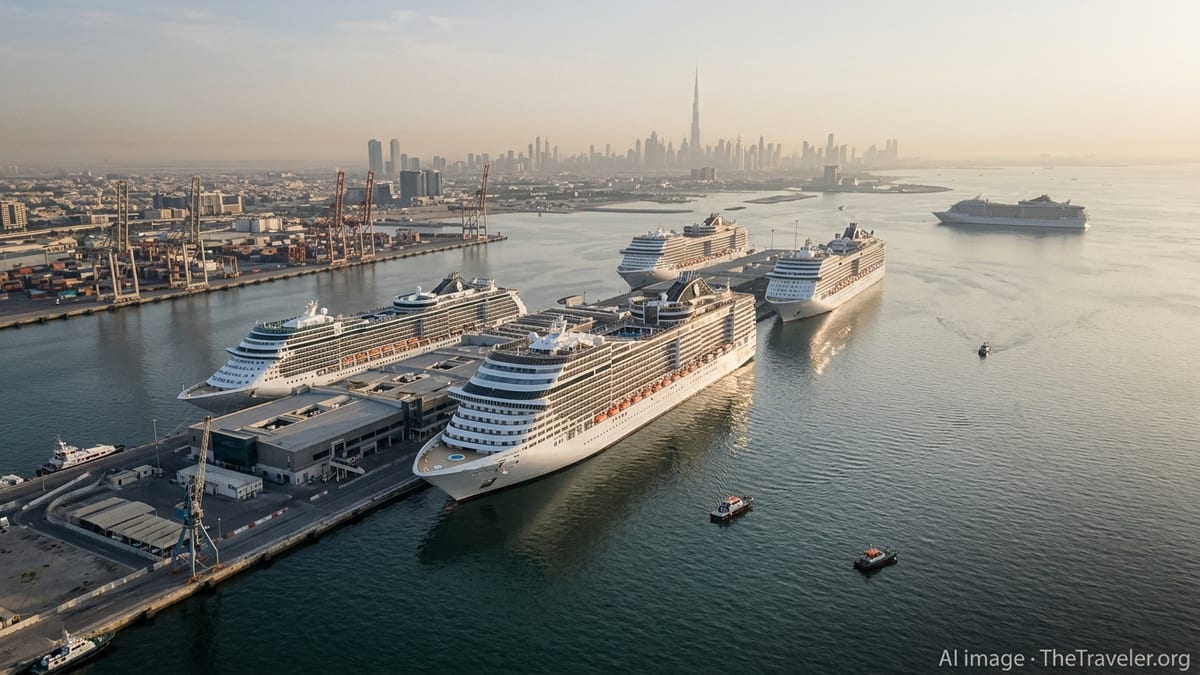
Weeks of instability around the Strait of Hormuz left at least six major cruise ships stuck in Gulf ports, according to specialist maritime and travel reporting. These vessels, operated by regional and European brands, had curtailed or suspended itineraries as attacks, near misses and threats against commercial shipping rippled through the area. Estimates in recent weeks suggested that more than 15,000 passengers were affected at various stages of the crisis, with some completing partial voyages and others facing rolling cancellations.
Cruise ships differ from cargo vessels in both their risk profile and operating model, which has complicated any rapid response to the change in Hormuz access. Passenger ships are highly visible, lightly armed and designed for comfort rather than damage resilience, making them especially sensitive to any prospect of missile, drone or mine activity along the route. Insurers and flag states have also treated them conservatively in previous maritime flashpoints, often imposing stricter operating constraints than those applied to tankers or bulk carriers.
In practice, this means Gulf-based cruise ships are unlikely to steam out en masse simply because Iran now signals a more permissive stance. Operators must still reckon with war-risk premiums, possible routing through Iranian-controlled “safe corridors,” and the need for reliable search and rescue coverage along the transit. Port authorities in states such as the United Arab Emirates, Qatar and Oman will also play a role, as they coordinate departure windows, security sweeps and crowd management for any large-scale passenger movements.
For now, many of those cruise vessels remain tied up at terminals in Jeddah, Doha, Dubai and other regional ports, functioning as floating hotels or remaining in warm lay-up while planners examine the evolving risk picture. The Hormuz announcement offers them a theoretical exit route, but implementation details will determine how quickly normal itineraries through the Red Sea or Indian Ocean can resume.
New Rules of Passage and Remaining Risks
Even with Iran declaring the strait open, transit is not yet a return to pre-crisis norms. Earlier phases of the conflict saw Tehran promote a tolled “safe corridor” through its territorial waters, using the presence of naval mines and patrol craft to steer ships into monitored lanes. Maritime security advisories in March and early April highlighted requirements for prior coordination, detailed route submissions and compliance checks, effectively granting Iran gatekeeper status over many transits.
Industry analysts expect some of those conditions to remain in practice, at least informally, as the ceasefire takes hold. Ship operators are still being urged by risk consultancies to maintain heightened watch, minimize loitering in high-threat zones and coordinate closely with regional maritime security centers. For cruise ships, that can translate into restricted sailing hours, daylight-only transits and speed requirements designed to reduce exposure time inside the narrowest parts of the strait.
There is also the question of how the United States and its partners will apply their own enforcement tools. The announced blockade of Iranian ports allows navies to monitor, hail and in some cases board ships suspected of carrying sanctioned cargoes or supporting Iranian military efforts. While this is not aimed at foreign-flagged cruise liners, operators will still assess any possibility of inspection delays, misidentification or entanglement in broader enforcement sweeps.
Insurance remains another unresolved factor. War-risk underwriters had already raised premiums dramatically for voyages touching the northern Gulf, and some major firms paused coverage entirely for waters near Iran and neighboring conflict zones. The degree to which insurers accept Iran’s new position on Hormuz, and the speed at which they adjust risk ratings, will heavily influence whether passenger ships can justify the voyage commercially.
What This Means for Travelers and Bookings
For travelers holding tickets on Gulf cruise itineraries, the reopening of Hormuz introduces a fresh layer of uncertainty rather than instant clarity. On one hand, the prospect of ships being able to sail out of the region raises hopes that suspended voyages could be repositioned, with new routes skirting risk zones and connecting to safer hubs such as the Eastern Mediterranean, India or East Africa. On the other, cruise lines must weigh reputational considerations and guest safety obligations before resuming operations through a corridor that only recently was at the epicenter of a shooting conflict.
Public statements from major travel brands over recent weeks have emphasized flexibility, with rolling cancellations, credits and rebooking options rather than firm restart dates. The new Hormuz environment may encourage companies to keep that adaptive stance, updating schedules in stages as they monitor how many ships, if any, successfully complete the passage in the coming days. Travel agents and online booking platforms are likely to continue advising customers to read fare conditions carefully and remain prepared for late changes.
Passengers currently on board stranded ships or holding near-term reservations can expect continued emphasis on port-based experiences in relatively secure Gulf cities, with extended overnights and land excursions substituting for traditional sea days. Should the situation stabilize, operators may attempt controlled repositioning sailings, moving vessels out of the Gulf with limited passenger loads and enhanced security protocols before reopening more ambitious itineraries to the general market.
Travelers considering new bookings for the 2026 and 2027 seasons may see discounted fares or added-value packages as lines seek to rebuild confidence in the region. However, many industry commentators anticipate that full normalization of Gulf cruise patterns could lag far behind the formal reopening of Hormuz, especially if ceasefire arrangements elsewhere in the Middle East remain fragile.
Key Points Travelers Should Watch Next
With the situation still fluid, prospective and current cruise passengers are watching a few critical indicators. One is the actual volume of ships using the Strait of Hormuz in the days following Iran’s announcement. Shipping data during earlier ceasefire windows showed only a trickle of vessels testing the route, despite formal permissions on paper. If that pattern changes and a steady stream of tankers, container ships and eventually passenger vessels begins moving, confidence is likely to build.
A second factor is how long the current ceasefire and associated opening of Hormuz will last. Previous diplomatic efforts produced time-limited arrangements, often measured in days or weeks, with sunset clauses or conditions tied to developments elsewhere, such as fronts in Lebanon or Iraq. Cruise planners generally require longer lead times to schedule repositioning voyages, market itineraries and coordinate airlift, so they will be looking for signs of a more durable settlement.
Travelers should also watch official travel advisories from their home governments and any new notices to mariners from international bodies. These documents influence both individual risk decisions and corporate policies, including insurance coverage and crew deployment rules. Changes in advisory levels for the Persian Gulf and adjacent waters could be a practical signal that the cruise sector is moving toward a restart.
For now, Iran’s move to lift many of its Strait of Hormuz restrictions marks an important turning point in a crisis that had frozen cruise tourism across the Gulf. It does not guarantee an immediate release for the ships and passengers still waiting in regional ports, but it does provide the first credible opportunity in weeks for operators to chart an eventual way out.