


More news on this day
Global airlines from Oman to the United States and Singapore are confronting a fresh financial shock as the Iran war closes critical air corridors, forces lengthy detours, inflates fuel bills and unleashes a new wave of travel disruption across already strained tourism markets.
Get the latest news straight to your inbox!
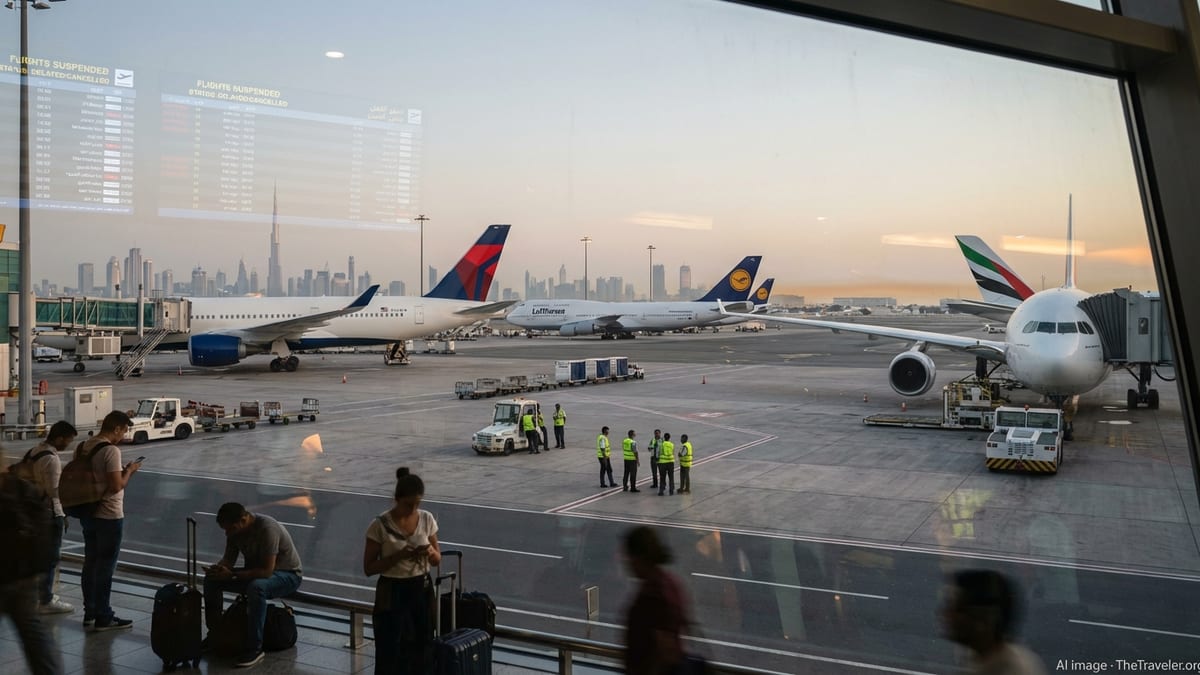
Oman Emerges as a New Pressure Point in Gulf Skies
As airspace over Iran and several neighboring states remains largely shut because of the 2026 conflict, Oman has emerged as one of the few Gulf countries whose skies remain fully open. Publicly available traffic data and regional aviation analyses indicate that flights which once crossed Iran, Iraq and the Strait of Hormuz are increasingly funneled through Omani airspace, turning Muscat’s flight information region into a critical east–west corridor.
However, that rerouting is coming with a financial sting. A recent airspace capacity study prepared for regional regulators warns that by 2040, limited airspace capacity over Oman could translate into hundreds of lost flights per day and substantial lost revenue for airlines and the wider aviation economy. The Iran war has effectively brought forward some of those pressures, with controllers managing higher volumes of overflights that are longer, heavier on fuel and more complex to sequence safely.
Omani carriers, including Oman Air, are contending with the same forces squeezing larger Gulf competitors: higher fuel bills, reduced schedule reliability and weaker connecting demand as passengers route away from the conflict zone entirely. Regional cargo flows that once relied on fast turnarounds through Gulf hubs are also being reshaped, with logistics advisories noting rising costs and longer transit times across the Middle East, South Asia and Africa.
For Oman, the short-term role as an alternative corridor brings incremental overflight fees and reinforces its strategic importance. Yet analysts caution that saturation in its airspace, combined with the broader collapse in regional connectivity, risks eroding airline profitability even as traffic numbers in Omani skies appear to surge.
Saudi Arabia, Qatar and Gulf Giants Cut Capacity Amid Record Disruptions
The Iran war has shut or restricted access to multiple Middle Eastern flight information regions, including those over Bahrain, Iraq, Israel, Kuwait, Qatar and the United Arab Emirates. Aviation and travel-industry trackers report that these closures have triggered thousands of daily cancellations and diversions, dismantling the tight web of connections that normally links Europe and North America with South and Southeast Asia through Gulf hubs.
Data compiled by specialist travel and aviation outlets show that by late March 2026, key Gulf carriers were operating at a fraction of their usual capacity. Emirates, Qatar Airways and Etihad Airways all sharply reduced flights as Dubai and Doha grappled with intermittent closures and operational constraints, with some estimates indicating capacity cuts of 30 to 60 percent on certain weeks compared with pre-war schedules.
Saudi Arabia, which has been investing heavily in turning Riyadh and Jeddah into global transfer hubs, has also been forced to pare flights, particularly those that would typically transit Iranian or Iraqi airspace. This has ripple effects across Europe–Asia and Africa–Asia flows, with Saudia and other Saudi-based operators seeing premium transfer traffic rerouted via alternative hubs such as Istanbul, Athens and select Indian metros.
Industry economic presentations released in recent weeks describe the impact of the Middle East war on airlines as “immediate and tangible,” citing airspace closures, fuel price spikes and disrupted supply chains. Even before the conflict, carriers were grappling with aircraft delivery delays and parts shortages; the sudden loss of key corridors has turned what was a managed recovery into what some analysts now characterize as a record revenue shock concentrated on the east–west trunk markets.
US, Singapore and Indian Carriers Absorb Longer Routes and Fuel Spikes
The turmoil is not confined to Middle Eastern airlines. Carriers based in the United States, Singapore and India are facing an abrupt rise in operating costs as they replot long-haul routes to avoid the conflict zone. Flights linking North America and Europe with India, Southeast Asia and Australasia are being shifted north over Central Asia or south over the Arabian Sea and East Africa, adding hours to block times on what were already among the world’s longest services.
Published coverage in Singapore and regional trade media shows that Singapore Airlines and its low-cost affiliate Scoot have rerouted many Europe-bound flights to avoid Iranian airspace, leading to longer flight times on routes to cities such as London, Frankfurt and Paris. Similar adjustments have been reported by European carriers and by Indian airlines operating to the Gulf and beyond, with some India–Europe services tracking further west over Saudi Arabia and Egypt or further north through the Caucasus.
Analysts at international banks and aviation think tanks note that fuel accounts for roughly one-fifth to one-third of airlines’ operating costs, and the Iran war has pushed jet fuel prices sharply higher alongside broader energy-market disruption. The combination of longer routings, heavier fuel uplift requirements and volatile spot prices is eroding margins on routes that had only recently returned to profitability after the pandemic slump.
US and Canadian carriers, which rely on Gulf partners and European hubs to feed traffic onward to India and Southeast Asia, are also being drawn into the disruption. Schedule data and travel-advisory notices show suspensions or reductions on some services to Dubai, Doha, Abu Dhabi and Tel Aviv, while alliance partners are working to re-accommodate passengers via alternate hubs such as Istanbul, Delhi and Singapore, often at higher cost and with significantly longer journey times.
Tourism Flows Fracture as Asia–Europe Fares Surge
The airspace closures and capacity cuts have quickly spilled over into the tourism economy. Asia–Europe itineraries that once relied on fast and relatively inexpensive one-stop connections via the Gulf are now subject to multiple stops, tight capacity and steep fare increases. Travel clubs and fare trackers report that in some markets, economy-class fares between Europe and key Asian destinations have at least doubled compared with early 2026 levels, while premium-cabin prices have climbed even faster.
Package operators and online travel agencies say publicly that they are struggling to reprice tours and holidays at short notice as airlines regularly update schedules and inventory. Popular winter and spring itineraries from Europe and North America to destinations such as Thailand, Indonesia, the Maldives and Indian beach resorts are being re-routed through secondary hubs or rebooked on less direct services, undermining the appeal of short-break travel and forcing some travelers to postpone or cancel trips altogether.
The disruption is also reshaping travel patterns within the Middle East. With key Gulf hubs constricted and Iran’s primary international gateway effectively offline, intra-regional tourism has contracted sharply. Some demand is being diverted to alternative stopover cities in Oman, Jordan and Egypt, but industry observers note that these markets lack the sheer capacity, hotel inventory and connecting networks that Dubai and Doha built over the past decade.
For destinations heavily dependent on Gulf and Iran-origin visitors, including parts of the Caucasus, East Africa and the Indian Ocean, the sudden drop in arrivals is hitting hotel occupancy and tourism-sector employment. Governments across these regions are turning to domestic and regional marketing campaigns to offset the loss, but the absence of wide-body capacity from Middle Eastern hubs is proving difficult to replace in the short term.
Prospects Clouded by Ongoing Conflict and Structural Strains
The Iran war has arrived at a moment when the global airline industry was still digesting post-pandemic structural challenges, including high debt loads, supply-chain bottlenecks and shifting business-travel demand. Economic outlooks published by airline associations earlier in the year projected modest profitability improvements for 2024 and 2025, but those forecasts assumed relatively stable geopolitics and open air corridors.
With a sizeable share of the world’s east–west traffic now forced onto longer or less efficient paths, revenue projections are being rapidly revised. Aviation economics briefings highlight not only the direct hit from higher fuel and crew costs, but also the knock-on effects of missed connections, compensation obligations under passenger-rights regimes and weakened demand from price-sensitive travelers confronting fare inflation.
Oman’s experience encapsulates the contradictions of this new phase. Its airspace has become indispensable for keeping some Europe–Asia and Africa–Asia links alive, yet the broader collapse in regional connectivity and surging operating costs threaten to erode the financial gains from hosting more overflights. Similar trade-offs confront Saudi Arabia, Qatar, the United Arab Emirates and other states that have built their economic strategies around aviation and tourism.
Much now depends on the trajectory of the conflict and on how quickly airlines and regulators can adapt routing, capacity and infrastructure to the new realities. For travelers, the near-term outlook suggests longer journeys, higher prices and a patchwork of new transit points. For airlines from Muscat to New York and Singapore, the Iran war has turned a fragile recovery into another severe test of resilience.