


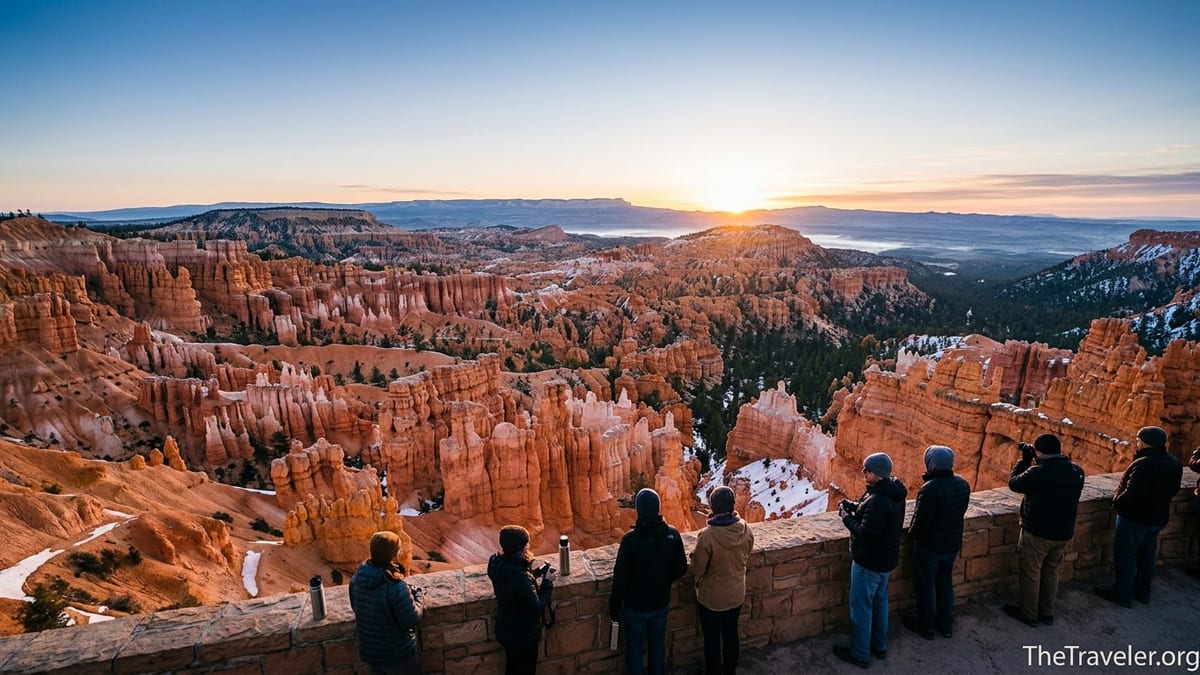
Stand on the rim of Bryce Amphitheater at first light and it becomes clear why so many travelers say this is the moment their Utah road trip truly comes alive. Thousands of delicate hoodoos glow in shades of orange and rose, a sweeping natural amphitheater carved not by a river but by snowmelt and summer storms. For many visitors, this compact three mile stretch of Bryce Canyon National Park delivers more wow factor, per hour and per step, than almost anywhere else in the American Southwest.
Get the latest updates straight to your inbox!
What Makes the Bryce Amphitheater So Special
The Bryce Amphitheater is the heart of Bryce Canyon National Park, a bowl shaped maze of spires, fins, and windows that feels otherworldly yet surprisingly accessible. Unlike classic canyons carved by rivers, this amphitheater was sculpted by freezing and thawing water and the slow work of rain and snow over millions of years. The result is one of the largest concentrations of hoodoos on Earth, all clustered within easy reach of the park road and shuttle system.
Most first time visitors are struck by how quickly they reach the iconic views. After entering the park, the main rim viewpoints of Sunrise Point, Sunset Point, Inspiration Point, and Bryce Point are all within the first three miles of the road. You can be parked at Sunrise Point within about 10 minutes of passing the fee station, which makes the amphitheater an ideal stop even on a tight schedule between Zion and Capitol Reef or between Page and Salt Lake City.
Travelers also appreciate how compact the area is. You do not need to commit to a full day or difficult backcountry trek to feel immersed in the landscape. Many visitors tour all four main viewpoints and walk a short section of the Rim Trail in half a day, then decide whether to return at sunrise, sunset, or drop below the rim for one of the classic day hikes.
Visually, the amphitheater offers nonstop variety. From some angles the hoodoos look like frozen flames, from others like crumbling castles or crowded city skylines. Even travelers who have already seen the Grand Canyon, Zion, and Arches often say Bryce feels unlike any other stop in the region.
The Views Travelers Love Most
Each amphitheater viewpoint has its own personality, and many travelers discover a favorite. Sunrise Point, the northernmost overlook, offers a broad panorama across the hoodoos and is an easy walk from the main campground and historic lodge. It is a convenient choice for families rolling out of a cabin or RV just before dawn with kids in tow and hot chocolate in hand.
Sunset Point, a short drive or 10 to 15 minute walk along the rim from Sunrise Point, is where many first time visitors gasp out loud. Here you look directly into the densest forest of hoodoos, with formations like Thor’s Hammer and the Silent City rising from the amphitheater floor. Photographers often set up along the stone wall with mid range lenses because the view feels almost three dimensional, with layers of spires leading your eye toward the distant plateau.
Inspiration Point, reached by a short but steep walk from its parking area, is the choice for travelers who want a grand, elevated perspective. From the upper viewpoint, the hoodoos fan out below you in waves. Many repeat visitors say this is their preferred spot for both sunrise and late afternoon light because you can watch shadows slowly slide across the formations.
Bryce Point, slightly farther along the road, offers one of the highest and widest perspectives over the amphitheater. It is especially popular on clear mornings when the sun rises behind you and everything in the bowl ignites in color. For travelers who are not planning to hike, doing a simple loop of these four overlooks, perhaps by shuttle during the busy season, is often the highlight of a Utah parks itinerary.
Is It Worth It If You Only Have Half a Day?
Many road trippers pull up Bryce Canyon on a map and worry that it might be too far off their route between larger destinations. The truth is that the Bryce Amphitheater is one of the most time efficient national park experiences in the region. If you have three or four hours, you can still feel that you truly experienced the park’s signature scenery.
For example, a couple driving in from Zion could leave Springdale after breakfast, arrive at Bryce Canyon around late morning, and by early afternoon have visited the four main viewpoints by car or shuttle. They might then walk the level Rim Trail between Sunrise and Sunset Points, which is roughly a mile one way and usually takes 30 to 45 minutes with photo stops. After a late lunch at the lodge or picnic area, they could be back on the road toward Torrey or Page before evening.
Travelers on tighter schedules often compare Bryce to other parks that require longer drives or high permit hurdles to reach their iconic views. Here, the main amphitheater is essentially roadside. There is no need to secure a lottery permit months in advance, no lengthy unpaved approach roads, and no need for advanced technical skills. Even if weather closes some backcountry trails, the viewpoints along the rim are frequently still accessible.
Of course, more time allows for more experiences. With a full day you can add a classic below the rim hike like the Queens Garden and Navajo Loop combination, or stay into the evening for stargazing programs when available. Yet even those who only sample the rim viewpoints routinely report that Bryce was one of the most memorable stops of their entire Southwest loop.
Hikes That Turn Sightseers Into Lifelong Fans
What often transforms a pleasant visit into something unforgettable is stepping off the rim and winding among the hoodoos themselves. The Bryce Amphitheater hosts several of the park’s best known day hikes, many of which start directly from Sunrise or Sunset Point. Travelers with average fitness can sample these trails without committing to all day mileage, as most routes are under 3 to 6 miles.
The Queens Garden Trail, which descends from Sunrise Point, is often recommended as the easiest way to drop below the rim. It leads past arches and small tunnels carved through the rock, winding toward formations that resemble statues of royalty, including one that locals liken to Queen Victoria. Families appreciate that they can turn around at any point if the switchbacks become too steep for younger children.
From Sunset Point, the Navajo Loop dives down through tight sandstone corridors like Wall Street, where tall Douglas firs reach up toward the sky. Many hikers combine the Navajo Loop with Queens Garden into a 2.5 to 3 mile figure eight, which might take two to three hours at a leisurely pace with photo breaks. Even travelers who typically shy away from hiking often say this loop was the highlight of their day because it offers a complete change of perspective from the rim views above.
Those seeking something slightly longer can connect the Peekaboo Loop with the Navajo or Queens Garden trails, creating 5 to 6 mile circuits that feel surprisingly quiet once you leave the most crowded turns near the rim. Guided horse and mule rides sometimes use parts of these routes in season, offering another way to experience the amphitheater for visitors who prefer to ride rather than hike.
Practical Planning: Costs, Shuttles, and Crowds
As of 2026, entrance to Bryce Canyon National Park by private vehicle typically costs around 35 dollars and is valid for seven consecutive days for everyone in the car. For travelers planning a broader national parks road trip, the America the Beautiful annual pass, usually about 80 dollars, often pays for itself after visiting Bryce plus two other major parks like Zion and the Grand Canyon within a year. Non US residents should check ahead, as there is now an additional nonresident fee for several flagship parks including Bryce, which can significantly affect trip budgets.
Once inside, the Bryce Canyon shuttle operates seasonally to help ease congestion along the amphitheater rim. The shuttle usually stops at key points including the visitor center, Ruby’s Inn area just outside the gate, Sunrise and Sunset Points, Inspiration Point, and Bryce Point. Many travelers park once at the large lot near the visitor center or shuttle station and then ride the shuttle to each viewpoint, avoiding the stress of competing for limited parking at individual overlooks during peak hours.
To manage crowds, it helps to time your visit carefully. In July and August, mid morning to mid afternoon can feel busy at the rim overlooks. If you stay in the nearby Bryce Canyon City area or in the park’s lodge or campgrounds, you gain a big advantage. Arriving at Sunrise or Sunset Point before 7 a.m. often means easier parking, fewer people in your photographs, and cooler temperatures for hiking. Similarly, walking the rim after most day visitors leave in the evening can feel almost meditative.
Facilities are relatively convenient for such a dramatic landscape. The main visitor center lies just inside the park boundary and offers exhibits, restrooms, and information on ranger programs. North and Sunset Campgrounds provide simple but well located sites within walking distance of the rim, while the historic lodge offers rustic rooms and cabins that appeal to travelers who want to step out their door and reach Sunrise or Sunset Point in minutes.
When to Visit and What Conditions to Expect
Because Bryce Amphitheater sits at elevations around 8,000 to 9,000 feet, conditions differ significantly from lower desert parks. Summer days are warm and sunny but often cooler than Zion or Arches, which many travelers appreciate when hiking below the rim. Afternoon thunderstorms are common in July and August, so it is wise to start hikes early, carry a light rain jacket, and avoid exposed rims if lightning is in the area.
Spring and fall are favorites for many repeat visitors. In May and late September, daytime temperatures are often comfortable for hiking, while mornings and evenings can be chilly enough for a fleece layer and gloves at the viewpoints. These shoulder seasons also see somewhat lighter crowds than peak summer, though weekends and holiday periods can still be lively.
Winter in the amphitheater can be truly magical for those prepared for snow and cold. Light snow often dusts the red hoodoos, creating a striking color contrast. The main viewpoints usually remain accessible, and the park sometimes grooms certain trails for snowshoeing or cross country skiing. Drivers should be ready for icy roads and occasional temporary closures during storms, and hikers must be prepared with traction devices for steep, icy sections if any below the rim routes are open.
Regardless of season, the high elevation means sun exposure is intense. Travelers consistently report that broad brimmed hats, sunscreen, and more water than they expected to need made their visit much more comfortable. Even a short walk along the rim can feel surprisingly dehydrating under a clear Utah sky.
Beyond the View: Stargazing, Photography, and Atmosphere
While the amphitheater is spectacular by day, many travelers fall in love with it after dark. Bryce Canyon National Park is recognized for its dark night skies, and on clear evenings you can often see the Milky Way stretching over the rim. In summer, the park typically offers night sky programs with rangers and powerful telescopes, drawing visitors who planned only a quick stop but decide to extend their stay to experience the stars.
Photographers praise Bryce Amphitheater as one of the most forgiving and rewarding landscapes to shoot. At sunrise, the hoodoos catch the first warm light while the background plateau stays in cool shadow, creating natural contrast. A wide angle lens around 16 to 24 millimeters on a full frame camera captures the breadth of the amphitheater, while a 70 to 200 millimeter telephoto lets you isolate individual spires and details. Even travelers with only a smartphone find that the drama of the scene often translates well without special equipment.
The atmosphere around the rim can also be unexpectedly communal. On cold autumn mornings, people wrapped in blankets share thermoses of coffee while they wait for the sun. In summer, families with children trade tips about which sections of the Queens Garden and Navajo Loop are best for younger hikers. Solo travelers often remark that this is one of the easier parks in which to strike up conversations, simply because everyone is staring at the same view in shared amazement.
Nearby services add to the experience without overwhelming it. Just outside the park, the small cluster of hotels, campgrounds, and restaurants in Bryce Canyon City offers simple but practical amenities, from grocery basics and gasoline to horseback rides and western themed dinner shows. Many travelers base themselves there for two or three nights, using the amphitheater as a focal point while also exploring the longer scenic drive to Rainbow Point and lesser known viewpoints beyond the main bowl.
The Takeaway
So is the Bryce Amphitheater worth visiting? For most travelers, the answer is an emphatic yes. It concentrates the essence of Bryce Canyon National Park’s beauty into a remarkably compact area that is easy to reach, simple to navigate, and endlessly photogenic. Whether you only have a few hours to make a quick shuttle assisted circuit of the main viewpoints, or several days to hike below the rim and linger under star filled skies, the amphitheater repeatedly ranks among the most memorable stops on a Southwest itinerary.
What visitors love most is the combination of spectacle and simplicity. You can step out of your car or shuttle and be at the park’s signature overlooks within minutes, yet feel as if you are looking into a landscape that belongs on another planet. From the delicate silhouettes of hoodoos at dawn to the quiet of the rim after dark, Bryce Amphitheater offers a depth of experience that belies its modest size on the map.
If your route through Utah has room for even half a day, the Bryce Amphitheater earns its place. Those who give it a full day or more often leave planning a return visit in a different season, eager to see the same formations under new light and weather. In a region filled with legendary scenery, that is perhaps the strongest endorsement a destination can have.
FAQ
Q1. How much time do I need to see the Bryce Amphitheater?
Most travelers feel satisfied with the main views in three to five hours, which allows time to visit Sunrise, Sunset, Inspiration, and Bryce Points and walk a short section of the Rim Trail. If you want to hike below the rim on Queens Garden and Navajo Loop or stay for sunrise and sunset, plan a full day or an overnight.
Q2. Do I need a reservation to visit the Bryce Amphitheater?
At present there is no timed entry or special reservation required specifically for the amphitheater. You simply need a valid park entrance pass. However, lodging and campground reservations, especially from late May through September, should be booked well in advance because options near the rim fill quickly.
Q3. Is the Bryce Amphitheater suitable for young children or older travelers?
Yes. The main viewpoints are close to parking areas and shuttle stops, and the paved Rim Trail section between Sunrise and Sunset Points is relatively level. Families with strollers and older visitors who prefer not to hike steep trails can still enjoy excellent views from the rim. Below the rim trails involve significant elevation change and may not be appropriate for everyone.
Q4. What is the best time of day to visit the amphitheater?
Sunrise offers the most dramatic lighting, with the hoodoos glowing in warm tones as the sun clears the horizon. Early morning and late afternoon are also cooler and less crowded than midday. If you can, experience both a sunrise and a late day visit, when low angle light creates long shadows and depth.
Q5. Can I see the Bryce Amphitheater without hiking?
Absolutely. Many visitors never leave the rim and still consider their visit a success. You can ride the shuttle or drive to the four major viewpoints, step out to the overlooks, and walk the short paved segments along the rim. Comfortable walking shoes are still recommended, but technical hiking gear is not necessary for rim based sightseeing.
Q6. What should I bring for a day in the Bryce Amphitheater area?
Plan on sturdy footwear, layered clothing for changing temperatures, a hat, sunglasses, sunscreen, and more water than you think you need. A light jacket is useful even in summer mornings at this elevation. If you plan to photograph, bring a spare battery and memory card because it is easy to take more pictures than expected.
Q7. Is there public transportation or a shuttle I can use?
Yes. During the main visitor season, the park’s shuttle system typically runs frequent buses that connect the visitor center, nearby lodging area just outside the gate, and the key amphitheater viewpoints. Many travelers park once and rely on the shuttle for the rest of the day to avoid parking congestion at popular overlooks.
Q8. How does Bryce Amphitheater compare to other Utah parks like Zion or Arches?
Bryce feels more compact and higher in elevation than Zion or Arches. The amphitheater’s hoodoos create a dense, vertical landscape that is very different from Zion’s deep canyon or Arches’ isolated rock spans. Travelers often say Bryce delivers intense visual impact in a relatively small area, making it easy to experience in one or two days.
Q9. Is Bryce Amphitheater accessible in winter?
In most winters, the main park road to the amphitheater viewpoints is plowed and open, though temporary closures can occur during storms. Viewpoints may be snowy or icy, so traction devices and caution near the rim are essential. Some below the rim trails close seasonally for safety, but the snowy landscapes viewed from above are a major draw for winter travelers.
Q10. Where should I stay to make the most of a visit to the amphitheater?
Staying at the historic Bryce Canyon Lodge or in the park’s campgrounds puts you within walking distance of Sunrise and Sunset Points, which is ideal for sunrise and stargazing. Just outside the gate, hotels and RV parks in Bryce Canyon City offer more rooms, restaurants, and services, and they are connected to the park by the seasonal shuttle. Both options allow you to reach the rim quickly in the early morning and evening.