


On paper, Cosby, Tennessee looks like the Smokies destination everyone says they want: quiet, green, close to trailheads and blissfully short on neon. Yet when you start actually planning a Great Smoky Mountains trip, questions creep in. Is Cosby too sleepy for a first visit? Will you spend your vacation just driving back and forth to trailheads, restaurants and attractions? Or is this exactly the reset you are craving from the crowds of Gatlinburg and Pigeon Forge?
Get the latest updates straight to your inbox!
Getting Oriented: What Cosby Actually Offers
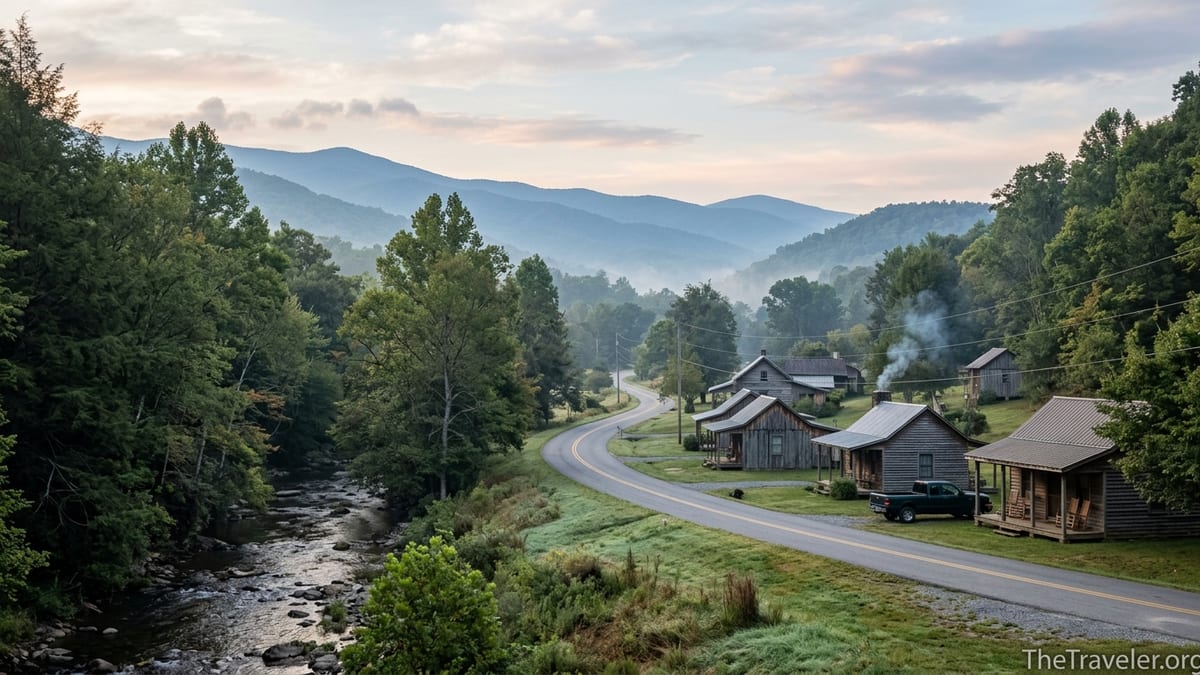
Cosby is a small unincorporated community on the northeastern fringe of Great Smoky Mountains National Park in Cocke County, roughly 20 miles east of Gatlinburg by road. It sits in rolling foothills with farms, wooded ridges and the clear water of Cosby Creek, with the park boundary just to the south and southwest.
Inside the park, Cosby’s main draw is Cosby Campground, a frontcountry National Park Service campground at about 2,450 feet elevation. It is one of the park’s larger campgrounds, with more than 150 sites set under mature hardwoods along the creek, but it remains much quieter than Elkmont or Cades Cove because it is farther from the theme-park bustle of Gatlinburg. Quiet hours are enforced, there are flush toilets but no showers, and nights are mostly about campfires, stars and the sound of moving water.
From the campground and nearby trailheads, you can step straight onto classic Smokies routes: the Lower Gap Trail to the Appalachian Trail, Snake Den Ridge climbing toward Inadu Knob, the trail to Hen Wallow Falls, and longer routes that eventually reach Mount Cammerer’s fire tower. For hikers who like to start early without an hour’s drive, this access is a major perk of basing in Cosby.
Outside the park boundary, the community of Cosby strings along Tennessee Highway 32 and nearby local roads. Expect a handful of RV parks and small campgrounds, scattered cabin rentals in the woods, one or two local diners or barbecue joints, small roadside markets and gas stations, and not a single stoplight downtown. There is no walkable restaurant strip and no big-box grocery store, which is either a deal-breaker or the whole point, depending on your travel style.
When Cosby Makes an Excellent Base
Cosby comes into its own for travelers who prize quiet nights and trail access over nightlife or a long list of restaurants. If your ideal Smokies trip is hiking to a fire tower in the morning, napping in a hammock in the afternoon and stargazing by the creek after dark, basing in or near Cosby is a strong choice.
As an example, a couple renting a small cabin off Cosby Highway can be at Cosby Campground’s trailhead parking in about 10 minutes on a typical June morning, lacing up for a 5 to 10 mile loop without worrying about finding parking on the busier Newfound Gap corridor. After hiking to Hen Wallow Falls or up Snake Den Ridge, they can be back on a cabin porch by mid-afternoon listening to tree frogs instead of fighting Gatlinburg traffic for lunch.
Cosby is also appealing in peak seasons when the main park entrances are jammed. During a busy October weekend, Newfound Gap Road and Gatlinburg’s Parkway can move at a crawl, and parking at popular trailheads like Alum Cave or Laurel Falls often fills early. In contrast, Cosby’s campground area and nearby trails typically remain noticeably less crowded. You might still share the Lower Gap Trail with other hikers, but you are far more likely to hear birdsong than a constant background noise of cars.
Budget travelers and RV owners often use Cosby as a base because nightly rates at smaller private campgrounds and basic cabins in the area tend to run lower than many Gatlinburg options, especially for last-minute summer bookings. You give up walkable attractions but gain affordability and elbow room. For a family trying to keep nightly costs under control, a simple two-bedroom cabin up a Cosby hollow can make more financial sense than a condo near Gatlinburg’s convention center.
When You Might Be Better Off Staying Elsewhere
Where Cosby falls short is convenience. From central Cosby to downtown Gatlinburg is usually a 30 to 40 minute drive in normal traffic, longer on summer weekends and fall foliage days. If your itinerary includes multiple dinners in Gatlinburg, a visit to the aquarium, time at the SkyPark or Ober Mountain, or day trips to Dollywood and Pigeon Forge, that commute adds up quickly.
Consider a first-time visitor who wants to mix hiking with classic Smokies attractions. They plan to ride the mountain coaster, walk the Gatlinburg strip at night, visit a distillery or two, and spend a full day at Dollywood. From a hotel near Gatlinburg’s convention center or a cabin in neighboring Pigeon Forge, they can park once and walk to many of these stops, or reach Dollywood in 15 to 20 minutes. From Cosby, every one of those days begins and ends with a 30 to 60 minute highway drive each way, some of it on winding mountain two-lane roads.
Cosby also offers very limited dining and shopping. You can expect a couple of local restaurants serving breakfast platters, burgers, catfish or barbecue, and perhaps a pizzeria or food truck in season. There may be a small market selling basics like ice, firewood, snacks and a few shelves of groceries. If you need a full supermarket run, you are likely driving into Newport, which is roughly 20 minutes away, or down toward Gatlinburg or Sevierville. Travelers who enjoy walking to coffee shops, browsing galleries, or having multiple dinner options within a short stroll will probably feel restricted here.
Finally, if your group includes people who are not outdoorsy, Cosby can feel isolating. A hiker might love a week of early-morning trail starts, but a friend who prefers shopping, shows or amusement rides might quickly tire of quiet creeks and forest views. In mixed groups, basing closer to Gatlinburg, Pigeon Forge or even Townsend often strikes a better balance between nature access and entertainment.
Cosby vs Gatlinburg, Townsend and Newport
When deciding whether to stay in Cosby or elsewhere, it helps to compare it with three common bases: Gatlinburg, Townsend and Newport. Each offers a different mix of access, atmosphere and amenities.
Gatlinburg is the best-known gateway on the Tennessee side of the Smokies, with a dense strip of hotels, motels, condos, chain restaurants, independent eateries, distilleries, theme attractions and souvenir shops. It sits right at an entrance to the park and close to the main north-south spine of Newfound Gap Road, so drives to popular viewpoints and trailheads are short. If you want to step out of your lodge and walk to dinner, live music or a tasting room every night, Gatlinburg delivers, but it comes with heavy traffic, bright lights and crowds, especially in summer and fall.
Townsend, about an hour’s drive to the west of Cosby depending on the route, markets itself as a quieter counterpart to Gatlinburg. It has a small cluster of motels, cabins, campgrounds and tubing outfitters along the Little River, plus a few restaurants and coffee shops. You can reach Cades Cove or the Tremont and Middle Prong areas of the park relatively quickly from Townsend. For travelers who want more amenities than Cosby but far fewer crowds than Gatlinburg, Townsend is a strong compromise, though it is not especially close to the northeastern trailheads around Cosby and Big Creek.
Newport, to the north of Cosby along Interstate 40, is a functional base rather than a scenic one. You will find chain hotels, full-service grocery stores, fast-food outlets and basic services. For some visitors, especially those arriving late at night or traveling on a strict budget, grabbing a freeway hotel in Newport and driving down into the park each morning makes sense. However, you do not get the “mountain town” setting that Cosby and Townsend provide, and your daily drives will still be substantial.
For travelers targeting the eastern side of Great Smoky Mountains National Park, including the Cosby area, Big Creek, and beyond to North Carolina, a practical strategy is to split time: two or three nights in a Cosby cabin or campground for hiking-intensive days, then a couple of nights in Gatlinburg or Pigeon Forge to experience attractions and restaurants without long commutes.
Who Will Love Staying in Cosby (and Who Probably Won’t)
Cosby is an excellent base for hikers, campers and anyone who values slow, quiet mountain time. If your idea of a successful trip is logging miles on trail, photographing spring wildflowers, listening for owls at night or reading on a porch with a view of the ridgeline, Cosby’s under-the-radar character is a major advantage.
Solo travelers or couples from big cities often find the contrast refreshing. After a day in busy airports and rental cars, arriving at a small cabin outside Cosby, grilling on a back deck and hearing only crickets and creek noise can feel like a complete reset. If you are used to Manhattan or Chicago, a week where your biggest evening decision is whether to drive to a local diner or cook at home might be exactly what you are paying for.
Families with kids who like camping and nature but are overwhelmed by crowds can also do well here. Cosby Campground’s loops are compact enough that older kids on bikes can explore within sight of adults, and ranger programs or informal talks sometimes take place in the area during peak season. Add in short hikes like the Cosby Nature Trail or the route to Hen Wallow Falls, and you have several days’ worth of exploration without leaving the valley.
On the other hand, visitors who crave variety, nightlife or shopping will likely be happier elsewhere. If your travel style involves coffee shops in the morning, galleries or boutiques in the afternoon and live music or bars at night, Gatlinburg or Asheville across the state line in North Carolina will be more satisfying. Likewise, larger groups celebrating events like reunions or milestone birthdays may prefer access to big cabins, group activities and restaurants that can handle large tables, something Cosby has in limited supply.
Practical Tips if You Choose to Base in Cosby
If you decide Cosby sounds right for you, a few practical steps can help the stay run smoothly. First, plan for self-catering. Before you drive up into the valley, stop at a full-service supermarket in a larger town such as Newport, Sevierville or Knoxville and stock up on groceries for most of your stay. Rely on local Cosby markets for top-ups like ice, firewood, drinks and basic pantry items, but do not assume you can assemble specialty diets or elaborate recipes from tiny roadside stores.
Second, build realistic drive times into your daily itineraries. Even in light traffic, expect around 30 minutes from Cosby to Gatlinburg, and more to reach Dollywood or Pigeon Forge. On popular weekends, pads of 15 to 30 extra minutes help avoid frustration. Plan park days that cluster activities in one geographic area: one day around Cosby and Big Creek; another centered on Newfound Gap and Clingmans Dome; a different day for Cades Cove if you are willing to make the long cross-park drive.
Third, match your lodging type to your comfort level. Cosby Campground offers a classic national park experience with tent and RV sites among big trees, but there are no hookups at individual sites and no showers. If that feels too rustic, opt for a private RV park or a cabin with a hot shower and climate control, then use the public campground and picnic area as your trailhead access point. Prices in the Cosby area for basic cabins tend to be lower than in Gatlinburg, but more luxurious homes with hot tubs and sweeping deck views are also available for travelers willing to climb steeper access roads.
Finally, come prepared for limited cell coverage and modest infrastructure. Depending on your carrier, service can fluctuate between strong, weak and nonexistent as you move around the valley and into the park. Download offline maps for driving and hiking in advance, keep printed directions for key trailheads, and if you are working remotely, confirm with your host or campground whether reliable internet is available before you book.
The Takeaway
So is Cosby worth staying in, or should you base yourself elsewhere? The answer depends on whether you see quiet and distance from the main strip as a problem or a privilege. Cosby trades instant access to attractions and broad dining choices for creekside campsites, dark starry nights and the ability to walk onto lesser-known Smokies trails from your door.
For seasoned park visitors, hikers, road trippers and anyone specifically seeking a slower Smokies experience, Cosby is not just “worth it” but often ideal. It keeps you close to the northeastern corner of the park, away from the thickest traffic, without completely severing your link to Gatlinburg, Pigeon Forge or Newport when you want a restaurant meal or a resupply run.
For first-timers who want to sample a bit of everything the region is famous for, splitting your stay can be the best of both worlds: a few nights in Cosby to savor early mornings on trail and campfires by the creek, followed by a couple of nights in a more developed base to enjoy attractions and restaurants on foot. In the end, Cosby shines brightest when you treat it not as a cheaper version of Gatlinburg, but as a different kind of Smokies home base altogether.
FAQ
Q1. Is Cosby a good base for a first visit to Great Smoky Mountains National Park?
For a first visit, Cosby can work if your focus is hiking and quiet time, but many first-timers prefer staying in or near Gatlinburg for easier access to visitor centers, popular overlooks and classic attractions, then visiting Cosby on a day trip.
Q2. How long does it take to drive from Cosby to Gatlinburg?
In normal conditions, the drive from central Cosby to downtown Gatlinburg usually takes about 30 to 40 minutes each way, longer on busy summer or fall weekends when traffic is heavy.
Q3. Are there restaurants and grocery stores in Cosby?
Cosby has a small number of local diners, cafes and markets suitable for casual meals and basic supplies, but no large supermarkets. For full grocery shopping, many visitors stop in Newport, Sevierville or another larger town before driving into the valley.
Q4. What kind of lodging is available in Cosby?
Expect a mix of national park camping at Cosby Campground, a few private RV parks, small mom-and-pop motels and a broad range of cabin rentals, from simple one-bedroom log cabins in the woods to larger homes with decks and hot tubs on surrounding hillsides.
Q5. Is Cosby less crowded than Gatlinburg?
Yes, Cosby is significantly quieter. You will not find the dense strip of attractions, neon signs and heavy pedestrian traffic that defines Gatlinburg, and trailheads in the Cosby area generally see fewer visitors than the most famous routes near Newfound Gap Road.
Q6. Is Cosby a good choice for families with kids?
Cosby can be great for families who enjoy camping, hiking and simple outdoor fun like playing in creeks, but families wanting go-karts, shows and amusement parks nearby may be happier staying in Gatlinburg or Pigeon Forge and visiting Cosby for day hikes.
Q7. What are the main hikes accessible from Cosby?
From the Cosby area you can reach trails such as the Lower Gap Trail to the Appalachian Trail near a shelter, Snake Den Ridge climbing toward the high ridges, the Hen Wallow Falls trail to a waterfall, and shorter options like the Cosby Nature Trail along the creek.
Q8. Can I visit Dollywood easily if I stay in Cosby?
You can, but it involves a drive of roughly an hour each way depending on traffic. If Dollywood and Pigeon Forge attractions are a major trip priority, most travelers find it more convenient to base closer and visit Cosby as a quieter side trip.
Q9. Does Cosby have cell service and internet?
Cell coverage around Cosby is patchy and varies by carrier, and some cabins or campgrounds may have limited or slower internet. If connectivity is important, confirm details with your host or campground before you book and download offline maps for the area.
Q10. Is it better to stay only in Cosby or split time with another town?
Many travelers find a split stay ideal: a few nights in Cosby for peaceful hiking-oriented days, combined with a couple of nights in Gatlinburg, Pigeon Forge or Townsend to enjoy restaurants, attractions and shorter drives to other parts of the park.