


Dark Hollow Falls is one of the most popular hikes in Shenandoah National Park. Its trailhead sits right off Skyline Drive, tour buses stop here, and on busy autumn weekends the small parking lot fills before 10 a.m. But popularity does not always equal the best experience. If you are planning a trip and wondering whether Dark Hollow Falls is really worth visiting, or if nearby waterfalls like Rose River, Whiteoak Canyon, or Overall Run might be better for you, this guide breaks down the real-world tradeoffs so you can spend your limited park time wisely.
Get the latest updates straight to your inbox!
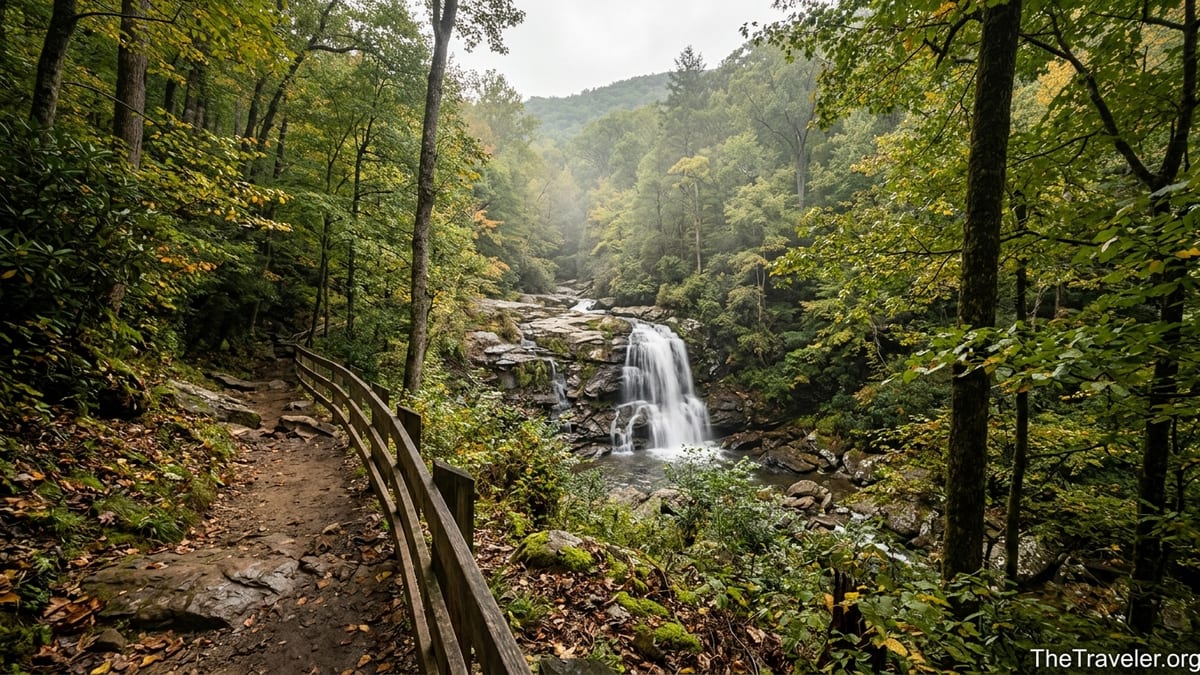
What Dark Hollow Falls Is Really Like
Dark Hollow Falls is often described as Shenandoah’s classic waterfall hike. The trailhead is at mile 50.7 on Skyline Drive in the park’s Central District, and the National Park Service lists the hike as roughly a 1.4 to 1.5 mile out-and-back with about 440 feet of elevation gain. The waterfall itself drops around 70 feet in a series of mossy ledges, framed by hemlock and hardwood forest. On a spring morning after rain, the stream roars and mist hangs in the air. In late summer or during a dry fall, the flow can shrink to a delicate veil, still pretty but less dramatic.
What surprises many first-time visitors is that Dark Hollow is harder than it looks on the map. The trail drops steeply from the parking lot, following Hogcamp Branch downstream on a rocky path. That means the easy part comes first, and the price is due on the way back. The return climb feels sustained and can be punishing on hot, humid Virginia afternoons, especially for families carrying toddlers or travelers not used to hiking. It is common to see people stopped every few minutes to catch their breath on the ascent.
The trail is also very busy in peak season. On a sunny Saturday in October, you may find cars circling the lot or idling on Skyline Drive waiting for a space. Once on the trail, you will likely walk in a loose line of people rather than in solitude. At the main viewpoint near the base of the falls, expect a small crowd taking photos and sometimes people stepping onto slick rocks for a closer look. That popularity is part of the appeal if you like a lively atmosphere, but it can disappoint travelers seeking quiet.
Another important detail: pets are not allowed on the Dark Hollow Falls trail, although service animals are permitted. The park service is explicit about this, in part because of the steep, narrow tread and the number of people. If you are traveling with a dog and hoped to include a waterfall hike, you will need an alternative such as Rose River Falls, which does allow leashed pets.
Pros and Cons of Choosing Dark Hollow Falls
The biggest advantage of Dark Hollow Falls is convenience. The trail starts directly from Skyline Drive, a scenic road that most visitors already plan to drive. You do not need to navigate gravel backroads or find a boundary trailhead; you pull into a signed lot, step out of your car, and the blue-blazed trail begins. For road-trippers doing a quick lap through Shenandoah in a single day, that simplicity is appealing. You can often hike to the falls and back in about an hour to 90 minutes, then continue toward Big Meadows or Skyland for lunch.
Because the hike is short, Dark Hollow makes sense if you are limited by time, energy, or mobility, but still want to see at least one waterfall. For example, a family staying at Big Meadows Lodge might drive less than 10 minutes to the trailhead after dinner for a golden-hour stroll down to the viewpoints, knowing they can be back before dark. Similarly, travelers breaking up a long drive between Washington, D.C., and the Blue Ridge Parkway may not have time for a three- or four-hour outing; Dark Hollow fits neatly into that window.
On the downside, the experience can feel rushed and crowded. You see one main waterfall and then turn around. There are smaller cascades and pools along Hogcamp Branch, but the trail is primarily a single-purpose out-and-back. If you have spent hours reaching Shenandoah from afar, you may find the payoff relatively modest compared with what is available just a few miles away. The steepness also catches some visitors off guard. A traveler who is comfortable with city walking but not used to hiking might assume that a 1.4-mile trail is easy, only to struggle on the climb and leave with a negative impression.
Conditions at Dark Hollow are also more sensitive to water levels. During a wet spring, snowmelt and rain feed a full curtain of water, and photographs look like the postcards that lure many visitors. In mid- to late summer, especially after a dry stretch, Hogcamp Branch can run low. The rock shelves remain scenic, but if you have seen more powerful waterfalls in the Pacific Northwest, New England, or Iceland, the subdued flow might feel underwhelming. In contrast, some longer canyon hikes in the park offer multiple falls and cascades, so even if one drop is reduced, others still feel lively.
Nearby Alternatives: Rose River Falls, Whiteoak Canyon, and Overall Run
Within roughly a 30-minute drive of Dark Hollow Falls, Shenandoah offers several waterfall hikes that many repeat visitors rank higher. The closest is Rose River Falls, another Hogcamp Branch tributary hike often accessed from Fishers Gap Overlook around mile 49.4 on Skyline Drive. The full Rose River Loop, which can also be linked with Dark Hollow for a longer outing, typically runs about 4 miles with around 900 to 1,200 feet of elevation gain depending on the variant. Rose River’s main drop is shorter than Dark Hollow’s, but the trail follows a lively stream for a longer stretch, with numerous small falls, plunge pools, and mossy stonework steps that many hikers call a highlight.
Whiteoak Canyon lies a bit farther north near mile 42.6 and is widely cited in guidebooks and forums as one of Shenandoah’s premier waterfall hikes. From the upper trailhead off Skyline Drive, you can hike to the upper falls on a moderate 4.5- to 5-mile round trip, or continue farther into the canyon to see multiple additional drops on a more strenuous outing. From the lower boundary trailhead outside the park, popular with day trippers staying in nearby towns like Syria or Luray, you work your way up the canyon past several waterfalls, then descend back to your car with gravity on your side. Visitors often describe this as a full-day experience, with opportunities to picnic by the stream or wade in shallow pools when water levels and safety conditions allow.
For those chasing the park’s superlatives, Overall Run Falls, in the North District near mile 21, is Shenandoah’s tallest waterfall at about 93 feet. Reaching its main viewpoint usually involves a 5- to 6-mile hike with more significant elevation change. On busy summer weekends, it tends to see fewer crowds than Dark Hollow or Whiteoak simply because of the longer distance. The payoff is a more open view down a rugged gorge, particularly striking when framed by spring wildflowers or peak fall color.
In addition to these marquee destinations, other options like South River Falls, Doyles River Falls, Jones Run, and combinations such as the Doyles River / Jones Run loop offer varied waterfall scenery with different levels of difficulty. Many experienced Shenandoah hikers will tell you that if you only see Dark Hollow, you are sampling just a fraction of what the park’s streams can offer.
Which Waterfall Fits Your Travel Style and Fitness
Choosing between Dark Hollow Falls and its neighbors is less about which waterfall is objectively “best” and more about matching the trail to your travel style and fitness. Dark Hollow suits travelers who want a short, straightforward outing directly off Skyline Drive and are comfortable tackling a steep but relatively brief climb. It works well for visitors with half a day in the Central District or those piecing hikes between scenic overlooks, visitor centers, and lodge stops.
Rose River Falls tends to appeal to hikers who want a more immersive streamside experience without a full-day commitment. The longer loop means you spend more time next to tumbling water, and the trail’s stone steps, bridges, and small side cascades create a sense of discovery. Because pets are allowed, it also becomes an obvious pick for dog owners staying in nearby campgrounds like Big Meadows or Lewis Mountain. If you are willing to budget three to four hours and can handle 800 to 1,000 feet of climbing, Rose River often feels like better value for your effort.
Whiteoak Canyon is the right choice for travelers who consider hiking a central part of their trip rather than an add-on. The canyon’s multiple falls and swimming holes (where conditions are safe) reward those who pack lunch, start early, and accept that they may finish the day pleasantly tired. Families with teens who enjoy adventure, couples on hiking-focused getaways, and photographers with time to linger along the stream often gravitate here. The tradeoff is a more strenuous hike with roots, rocks, and some steep grades, so it may be less comfortable for those with joint issues or limited trail experience.
If your priority is seeing Shenandoah’s tallest waterfall and avoiding the densest crowds, Overall Run is worth the drive to the North District. It is best for reasonably fit hikers who are already comfortable with 5- to 7-mile outings and do not mind a climb. Travelers staying in lodgings near Front Royal, or making a loop that includes Skyline Drive’s northern overlooks, often incorporate Overall Run as their primary waterfall day.
Seasonal Considerations: When Dark Hollow and Other Falls Shine
Season matters a great deal when deciding if Dark Hollow Falls is worth your time. In early spring, usually from late March through May, snowmelt and frequent rain keep Hogcamp Branch and other streams flowing strongly. Dark Hollow’s 70-foot cascade tends to look close to the iconic photos that fill social media, and wildflowers like trillium and violets brighten the forest floor along the trail. Temperatures are cooler, which makes the steep return climb more manageable.
Summer brings lush greenery but more variable water levels. In June, waterfalls are often still strong, especially after storms. By July or August, stretches of dry weather can reduce flow across Shenandoah’s falls. In that context, hikes with multiple cascades, such as Rose River or Whiteoak Canyon, may feel more rewarding than a single-drop out-and-back like Dark Hollow. Afternoon thunderstorms are also common, so starting earlier in the day reduces the risk of hiking on slippery rock during a downpour.
Autumn is peak season for both foliage and crowds. On October weekends, visitors drive Skyline Drive in large numbers to see the ridges painted in red, orange, and gold. Dark Hollow’s parking lot often fills by mid-morning, and traffic can slow near popular trailheads. If your visit falls during this period and you want to hike Dark Hollow, aim for a weekday or arrive soon after sunrise. Alternatively, choosing a slightly longer waterfall hike like Jones Run or South River early or late in the day can sometimes offer more breathing room.
Winter transforms the park into a quieter, more austere landscape. Some experienced hikers visit Dark Hollow and other falls in cold spells hoping to see ice formations and partially frozen cascades. However, snow and ice can make steep trails treacherous, especially on the shaded sections that do not thaw quickly. The park may close Skyline Drive sections temporarily after storms, so winter travelers need flexibility. Dark Hollow’s short distance can be an advantage here, but only if you have the proper traction devices and warm, layered clothing.
Practical Tips: Parking, Safety, and Combining Trails
From a practical standpoint, Dark Hollow’s size and layout mean that small logistical choices have an outsized impact on your day. Parking is limited to a modest lot right off Skyline Drive, with no overflow beyond roadside pull-offs where parking is allowed. Arriving before 9 a.m. in peak season markedly increases your odds of finding a space without circling. If you show up at midday on a foliage weekend and the lot is full, park rangers may ask you to move along rather than wait idling.
On the trail, plan for a hike that, while short, demands careful footing. The path includes rocky steps, roots, and wet patches, especially after rain. Trail runners or light hiking shoes with good grip are far safer than smooth-soled sandals. The park service frequently reminds visitors not to climb out onto slick rocks near the falls, no matter how tempting the photo opportunity. Serious injuries have occurred when people lost footing on algae-covered stone. Carrying basic rain gear and a small first-aid kit is sensible even on a quick outing, since mountain weather can change quickly.
If you like the idea of seeing Dark Hollow but want a deeper experience, consider linking it with Rose River Falls in a loop. Many hikers start at the Dark Hollow parking area, descend to the falls, continue down to the junction with Rose River Fire Road, and then follow either the fire road or the Rose River Trail back toward Skyline Drive. Depending on the variant, this can turn into a 4- to 5-mile outing with several hours of streamside walking and two distinct waterfall areas. This option is especially attractive for travelers based at Big Meadows Campground who have an entire morning or afternoon to explore on foot.
For those staying multiple nights in the park, another strategy is to dedicate one day to the Central District waterfalls and another to the North or South District. For example, you might hike the Dark Hollow / Rose River combination on day one, then tackle Whiteoak Canyon or Overall Run on day two. Spacing hikes like this allows your legs to recover while still giving you a feel for the variety of Shenandoah’s canyons and falls.
The Takeaway
So, is Dark Hollow Falls worth visiting, or are there better waterfalls nearby? The honest answer depends on what you want from your time in Shenandoah. If you are driving Skyline Drive with only a few hours to spare, want a relatively short hike to a classic-looking cascade, and do not mind sharing the trail with many others, Dark Hollow delivers exactly that. Its proximity to Big Meadows, its straightforward navigation, and its status as a park icon make it an easy win for first-time visitors who value convenience.
If, however, you are a traveler who prioritizes quieter trails, longer immersion in nature, or seeing multiple waterfalls in one outing, neighboring hikes like Rose River Falls, Whiteoak Canyon, and Overall Run will almost certainly feel more rewarding. They require more effort and time, but they also offer more varied scenery and a stronger sense of being deep in the Blue Ridge rather than steps away from a busy road.
For many visitors, the best strategy is not choosing one or the other but planning a waterfall-themed day that fits both their schedule and fitness. A dawn walk to Dark Hollow followed by a leisurely loop along Rose River, or a longer day committed to Whiteoak Canyon, can turn a simple stop into a highlight of your Shenandoah trip. Whatever you pick, checking current trail and road conditions with the National Park Service before you drive in, packing proper footwear and water, and starting earlier in the day will go a long way toward ensuring that the waterfall you choose feels absolutely worth the effort.
FAQ
Q1. Is Dark Hollow Falls a good choice for first-time visitors to Shenandoah?
Yes, Dark Hollow Falls is a solid choice for first-time visitors who want a short, classic waterfall hike directly off Skyline Drive and are comfortable with a steep but brief climb back to the car.
Q2. How difficult is the Dark Hollow Falls trail compared with other waterfall hikes nearby?
The Dark Hollow Falls trail is relatively short but quite steep and rocky. Hikes like Rose River, Whiteoak Canyon, and Overall Run are longer and generally more strenuous, but they spread the elevation gain over more distance and offer more varied scenery.
Q3. Are there better options than Dark Hollow Falls for avoiding crowds?
Yes. Longer hikes such as Overall Run Falls, Jones Run, Doyles River, or the lower Whiteoak Canyon approach often feel less crowded, especially early or late in the day or outside peak fall weekends.
Q4. Which nearby waterfall hikes allow dogs if Dark Hollow Falls does not?
Trails like Rose River Falls and many other Shenandoah routes allow leashed pets, making them better choices for travelers with dogs. Always confirm pet rules with the park before your visit, as regulations can change.
Q5. If I only have half a day, should I choose Dark Hollow Falls or Rose River Falls?
If you want the quickest option with minimal planning, Dark Hollow Falls may suit you better. If you are willing to hike a few extra miles for a more immersive streamside experience and you prefer a loop, Rose River Falls is usually the more satisfying half-day choice.
Q6. When is the best time of year to see Dark Hollow Falls at its strongest?
Dark Hollow Falls typically looks most impressive in early to mid-spring, when snowmelt and frequent rain feed Hogcamp Branch. After long dry stretches in late summer or early fall, the flow at Dark Hollow and other falls can decrease noticeably.
Q7. Can I combine Dark Hollow Falls with other waterfalls in one hike?
Yes. Many hikers link Dark Hollow Falls with Rose River Falls using connecting trails and fire roads to create a 4- to 5-mile loop that visits multiple cascades in a single outing.
Q8. Is Dark Hollow Falls safe for young children and older adults?
Many families and older hikers successfully complete the trail, but the steep, rocky climb back up can be challenging. Taking plenty of breaks, wearing good footwear, and turning around early if anyone is struggling are important safety considerations.
Q9. How early should I arrive to find parking at Dark Hollow Falls?
In busy periods such as peak fall foliage weekends, arriving before 9 a.m. greatly improves your chances of finding a space in the small parking lot. On quieter weekdays or in shoulder seasons, parking is usually easier.
Q10. If I am an experienced hiker, will Dark Hollow Falls feel worthwhile?
Experienced hikers often enjoy Dark Hollow as a quick warm-up or a short add-on to a longer day, but many prefer more demanding routes like Whiteoak Canyon, Rose River loops, or Overall Run, which provide greater distance, elevation, and solitude.