


More news on this day
Dubai International Airport is open and operating today, July 13, 2026, but passengers are being warned to expect delays, schedule changes and selective flight suspensions as renewed tensions in the Middle East ripple through regional airspace and airline networks.
Get the latest news straight to your inbox!
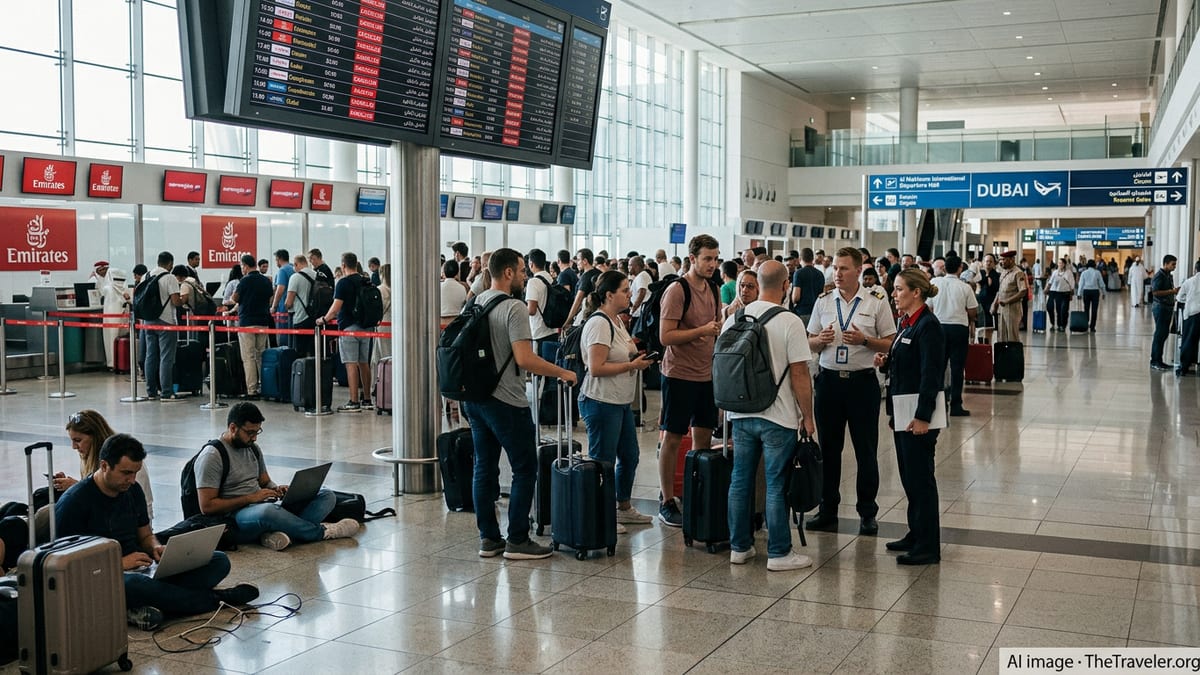
DXB Operating, but With a Patchwork of Airline Schedules
Publicly available flight-tracking information shows passenger and cargo services using Dubai International Airport throughout July, including departures today from all three terminals. Live schedules monitored this morning list multiple Emirates and flydubai flights operating from DXB, including regional routes and long haul connections to Europe, Asia and Africa.
At the same time, the overall flight offering into and out of Dubai remains thinner than it was before the regional crisis that began earlier this year. Some foreign carriers have extended or reintroduced suspensions on Dubai routes, citing security assessments and operational constraints across the Gulf corridor. British Airways, for example, has pushed back the restart of its Heathrow to Dubai service until late October, reflecting continued caution among European airlines about exposure to the region.
Industry summaries of published schedules suggest that Gulf hubs, including Dubai, are in a gradual recovery phase after months of airspace closures and rerouting. Capacity at DXB is still below the levels airlines planned before the conflict, but data shows a steady increase in frequencies since May as more carriers restore services and rerouted long haul traffic adjusts to new flight paths around restricted areas.
The result for travelers today is a mixed picture: the airport itself is open and handling large volumes of passengers, yet choice of airline and route is more limited than a year ago, and some itineraries involve longer flying times due to diversions around high risk airspace.
Recent Disruption: Strikes, Closures and a Gradual Reopening
Dubai’s hub has been at the center of a broader aviation shock triggered by the 2026 Iran conflict and subsequent exchanges across the region. Earlier in the year, Iranian strikes on infrastructure and the temporary closure of key Gulf airspace forced DXB and neighboring airports to halt or sharply curtail operations for several days. In March, Dubai International operated only a limited schedule after an attack-related incident affected fuel facilities, with flights diverted to Abu Dhabi and Al Maktoum and roads near the airport briefly closed.
In the weeks that followed, airlines operating through the Middle East reorganized networks at short notice, cutting frequencies, canceling certain routes outright and repositioning aircraft to less exposed markets. Trade and consultancy reports published in April and May describe a steep drop in seat capacity across major Gulf hubs and a sharp decline in transfer traffic, with DXB, Doha and Abu Dhabi bearing a large share of the impact.
By early May, Dubai’s airport operator signaled that DXB was sustaining what it described as “global connectivity” even as the wider corridor remained constrained. Passenger numbers for the first quarter of 2026, however, were more than 20 percent lower than a year earlier, illustrating how badly the conflict disrupted travel patterns during the late winter and early spring peak.
Since then, a combination of temporary ceasefires, revised routing and the reopening of some national airspaces has allowed a cautious restart. While the war’s broader economic and political impact continues, the operational focus for airports such as Dubai has shifted toward managing a phased return of demand without overloading an airspace system that still carries additional risk and complexity.
New Advisories and Ongoing Airspace Restrictions
The latest round of tension has not brought a full-scale shutdown of Gulf aviation, but it has prompted new risk assessments and route adjustments. In early July, the European Union Aviation Safety Agency replaced its broad conflict-zone bulletin for the Middle East and Persian Gulf with a more targeted advisory package. The updated framework maintains high-risk warnings for operations over Iran, Iraq and Lebanon while characterizing other states in the region, including the United Arab Emirates, as carrying a medium level of residual risk.
For airlines serving Dubai, this means continued avoidance of several neighboring airspaces and greater reliance on alternative corridors that add time and cost to long haul services. Carriers have adopted different responses depending on their risk appetite and network structure. Some, like KLM and several Asian and European airlines, have temporarily suspended flights to Dubai and other regional destinations, while Gulf-based airlines have focused on reconfiguring routings and consolidating schedules rather than withdrawing entirely.
Humanitarian and logistics briefings tracking the crisis show that UAE airspace, including the skies around Dubai, is open but subject to operational restrictions and dynamic routing requirements. Flight paths are regularly adjusted to steer clear of active conflict areas and missile risk zones, with additional fuel uplifted to accommodate longer tracks and potential holding patterns. For passengers, this can translate into arrival delays, missed connections and irregular departure times even when airports are functioning normally.
Travel analysts note that such layered restrictions across multiple countries create knock-on effects well beyond the immediate region. Aircraft rotations are disrupted, crews reach duty time limits sooner on elongated routes, and buffer time built into schedules is quickly absorbed when unexpected closures occur. DXB, as one of the world’s busiest transit hubs, feels these pressures especially acutely.
Passenger Experience: Delays, Cancellations and Packed Transit Halls
For travelers passing through Dubai today, the most visible signs of strain are crowding, queuing and inconsistent punctuality rather than closed terminals. Coverage from regional travel media in recent days highlights DXB preparing for more than 200,000 passengers per day through mid July, a volume comparable with peak summer periods before the conflict, even as some airlines keep their Dubai routes suspended.
Independent flight data compiled in June and early July records dozens of delays and a smaller number of outright cancellations across Dubai’s three terminals on certain days, particularly for flights that rely on overflying or connecting via neighboring states. In many cases, schedules were adjusted by less than an hour, but a subset of flights saw multi hour disruptions as aircraft awaited new routings or departure slots.
Passengers also continue to feel the impact of earlier cancellations that removed entire routes from the market. Long haul travelers who might previously have flown with European or Asian carriers via Dubai are often being rebooked onto Gulf airlines or rerouted through alternative hubs such as Istanbul, Singapore or European airports less affected by the conflict zone advisories. This consolidation can leave remaining services heavily booked, with limited options for same day changes when disruption occurs.
Travel forums and airline advisories frequently emphasize basic precautions: monitoring flight status up to departure time, allowing longer connection windows in Dubai, and staying flexible on travel dates where possible. Many carriers maintain waiver policies linked to the Middle East unrest, allowing passengers to change itineraries without standard penalties, though these concessions are gradually being scaled back as schedules stabilize.
What Travelers Should Expect at DXB Today
For those due to travel through Dubai on July 13, 2026, the key message from publicly available data is that the airport is open and busy, but conditions can change quickly. Core operations at DXB, including check in, security screening and baggage handling, are functioning, and major home carriers are running extensive banks of flights. However, the pattern of selective suspensions by some foreign airlines, combined with ongoing airspace constraints, means disruption remains a real possibility.
Travelers are likely to encounter longer security and immigration queues during peak departure waves, as well as congested gate areas when several delayed flights overlap. Lounge and terminal seating can be in high demand, especially around midnight departure banks traditionally favored by long haul services. Even when flights operate close to schedule, extended flight times due to detours around restricted airspace can lengthen overall journey durations.
Industry observers expect DXB’s capacity to continue rebuilding through the remainder of the summer, provided there is no further escalation in regional hostilities. Forecasts compiled from airline schedules point to a near return to pre conflict seat supply on several core routes by late 2026, though some markets that have seen deeper suspensions may take longer to recover. For now, the operational reality at Dubai International is one of resilience under pressure: open today, globally connected, but still navigating the aftershocks of a volatile regional crisis.