


Few museums divide opinion among travelers quite like the Uffizi Gallery in Florence. For some, it is a life highlight, a walk through the greatest hits of Renaissance art. For others, it is an exhausting blur of Madonna-and-child paintings, dense crowds and aching feet. If you are planning a trip to Florence and wondering whether the Uffizi is worth visiting or better left to serious art fans, this guide breaks down what to expect in very practical terms so you can decide with clear eyes.
Get the latest updates straight to your inbox!
What the Uffizi Actually Is, Beyond the Hype
The Uffizi is not just another museum stop. It is one of the most visited art museums in the world, attracting roughly several million visitors a year and ranking alongside institutions like the Louvre and the Vatican Museums for popularity. Its focus is overwhelmingly on Italian art from the Middle Ages through the Baroque period, with a particular emphasis on the Florentine Renaissance. That means you will see painting after painting from the 13th to 17th centuries, often with religious themes or portraits of Medici-era elites.
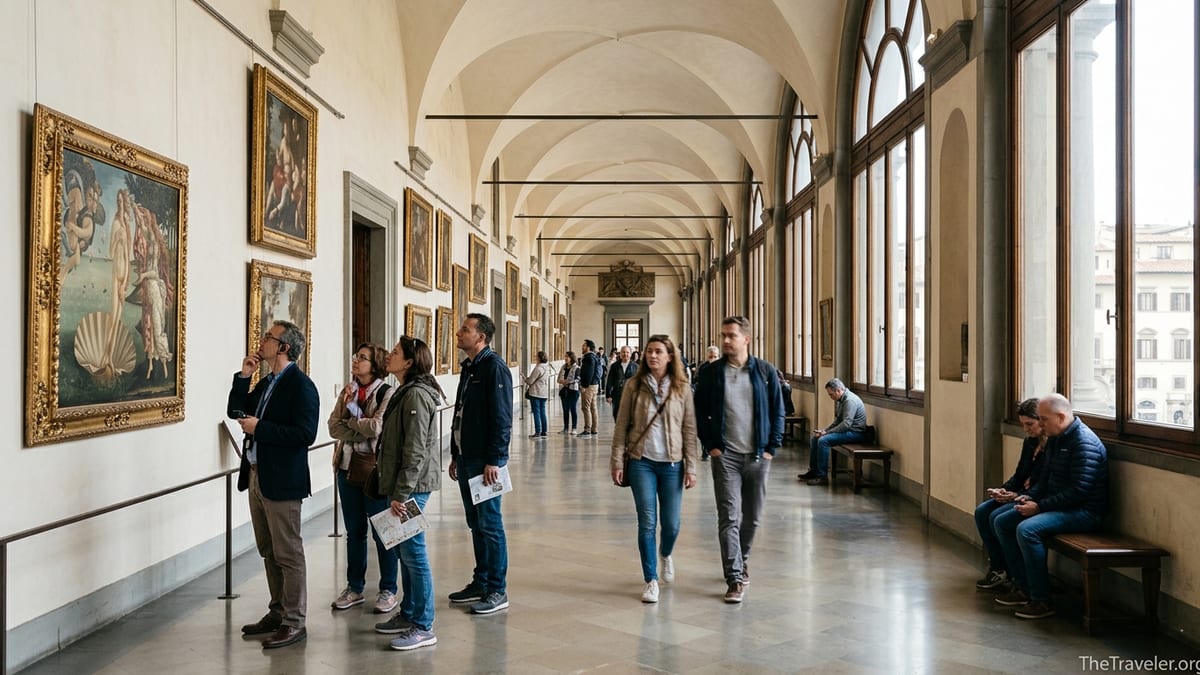
The building itself, begun in the 1560s by Giorgio Vasari for the Medici family, forms part of the historic core of Florence. Walking its long corridors, with polished stone floors and arched windows framing the Arno River and Palazzo Vecchio, is an experience in its own right. Even travelers who are not art experts often comment that some of their favorite memories are the views out the windows rather than the paintings on the walls.
For many visitors, the Uffizi is where art history textbooks come to life. You will find Botticelli’s "Birth of Venus" and "Primavera," Leonardo da Vinci’s early works, Michelangelo’s "Doni Tondo," Caravaggio’s dramatic canvases and a dense lineup of masterpieces by Giotto, Cimabue, Raphael, Titian and Bronzino. Even a casual traveler who has never studied art will likely recognize some of these images from posters, book covers and popular culture.
However, the singular focus on painting can also be tiring. Unlike the Louvre, which mixes sculpture, decorative arts and ancient objects, the Uffizi’s experience is more concentrated and sometimes repetitive. If you do not have at least a mild curiosity about Renaissance art, a two to three hour visit may begin to feel like work rather than pleasure.
Costs, Tickets and What You Get for Your Money
As of mid 2026, a standard in-person ticket for the Uffizi in high season typically costs around 25 euros, with a small surcharge if you book in advance online. There is also a combined five-day "Passepartout" ticket, around 40 euros, that covers the Uffizi, all the museums in Palazzo Pitti and the Boboli Gardens. For travelers intending to explore multiple major sites over several days, that combined option can represent noticeably better value than buying separate single tickets, especially if you enjoy both art and gardens.
The price level means the Uffizi is not an impulse stop in the way a small local museum might be. For a family of four paying standard rates plus reservation fees, admission can easily climb toward 120 euros or more. At that level, it is reasonable to ask whether everyone in your group will genuinely enjoy the visit. If your teenagers have limited patience for museums and would rather climb Brunelleschi’s Dome or explore food markets, you may want to prioritize those activities instead.
There are ways to keep costs under control. The Uffizi participates in national free-entry days, such as the first Sunday of certain months, when admission is waived but lines can be very long and entry caps may apply. In low season, there are often discounted afternoon tickets starting from late afternoon that reduce the price for visitors willing to enter later in the day. If you are happy to visit in January or November and do not mind shorter daylight hours, you can often combine lower prices with thinner crowds.
Multi-museum passes like the FirenzeCard, typically priced around the cost of a few individual admissions, can also make the Uffizi more attractive for culture-heavy trips. If you intend to visit the Uffizi, Accademia, Palazzo Pitti, Bargello and several smaller museums within three to five days, the per-museum cost of each visit drops substantially, and you generally benefit from priority access lines. In that context, even a casual traveler might feel more relaxed about "sampling" the Uffizi for 90 minutes rather than feeling obligated to stay for hours to justify a single-use ticket.
Crowds, Logistics and How Physically Demanding It Really Is
The Uffizi is almost never empty. In 2023 and 2024, it recorded record-breaking visitor numbers, which translates on the ground into security queues, dense rooms around famous works and a constant background murmur of guided tours in multiple languages. For many travelers, the crowds, not the art, are what make the experience tiring.
Logistically, the visit is more demanding than some expect. After clearing security and scanning your ticket, you typically climb a long staircase of over 100 steps to reach the main galleries on the upper level. There are elevators, but they can be slow and sometimes reserved for visitors with mobility needs. Once inside, the layout is essentially a long U shape of corridors and side rooms. Even a focused visit can involve several kilometers of walking on hard floors. If you have knee, hip or back issues, planning rest stops in the small seating areas under the corridor windows becomes essential.
The most intense crowding usually happens in front of headliner works such as Botticelli’s "Birth of Venus." Visitors often queue informally to snap photos, and it can take patience to edge closer. By contrast, sections devoted to Northern European painting or still lifes can be comparatively quiet. Casual visitors sometimes report that they only truly relax and start to enjoy the museum once they leave the "greatest hits" and wander through these calmer rooms.
Timing your visit helps. Early morning slots, especially in the first hour after opening, can be noticeably less crowded, as can late afternoon entries after most tour groups have completed their circuits. In shoulder months like March or late October, the combination of mild weather and slightly smaller crowds can be a good compromise for travelers who want the experience without peak-season stress.
Who Will Love the Uffizi, and Who Might Not
The Uffizi is clearly a must for travelers with a strong interest in art history, especially those fascinated by the Renaissance. If you can tell the difference between a Giotto and a Botticelli at a glance or you enjoy listening to long-form podcasts about Medici politics, you will probably feel that two or three hours at the Uffizi is barely enough. Art students, designers and photographers often leave energized by the colors, compositions and the chance to study original masterpieces up close.
History lovers who may not be art specialists can also find the Uffizi deeply rewarding. Portraits of the Medici, scenes of Florentine life and allegorical paintings inspired by classical mythology all illuminate the city’s past. For example, seeing Bronzino’s icy, meticulous portraits of Cosimo I and Eleonora di Toledo after walking through the streets they once controlled can make the city feel more alive and layered.
On the other hand, travelers who primarily value hands-on experiences, scenery or food over museums may find the Uffizi less compelling. If your Florence wish list centers on cooking classes, winery day trips in Chianti and sunset views from Piazzale Michelangelo, forcing yourself through a crowded three-hour museum visit might not add much joy. Many people feel obliged to visit because guidebooks call it unmissable, only to realize halfway through that they are counting the minutes until lunch.
Families with young children should think carefully. While some kids are captivated by dramatic works like Caravaggio’s "Medusa" or mythological scenes full of strange creatures, many under-tens quickly tire of room after room of paintings. There are few interactive elements, and seating is limited, so you may spend a lot of effort on crowd navigation and behavior management. For some families, a shorter visit to the Accademia to see Michelangelo’s "David," combined with outdoor time in the Boboli Gardens, delivers a better balance.
How to Make the Uffizi Work for Casual Travelers
If you are a casual art appreciator but still curious to see what the Uffizi is all about, a strategic approach can make the difference between overwhelm and enjoyment. One effective strategy is to identify a short list of works you genuinely want to see, then allow everything else to be a bonus. For many first-time visitors, that list includes Botticelli’s "Birth of Venus" and "Primavera," Michelangelo’s "Doni Tondo," a Leonardo painting such as the "Annunciation" and a few Caravaggios. With a good museum map or official app, you can create a loop that focuses on these highlights in 90 to 120 minutes.
Audio guides and smartphone apps can also be a great compromise if you do not want the intensity of a three-hour guided tour. The official audio guide, rented near the entrance, typically costs the equivalent of a light lunch and offers concise explanations in clear language. Some independent apps provide themed routes, such as "Women artists in the Uffizi" or "The Medici story in 20 works," which can make the experience feel more like a story and less like a checklist.
Another way to keep the visit accessible is to pair the Uffizi with a contrasting activity on the same day. For instance, you might book a morning entry, spend two hours in the museum, then head for a relaxed lunch at the nearby Sant’Ambrogio market or in the Oltrarno neighborhood, followed by a leisurely stroll along the Arno. Structuring your day this way ensures the Uffizi becomes one flavor in your Florence experience rather than dominating it.
Travelers who tend to get museum fatigue should not be afraid to leave early. Your ticket does not obligate you to see every room, and you will not receive a quiz on the way out. If, after an hour, you feel satisfied and ready for a spritz in Piazza della Signoria, it is perfectly acceptable to call it a successful visit and move on.
Guided Tours, DIY Visits and Alternative Experiences
Choosing between a guided tour and exploring on your own depends largely on your learning style and how much context you want. Group tours of the Uffizi usually last between two and three hours and are often bundled with skip-the-line entry for a per-person price that can equal or exceed the base ticket. For travelers who do not enjoy reading labels or who appreciate big-picture storytelling, a small-group tour can bring coherence to what might otherwise feel like an overwhelming series of rooms.
Private tours, while more expensive, allow you to customize the focus. For example, couples celebrating a special anniversary sometimes book a private guide to concentrate on mythological love stories in the paintings or to follow a "women of the Renaissance" theme. This can transform the Uffizi into a memorable highlight even for people who did not consider themselves museum lovers beforehand.
Self-guided visits are more budget-friendly and flexible. Many travelers opt to reserve a timed-entry ticket on the official system, arrive a little early to clear security and spend about two hours inside with either a printed map or a simple app-based guide. If you are disciplined about sticking to a limited route, this approach minimizes both cost and fatigue while still delivering a sense of the museum’s treasures.
If, after considering all this, you suspect the Uffizi is not for you, Florence offers plenty of alternatives. The Basilica of Santa Maria Novella and Santa Croce both contain important artworks in a more contemplative setting. The Bargello Museum focuses on sculpture, including works by Donatello and Michelangelo, and is often far less crowded. For a mix of city views and history with fewer paintings, climbing Giotto’s Campanile or visiting the Medici Chapels can satisfy your curiosity without committing to the full Uffizi experience.
The Takeaway
Whether the Uffizi Gallery is worth visiting depends less on its reputation and more on your interests, energy and budget. As a collection, it is extraordinary. Where else can you stand a few steps from Botticelli’s "Birth of Venus" or study the brushwork of early Leonardo paintings in the city where they were created? For travelers who care about Renaissance art and history, the Uffizi is not just worth it; it is arguably essential.
At the same time, the realities of high ticket prices, heavy crowds, physical demands and the intellectual intensity of room after room of paintings mean the Uffizi is not automatically a good fit for everyone. Casual visitors who feel mild curiosity rather than strong enthusiasm should approach it with a focused plan, a limited time frame and realistic expectations. Think of it as sampling a famous local dish: you do not need to eat the whole menu to understand why people love it.
If you decide to go, booking a timed ticket, targeting a handful of key works and allowing downtime before and after your visit will help you enjoy the experience rather than simply endure it. If you decide to skip it in favor of outdoor views, churches, food tours or day trips, you are not failing as a traveler. Florence offers more than enough beauty and culture outside any museum walls.
Ultimately, the Uffizi is best suited to travelers who either already love art or are open to giving it a fair chance. If that sounds like you, the gallery can deepen your understanding of Florence and leave a lasting imprint on your memory. If not, you can comfortably admire the building from the Piazza della Signoria, raise a glass of Chianti and know that you made the right call for your own trip.
FAQ
Q1. Is the Uffizi Gallery worth it for first-time visitors to Florence? For most first-time visitors who have at least some interest in art or history, the Uffizi is worth considering, especially if you plan a focused two-hour visit to see key masterpieces rather than trying to cover the entire museum.
Q2. How long should I plan to spend inside the Uffizi? Many travelers find that 2 to 3 hours is enough for a satisfying visit, with casual visitors often happiest around the 90-minute mark if they focus on a highlight route instead of every room.
Q3. Is the Uffizi too much for kids? It can be challenging for younger children because most galleries are traditional painting rooms with limited interactive elements, so families often do better with a short, targeted visit and plenty of breaks before and after.
Q4. Do I really need to book tickets in advance? In most seasons it is strongly recommended to reserve a timed-entry ticket in advance, as same-day availability can be limited and walk-up lines may involve long waits, especially in spring and summer.
Q5. Are guided tours of the Uffizi worth the extra cost? Guided tours are worthwhile if you enjoy storytelling and want historical context, but independent travelers who prefer flexibility may be happier with a basic audio guide or app-based route.
Q6. What is the best time of day to visit to avoid crowds? Early morning entries shortly after opening and late afternoon slots typically see slightly thinner crowds, while mid-morning to early afternoon is usually the busiest period.
Q7. I am not an art buff. Will I still enjoy the Uffizi? If you have a general curiosity about Florence and are willing to spend about 90 minutes on a highlight route, you can still enjoy the Uffizi, but it may not be a must-do if museums rarely appeal to you.
Q8. How does the Uffizi compare to the Accademia Gallery? The Uffizi is larger and focused on paintings, while the Accademia is smaller and best known for Michelangelo’s "David," so travelers who want a shorter, more sculptural experience often prefer starting with the Accademia.
Q9. Is the Uffizi accessible for people with mobility issues? The museum has elevators and some step-free routes, but the visit still involves long distances on hard floors, so visitors with mobility challenges should plan rest stops and, if needed, inquire on-site about accessible paths.
Q10. If I have only one full day in Florence, should I prioritize the Uffizi? It depends on your interests; art lovers will likely prioritize the Uffizi, while travelers more excited by architecture, views and food may prefer combining the Duomo complex, a walk across Ponte Vecchio and a relaxed evening in the historic center.