


George Town in Grand Cayman is one of the Caribbean’s busiest cruise ports and the gateway to Seven Mile Beach, famous snorkeling reefs, and duty-free shopping. Whether you are arriving on a ship or planning a land-based stay, deciding how much time to spend in town versus exploring the rest of the island can shape your entire Cayman experience. This guide breaks down what George Town actually offers for different types of travelers and helps you decide if it is worth your valuable vacation day.
Get the latest updates straight to your inbox!
George Town at a Glance: What to Expect When You Arrive
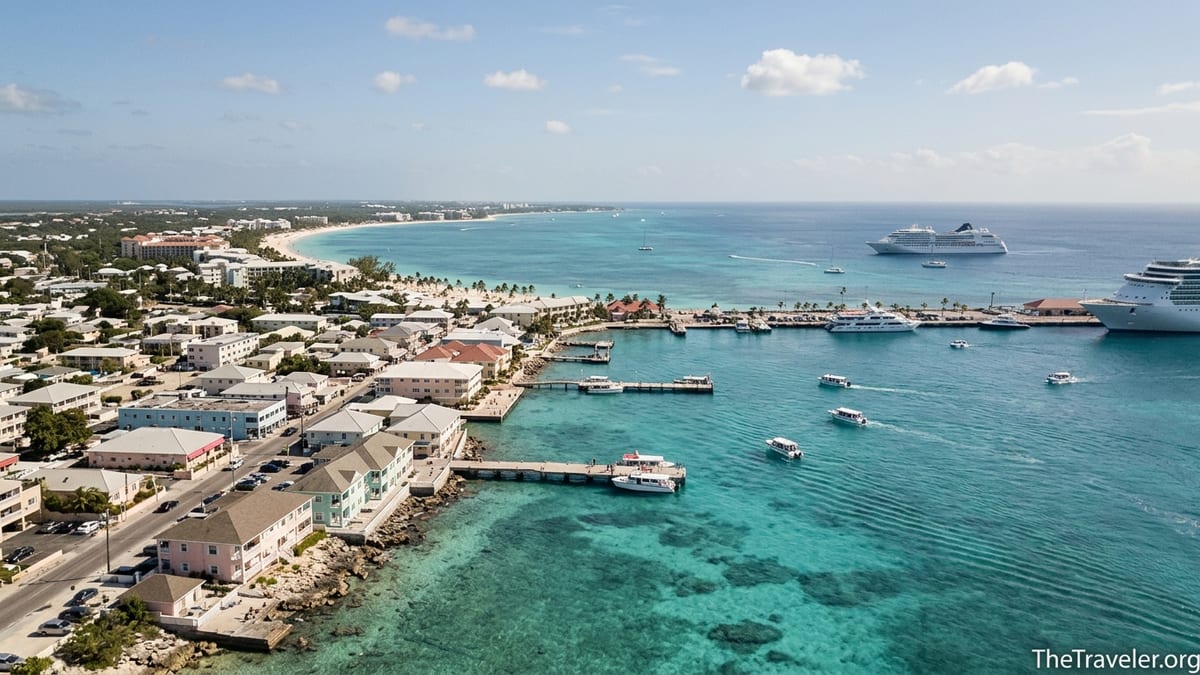
George Town is the capital of the Cayman Islands and the main hub where cruise ships anchor just offshore. Passengers are tendered into the center of town, right by the waterfront, surrounded by jewelry stores, souvenir shops, banks, and small plazas. On a typical busy day in high season, several large ships may be anchored, and the narrow streets can feel crowded for a few midday hours as passengers pour off tenders into the central shopping district.
From the port, most of the core attractions are within a short walk or a quick taxi ride. The harbor area offers a small promenade, views of the anchored ships, and access to shore-dive and snorkel operators such as Eden Rock Diving Center. However, there is no broad sandy beach directly at the cruise tender pier. If your mental image of Grand Cayman is a wide swath of white sand, you will not find it right at the dock. Instead, the true postcard beaches begin just north of town along Seven Mile Beach, a short drive away.
For cruise visitors with five to seven hours in port, this geography matters. You need to decide early whether to stay mostly in George Town to shop and perhaps snorkel from shore, or to invest time and money in heading up to Seven Mile Beach or out to an organized excursion such as Stingray City. Understanding that trade-off is key to deciding whether George Town is “worth it” on its own or simply a staging area for the rest of the island.
In terms of atmosphere, George Town itself feels more like a compact financial and retail center than a classic Caribbean beach town. Office buildings, banks, and duty-free storefronts mix with a few bars and casual restaurants. If you are looking for culture and local life, you will find small fragments here, but the real charm for many visitors lies along the coast beyond the central grid of streets.
Is George Town Worth It for Cruise Passengers?
For cruise travelers, the main question is how to use a single day in port. Most ships anchor in George Town from early morning until mid-afternoon, which gives roughly six to eight usable hours ashore once you account for tendering. Staying in George Town itself is the easiest option: you step off the tender, walk into town, and never need a taxi or tour. This might suit travelers with mobility issues, those who dislike logistical stress, or visitors who have already seen the main island highlights on previous cruises.
If you choose to remain in town, you can easily fill several hours with jewelry and watch shopping, browsing local craft markets, sampling rum cakes, and enjoying a harbor-view lunch. There are also several shore-based snorkeling and dive operators only a 5 to 10 minute walk from the tender dock. Eden Rock Diving Center, for example, sits on the rocky shoreline and provides access to the Eden Rock and Devil’s Grotto reefs, which are well known among snorkelers and divers for colorful coral formations and abundant fish. Entry is from a concrete ladder into deep water, so it suits confident swimmers rather than families with toddlers.
However, if your main Caribbean priority is soft sand and clear, shallow water, staying only in George Town may feel underwhelming. You will not get the full Seven Mile Beach experience without at least a short ride. Many cruise passengers opt for a hybrid day: a morning excursion such as Stingray City or a beach break combined with an hour of shopping back in town before returning to the ship. Because tender lines can be longer in the final hour before all-aboard time, it is wise to plan to be back at the pier earlier than the official deadline, especially on days with multiple ships in port.
Ultimately, George Town is worth a walk-through for almost every cruise visitor. The real decision is how much of your limited port time to allocate to town versus the beaches and attractions beyond. If you are a first-time visitor and physically able to move around, most travelers find that devoting at least half the day to leaving downtown provides a more memorable taste of Grand Cayman.
Seven Mile Beach Access: Where Beach Lovers Should Go
The main reason many people visit Grand Cayman is Seven Mile Beach, a long curve of pale sand and turquoise water north of George Town. Erosion means it is now closer to five and a half miles, but it remains one of the most praised beaches in the Caribbean. From the cruise tender pier, the closest part of Seven Mile Beach is only a 10 to 15 minute drive along West Bay Road. Taxi drivers and shared shuttles at the port regularly offer transfers to popular access points such as Public Beach or large resorts with day-pass facilities.
Unlike some islands where beach access is restricted, the shoreline on Seven Mile Beach is public, so you can walk the length of the beach once you are on the sand. What you pay for is convenience: chairs, umbrellas, restrooms, and food and drink service. Major beach clubs and resort areas often sell day packages that include a lounge chair, umbrella, Wi-Fi, and sometimes a welcome drink. Prices fluctuate, but visitors commonly report paying a modest per-person fee for a shared lounger and umbrella at busy beach clubs, while public sections such as Seven Mile Public Beach offer sand and sea at no charge but limited shade.
For a simple, low-cost beach day from a cruise ship, many travelers take a shared taxi from the port to a public access point on Seven Mile Beach, then rent chairs and umbrellas if they want more comfort. The ride is short enough that you can comfortably spend three or four hours on the beach and still have time to look around George Town. On days with heavy cruise traffic, expect more crowds and potentially higher demand for loungers at the most popular entrances.
If you are staying on the island, choosing accommodation along Seven Mile Beach rather than in central George Town often makes sense for pure beach lovers. You can still reach downtown by rental car or local minibus, which runs along West Bay Road, but your daily environment will be softer sand, quieter evenings, and easy sunset walks. George Town then becomes a place to dip into for shopping or a meal rather than your primary base.
Snorkeling from George Town vs Exploring Further Afield
Grand Cayman is known for clear water and accessible snorkeling over coral reefs. From George Town itself, you can access several notable sites on foot. Eden Rock and Devil’s Grotto sit just south of the main harbor and are reachable via dive shops on the waterfront. These reefs start not far from shore and quickly drop into deeper water with caverns, overhangs, and schools of fish. Confident swimmers who are comfortable entering from a ladder or concrete ramp can enjoy advanced-feeling snorkeling here without booking a boat tour.
Conditions at Eden Rock and Devil’s Grotto are typically better for snorkeling when seas are calm and visibility is good, which is often the case on the leeward west side of the island, but can vary with weather. The entry is not ideal for very young children or anyone uneasy in deep water. As a result, these sites are often recommended for reasonably fit adults and older teens rather than mixed-age families. Many visitors rent gear directly from the dive centers near the entry point, which keeps things simple for cruise passengers traveling light.
Beyond George Town, a range of shore snorkel options can be reached via taxi, rental car, or local minibus. Along Seven Mile Beach, Governor’s Beach and Cemetery Beach are often praised for a combination of pleasant sand and reef structures within a moderate swim of shore. To the south, places such as Smith’s Barcadere offer rocky coves, ladders into clear water, and a more local feel. On the east and north coasts, sites like Spotts Beach are known for frequent turtle sightings, although they sit farther from the cruise port and require more travel time.
If snorkeling is your top priority, you might compare two strategies. The first is to maximize time in the water at a single shore site such as Eden Rock or Governor’s Beach, keeping logistics simple. The second is to book a small-boat excursion that combines Stingray City sandbar with one or two reef stops in the North Sound. These trips typically include gear, guiding, and transportation from the George Town area. For many first-time visitors, the stingray encounter plus reef snorkel is the signature memory of Grand Cayman, and often feels more special than spending the entire stop inside the town itself.
Shopping, Food, and Family Practicalities in Town
George Town’s compact downtown district concentrates most of the island’s duty-free shopping, especially along the streets directly facing the harbor. Visitors will find international jewelry brands, watch boutiques, high-end liquor shops, and souvenir outlets selling T-shirts, magnets, and rum cakes packaged for travel. On typical cruise days, staff members stand outside doors encouraging browsing and offering small samples of local rums or flavored cakes.
Prices for luxury goods are marketed as duty-free, and some travelers do find significant savings on specific high-end watches or jewelry compared with home-country prices. However, for most visitors, the primary appeal is variety and convenience rather than guaranteed bargains. Everyday items and souvenirs can feel expensive relative to other Caribbean ports, reflecting the generally high cost of living on Grand Cayman. It is wise to comparison-shop between two or three stores if you are considering a major purchase and to know your home-country customs limits before buying alcohol or tobacco.
For food, George Town offers a mix of waterfront bars, casual cafes, and sit-down restaurants serving seafood, Caribbean staples, and international dishes. Prices are broadly higher than in many neighboring islands. A simple lunch of fish tacos or a burger with a soft drink in a harbor-view setting can easily cost the equivalent of a mid-range North American city meal. Families on a budget often opt for quick-service spots, bakery items, or grocery-store snacks to keep costs in check. If you are on a cruise, returning to the ship for a meal is another way to control spending if your schedule allows.
Families considering whether to stay in George Town may appreciate the logistical simplicity. Sidewalks are generally well maintained, and distances between the tender pier, shops, and cafes are short. There is little need to negotiate long taxi rides with small children or fold strollers into vans. The trade-off is the lack of an easy sandy play beach directly in town. For younger kids who simply want to dig in the sand and splash in shallow water, a quick trip to Seven Mile Beach usually provides more joy than an afternoon of shopping and city strolling.
Costs, Crowds, and Transport: Planning Your Day Wisely
Visiting George Town involves three main practical considerations: how much money you will spend, how you will move around, and how you will handle crowds. Grand Cayman has a reputation as one of the more expensive islands in the region. Restaurant meals, beach club day passes, and organized excursions often reflect this. While it is possible to have a relatively low-cost day by sticking to public beaches, walking, and simple snacks, visitors who book multiple paid activities, rent loungers, and dine at waterfront spots can see their spending add up quickly.
Transport from the cruise port is straightforward but not the cheapest in the Caribbean. Taxis waiting near the tender terminal commonly operate on fixed or posted fares for common routes such as the main sections of Seven Mile Beach. Sharing with others in a van is a common way to reduce per-person cost. For independent-minded travelers, the local minibuses that run along West Bay Road offer a more economical option and are often used by cruise passengers who are comfortable asking the driver to stop near a particular beach access path.
Crowding is highly variable and depends heavily on how many ships are in port on a given day. On peak days during winter and early spring, the downtown sidewalks can feel very busy between late morning and early afternoon, and popular beach clubs on Seven Mile Beach may run close to capacity. On lighter days, George Town feels far more relaxed, and it is easier to find space at beach access points. Checking your ship’s schedule and the daily port calendar, if available, can give you a sense of what to expect.
To make the most of your time, it often pays to move in the opposite direction of the main flow. Many cruise passengers shop in town first and head to the beach later. Reversing that pattern by going early to Seven Mile Beach and leaving shopping for the last hour or two can help you enjoy the sand and sea before midday heat and peak crowds. Similarly, snorkelers might plan to be in the water first thing in the morning when conditions are often calmer, then return to town for lunch.
Should You Base Yourself in George Town or Elsewhere on the Island?
For travelers staying several nights rather than arriving on a cruise, the decision shifts from how to use a single day to where to base yourself. George Town offers proximity to financial offices, some government services, and the cruise harbor. It works for business travelers who need quick access to banks or offices, or for visitors who prioritize being able to walk to downtown restaurants and shops. Accommodation in central George Town tends to be more limited compared with the long stretch of hotels and condos along Seven Mile Beach.
Beach-focused vacationers usually prefer to stay along Seven Mile Beach or in quieter residential areas beyond town. A condo or resort on Seven Mile Beach places you within walking distance of swimming, paddleboarding, and shore snorkeling, with George Town an easy drive or short taxi ride away. You can visit town when you want duty-free shopping or a harbor-view dinner, then retreat to a more relaxed environment when ships depart in the afternoon and the beach grows calm.
More adventurous travelers sometimes choose to stay farther afield, in districts like East End or North Side, which offer a slower pace, fewer crowds, and close access to less-developed snorkel and dive sites. In that scenario, George Town becomes a place you might visit once or twice for practical errands, a half-day of shopping, or a specific restaurant, rather than your daily center of activity.
When weighing costs, keep in mind that grocery prices and restaurant bills will feel high almost anywhere on Grand Cayman, not only in George Town. The main difference between basing yourself in town or on the beach lies in atmosphere and convenience rather than dramatic price swings. If you dream of rolling out of bed and walking straight onto sand at sunrise, downtown is unlikely to feel ideal. If you prefer an urban feel with water views and quick access to banking or offices, George Town can work well.
The Takeaway
So, is George Town, Grand Cayman worth visiting? For most travelers, the answer is yes, but with clear expectations. As a cruise port, George Town offers easy access to island transport, organized tours, and shore-based snorkeling at sites like Eden Rock and Devil’s Grotto. It provides a dense cluster of duty-free shops, cafes, and services within a short walk of the tender pier, making it convenient for a quick taste of the island without complex logistics.
However, George Town itself is not the wide sandy beach many visitors imagine when they think of Grand Cayman. The island’s famous stretches of sand and some of its gentlest snorkel spots lie north along Seven Mile Beach and beyond. Beach lovers, families with young children, and travelers intent on a classic Caribbean seascape will usually be happier spending at least part of their day or stay outside the central town grid, whether that means a short taxi ride from the cruise port or choosing accommodation along Seven Mile Beach instead of downtown.
From a decision-making standpoint, think of George Town as a hub rather than the main attraction. Use it as your launching point for beaches, reefs, and excursions, and then return for a bit of shopping or a meal if time and budget allow. If your cruise schedule or energy levels make venturing farther impractical, you can still have a pleasant few hours exploring the harborfront, browsing shops, and, for confident swimmers, snorkeling from the rocky shoreline.
With realistic expectations about costs, crowds, and what is and is not available right at the port, you can design a day in and around George Town that matches your travel style. Done thoughtfully, a stop here can be a worthwhile highlight, especially when combined with the island’s world-class beaches and underwater scenery.
FAQ
Q1. Is there a sandy beach within walking distance of the George Town cruise port?
There is no broad, family-friendly sandy beach directly at the tender pier in George Town. Most visitors who want a true beach experience take a short taxi or bus ride to access Seven Mile Beach, where public beach entrances and beach clubs provide soft sand and calm water.
Q2. Can I snorkel without booking a tour if my ship docks in George Town?
Yes. Confident swimmers can walk from the tender pier to shore-entry snorkel sites like Eden Rock, where dive centers offer gear rentals and access to nearby reefs. Conditions are generally best when seas are calm, and the entry is via ladders or steps into deep water rather than from a sandy shore.
Q3. Is George Town good for families with young children?
George Town is convenient for families because everything is close together, but it lacks an easy sandy play beach in the immediate port area. Families with younger children often combine a short, stroller-friendly walk and some shopping in town with several hours on Seven Mile Beach, where kids can play in shallow water and sand.
Q4. How expensive is a typical day in George Town for cruise passengers?
Costs vary widely. A budget-minded visitor might spend only on transport to a public beach and a snack, while others pay for beach club day passes, restaurant meals, and organized excursions. Grand Cayman is generally more expensive than many Caribbean islands, so planning ahead and deciding your priorities helps keep spending under control.
Q5. Is it better to book a ship excursion or explore George Town independently?
It depends on your comfort level and goals. Ship excursions offer structured itineraries, transport, and a clear schedule, which some travelers value. Independent exploration allows more flexibility and can be cheaper, especially if you simply want to visit Seven Mile Beach, snorkel from shore, or browse downtown shops at your own pace.
Q6. How crowded does George Town get on cruise days?
Crowding depends heavily on how many ships are in port. On days with several large vessels, sidewalks around the harbor can feel busy from late morning through early afternoon. On lighter days, the town is more relaxed. Beach areas such as Public Beach on Seven Mile may also feel busy when multiple ships bring passengers ashore.
Q7. Is George Town a good base for a multi-day stay on Grand Cayman?
George Town can work for business travelers or visitors who prioritize walking access to banks, offices, and downtown restaurants. Beach-focused vacationers usually prefer to stay on Seven Mile Beach or in quieter coastal areas, visiting George Town for shopping and specific meals rather than basing themselves in the center of town.
Q8. What is the easiest way to get from the cruise port to Seven Mile Beach?
The simplest option is to take a taxi or shared van from the taxi stand near the tender terminal to a specific beach access point or beach club along Seven Mile Beach. Local minibuses that run along West Bay Road provide a more economical option for travelers comfortable asking the driver to stop near public access paths.
Q9. Are there cultural or historical attractions in George Town worth seeing?
While the town is best known for shopping and the cruise harbor, visitors can also find small museums, public monuments, and local government buildings that hint at Cayman’s political and maritime history. These can be combined with a walking tour of the waterfront for travelers interested in more than beaches and shopping.
Q10. If I only have one day, should I prioritize George Town or the wider island?
For first-time visitors, spending at least part of the day outside George Town usually provides a more balanced impression of Grand Cayman. A combination of beach time on Seven Mile, a reef or stingray excursion, and a short visit to downtown for shopping or a harborfront drink is often more satisfying than remaining in the town center all day.