


More news on this day
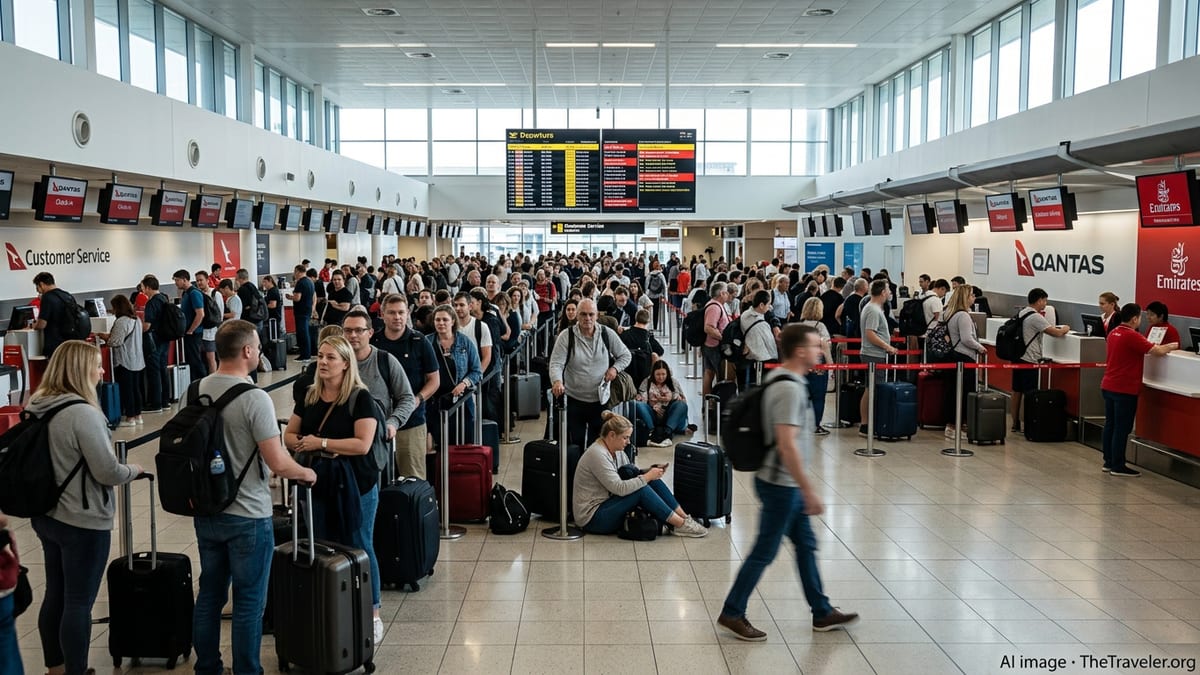
Sydney’s Kingsford Smith Airport has faced fresh flight disruptions after air traffic controller staffing constraints triggered traffic-management measures that reduced the number of aircraft able to arrive and depart during peak periods, rippling across domestic and international schedules.
Get the latest news straight to your inbox!
What triggered the latest disruption
Published coverage indicates Airservices Australia, the government-owned provider responsible for managing Australia’s air traffic, introduced air traffic flow management measures at Sydney Airport after staffing levels in the control system fell below what was needed to run normal movement rates. Those measures can include imposing arrival and departure limits that force airlines to hold aircraft on the ground, adjust departure times, or cancel services outright.
In the latest episode, reports described a cluster of cancellations alongside long delays during the morning push, a period when Sydney’s runway and gate capacity is typically most constrained. Because Sydney is a primary connecting point for flights to and from other Australian capitals, even a short restriction window can cascade into missed crew connections, aircraft rotations running late, and delayed inbound services later in the day.
Recent reporting has also linked some of the most disruptive days to short-notice unavailability, where rosters have limited spare capacity to cover unexpected absences. That lack of buffer has been a recurring theme in public discussion around Sydney’s tower staffing resilience.
How flow restrictions translate into traveler impacts
When air traffic flow management is activated, travelers may experience disruption in several ways, even if their flight is not formally cancelled. Departure boards can show rolling delays as airlines wait for revised slots, and flights can be held at the gate to avoid contributing to apron congestion or extended taxi queues.
For passengers, the most immediate impacts are missed connections, rebookings to later flights, and knock-on delays on routes that depend on aircraft arriving from Sydney. Published coverage has pointed to both domestic and international services being affected during recent disruption periods.
Airlines typically respond by consolidating loads onto later departures, swapping aircraft types where possible, or re-timing services within airport operating constraints. Travelers are generally advised via airline channels to monitor flight status closely and follow carrier instructions on check-in timing, baggage cut-offs, and rebooking options.
Airservices’ response and staffing outlook
Airservices Australia has publicly apologized for recent disruptions at Sydney and outlined efforts to improve reliability, including changes to workforce practices and continued recruitment. Publicly available statements also indicate the agency has been growing controller numbers, describing controller staffing as reaching a record high nationally, while also noting that demand on the workforce has increased.
In public messaging, Airservices has emphasized that it works with airlines to reduce delays and limit passenger impacts when flow measures are required. Separately, published coverage has pointed to improved rostering practices for Sydney air traffic controllers planned for implementation from early September 2026, following heightened scrutiny of repeated disruption days.
Even with recruitment, training timelines can be long, and operational readiness is not immediate. Industry coverage has noted that the system can still be vulnerable when there is limited redundancy in specific roles or locations, particularly at a complex, high-tempo airport like Sydney.
Why Sydney is especially sensitive to controller shortages
Sydney Airport is Australia’s busiest and one of its most constrained major airports, operating with tight runway and airspace parameters and a curfew framework that limits overnight recovery options. When a morning wave is disrupted, the ability to “make up time” later can be limited compared with airports that can schedule more late-night movements.
Public submissions and aviation network reporting have previously described how staffing shortages can trigger ground delay programs and movement caps, contributing to cancellations and delays. Those constraints can ripple nationally because Sydney is a central node for airline schedules, aircraft rotations, and passenger connections.
In parallel with the service reliability discussion, recent coverage has also increased attention on operational pressures in the Sydney environment, including fatigue risks and the broader resilience of air traffic management during peak demand.
What travelers can do if flying through Sydney now
With the potential for intermittent restrictions when staffing buffers are thin, passengers traveling via Sydney can reduce risk by checking flight status frequently on the day of travel and keeping an eye on airline app notifications for revised departure times or gate changes.
For time-sensitive trips, travelers may want to consider earlier departures where practical, since mid-morning disruptions can cascade through the day. Those with connections should review minimum connection times and have a plan for alternative flights if a first segment is delayed.
Because rebooking queues can build quickly during network disruptions, travelers may also benefit from confirming that contact details are up to date in airline profiles and carrying essentials in cabin baggage in case checked bags are delayed by late aircraft turns.