


More news on this day
Escalating conflict across the wider Middle East has pushed many travelers to reassess upcoming trips to Dubai and Abu Dhabi, as governments update advisories, airlines adjust routes and questions grow about how secure the United Arab Emirates remains as a transit and holiday hub.
Get the latest news straight to your inbox!
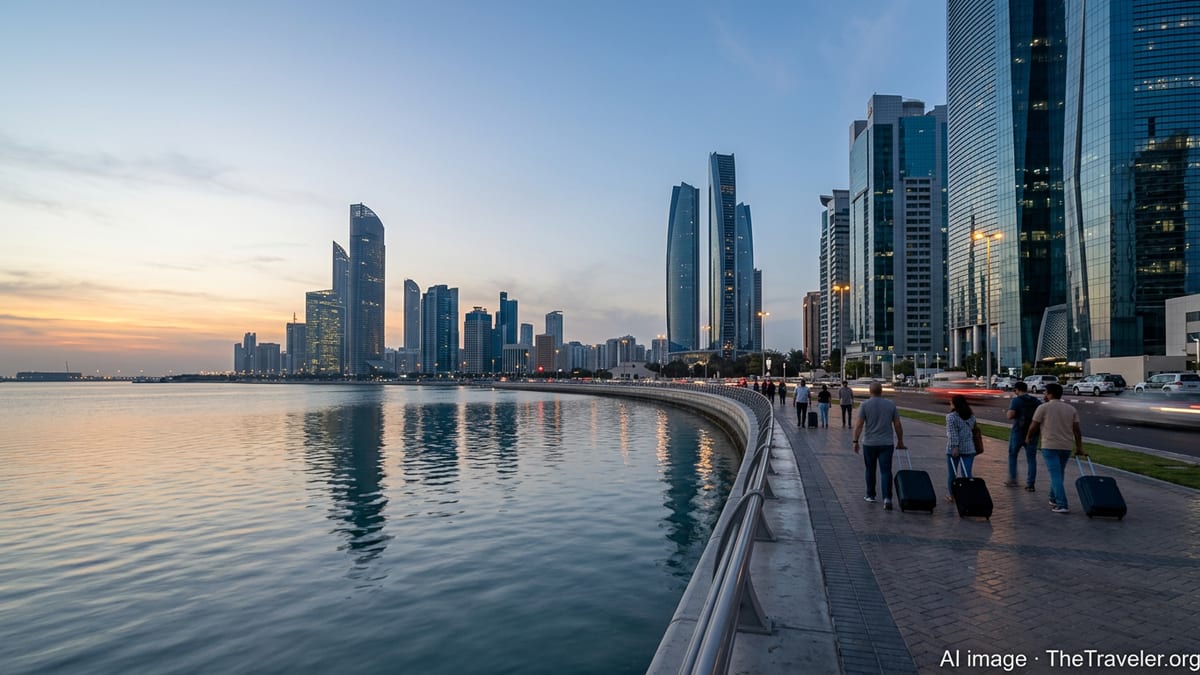
How the latest regional conflict is affecting the UAE
Dubai and Abu Dhabi sit close to a cluster of active flashpoints, including tensions involving Iran and armed groups across the Gulf. In recent weeks, publicly available coverage has highlighted renewed warnings from Iran that Gulf states supporting United States military operations could be treated as part of the conflict, increasing concern about potential spillover.
Reports from Gulf-based media in mid and late September 2026 describe a volatile aviation environment, with airspace restrictions and periodic disruptions across parts of the Middle East. Coverage on 22 September noted that while some flights at Dubai International Airport and Abu Dhabi’s Zayed International Airport were delayed, both hubs continued operating without widespread cancellations, underlining that the UAE’s airports remain open but subject to short-notice schedule changes.
Separate reporting indicates that the United States Mission to the UAE has urged American citizens outside the region to reconsider travel to and through the broader Middle East, citing the risk of rapid escalation, airspace closures and flight cancellations. This advice is focused on the regional context rather than a specific imminent incident in Dubai or Abu Dhabi, but it underscores how quickly conditions could change for travelers in transit.
Regional analysis published by international travel media in early September similarly notes that daily life in Dubai has largely continued, even as conflict activity concentrates around key maritime and air corridors such as the Strait of Hormuz. For visitors, that means most hotels, malls, beaches and attractions remain open, but the strategic location of the UAE keeps it firmly within the risk calculations of foreign governments.
Current government travel advisories for the United Arab Emirates
As of late September 2026, the United States Department of State lists the United Arab Emirates at Level 3, “Reconsider travel,” citing the risk of terrorism and broader regional instability. The advisory highlights the potential for attacks against civilian targets and notes that conflict elsewhere in the Middle East could affect security conditions and transport links involving the UAE.
The United Kingdom’s Foreign, Commonwealth and Development Office maintains detailed guidance for the UAE that does not advise against all travel, but warns that tensions between regional actors could escalate with little warning. The safety section refers to the possibility of missile or drone strikes across the Gulf and encourages travelers to stay alert to local updates and follow any instructions disseminated through the UAE’s official alert systems.
Other European governments have taken a slightly more moderate view. Dutch travel guidance, for example, shifted much of the UAE to a standard “yellow” caution level on 8 September 2026, signalling that travel is permitted while acknowledging heightened security awareness. This illustrates how assessments vary by country, with some focusing more on the regional military picture and others on conditions inside the Emirates themselves.
Across these advisories, a common theme emerges: authorities acknowledge that Dubai and Abu Dhabi remain functional, densely policed cities, but emphasize that their location within an unstable region justifies a higher baseline of caution for visitors. Travelers are encouraged to check the latest advisory from their own government immediately before departure, as levels and wording can change quickly in response to new incidents.
Flight operations, airspace restrictions and what travelers are seeing
The UAE’s two main international gateways, Dubai International Airport and Zayed International Airport in Abu Dhabi, continue to handle large volumes of traffic. Recent coverage from regional news outlets notes that both airports have experienced pockets of delays, with more than 170 flights reportedly affected on a recent Sunday, yet there has not been a systematic shutdown of operations.
The picture becomes more complex in the skies above the wider Gulf. Earlier in the summer, conflict zone advisories from European aviation regulators urged airlines to avoid certain airspace segments over the UAE, Bahrain, Kuwait, Oman and Qatar, prompting some international carriers to reroute or suspend services to parts of the region. While many flights to Dubai and Abu Dhabi are still operating, schedules on some routes have become longer or less frequent as airlines adjust their risk assessments.
Travel forums and local discussion boards reflect a mix of experiences. Some recent travelers describe routine journeys with standard security procedures, while others report last minute gate returns, extended tarmac waits or abrupt schedule changes as airlines react to changing airspace permissions. These accounts underline the practical reality that even if the risk to individuals on the ground remains low, operational uncertainty can significantly disrupt travel plans.
For anyone connecting through Dubai or Abu Dhabi in the coming weeks, the practical takeaway is to build in flexibility. Booking longer layovers, avoiding tight same-day onward connections and monitoring airline apps and airport notices closely can reduce the stress of potential delays. Travel insurance that specifically covers missed connections and conflict-related disruption is also increasingly relevant given current conditions.
Security on the ground in Dubai and Abu Dhabi
Within city limits, available information continues to describe Dubai and Abu Dhabi as relatively secure, highly monitored urban centers. Law enforcement presence at malls, metro stations, major hotels and tourist sites is extensive, and both emirates operate sophisticated surveillance and emergency response systems. Publicly available material from foreign embassies and consulates points to a consistently strong record of managing routine crime and public-order incidents.
That does not mean there is no risk. Government advisories continue to point to the possibility of terrorist attacks against locations frequented by foreigners anywhere in the Gulf, and the UAE’s participation in regional security and diplomatic initiatives could, in theory, make it a symbolic target. Large public gatherings, high-profile events and busy transport hubs are treated as higher-risk environments in many advisories, and visitors are encouraged to remain aware of their surroundings.
Cultural and legal differences also shape the security environment. The UAE enforces strict laws on public behavior, alcohol consumption, online speech and displays of affection, with penalties that can be far more severe than in many Western countries. The United Kingdom’s travel advice, among others, highlights that even behavior perceived as offensive or disrespectful, including on social media, can result in arrest or deportation. Understanding these frameworks before arrival is essential to avoiding conflicts with local law that have nothing to do with regional hostilities.
Healthcare and emergency infrastructure in both emirates are described by foreign governments as broadly comparable to systems in high-income countries, although access may depend on proof of insurance or ability to pay. Travelers are advised to carry documentation of medical coverage, keep copies of identification and know the local numbers for police, ambulance and fire services in case an incident occurs during their stay.
Practical considerations for deciding whether to travel
Against this backdrop, whether it is “safe” to travel to Dubai and Abu Dhabi has become a personal risk calculation shaped by individual tolerance, purpose of travel and flexibility. For some travelers, especially those transiting from or to other high-risk destinations, the combination of a Level 3 advisory from the United States, evolving conflict dynamics and the possibility of sudden airspace closures may be reason enough to postpone or reroute.
Others may judge that the on-the-ground security profile in Dubai and Abu Dhabi, together with the continued operation of major airlines and tourism infrastructure, justifies proceeding with extra caution. For these visitors, widely shared recommendations include registering with their embassy where possible, sharing itineraries with family or friends, monitoring reputable international and local news sources, and staying alert to official alerts distributed through UAE channels.
What is clear from the latest round of advisories and reporting is that conditions are neither business as usual nor at the point of mass evacuation or blanket bans on travel. Instead, the situation sits in a gray zone where individual travelers need to weigh comfort with risk against the importance of their trip, keep their plans adaptable and remain prepared for rapid changes to both regional security dynamics and flight operations.
Given how quickly the picture has evolved since early summer, travelers with bookings in the coming days or weeks should recheck official advisories and airline guidance as close as possible to departure, and be ready to adjust plans if further escalation in the region begins to affect the UAE more directly.