


More news on this day
Recent riots and large-scale protests in parts of Europe, especially France, have raised fresh questions for holidaymakers about whether it is still safe to travel, and what the latest official advice from the UK Foreign, Commonwealth & Development Office (FCDO) means for upcoming trips.
Get the latest news straight to your inbox!
What the UK Foreign Office Is Saying About Europe
According to publicly available FCDO travel advice, the UK government has not issued a general warning against travel to Europe, and key destinations such as France remain open to British visitors. The France country page, updated on 24 October 2026, highlights an increased likelihood of demonstrations and political gatherings across the country, sometimes at short notice, but confirms that there is no blanket advice against visiting.
The FCDO notes that protests and associated disruption have affected major French cities following nationwide student and cost-of-living mobilisations and the 17 October riots. However, its guidance frames these events primarily as a safety and disruption risk that travelers should factor into plans, rather than a reason to cancel all trips.
Beyond France, other popular European destinations including Spain, Italy, Germany and Portugal currently carry standard alerts focused on general security and the ongoing risk of terrorism, but without broad recommendations to avoid travel entirely. The overarching message from published UK guidance is to “check our travel advice before you travel,” monitor local developments and stay informed as conditions can change quickly.
Travelers are reminded that the FCDO’s role is to help people make informed decisions about risk. Its advice can also influence travel insurance cover, so checking the exact wording for a destination just before departure is an important practical step.
France: Riots, Protests and Museum Closures
France has been at the center of recent unrest, with student protests over education and cost-of-living concerns evolving into wider demonstrations and, on some days, serious rioting. Reports compiled by international and French media describe the 17 October riots as a flashpoint, with looting, arson and clashes with police in several cities, including Paris, Marseille and Lyon.
Subsequent weekends have seen authorities prepare for renewed trouble. Coverage from news agencies indicates that around 70,000 police and gendarmes were deployed across France for the latest major protest Saturday, while high-profile cultural sites such as the Louvre and several other Paris museums closed for the day as a precaution. These measures aim to contain potential violence to specific areas and time windows but can significantly disrupt visitor plans.
Travel-focused advisory trackers that compile government positions from the United Kingdom, United States, Canada and Australia show a consistent pattern as of late October 2026: France is rated as a place where travelers should exercise increased caution because of terrorism and civil unrest, but it is not classed as a destination to avoid. The UK’s own France page is at its lowest formal level, indicating no specific advice against travel while still flagging the higher likelihood of demonstrations.
Local accounts shared on traveler forums reinforce this mixed picture. Visitors report that on protest days, some central districts around traditional gathering points see heavy police presence, burning rubbish bins and occasional vandalism, while other neighborhoods and many tourist sites continue operating with relatively normal activity. The result is a patchwork situation where safety can vary significantly from street to street.
Security Risks Beyond the Street Protests
While images of rioting dominate headlines, the broader security environment in Europe continues to be shaped by the long-standing threat of terrorism and sporadic violent incidents. The FCDO’s France guidance references past attacks, including stabbings near tourist areas and transport hubs, as part of its reminder that the risk of terrorism in France and other Western European countries remains.
Risk assessments published by governments such as the United Kingdom, Ireland, Australia and New Zealand describe a similar pattern across much of Europe: plots have been disrupted in recent years, but officials still judge that attacks with little or no warning are possible, particularly in crowded public places, on public transport, at major events and near symbolic locations.
Travel advisory pages also highlight that protests can themselves become a security concern when they turn violent, leading to confrontations between demonstrators and police, the use of tear gas and water cannon, and sporadic looting. Civil unrest guidance typically advises visitors not to approach protests, not to attempt to watch them out of curiosity, and to move away quickly if they encounter large gatherings or see a sudden buildup of security forces.
Insurance and risk specialists point out that while most demonstrations across Europe end peacefully, the combination of unrest and the underlying terrorism threat makes it sensible to treat large crowds, political rallies and late-night gatherings in city centers with added caution at the moment.
How the Unrest Is Affecting Travel Plans
Even where the overall security risk is judged manageable, practical disruption has become a key concern for travelers. In France, protests have occasionally coincided with transport strikes and bad weather, creating a cascading effect of delays. International coverage and traveler reports describe isolated instances of metro closures around central squares, short-notice cancellation of events and temporary closures of attractions such as the Arc de Triomphe and key museums on high-risk dates.
So far, long-distance rail and air links in and out of France and neighboring countries have largely continued to operate, though local public transport within affected cities can be rerouted or suspended for several hours during major demonstrations. This means that while most visitors are still able to reach their destination, they may need to allow more time for journeys, be flexible about sightseeing plans and check live updates from transport operators.
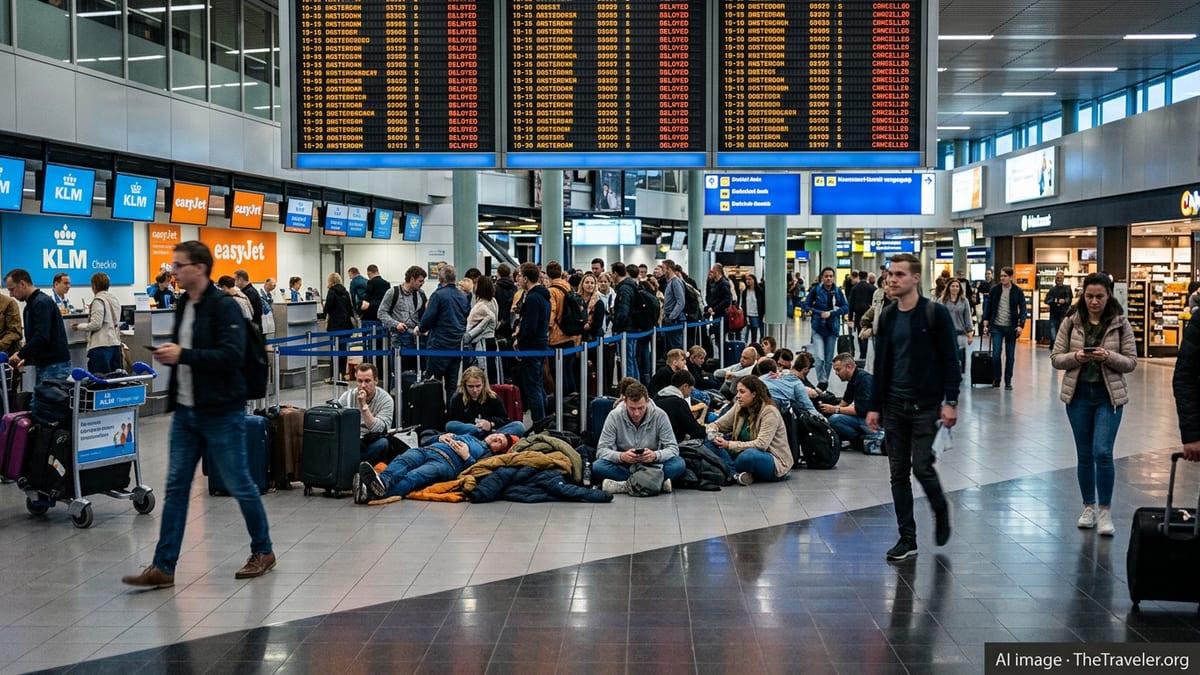
Across Europe more broadly, airports and railway stations remain busy, with no widespread shutdowns linked to the recent unrest. However, many European governments encourage arriving passengers to be alert in terminals, avoid unattended luggage, and follow local security instructions if an incident occurs. Travelers connecting through larger hubs such as Paris, Frankfurt or Amsterdam may occasionally encounter visible security operations, additional bag checks or temporary access restrictions.
Accommodation providers in major cities are generally open, but some hotels near traditional protest routes have advised guests, through publicly shared messages, to avoid certain streets or to remain inside during designated hours when marches are expected to pass nearby. This kind of localized advice can be important, so checking messages from hotels or rental hosts shortly before arrival is advisable.
Planning a Trip: Balancing Caution and Normal Travel
With the FCDO still permitting travel to European destinations including France, decisions about whether to go ahead with a trip are largely a matter of personal risk tolerance and flexibility. Published government and industry guidance suggests that travelers willing to adapt their itineraries and avoid protest areas can, in many cases, continue with plans while taking extra precautions.
Key recommendations drawn from current European travel advisories include monitoring reliable local news, transport operator updates and official city channels in the days before travel; registering contact details with consular services where available; and carrying identification at all times, as spot checks can increase around demonstrations and in high-security zones.
Visitors are also encouraged to map out alternative routes to and from airports, train stations and major sites, in case certain metro lines or streets are temporarily closed. Booking timed tickets for museums and attractions on days when large protests are announced can be risky, given the possibility of precautionary closures, so keeping one day in an itinerary more flexible may reduce frustration.
For now, the picture across Europe is one of heightened vigilance rather than wholesale shutdown. Riots and intense protests have had serious local impacts, particularly in parts of France, but current UK Foreign Office advice and comparable international guidance stop short of telling travelers to stay away from the continent altogether. Instead, the emphasis is on informed planning, awareness and a willingness to adjust plans if demonstrations flare during a visit.