


Few travel debates are as enduring as New York versus California. Both are global icons, each promising world class cities, dramatic landscapes and culture that shapes the rest of the United States. Yet the experiences they offer on the ground feel very different. If you only have limited vacation time or you are planning a once in a lifetime trip to the US, choosing between them matters. This guide breaks down how New York and California actually compare right now, from costs and logistics to neighborhood level experiences, to help you decide which state delivers the better trip for you.
Get the latest updates straight to your inbox!
Defining the Classic New York and California Experiences
Most travelers come to New York for intensity. In New York City, the classic first timer circuit runs from Times Square and Broadway to Central Park, the Statue of Liberty and the skyline views at the Empire State Building or One World Observatory. Outside the city, many visitors add a few days in the Hudson Valley for small river towns and wineries, or in the Finger Lakes for waterfalls and state parks. The state is compact enough that you can fit city culture and countryside escapes into a 7 to 10 day trip without spending your whole vacation in transit.
California sells a different fantasy. Here the archetypal trip mixes Pacific beaches, scenic drives and national parks. A common two week route might start in San Francisco for cable cars and the Golden Gate Bridge, drop down coastal Highway 1 through Monterey and Big Sur, spend a couple of days in Santa Barbara and end in Los Angeles for Hollywood, Venice Beach and day trips to theme parks. Another popular version heads inland instead, combining Los Angeles with Palm Springs, Joshua Tree National Park and perhaps Las Vegas just across the Nevada state line.
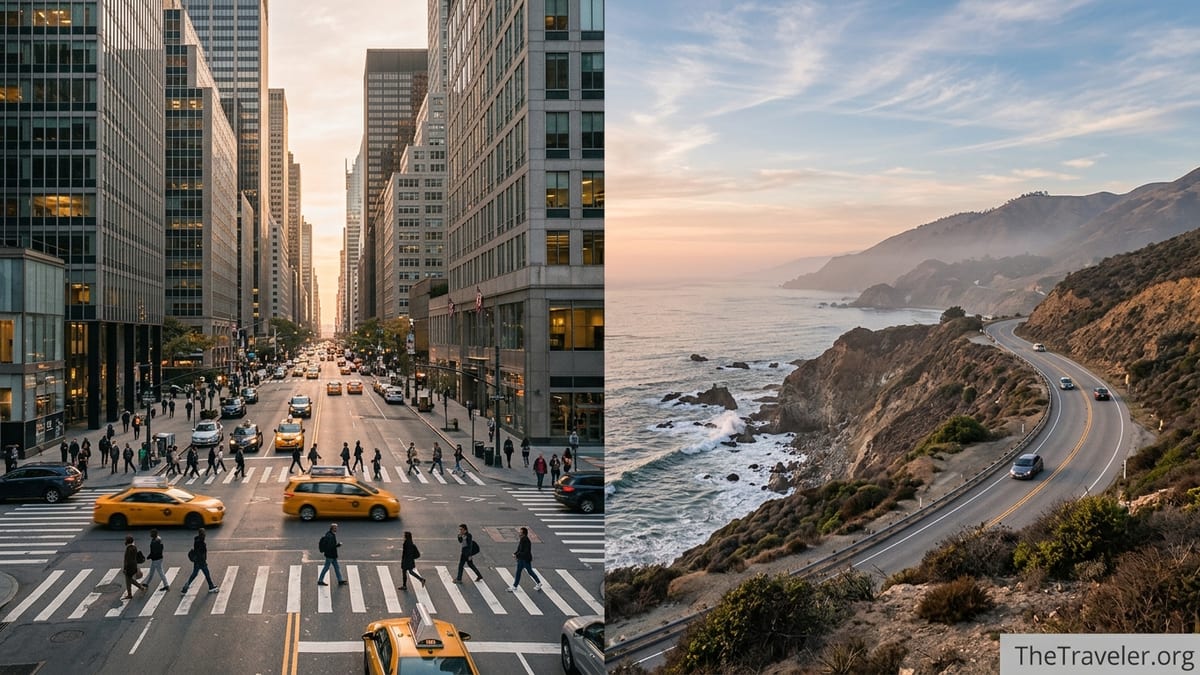
New York’s defining experience is vertical and walkable. Think of Midtown Manhattan streets where skyscrapers, subway entrances and steam vents are all within one city block. California’s is horizontal and car based, from the wide boulevards of Los Angeles to vineyard lined roads in Napa and winding routes through Yosemite Valley. You feel this from the moment you land: in New York, many visitors take the subway or commuter rail into Manhattan; in California, most people head straight to a rental car counter.
The result is that your daily rhythm will look very different. A New York day might involve walking 20,000 steps between museums, neighborhoods and rooftop bars. In California, you are more likely to divide your time between long drives, scenic viewpoints and slow meals on outdoor patios.
Access, Distances and Getting Around
Both states are straightforward to reach, but how you move once you arrive is where they diverge. New York City is served by three main airports: John F. Kennedy, LaGuardia and Newark. Together they offer nonstop flights from most major US cities and many European and Latin American hubs. According to recent federal airfare data, average domestic itineraries nationwide are just under 400 dollars one way, with big coastal hubs like New York often landing near that mark or slightly above depending on the route and season. In practical terms this means that a round trip from Chicago or Atlanta to New York commonly falls in the 300 to 500 dollar range if booked a few months in advance.
California’s primary gateways are Los Angeles International and San Francisco International, with additional options in San Diego, Oakland and San Jose. These airports rank among the nation’s busiest and offer similar pricing bands to New York for domestic travelers. For example, itineraries to Los Angeles from Midwestern cities frequently track close to national averages, with deals dipping under 300 dollars round trip in off peak months and rising well above 500 dollars at holiday peaks. One advantage for West Coast and Mountain West travelers is the abundance of short, competitive flights into Los Angeles, San Diego or the Bay Area, which can make California the more affordable choice if you are starting from cities like Seattle, Denver or Phoenix.
On the ground, New York clearly favors travelers who prefer transit and walking. A single subway or local bus ride in New York City is a little under 3 dollars, and you can ride all day for the price of a couple of coffee drinks. The system reaches all five boroughs and runs 24 hours on most lines. Many visitors based in Midtown or Lower Manhattan spend their entire stay using only the subway, buses, and the occasional yellow cab or rideshare for late nights. Outside the city, Amtrak and regional rail connect to places like the Hudson Valley, Albany and even Niagara Falls without requiring a car.
California, by contrast, is built around the car. While Los Angeles has growing metro and light rail lines and San Francisco has BART and Muni, these systems cover only portions of the sprawling metro areas. To realistically string together a trip that includes Los Angeles, the Central Coast and Yosemite or Sequoia National Park, you will almost certainly need to rent a car. Weeklong rentals for compact cars at major California airports frequently run in the 300 to 500 dollar range, before fuel, tolls and parking. The payoff is access: a car lets you pull over at Big Sur viewpoints, detour into wine regions like Paso Robles, and reach trailheads in the Sierra Nevada that are impractical by public transport.
Costs on the Ground: Hotels, Food and Activities
Both New York and California have reputations for high prices, but the way your money flows is slightly different. In New York City, accommodation is the major cost driver. Recent lodging reports for Manhattan show average daily hotel rates in busy periods topping 400 dollars per night in core areas. Travelers posting about their experiences still routinely mention midrange chain hotels around Times Square or Midtown for 250 to 350 dollars per night for a standard room, even in shoulder seasons. That means a five night stay in a central Manhattan hotel often rivals or exceeds the cost of your flights.
In California, hotel prices vary widely by city. Average daily rates in San Francisco and parts of Los Angeles often sit in the high 100 to low 300 dollar range for midscale properties, with spikes during major events or tech conferences. Beachfront areas like Santa Monica, Santa Barbara or upscale Napa Valley resorts can easily climb into the 400 to 800 dollar per night range. However, inland cities such as Sacramento, Fresno or inland San Diego County towns can offer decent chain hotels closer to 130 to 180 dollars per night, especially outside peak summer months. That flexibility can make California more budget friendly if you are willing to trade prime locations for short drives.
Food costs are broadly comparable. In New York, you can still find a classic slice of pizza for about 3 to 5 dollars in corner pizzerias, street hot dogs around 3 dollars, and a quick counter service lunch like a deli sandwich plus drink for 12 to 18 dollars. Sit down dinners at midrange restaurants in Manhattan typically land between 25 and 40 dollars per main course before drinks and tips, with trendy spots in neighborhoods like SoHo, the West Village or Williamsburg charging more. In California’s major cities, tacos and burritos from neighborhood taquerias might run 4 to 6 dollars each, while a casual brunch in San Francisco or Los Angeles commonly ends up at 20 to 30 dollars per person before coffee and tax. Upscale restaurants in Santa Monica or Napa Valley easily mirror or exceed Manhattan prices, especially if you add local wine pairings.
Activity costs also tilt differently. In New York, many of the iconic experiences come with fixed ticket prices: observatory decks at major skyscrapers often charge 40 to 60 dollars per adult, Broadway tickets frequently range from 80 dollars for discounted weekday seats to several hundred dollars for prime weekend shows, and admission to flagship museums such as the Museum of Modern Art or the American Museum of Natural History typically sits around the 25 to 30 dollar mark for standard adult entry. In California, a significant portion of the best experiences are outdoors and either low cost or free. Driving the Big Sur coast, exploring the beaches of San Diego, or watching sunset over the Pacific at Griffith Observatory in Los Angeles costs little more than parking. Admission to national parks like Yosemite or Joshua Tree is generally covered by a single vehicle pass of roughly 35 dollars, valid for a week. Theme parks are the exception: a one day ticket to major Southern California parks such as Disneyland often climbs well above 150 dollars per person before extras.
Urban Culture: New York City vs Los Angeles and San Francisco
For pure urban immersion, New York City is hard to match. The city welcomed around 65 million visitors in 2024 and remains one of the world’s top tourism destinations. Times Square alone draws tens of millions annually to its neon billboards and theater district. Walk a 20 minute radius from there and you have world class institutions like the Museum of Modern Art, Rockefeller Center’s observation decks, Fifth Avenue flagships and Central Park’s southern edge. The density of experiences packed into a few subway stops is what makes New York feel electric even on a random Tuesday evening.
Los Angeles offers a more sprawling, cinematic version of city life. Visitors often split their time between Hollywood’s Walk of Fame and studio tours, the beaches of Santa Monica and Venice, and neighborhoods like Silver Lake or Echo Park for coffee bars and nightlife. The city’s creative energy shows up in street murals along the Arts District, food trucks outside music venues, and weekly farmers markets in places like Santa Monica or Hollywood. Unlike New York, where you might see three or four neighborhoods in one day by subway, in Los Angeles you often pick one or two districts and drive between them, spending more time in each place.
San Francisco sits somewhere between the two. It offers the compactness of a walkable city center with the drama of the bay, hills and iconic landmarks like the Golden Gate Bridge and Alcatraz. Neighborhoods such as North Beach, the Mission and Hayes Valley are close enough that you can explore several on foot or via short tram rides. Compared with New York, the city shuts down a bit earlier and feels more relaxed in the evenings, but its tech driven economy and diverse communities support a sophisticated dining and arts scene. For travelers who want an urban experience without the constant rush of Manhattan or the driving demands of Los Angeles, San Francisco can feel like a sweet spot.
In practical terms, if your ideal trip revolves around live theater, late night dining and walking between densely layered cultural experiences, New York has the edge. If you are drawn to film studios, beach culture, and neighborhoods that spread out under palm trees, Los Angeles and California’s cities might better match your vision.
Nature and Landscapes: Adirondacks vs Sierra Nevada and Pacific Coast
New York is often overlooked for nature, but it should not be. North of New York City, the Hudson Valley blends historic estates, small towns and river views that are easy to reach by train. Further north, the Adirondack Park covers a vast area of mountains, lakes and forests. Towns like Lake Placid and Saranac Lake offer hiking, canoeing and winter sports with a classic small town feel. In western New York, the Finger Lakes region draws visitors to gorges, waterfalls and vineyards, while the US side of Niagara Falls remains a major draw for first time visitors who want to pair the falls with a night or two in nearby Buffalo.
California, however, is built for travelers whose primary goal is scenery. The state’s Pacific coastline ranges from the fog shrouded cliffs of Big Sur to the wide sandy beaches of San Diego. Inland, Yosemite National Park delivers sheer granite walls like El Capitan and Half Dome rising above meadows and rivers. Further south, Joshua Tree combines Mojave and Colorado desert landscapes with surreal rock formations and starry skies, while Death Valley offers dunes and salt flats in one of the hottest places on earth. Add in Lake Tahoe’s alpine lakes and the giant sequoias of Sequoia and Kings Canyon National Parks, and California becomes a year round playground for hikers, climbers, surfers and road trippers.
Accessibility again plays a role. In New York, many of the best outdoor areas require only modest planning. A day trip from Manhattan to Beacon or Cold Spring in the Hudson Valley, reached by Metro North trains, delivers hiking trails and river views without renting a car. Weekend trips to the Catskills, Adirondacks or Finger Lakes do usually require driving, but distances are manageable: from New York City to Lake Placid, for example, is roughly a five hour drive under normal traffic conditions.
In California, nature trips are longer and more logistically complex, but the payoff can feel bigger. Driving from Los Angeles to Yosemite often takes six hours or more once you account for traffic and mountain roads, and you must book park lodging or nearby hotels months ahead in popular seasons. Yet waking up to sunrise on Yosemite Valley cliffs, then driving a few days later to watch sunset over the Pacific near Santa Barbara, creates the kind of varied landscapes that are difficult to replicate in a single New York based trip. If national parks and road trips top your wish list, California is likely the better match.
Seasonality, Weather and Trip Timing
Weather can quietly decide whether New York or California works better for a given month. New York has four distinct seasons. Winters from December through February can be cold, windy and occasionally snowy, with temperatures commonly hovering near or below freezing. That said, visiting in January or February often means lower hotel prices and fewer crowds, especially at non holiday times. Spring and autumn are prime: April to early June and late September through early November typically bring mild temperatures and colorful parks, especially in Central Park and the Hudson Valley.
Summers in New York can be hot and humid, particularly in July and August, with heat wave days feeling oppressive on subway platforms and city streets. On the positive side, summer also packs in outdoor concerts, street fairs and rooftop bar scenes. Many families target this period because of school holidays, accepting higher hotel rates and thicker crowds around major attractions like Times Square and the Statue of Liberty.
California’s weather story is more varied. Coastal destinations such as San Diego and much of the Los Angeles basin enjoy mild, relatively stable temperatures for much of the year, making them appealing in winter when much of the US is cold. Summer in San Francisco often brings fog and cooler-than-expected conditions for visitors who expect beach weather, while inland valleys and desert areas like Palm Springs and Death Valley can be extremely hot, with daytime highs frequently soaring well past 100 degrees Fahrenheit.
For planning, this means winter can be a sweet spot for California city trips and coastal drives, especially from December to March, when you can enjoy outdoor dining and hiking in light jackets. High summer works very well for Yosemite, Lake Tahoe and higher elevation mountain areas where snow lingers into spring, but you will need to book well ahead. If your only available dates are in the peak of summer and you dislike heat and humidity, a California itinerary that favors the central coast and higher elevations may feel more comfortable than a New York City trip dominated by dense streets and subway heat.
Who Each State Suits Best
When travelers ask which state offers the better experience, the more useful question is usually which state is better for a particular style of trip. New York tends to shine for short, intensive stays of five to seven days where you want maximum culture and energy with minimal logistics. A couple flying into New York for a long weekend can check into a Midtown hotel, buy unlimited transit passes, and spend their time roaming from Broadway shows to Brooklyn neighborhoods like DUMBO and Williamsburg without ever driving or navigating long distances.
California is better suited to itineraries of 10 days or more and travelers who enjoy the road trip format. A family might fly into Los Angeles, rent a car, spend three days exploring theme parks and beaches, drive up the coast through Pismo Beach and Big Sur, then end in San Francisco for cable cars and Chinatown. Alternatively, outdoor focused travelers might pair San Francisco with several nights in Yosemite, Lake Tahoe and wine country, spending a majority of their time surrounded by nature but still enjoying urban bookends.
Budget also plays a role. If you can tolerate small hotel rooms and are comfortable using public transit and grabbing cheap street food or quick service meals, New York’s high nightly hotel rates become more manageable over a short span. A traveler staying four nights in a 270 dollar per night Manhattan hotel, eating a mix of 5 dollar pizza slices and 25 dollar bistro dinners, might come out ahead of a two week California road trip that adds up fuel, parking, rental cars and multiple hotel stays across different cities, even if each individual California hotel night is cheaper.
Travel party composition matters too. Solo travelers and couples who love walking and nightlife often prefer New York because it feels active around the clock and you can safely move between districts by public transit or taxi late into the evening. Families with younger children may lean toward California, where theme parks, beaches and more spacious hotels or vacation rentals make days easier to structure. Multigenerational groups often find that California’s mix of gentle coastal walks, scenic drives and wine regions provides common ground across ages.
The Takeaway
New York and California deliver very different flavors of a headline American vacation. New York concentrates towering architecture, world famous museums, Broadway stages and a dense fabric of neighborhoods into a relatively small geographic area that rewards curiosity on foot. It is at its best for travelers who want to spend their days and nights immersed in city life, hopping between galleries, theaters and restaurants, and who are comfortable sacrificing space and quiet for access and intensity.
California trades vertical drama for horizontal variety. Within a single trip you can watch surfers at sunrise in San Diego, drive under redwoods along the North Coast, taste wine in Napa Valley and stand at the base of granite walls in Yosemite Valley. The catch is that you have to earn those moments with longer drives, more complex bookings and a reliance on the car for almost every move. For travelers who see the journey itself as part of the adventure, that structure can be a feature rather than a flaw.
If you have under a week, lean toward New York, where transit, density and walkable neighborhoods let you fit a huge amount into a short stay. If you have 10 days or more, especially with friends or family, California’s road trip loops offer a richer mix of landscapes and climates without ever leaving one state. In the end, the better travel experience is less about which state wins on paper and more about where your imagination goes when you picture boarding the plane. If you find yourself dreaming of skyline silhouettes and museum corridors, choose New York. If your mind jumps to ocean horizons, winding coastal roads and trailheads in the mountains, California is waiting.
FAQ
Q1. Is New York or California cheaper for a one week vacation?
For a one week vacation focused on a single city, costs often balance out. New York hotels can be more expensive per night, but you save on rental cars and long drives. In California, you may pay less for some hotels but add 300 to 500 dollars for a weeklong car rental plus fuel and parking, especially if you move between multiple destinations.
Q2. Which is better for first time visitors to the United States?
For first time visitors who want a compact, low logistics introduction to the US, New York is usually easier. You can see many famous landmarks without driving and get a strong sense of American urban culture in a few days. California works well for first timers who already know they love road trips, nature and coastal scenery.
Q3. Do I need a car in New York City or Los Angeles?
In New York City you do not need a car and most visitors rely on the subway, buses, taxis and rideshares. In Los Angeles, a car is strongly recommended if you want to see more than one or two districts, visit beaches, or make day trips to nearby attractions and hiking areas.
Q4. When is the best time of year to visit New York?
The best times for comfortable weather and manageable crowds are typically April to early June and late September through early November. Winter can be cold but offers lower prices outside holidays, while summer brings more events and longer days at the cost of heat and humidity.
Q5. When is the best time of year to visit California?
California is more flexible. Coastal cities like San Diego and much of Los Angeles are pleasant almost year round. Spring and autumn are ideal for road trips that mix cities and national parks, while mid to late summer is best for high elevation areas like Yosemite and Lake Tahoe, when snow has melted from most trails.
Q6. Which state is better for families with children?
Families who prioritize theme parks, beaches and varied activities often gravitate toward California, thanks to options like Disneyland, Universal Studios, San Diego’s beaches and easy day hikes in national parks. New York works well for families with older kids who are excited by city life, museums and theater.
Q7. Can I combine New York and California in one trip?
Many international visitors do, but the key is time and budget. With two weeks or more, you can spend four to five days in New York City, then fly to Los Angeles or San Francisco for a shorter California loop. Be prepared for higher total costs due to cross country flights and multiple hotel bases.
Q8. Is California really that much better for nature and outdoors?
California simply has a greater concentration of famous national parks and diverse landscapes, from deserts to high mountains and long coastlines. New York offers excellent outdoor options, especially in the Hudson Valley, Catskills and Adirondacks, but most travelers who put hiking and dramatic scenery first will find California more rewarding overall.
Q9. How far in advance should I book hotels and major attractions?
In both states, booking three to six months ahead is wise for peak seasons and popular areas. In New York, this especially applies to centrally located Manhattan hotels and major Broadway shows. In California, lock in Yosemite and coastal lodging early in summer, and secure tickets for major theme parks and studio tours ahead of time.
Q10. If I hate driving, should I rule out California?
You do not have to rule it out, but you may need to narrow your focus. You can base in San Francisco and use transit and guided tours, or stay in central Los Angeles neighborhoods and rely on rideshares. However, if you strongly prefer walking and transit based exploration, New York will likely feel more natural and less stressful.