


Choosing between Newark Liberty International (EWR), John F. Kennedy International (JFK), and LaGuardia (LGA) can shape your entire New York City trip, from how much you spend on ground transportation to how stressed you feel when you land. There is no one-size-fits-all winner, but understanding how these three major airports really compare in 2026 will help you pick the right one for your itinerary, budget, and sanity.
Get the latest updates straight to your inbox!
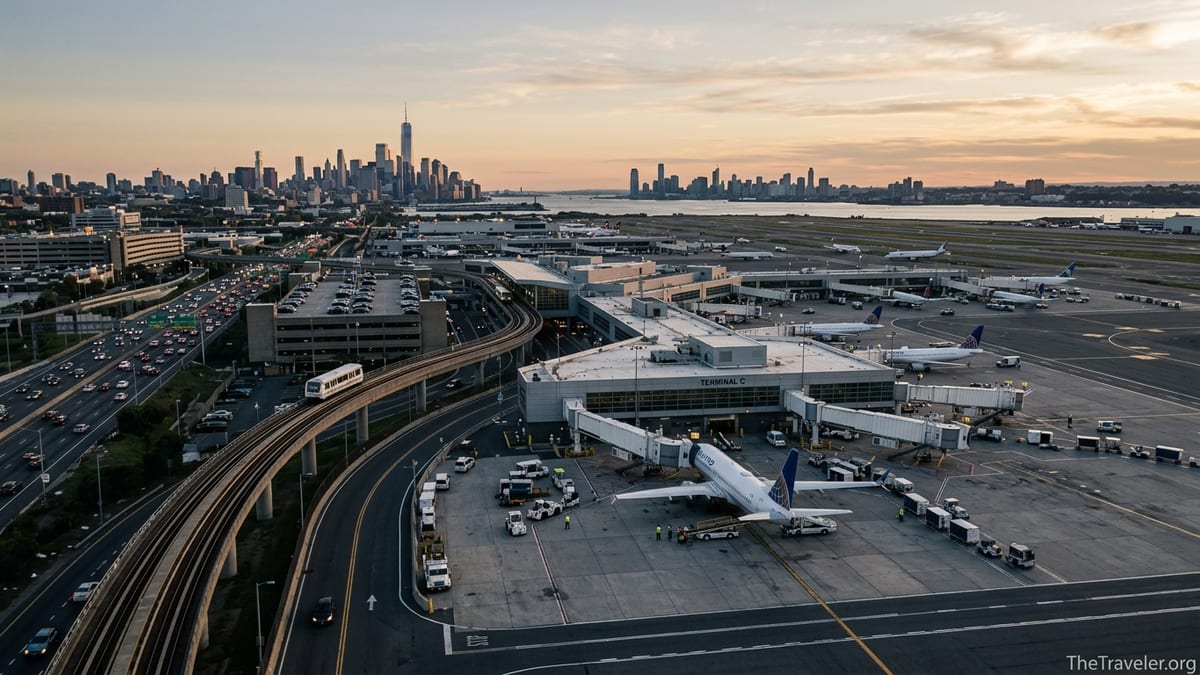
Location: How Close Is Each Airport to Where You Are Going?
Newark Liberty International sits in New Jersey, about 16 miles west of Midtown Manhattan. In practice, that usually means a 30 to 60 minute trip to Midtown, depending on traffic and the mode of transport you choose. For example, on a typical weekday afternoon, a rideshare from Newark to Times Square might take 40 minutes with light tunnel traffic, while an NJ Transit train from Newark Liberty Airport Station to New York Penn Station often runs under 30 minutes once you are on board.
JFK is located in southeastern Queens, closer to Brooklyn and many parts of Queens than to Midtown. From JFK, you almost always connect first via AirTrain to Jamaica or Howard Beach, then transfer to either the Long Island Rail Road or the subway to reach Manhattan. That can put total travel time to Midtown in the 45 to 70 minute range, depending on whether you take the faster LIRR or the cheaper subway. For example, an evening arrival might involve 10 minutes on AirTrain, a short wait, then a 25 minute LIRR ride to Penn Station.
LaGuardia is the closest of the three to Midtown in pure driving distance and is especially convenient if you are staying on the Upper East Side, in Midtown East, or in parts of Queens like Astoria and Long Island City. In good traffic, a yellow cab from Terminal B to a hotel near Grand Central can be as fast as 20 minutes. In rush hour, that same ride can easily stretch to 45 minutes or more, as LaGuardia lacks a direct rail connection and relies on roads that clog quickly.
In simple geographic terms, LaGuardia tends to be best for Manhattan and Queens, JFK for Brooklyn and southeast Queens, and Newark for travelers heading to New Jersey or the west side of Manhattan. If your hotel is near Penn Station or on Manhattan’s west side, Newark’s direct train access to New York Penn Station can be more convenient than either JFK or LaGuardia, even though it is technically in another state.
Ground Transportation: Cost, Time, and Real-World Hassle
From Newark, the most balanced option for many travelers is the AirTrain plus NJ Transit combination. You take the AirTrain from your terminal to Newark Liberty International Airport Station, then board an NJ Transit train to New York Penn Station. As of late 2025, a one-way adult ticket is in the upper teens in US dollars for the combined AirTrain and train segment, and the total journey can be around 35 to 45 minutes door to door if connections are smooth. Budget-conscious travelers sometimes choose the Newark Airport Express bus from the terminals to Midtown stops like Port Authority Bus Terminal, Bryant Park, or near Grand Central, at a similar price point to a train ticket.
Newark taxis and rideshares are straightforward but pricey. A yellow taxi or licensed sedan to Midtown frequently ends up in the 70 to 100 dollar range once tolls and tip are added, especially if you are crossing the Hudson via the Lincoln or Holland Tunnel. Rideshare prices swing widely with surge-pricing; it is not unusual to see an UberX from Newark to Midtown at around 60 dollars on a quiet mid-morning, jumping to 90 dollars or more on a rainy Sunday evening.
At JFK, the AirTrain plus LIRR combo is usually the fastest route to Manhattan. You ride AirTrain to Jamaica Station, then transfer to a Long Island Rail Road train toward either Penn Station or Grand Central. Off-peak, that rail leg can be approximately 20 to 25 minutes, with the AirTrain portion adding about 10 minutes. The total cost for AirTrain plus LIRR is typically in the mid-teens to low twenties per person, depending on peak or off-peak pricing and whether you use combo tickets. The cheaper option is AirTrain plus subway from Jamaica or Howard Beach, which can bring the total cost down to roughly ten dollars or so per person but stretches travel time and crowds.
LaGuardia is still a ground-transport game. Yellow cabs from LGA to Manhattan run on the meter, and in practice a trip to Midtown frequently ends up from the upper 30s to the 60 dollar range including tip, subject to congestion pricing surcharges in certain zones. Rideshares can be slightly cheaper or more expensive depending on demand. Some travelers use the MTA Q70 Select Bus Service, which runs from LaGuardia Terminals B and C to the Jackson Heights–Roosevelt Avenue subway hub, then transfer to the E, F, M, R, or 7 train. That option can keep your total cost under ten dollars while delivering you to Midtown in about 45 to 60 minutes in moderate traffic.
It is also worth checking for temporary disruptions. In early 2026, parts of Newark’s AirTrain service have periodically been replaced with shuttle buses during daytime construction windows, adding a layer of uncertainty and a few extra minutes to the connection. JFK’s AirTrain also goes through maintenance periods, sometimes with shuttles replacing sections of the route on specific weekends. If your arrival or departure is time-critical, double-check current notices the week of your trip and be prepared with a backup plan like a taxi or rideshare.
Airlines, Destinations, and Where Each Airport Shines
Your choice may be largely made for you by the airline and route you care about. Newark is a major hub for United Airlines, which dominates Terminal C and runs a dense network of flights across the United States and internationally. If you are a United loyalist or flying to secondary US cities like Cleveland or Indianapolis, or to certain European destinations that United serves nonstop from Newark, EWR will often be your only or most convenient option.
JFK is a global long-haul powerhouse. It is the primary New York area hub for Delta and a major base for American Airlines and JetBlue, as well as the default home for many international flag carriers. Nonstop flights to London, Paris, Tokyo, Dubai, and dozens of other intercontinental destinations cluster here. If you are flying premium cabins on foreign airlines or connecting onward to the Caribbean or Latin America on JetBlue or American, JFK usually offers the most choices in schedule and price.
LaGuardia tends to focus on domestic and short-haul routes within the United States and Canada. It is particularly strong for high-frequency business routes like Washington Reagan National, Boston, Chicago, and Toronto. For example, travelers doing a quick overnight trip between Midtown and Washington for meetings will often pick LaGuardia to DCA because the total journey from office to office can be significantly shorter than flying via JFK or Newark.
Consider elite status and alliances too. If you hold Star Alliance status and want lounge access and mileage earning on a United-operated flight, Newark may beat JFK or LaGuardia even if the drive seems a bit longer. Conversely, Delta SkyMiles elites or SkyTeam loyalists often gravitate toward JFK’s Terminal 4, while American Airlines and oneworld flyers might split between JFK and LaGuardia depending on where their preferred routes operate. The best airport for your trip may simply be the one that hosts the airline and alliance where you already have perks.
Airport Experience: Terminals, Dining, and Overall Comfort
Newark’s passenger experience has improved in recent years, particularly with the opening of the new Terminal A, which replaced an older facility with brighter spaces, improved security lanes, and more modern concessions. United’s Terminal C also offers a reasonably wide choice of food and beverage options, including recognizable brands like Shake Shack and a mix of sit-down and grab-and-go concepts. That said, Newark can still feel hectic at peak times, and security lines at some checkpoints are known to be slow, prompting TSA to introduce reservation-style screening slots in certain areas.
JFK’s experience varies significantly by terminal. Terminal 4, home to Delta and numerous international carriers, tends to feel more modern and spacious, with a strong lineup of dining and shopping, from familiar chains to more upscale wine bars and full-service restaurants. Other terminals, such as older sections of Terminal 7 or portions of Terminal 8, can feel dated or crowded at peak departure banks. A major multiyear redevelopment is under way, with a new Terminal One and refurbished gate areas gradually coming online, so travelers in 2026 are experiencing a mix of brand-new and legacy infrastructure.
LaGuardia has undergone a dramatic transformation that has changed its reputation. The new Terminal B now consistently receives high marks from passengers, including top ratings from international airport review organizations, with large glass façades, airy concourses, and an impressive central hall area that feels closer to a contemporary shopping mall than a tired city airport. Modern concessions, high ceilings, and good natural light make arrivals and departures far more pleasant than they were a decade ago. Terminals C and the smaller A have also seen significant updates, though they do not all yet match Terminal B’s polish.
Practical touches often matter more than architecture. At all three airports, look for clear signage to rideshare pickup zones and public transit; they are not always intuitive, especially when construction shifts curbside traffic patterns. Newark’s AirTrain connectors, JFK’s AirTrain platforms at Jamaica and Howard Beach, and LaGuardia’s Q70 bus stops can all be slightly confusing the first time. Allow a few extra minutes to navigate, particularly if you are traveling with children or heavy luggage.
Costs Beyond the Ticket: Fees, Taxis, and Time as Money
When comparing airports, travelers often fixate on the airfare alone. Yet the true cost of flying into one airport over another includes ground transport, time, and stress. Consider a couple visiting New York from Chicago for a four-night stay in Midtown. They might see round-trip fares of 260 dollars per person to Newark, 280 dollars to JFK, and 300 dollars to LaGuardia. At first glance, Newark is cheapest. However, if they plan to take taxis everywhere, a pair of round-trip taxi rides from Newark to Midtown and back could easily run over 150 dollars total with tolls and tips, while LaGuardia might come in closer to 90 dollars and JFK perhaps just below that if they split a flat-rate cab.
On the other hand, if the same couple is comfortable with public transit, Newark and JFK can level the playing field or even come out ahead. Two round-trip AirTrain plus rail journeys from Newark to Penn Station might end up around 70 dollars combined, while JFK’s AirTrain plus LIRR could be in a similar range depending on timing. LaGuardia’s bus plus subway combination would probably be the cheapest, but also the least comfortable with luggage during rush hour. Over a short trip, the differences in total cash outlay between airports might shrink to 40 or 50 dollars, making schedule and stress more important than pure price.
Time has value too, especially for short business trips. A consultant flying from Toronto for a one-day meeting near Bryant Park might choose LaGuardia at a slightly higher fare because a mid-morning arrival can reasonably put them at their client’s office within 45 minutes of landing, using a taxi or rideshare. A traveler landing at JFK around the same time might still be riding the AirTrain or sitting on the Van Wyck Expressway while that meeting begins. Likewise, someone heading home to New Jersey suburbs along NJ Transit’s Northeast Corridor might find Newark’s direct train connections unbeatable, even if flights there cost a bit more.
Pay attention to hidden costs such as airport parking. Newark offers large on-site parking structures and economy lots that can still be relatively expensive for weeklong stays, especially when demand spikes around holidays. JFK and LaGuardia also offer Port Authority parking options whose daily maximums add up quickly. Travelers on longer trips often look to off-airport parking operators around Newark or JFK that bundle parking with terminal shuttles at lower weekly rates, or they choose to arrive by train or bus to avoid parking fees altogether.
Who Should Choose Newark Over JFK or LaGuardia?
Newark tends to be the strongest choice if you are staying or living in New Jersey, commuting to towns along the NJ Transit rail lines, or basing yourself on Manhattan’s west side near Hudson Yards, Penn Station, or the Port Authority Bus Terminal. For instance, a family staying in a hotel near Madison Square Garden can land at Newark, take AirTrain plus NJ Transit to New York Penn Station, and walk to their hotel without ever needing a cab, which can be a major advantage for budget and logistics.
It is also compelling for United frequent flyers and Star Alliance travelers, who may enjoy more nonstop options and better schedules from Newark. A business traveler flying from Frankfurt to New York, for example, may find United’s Newark route timed better for morning arrivals than certain JFK alternatives, and they can then connect onward within the same terminal to domestic United flights. The combination of hub connectivity and direct rail access to Penn Station often outweighs the perceived inconvenience of landing in New Jersey.
Newark can be a smart play when you are flying to or from secondary US cities that are not well served from JFK or LaGuardia. Routes like Columbus, Kansas City, or certain Florida and Texas cities may have more frequency or better timing on United out of Newark. If your priority is minimizing the risk of misconnecting on a tight schedule, sticking with a single airline through a hub like Newark can be safer than stitching together separate tickets through JFK or LaGuardia.
On the flip side, Newark is usually not ideal if you are staying in Brooklyn or Queens, or if your loyalty is with airlines that focus heavily on JFK or LaGuardia. If your trip revolves around Williamsburg, Park Slope, or Long Island City, the time and cost of crossing the Hudson from Newark can quickly erode any airfare savings. In those cases, JFK or LaGuardia is typically the more logical choice.
The Takeaway
No single New York area airport is objectively best. Newark, JFK, and LaGuardia each offer advantages that shift depending on where you are staying, which airline you fly, how comfortable you are with public transit, and how much you value time versus money. Newark shines for travelers tied to United, staying in New Jersey or near Penn Station, or looking for a relatively straightforward train connection into Manhattan. JFK stands out for long-haul international options, strong airline competition, and the flexibility of fast rail or cheaper subway trips into the city. LaGuardia increasingly wins for convenience into Manhattan and Queens, particularly for short domestic hops and business travel.
When searching flights, consider running your dates through all three airports, then layering on ground transport costs and travel time. Ask yourself where you will actually be sleeping, whether you will have checked bags, and how comfortable you are standing on a crowded subway or bus after a long flight. A 40 dollar fare difference might matter less than arriving at a terminal where you know you can quickly navigate to a familiar rail link or grab a taxi without an hour-long queue.
In many real-world itineraries, the “best” choice becomes clear once you map airport to neighborhood. For a Midtown west hotel, Newark with NJ Transit can be surprisingly efficient. For a trendy hotel in Brooklyn, JFK often wins. For a quick in-and-out meeting in Midtown east, LaGuardia’s short drive could be worth a slight premium. Making your decision with your specific trip in mind, rather than on reputation alone, is the surest way to start or end your New York visit on the right note.
FAQ
Q1. Is Newark or JFK faster for getting to Midtown Manhattan?
In practice, Newark and JFK can be similar for Midtown. Newark plus NJ Transit to Penn Station often takes around 35 to 45 minutes, while JFK plus AirTrain and LIRR can fall in roughly the same window. Actual times depend heavily on connection waits and time of day.
Q2. Which airport is cheapest overall for visiting New York City?
LaGuardia often yields the lowest total cost if you are willing to use the Q70 bus and subway, while Newark and JFK can be cost effective with AirTrain plus rail. However, airfare differences can outweigh ground transport savings on specific dates, so it is worth checking all three.
Q3. Is Newark really in a different state, and does that make immigration or customs harder?
Newark is in New Jersey, but for international travelers it is processed like any other major US airport. Immigration and customs procedures are the same as at JFK. The only practical difference is that you cross state lines on your way into Manhattan.
Q4. Which airport is best if I am staying in Brooklyn?
JFK is usually the most convenient for Brooklyn, especially neighborhoods like Williamsburg, Bushwick, and Park Slope, thanks to closer geography and more direct road and transit connections. Newark typically involves an extra river crossing and longer car rides.
Q5. Is LaGuardia good for international flights?
LaGuardia is primarily a domestic and short-haul airport, with limited flights to Canada and a few other nearby international destinations. For most transatlantic or long-haul international routes, JFK or Newark is a better choice.
Q6. How should I choose if flight prices are similar at all three airports?
If prices are close, choose based on where you are staying and the ground transport you prefer. Midtown west or New Jersey often favors Newark, Brooklyn leans toward JFK, and Midtown east or Queens frequently points to LaGuardia.
Q7. Are the new terminals at LaGuardia really better than the old airport?
Yes. The rebuilt Terminal B and upgraded facilities at LaGuardia are a significant improvement, with brighter spaces, more seating, and modern dining options. Many travelers now consider LaGuardia one of the more pleasant domestic airports in North America.
Q8. Which airport should I pick if I have mobility issues or a lot of luggage?
If you rely on elevators, wheelchairs, or curbside drop-offs, LaGuardia or Newark in a taxi or rideshare can be simpler than navigating multiple transfers on JFK’s AirTrain and rail. Request wheelchair assistance from your airline in advance, whichever airport you choose.
Q9. Is it easy to transfer between Newark and JFK or LaGuardia on the same day?
Transfers between airports are possible but rarely convenient. Moving between Newark and JFK or LaGuardia usually involves a combination of trains, subways, or long car rides that can take 90 minutes or more. If you must connect between airports, allow generous time and consider a car service.
Q10. If I am a United frequent flyer, should I always choose Newark?
United’s hub at Newark makes it the natural choice for most United and Star Alliance itineraries in the New York area. However, if a specific trip has a much cheaper or more direct option via JFK or LaGuardia on another airline, it can still be worth weighing those alternatives against your loyalty benefits.