


On the south coast of Mykonos, Paraga Beach and Paradise Beach sit less than a 15-minute walk apart, yet feel like very different worlds. Both are sandy, well served by buses from Mykonos Town, and lined with beach clubs and tavernas. But the vibe, prices, and type of traveler they suit can vary a lot. If you only have a few days on the island, choosing the right one can make the difference between a relaxed, sun-drenched day and a full-blown party marathon. Here is a detailed, real-world guide to help you decide which beach fits you better.
Get the latest updates straight to your inbox!
Setting the Scene: Where Paraga and Paradise Sit on the Island
Paraga and Paradise lie on Mykonos’s sheltered south coast, about 5 to 6 kilometers from Mykonos Town. Paraga is tucked between Platis Gialos and Paradise, while Paradise sits in a wider, more open bay at the end of the same coastal road. In practical terms, they are neighbors: you can walk the coastal path between them in roughly 10 to 15 minutes, with short but steep sections and excellent sea views along the way.
Both beaches are easily reached by the island’s public buses that run from the Fabrika station in Mykonos Town during the summer season. Buses serve Paraga and Paradise several times a day, with frequencies increasing from late June through August. A one-way ticket has recently hovered around a few euros, paid either at a kiosk near the station or to the driver in cash, which makes both beaches realistic options even if you skip renting a car or ATV.
Taxi and hotel transfer prices to the south-coast beaches have climbed in recent years, especially in peak summer. A private transfer from some midrange hotels near Mykonos Town to Paraga or Paradise can run in the region of 30 to 45 euros per car each way for 2 to 3 people, according to recent hotel transfer lists, which encourages many visitors to group up or rely on buses instead. This context matters if you plan to shuttle back to your hotel after late-night partying at Paradise or sundowners at Paraga.
Because they sit on the same stretch of coastline, you can think of Paraga and Paradise less as mutually exclusive choices and more as distinct “zones” within one larger beach-hopping area. It is common to spend the day stretched out on a lounger at Paraga and then follow the shoreline around to check out the louder scene at Paradise in late afternoon, or vice versa.
Atmosphere: Boho-Chic at Paraga vs High-Energy Party at Paradise
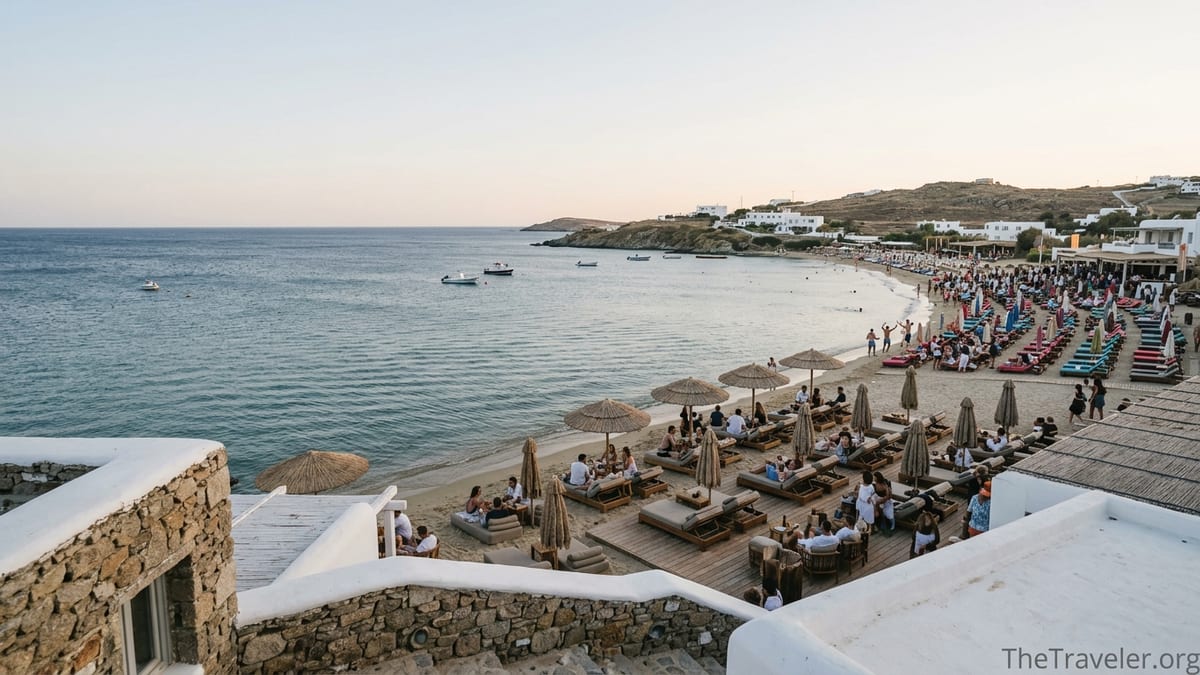
Paraga’s atmosphere is often described as stylish but not overwhelming. The beach blends traditional Cycladic touches with contemporary beach club design: whitewashed stone, teak decks, natural canvas shades, and cactus-filled gardens above smooth golden sand. Music plays at most venues, but during the first half of the day it typically stays at a level where you can still read a book, talk with friends, or enjoy a long lunch without shouting.
Well-known venues here include upscale, design-focused clubs and restaurants that draw an international crowd who might spend on a bottle of wine and a refined lunch rather than all-day shots. Guests arrive in resort wear, linen shirts, and flat leather sandals rather than club outfits. Sunset often becomes the highlight at Paraga, with many visitors booking early evening tables specifically to watch the sky turn pink and orange over the bay while a DJ or live musician gradually lifts the tempo.
Paradise Beach, by contrast, has long been Mykonos’s classic party beach. The golden sand and shallow, clear water are genuinely beautiful, but the vibe is far more energetic, especially from mid-afternoon into the night. Rows of sunbeds sit directly in front of several large beach bars and clubs that start the day relaxed and ramp up steadily, with shots delivered to loungers, staff dancing on platforms, and DJs encouraging the crowd to join in.
In summer, Paradise tends to attract younger groups of friends in their twenties and thirties, as well as cruise passengers who come in for a concentrated hit of the famous Mykonos party scene. Expect pool-party volume music, frequent announcements of drink specials, and a layout designed around dancing and socializing rather than quiet moments. After dark, Paradise becomes a springboard for the hilltop club above the bay, which hosts international DJs through the season.
Beach, Sea, and Comfort: What It Feels Like on the Sand
Physically, both beaches offer inviting sand and classic Aegean water. Paradise sits in a wide curve with a long, even stretch of sand sloping gradually into the sea. The seabed is largely sandy with few rocks near the shoreline, which makes entry easy even for nervous swimmers. On calm mornings, the water can appear glassy and turquoise, and you can wade out quite far before it gets deep.
Paraga is smaller and feels more intimate, with a mixture of soft sand and some rocky outcrops at the far ends of the bay. The water is usually just as clear, but the beach shelf varies slightly depending on where you settle. There are small coves near Paraga that, while not completely untouched, remain less structured than the main organized sections and can be appealing if you want a towel-on-the-sand spot away from the music.
In both places, organized sections dominated by beach clubs mean that large portions of the shoreline are lined with closely packed sun loungers and umbrellas. Completely free space can be limited in high season. Travelers have reported, particularly at Paradise, that staff sometimes try to direct people away from prime shoreline areas unless they are renting loungers, so if you are set on using your own towel, arrive earlier in the morning, stay toward the fringe of the beach, and be prepared to stand your ground politely.
In terms of comfort, Paradise’s loungers tend to be laid out in many uniform rows extending far back from the water, optimized for capacity and easy table service. At Paraga, layouts are more varied, with some venues offering daybeds, low wooden platforms, and shaded cabanas that match the more design-driven aesthetic. Both beaches receive strong sun from late morning onward, and the sand can get very hot, so sandals or beach shoes are useful even if you are comfortable barefoot in the water.
Costs and Value: Sunbeds, Drinks, and Day Budgets
Prices in Mykonos change seasonally and vary widely between venues, but recent on-the-ground reports show clear patterns. Across the island’s south-coast party beaches, front-row sunbeds for two at high-end clubs can easily run into three-figure amounts in euros in peak August, especially at the most famous names. Paradise and nearby beaches have seen similar trends, with some visitors quoting prices in the region of 80 to 120 euros per pair of loungers at busy times, often with minimum spend requirements on food and drinks.
At Paradise Beach, you will typically find a spread of options. The front rows closest to the water, especially in front of the biggest beach clubs, can be the most expensive and may require advance reservation in July and August. Beds further back or at less hyped venues can be significantly cheaper, sometimes in the range that a small group can split without too much pain. Many travelers report that arriving earlier in the day or in shoulder months like late May, June, or late September results in much lower prices and more willingness to negotiate.
Paraga is generally associated with higher-end venues where food and drinks cost more than at simpler tavernas on quieter beaches, and daybed prices reflect the elevated setting and strong demand for sunset seats. However, if you step away from the premier clubs and walk a little farther along the bay, you can still find more traditional tavern-style spots where a pair of sunbeds with umbrella can cost substantially less than the most famous names. Some budget-conscious travelers choose to mix: one splurge day at a flagship venue, followed by a more modest day at a smaller bar down the sand.
In practical terms, a mid-range day at either beach for two people might easily include a pair of loungers, a simple lunch, a couple of rounds of drinks, and perhaps a taxi back if you stay out late. Planning for a total of around 150 to 250 euros for two in high season is a cautious but realistic range if you engage with the beach club scene. Spending substantially less is possible by using the bus, packing snacks, skipping loungers, and limiting alcohol, but both Paraga and Paradise are designed to encourage on-site spending.
Food, Drinks, and Daytime Activities
Both beaches offer plenty of places to eat and drink without leaving the sand. Paradise leans into casual, crowd-pleasing options: beach bars with big menus of cocktails, beer buckets, and straightforward dishes like burgers, gyros plates, salads, and pizza. Service is geared toward people who want to eat on their loungers or grab something quick between swims and dancing sessions. Bars promote happy hours and themed events, and it is normal to see staff circulating the rows of sunbeds to upsell drinks.
At Paraga, food is more of a focal point at several venues. Expect menus featuring fresh seafood, Greek mezze with elevated presentation, ceviches, grilled fish, and modern Mediterranean dishes that bridge between fine dining and upscale beach fare. Cocktails often come with crafted garnishes, and wine lists highlight Greek and international labels. Many visitors plan their time at Paraga around a long lunch under shade followed by a few relaxed hours on loungers, rather than constant motion between bar and dance floor.
For daytime activities beyond eating and drinking, Paradise offers straightforward beach fun. The sandy entrance and gentle gradient make it easy to swim for long stretches close to shore, and in high summer there can be simple water sports nearby, such as pedal boats or kayaking, depending on the year and local operators. However, the core draw remains the social atmosphere and music rather than organized sports.
Paraga, with its slightly more varied shoreline and neighboring coves, appeals to those who enjoy short coastal walks, photography, or simply exploring around the rocks and viewpoints between Paraga, Platis Gialos, and the small neighboring beaches. Some wellness-oriented activities, such as informal yoga sessions or meditation gatherings, have also been hosted by venues at Paraga in recent seasons, reflecting its more boho-chic personality.
Getting There and Getting Home: Transport, Walking, and Safety
In peak season, the Fabrika bus station in Mykonos Town is your main public transport gateway to both Paraga and Paradise. Buses typically begin running in the morning and continue through the evening, with last departures from the beaches often scheduled for late night in midsummer, especially from Paradise where party traffic remains heavy. Schedules can vary by year and month, so check the latest posted times in town before you head out, and allow extra time for queues on busy days.
Many travelers enjoy walking the coastal path that connects Platis Gialos, Paraga, and Paradise. The section between Paraga and Paradise is scenic but includes a few steep sections and uneven steps, so flat sandals or sturdy flip-flops are better than delicate shoes. The walk is realistic during the day and before sunset, but local advice and experience suggest avoiding unlit sections late at night after heavy drinking, especially if you are alone. In those cases, a pre-arranged taxi or transfer is the safer option.
Pre-booked transfers from hotels or beach clubs can remove some uncertainty but come at a price premium. Sample transfer lists from hotels outside town show similar per-room fees to both Paraga and Paradise, which means price should not be the only factor in your choice between the two beaches. Ride-sharing apps are limited on the island, and waiting for taxis at peak times can be frustrating, so budgeting time as well as money is key if you plan to leave Paradise after midnight or depart Paraga just after sunset, when demand spikes.
From a safety standpoint, both beaches are heavily frequented during the season and feel lively rather than isolated. Standard party-resort cautions apply: watch your drinks, know your limits, keep valuables secure, and make a clear plan with your friends for how and when you will travel back. It is also wise to carry some cash in small denominations for bus tickets, beach kiosks, and tips, as not every small operator on the sand relies solely on card payments, especially on very busy days when card machines can slow service.
Who Each Beach Fits Best: Traveler Profiles
If your ideal beach day involves a designer lounger, curated playlists, a craft cocktail at sunset, and the ability to hold a conversation without shouting over the speakers, Paraga is likely to suit you better. Couples on a romantic break, small groups of friends celebrating a milestone birthday, and travelers in their thirties and forties who still like a scene but want style and comfort tend to gravitate here. Those staying at higher-end hotels near the south coast also often treat Paraga’s venues as an extension of their hotel facilities.
Paradise, on the other hand, is the better match if you are seeking a classic “Mykonos party beach” experience. Groups on bachelor and bachelorette trips, friends on post-exam holidays, and cruisers with a single day to let loose in the sun all find what they are looking for at Paradise. You do not need to be in your twenties to enjoy it, but you should be comfortable with loud music, crowded sand, and a social scene that encourages mingling with strangers from all over the world.
Budget also plays a role, although the differences are not as clear-cut as they once were. High-end experiences at either beach can cost similar amounts during peak weeks, but Paradise often includes more mid-range options for snacks and basic loungers if you are happy to sit a little farther from the front row. Paraga leans more toward elevated experiences with price tags to match, though savvy travelers can still find simpler tavern corners at lower cost.
For families with children, neither beach is ideal in the heart of high season once the music starts pounding, but Paraga’s calmer mornings and slightly more mixed-age crowd can feel more comfortable, especially outside July and August. If you are visiting Mykonos in shoulder season or prefer a quieter experience, you might enjoy Paraga in late May or late September, when the beach clubs are open but the overall volume and density are lower.
How to Decide: A Simple Framework
When you look past the glossy images, your choice between Paraga and Paradise comes down to three questions: how much noise and party energy you want, how much you plan to spend, and what kind of day you imagine. If you picture yourself lingering over a seafood lunch, taking photos of sunset, and listening to music that enhances rather than dominates your day, then Paraga should sit at the top of your list.
If instead you want an all-day event with dancing in swimwear, spontaneous champagne showers, and a strong chance of leaving after midnight with new friends, Paradise will deliver. It is the archetype of the Mykonos party beach, and even a few daytime hours there can give you a concentrated taste of the island’s high-energy side.
Because the two beaches are close, a good strategy for undecided travelers is to plan a flexible day that includes both. You might reserve loungers at Paraga for the late morning and early afternoon, enjoy lunch and a swim, then walk or take a quick ride over to Paradise from mid-afternoon to early evening to experience the louder scene. Alternatively, start with the buzz at Paradise and retreat to Paraga for sunset, where the vibe often feels more sophisticated and relaxed as the day winds down.
Above all, remember that conditions on Mykonos change throughout the season. A June weekday at Paradise may feel only moderately busy and fun, while an August weekend can be intense and crowded. Likewise, a late-afternoon visit to Paraga in May will be much quieter than sunset on a peak Saturday in July. Checking recent traveler reports and being honest about your own noise tolerance and budget will help ensure that the beach you choose fits the version of Mykonos you actually want to experience.
The Takeaway
Paraga Beach and Paradise Beach share the same coastline, the same sparkling Aegean water, and the same easy bus access from Mykonos Town, yet they cater to noticeably different moods. Paraga leans boho-luxury and design-forward, with strong food, sunset rituals, and music that enhances the scene without fully taking over. Paradise lives up to its reputation as one of the island’s main party headquarters, where the energy is high, the music loud, and the action continuous from afternoon into the night.
If you prioritize style, a touch of refinement, and the ability to shift between quiet moments and gentle partying, Paraga is your better fit. If your goal is to experience Mykonos at full volume, meeting people from all over the world on a packed stretch of sand with DJs and dance platforms, Paradise is where you should head. Both beaches are expensive by Greek-island standards, but each delivers a different version of value: atmosphere and refinement at Paraga, pure party credentials at Paradise.
In practice, many visitors do not choose just one. With buses, taxis, and coastal paths tying the south-coast beaches together, it is easy to sample both Paraga and Paradise during a single stay. Start with the beach that best matches your instincts, stay flexible enough to adjust if the scene is not what you expected, and you will likely find that one of these famous bays feels exactly like your own personal version of Mykonos.
FAQ
Q1. Which beach is better for first-time visitors to Mykonos, Paraga or Paradise?
For first-time visitors who want to understand why Mykonos is famous, Paradise offers the most iconic party-beach experience, especially from mid-afternoon onward. If you are unsure about the noise level or are traveling with mixed ages, starting at Paraga during the day and then visiting Paradise for a few hours can give you a balanced introduction.
Q2. Is Paraga or Paradise cheaper for sunbeds and food?
Prices fluctuate, but Paradise often has a wider range of sunbed and food options, from more affordable rows further back to expensive front-row setups. Paraga skews more upscale overall, particularly at its best-known venues, though you can find more modest tavern-style spots if you walk along the beach. In both places, expect higher prices in July and August than in May or late September.
Q3. Can I walk between Paraga Beach and Paradise Beach?
Yes, you can walk between Paraga and Paradise in around 10 to 15 minutes along a coastal path. The route is scenic but has a few steep and uneven sections, so wear sturdy sandals or flat shoes. It is best enjoyed during daylight or early evening; late at night after drinking, using a bus or taxi is safer.
Q4. Which beach has better swimming conditions?
Both beaches offer clear, usually calm water in summer. Paradise has a broad, sandy entrance with a gradually sloping seabed, which many people find especially comfortable for long swims. Paraga combines sandy areas with some rockier edges, but the main swimming zone in front of the organized sections is also easy to enter and suitable for most swimmers.
Q5. Is either beach suitable for families with children?
During peak season afternoons, both beaches can feel too loud and crowded for many families. However, Paraga generally has a more mixed-age atmosphere and calmer mornings, which some families find more comfortable, especially outside July and August. If you visit with children, arrive early, leave before the music peaks, and choose a quieter section away from the busiest clubs.
Q6. Do I need to reserve sunbeds in advance?
In July and August, or on weekends, advance reservations are strongly recommended at the most popular beach clubs on both Paraga and Paradise, especially for front-row loungers or cabanas. Outside peak periods, you can often walk in earlier in the day and still find space, particularly if you are flexible about which row you take and which venue you choose along the beach.
Q7. How late do buses run back from Paradise and Paraga?
Bus timetables change from year to year, but in high summer there are usually late departures back to Mykonos Town from Paradise because of the strong nightlife demand, while Paraga typically has services into the evening. Always check the latest schedule posted at the Fabrika station or at the beach stops and plan to arrive early at the bus stop, as queues can build after sunset and after major parties.
Q8. Which beach is better if I prefer a more relaxed, bohemian vibe?
Paraga is the better choice if you want a relaxed, bohemian feel with stylish surroundings, good food, and music that builds gradually rather than pounding all day. You will still get a sense of Mykonos’s social scene, but the atmosphere is generally more refined and less hectic than at Paradise, especially earlier in the day and outside the highest peak weeks.
Q9. Can I enjoy Paradise Beach without partying all day?
Yes, if you arrive in the morning or late morning, Paradise can feel surprisingly relaxed, with space to swim and sunbathe before the party fully ramps up. Many visitors who are not heavy partiers come early, enjoy the sea and a simple lunch, and then leave mid-afternoon as the music and crowd intensify. If you are sensitive to noise, bringing earplugs or choosing loungers slightly farther from the speakers can also help.
Q10. If I only have one day on Mykonos, which beach should I pick?
If you want the most stereotypically “Mykonos” story to take home, choose Paradise for at least part of the day, as it best represents the island’s party reputation. If your priority is a beautiful setting, quality food, and a more mellow yet still fashionable crowd, then spend your limited time at Paraga. With efficient planning and an early start, it is possible to visit both, but if you must choose one, let your noise tolerance and party appetite guide you.