


Paraga Beach on Mykonos is famous for its golden sand and clear Aegean water, but the real magic begins once you step away from your sunbed. Wedged between buzzy Paradise Beach and family-friendly Platis Gialos, Paraga has evolved into a compact but surprisingly varied strip where slow lunches, coastal walks, boho beach clubs and soulful sunset rituals all coexist. If you are looking for things to do at Paraga beyond swimming and sunbathing, this guide will help you shape a day that feels richly Mykonian without ever straying far from the shore.
Get the latest updates straight to your inbox!
Get Your Bearings: The Character of Paraga Beach
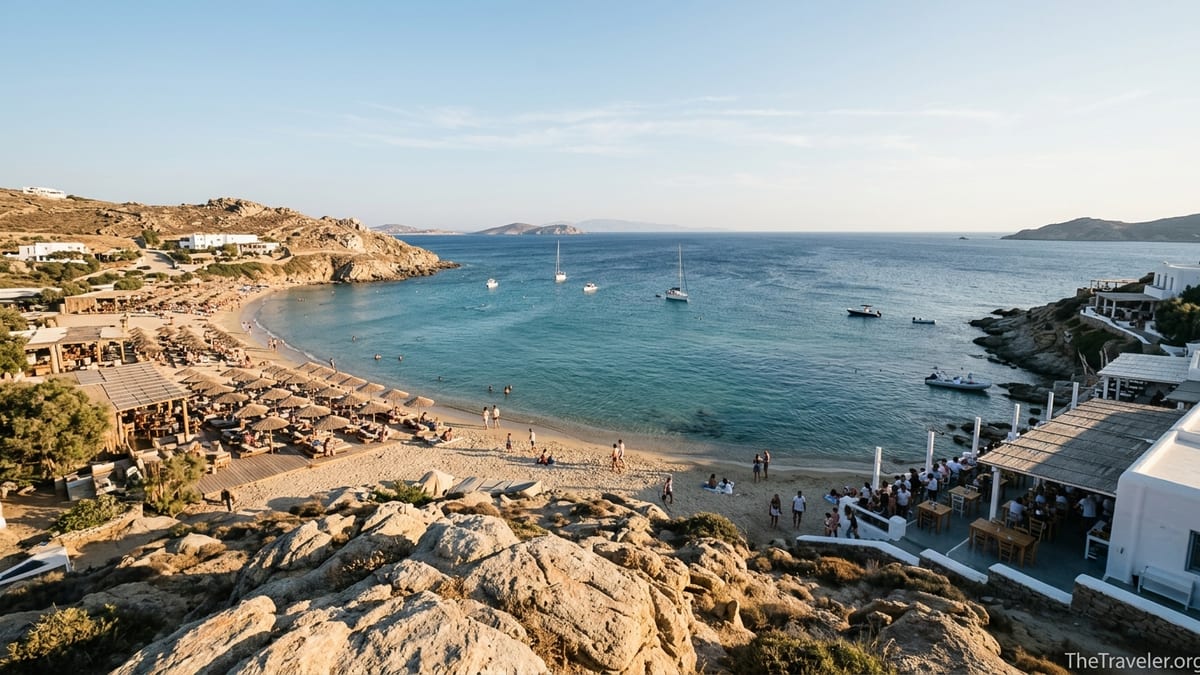
Paraga, sometimes written Paranga, sits on the south coast of Mykonos about 6 to 6.5 kilometers from Mykonos Town. You can reach it in roughly 15 minutes by taxi or in about 10 minutes on foot from neighboring Platis Gialos via a scenic coastal path that traces the low cliffs above the sea. The beach itself is split into two small bays separated by a rocky headland, giving it two distinct personalities in a very walkable area.
The northern side leans more upscale and curated, with high design beach clubs like Scorpios and SantAnna drawing an international crowd for music, dining and cocktails that run from late morning into the night. On the southern side the mood softens, with older family tavernas and simpler beach bars that have been here for decades, attracting regulars who come back summer after summer. Even at the height of July and August, you can feel the difference simply by walking a few minutes along the sand.
This split personality is what makes Paraga ideal if you want more than a day of static sunbathing. You can start with a quiet coffee on the low key side, wander up toward the headland for a late lunch overlooking the bay, then drift into the more atmospheric clubs for sunset and music, all without needing a car. Using Paraga as your base, it is easy to fill a full day with small but memorable experiences.
Most services on Paraga are highly seasonal, with the main action running from late May to early October. In shoulder months like late September, some beach clubs scale back their schedules or close during midweek, but the core tavernas and at least one or two bars usually remain open, which can be ideal if you prefer a more relaxed rhythm.
Walk the Coastal Path and Explore Nearby Coves
One of the simplest ways to go beyond the sunbed is to turn Paraga into your starting point for an easy coastal walk. A well trodden path leads west from Platis Gialos to Paraga in about 10 minutes, then continues on toward Paradise Beach. The stretch between Platis Gialos and Paraga is especially rewarding, passing above rocky inlets where the sea turns an intense turquoise and small fishing boats bob just offshore.
If you begin in Platis Gialos around 9 in the morning, when the sun is lower and the breeze cooler, you can amble along the path with frequent photo stops. The route is not technical, but you will be walking on packed earth and stone steps, so flat sandals or trainers are better than flimsy flip flops. From certain rises you get expansive views toward the islands of Naxos and Paros, and on especially clear days you may even make out the sacred island of Delos on the horizon.
Once you reach Paraga, instead of heading straight down to the main organized section, follow the rocks around the small headland between the two bays. Here you will often find people sitting on the flat stones with takeaway coffees or cold beers from the beach bars, watching sailboats anchor in the calm water. In early evening this spot doubles as a low key sunset perch if you prefer nature to the choreographed scene of the larger clubs.
More adventurous walkers can continue beyond Paraga toward Paradise Beach along paths that weave behind the beach clubs and over low hills. It is entirely possible to link Platis Gialos, Paraga, Paradise and even further to Super Paradise in a half day of unhurried hiking, with swim stops and snack breaks built in. Paraga sits at the center of this southern string of beaches, so you can always loop back here for lunch or sunset.
Savor Long Seaside Lunches at Classic Tavernas
Paraga is one of the few beaches on Mykonos where modern beach clubs sit side by side with old school tavernas. That mix makes it an excellent destination for a long, shaded lunch that can easily become the highlight of your day, especially if you are traveling with friends or family.
Tasos Taverna, right on the sand, has been serving simple Greek food since the early 1960s and is a favorite among both locals and returning visitors. Typical mains like grilled sea bream, fried calamari or moussaka often fall in the rough range of 20 to 30 euros, with shared starters such as taramasalata, fava and grilled octopus adding another 8 to 15 euros per plate. Many guests pick their fish from the chilled counter inside and have it weighed on the spot before it is cooked over the charcoal grill. That ritual, together with carafes of local white wine and the sound of the sea a few meters away, feels quintessentially Cycladic.
If you prefer a slightly more contemporary setting, nearby Tasos is joined by other waterfront options where menus combine Greek staples with lighter Mediterranean dishes. It is common to see tables sharing giant village salads, saganaki cheese and plates of steamed mussels at three in the afternoon while children play in the shallows just in front. These lunches often stretch to two or three hours, especially when a mid day heatwave makes lingering under the bamboo shade more appealing than returning to a sun lounger.
For something completely different, ROKA Mykonos, which opened its beach, pool and restaurant concept on Paraga in 2026, offers a Japanese inspired robatayaki menu in a polished but relaxed setting overlooking the bay. Here you might pair salmon tartare maki rolls, robata grilled lamb cutlets and black cod marinated in miso with cocktails or cold sake. Prices run higher than traditional tavernas, but for many travelers the combination of food quality and sea views makes it a worthwhile splurge, especially for a special occasion lunch or early dinner.
Whichever venue you choose, it is wise to reserve for lunch in high season, particularly in July and August, when cruise ship excursions and hotel concierges funnel guests to Paraga for “lunch by the water.” Calling a day ahead or asking your hotel to book a table on the terrace can save you from queuing in the sun.
Experience the Beach Club Culture Without Just Lying Out
Paraga is home to some of the island’s most talked about beach clubs, but experiencing them does not have to mean spending all day in a lounger. Many visitors now treat clubs such as Scorpios, SantAnna and the beach and pool area at ROKA as multi layered venues for dining, music, wellness and people watching, dipping in and out depending on mood and budget.
Scorpios, perched on the rocky promontory at the north side of the beach, is the most iconic. Built in a weathered stone and wood style that echoes a Cycladic village, it hosts a full calendar of DJ sets, live performances and community style gatherings throughout the season. Guests often arrive in the late afternoon, skipping the daytime sunbed rental altogether, and head straight to the restaurant for family style sharing dishes before moving into the amphitheater style performance space as the sun sinks. The emphasis is on atmosphere as much as on swimming, with cushions arranged around a central fire pit and the Aegean spread out behind the stage.
Just along the bay, SantAnna is organized around an enormous saltwater pool that is among the largest on the island. While it does offer rows of loungers, some visitors come mainly for its restaurants, bars and occasional events. You might spend a couple of hours at a shaded poolside table with mezze and wine, watch the scene, take a quick dip in the pool and then move on. It is especially appealing for small groups who are happy to split the cost of a cabana or pool bed and treat the day like an upscale social outing rather than a simple beach visit.
On a smaller and more casual scale, Paraga Cafe and other beach bars at the quieter end of the sand create a friendly base for those who want music and drinks without the celebrity price tag. Here coffee and a light breakfast pastry in the morning might run closer to what you would pay in town, and there is often a regular mix of staff from nearby hotels, long stay visitors and locals who stop in daily. Some bars organize private boat rides to neighboring beaches on request, a fun way to turn a simple drink into a mini coastal excursion without committing to a full day tour.
Wherever you go, it is worth keeping in mind that reservation and minimum spend policies at Paraga’s clubs evolve each season. Many now allow walk in guests for the restaurant or bar while reserving certain sea view zones for higher minimums. If you want to enjoy the club vibe but not overspend, consider reserving a dining table at a quieter time slot, such as a late lunch around 3 in the afternoon, and then lingering over drinks as the music builds.
Chase Sunsets, Starry Skies and Late Night Vibes
Paraga’s position facing southwest means evenings here can be spectacular. As the sun drops behind Delos and the neighboring islands, the sky often blushes pink and orange while the sea turns a deep cobalt. This daily show draws different kinds of sunset seekers, from those watching quietly from the rocks to crowds gathered in club amphitheaters where DJs time their sets to the last rays of light.
If you enjoy a more reflective experience, head toward the rocky headland between the two bays about 30 to 45 minutes before sunset. Bring a light scarf or sweater for the breeze, pick up a coffee or a bottle of water along the way, and find a flat rock facing west. From here you see both the main beach and the wider horizon, which makes it an ideal place to take photos that capture the curves of Paraga with the islands in the background.
For a social twist on sunset, Paraga’s high end clubs and newer venues like the pool and beach spaces at ROKA turn early evening into their prime slot. Guests often arrive around 6 to secure a table or cabana, order a first round of cocktails and snack plates, and then stay through the “golden hour” as the lighting turns honeyed and soft. The music usually starts mellow and gradually intensifies as the sky darkens, attracting a mix of hotel guests, yacht crews coming ashore and island workers on a night off.
After dark, Paraga retains a more compact, curated late night scene than Mykonos Town or Paradise Beach, but that is part of its appeal. You can linger over a bottle of wine at a taverna terrace, listening to the waves, or move into one of the club lounges where DJs switch to deeper sets and dancing goes on until around midnight or later, depending on the venue and month. For many visitors this balance between energy and manageability makes Paraga a comfortable introduction to Mykonos nightlife.
Enjoy Casual Activities: Boating, Snorkeling and People Watching
Even if you are not committed to a full day of watersports, Paraga offers gentle, low pressure ways to get out on or into the water. During the main summer months, small operators and beach bars can arrange short boat rides along the coast to neighboring beaches such as Paradise, Super Paradise and Elia. These informal trips, often booked directly at the bar or via a concierge, are ideal if you want to see more of the shoreline without signing up for a structured tour.
Closer to shore, the rocky edges of Paraga’s bays are good for light snorkeling. You will not find tropical reef fish, but you can expect clear visibility, small schools of silvery fish and occasional glimpses of sea urchins and starfish clinging to the rocks. Basic masks and snorkels are easy to buy in beach shops on Mykonos or borrow from some hotels, and early morning usually offers the calmest conditions. Just be mindful of swimmers and small boats when exploring near the edges of the organized beach areas.
On land, one of Paraga’s underrated pleasures is simply finding a café table or shaded bar stool and watching the constant choreography of arrivals and departures. In a single hour you might see hotel shuttles dropping off guests, crews from anchored yachts drifting in by tender, bus riders arriving from town and walkers finishing the coastal trail from Platis Gialos. Many cafés serve freddo espressos, iced teas and light snacks all day, with prices closer to what you would expect in town than in the top tier clubs.
Souvenir hunters will also find a few small beach shops and boutiques around Paraga, from classic kiosks selling sunscreen and inflatable toys to curated boutiques inside venues like Scorpios carrying resort wear, jewelry and home goods. Even if you do not plan to buy, browsing these spaces can be a pleasant way to cool off and get a feel for the island’s evolving beach style.
Plan Your Visit: When to Go and Practical Tips
To get the most out of Paraga beyond basic beach time, timing matters. The period from mid June to early September is peak season, with the fullest program of events, restaurant openings and club lineups. If you want the most animated version of Paraga, including high profile DJ sets and buzzy opening or closing parties at places like Scorpios and SantAnna, late June through late August is the safest bet. Be prepared, though, for higher prices, crowded buses and strong demand for sunbeds and restaurant reservations.
For a more relaxed but still lively experience, consider late May, early June or the second half of September. Water temperatures are slightly cooler at the beginning and end of the season, but you gain space on the sand, easier last minute bookings and a more local feel in the tavernas. By early October, many beach clubs begin winding down or close on weekdays, though weather can remain mild and sunny, making it appealing if your focus is long walks and quiet lunches rather than nightlife.
Reaching Paraga is straightforward. From Mykonos Town, direct buses run frequently in high season and drop you a short walk from the beach. The ride typically takes around 15 to 20 minutes. Taxis and rides arranged through your hotel are easy but more expensive, especially late at night when demand spikes after club closing. If you are staying at Platis Gialos, the coastal path offers a scenic, car free alternative that takes roughly 10 minutes on foot, ideal for those who want to avoid dealing with parking.
On the money side, expect prices at the top beach clubs and designer boutiques in Paraga to be among the highest on the island, while classic tavernas and simple cafés remain relatively moderate by Mykonos standards. It is sensible to confirm minimum spends when booking sunbeds or cabanas, keep an eye on service charges and check whether card payments are accepted, especially at smaller establishments. Tipping around 5 to 10 percent in tavernas and for good bar service is common but not rigidly enforced.
The Takeaway
Paraga Beach rewards travelers who treat it as more than a patch of sand to pass a few hours. Its compact scale, split personality and enviable position on the south coast mean you can string together a day that includes coastal walks, tavern lunches, curated club experiences, quiet sunset watching and a taste of Mykonos nightlife without ever straying far from the water.
Whether you are slipping away from a cruise ship for an afternoon, basing yourself in a nearby hotel for several days, or day tripping from Mykonos Town, approaching Paraga with curiosity transforms it from just another beautiful beach into a small slice of island life. Step off the sunbed, follow the paths, linger at the tables and let the beach reveal its layers. That is where the best memories tend to hide.
FAQ
Q1. How do I get to Paraga Beach from Mykonos Town without a car?
From late spring to early autumn, regular buses run from the main station in Mykonos Town to Paraga in about 15 to 20 minutes, and many travelers also use taxis or hotel transfers. If you are staying in Platis Gialos, you can simply walk the coastal path to Paraga in roughly 10 minutes.
Q2. Is Paraga Beach suitable for families, or is it mainly a party spot?
Paraga has both sides. The southern section with traditional tavernas and simpler beach bars tends to feel more relaxed and can suit families during the day, while the northern side around the major beach clubs is livelier and skews more adult oriented, especially late afternoon and evening.
Q3. Do I need reservations for restaurants and beach clubs at Paraga?
In peak months such as July and August, it is wise to reserve ahead for popular tavernas and high profile beach clubs, particularly for lunch, sunset and dinner slots. Outside peak season or for smaller cafés, you can often walk in, although calling ahead is still a good idea for larger groups.
Q4. Are there things to do at Paraga if I am not interested in renting a sunbed?
Yes. You can walk the coastal paths to nearby beaches, linger over long lunches at tavernas, attend sunset DJ sets or performances at clubs, take short boat rides along the coast, snorkel around the rocks or simply watch the scene from a café terrace without committing to a lounger.
Q5. What should I budget for a day at a Paraga beach club?
Costs vary widely by venue and season, but at top tier clubs you can expect higher prices for drinks and food and, in some areas, minimum spends per person for loungers or cabanas. More casual bars and tavernas closer to the quieter end of the beach generally offer more moderate pricing, so mixing venues can help balance your budget.
Q6. Is Paraga Beach windy compared with other parts of Mykonos?
Like most of the island, Paraga can be affected by the strong summer Meltemi winds, but its position on the south coast offers more shelter than many northern beaches. On particularly windy days, the organized sections and headlands provide better protection, and the sea often remains swimmable close to shore.
Q7. Can I visit Paraga Beach outside the main summer season?
You can visit from spring through autumn, but services change with the season. In May and October some beach clubs and bars may operate on limited schedules or remain closed midweek, while core tavernas and at least one or two cafés usually stay open when the weather is pleasant.
Q8. Are there showers, changing rooms and other facilities at Paraga?
Most organized sections of the beach, including tavernas and beach clubs, provide basic facilities such as restrooms and showers for their guests. If you are not using a club or renting a lounger, you may still be able to access facilities by purchasing food or drinks on site.
Q9. Is it possible to combine Paraga with other beaches in one day?
Yes. Thanks to the coastal paths and frequent buses, many visitors combine Paraga with nearby Platis Gialos or Paradise Beach in a single day, walking one way and taking a bus or taxi back. This makes it easy to sample different atmospheres without a long commute.
Q10. What should I wear for an afternoon and evening at Paraga?
Daytime dress is beach casual, so swimsuits, cover ups, shorts and sandals are standard. For late afternoon and evening, especially at upscale clubs and restaurants, lightweight resort wear such as linen shirts, sundresses and smarter sandals feels appropriate, and a light layer is useful for the breezy walk back or ride to your hotel.