


Even if you have never heard its name before planning a trip, you have probably seen photos of Barcelona’s Passeig de Gràcia. This grand avenue connects Plaça de Catalunya with the Gràcia district and concentrates some of the city’s most famous architecture, most exclusive shops and several top hotels and restaurants. The question for many visitors with only a few days in the city is simple: is Passeig de Gràcia really worth a precious half day in your Barcelona itinerary, or is it just an expensive shopping street you can skip?
Get the latest updates straight to your inbox!
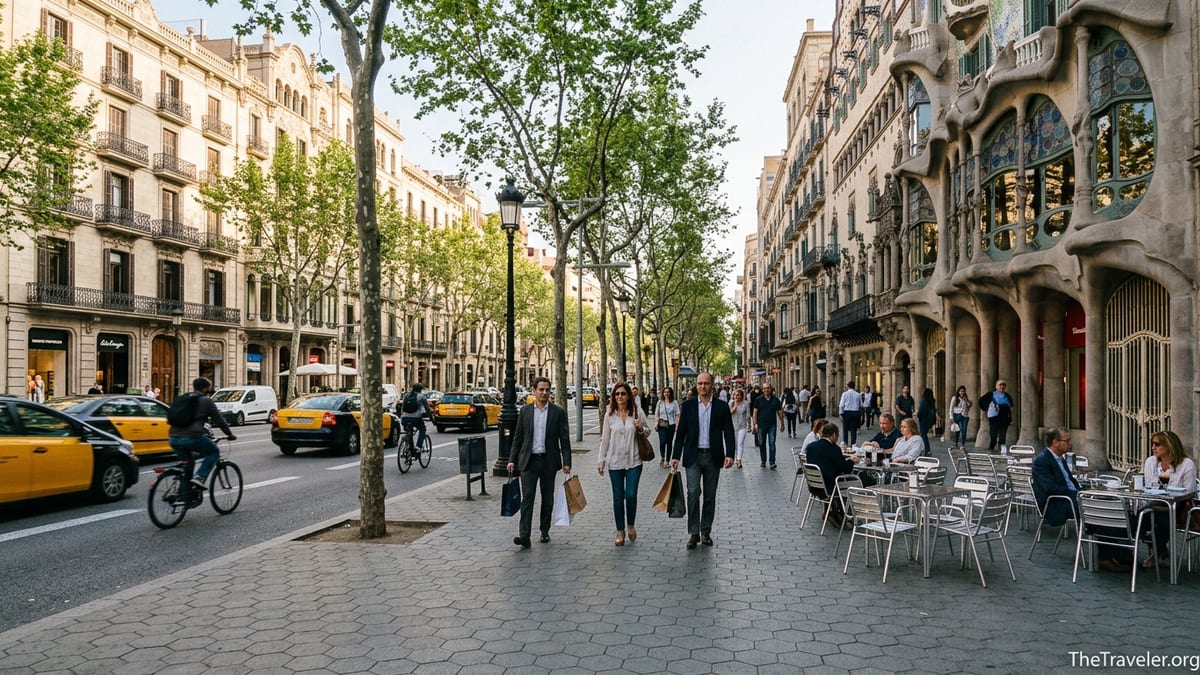
What Exactly Is Passeig de Gràcia?
Passeig de Gràcia is one of Barcelona’s main arteries, running roughly 1.5 kilometers from Plaça de Catalunya up toward the Gràcia neighborhood. It was developed in the late 19th and early 20th centuries as part of the Eixample expansion, and today it is both a business hub and the city’s most prestigious shopping boulevard. Modernist mansions, offices, flagship stores, hotels and sidewalk cafes all share the same wide, tree lined avenue.
The street is more than just a place to buy a handbag. It holds several of Barcelona’s most iconic buildings, including Gaudí’s Casa Batlló at number 43 and Casa Milà, better known as La Pedrera, at number 92. Both are UNESCO listed masterpieces and are often used in tourism campaigns to represent the city itself. Many visitors who never set foot inside still walk the avenue simply to see these facades up close.
Practically, Passeig de Gràcia is easy to reach and hard to avoid. Metro lines L2, L3 and L4 all stop at Passeig de Gràcia station under the avenue, and Diagonal station at the upper end is served by L3 and L5. Plaça de Catalunya at the lower end is a central hub for metro, suburban trains and airport buses. Because of this, even travelers who do not plan around the avenue often pass through it on their way to or from other sights.
In daily life, it functions as a mixed space. Office workers hurry between glass fronted buildings, guests roll suitcases into hotels such as the Mandarin Oriental, and shoppers queue outside luxury boutiques. Street musicians perform in front of Casa Batlló in the evenings, and long time locals still use the avenue as a dignified promenade, especially on weekends.
The Architectural Highlights That Make It Special
The strongest argument for adding Passeig de Gràcia to your itinerary is its concentration of Modernist architecture. Casa Batlló, remodelled by Antoni Gaudí for the Batlló family, is a fantasy of colored mosaics and bone like balconies. Even from the sidewalk, you can appreciate the shimmering tiled roof and organic lines. For those who want to go inside, official tickets for the self guided “immersive” visit typically start in the 30 to 40 euro range per adult when bought online, with visits taking around 60 to 90 minutes depending on how closely you explore each room.
A little further uphill stands Casa Milà, or La Pedrera, another Gaudí project and one of the last private residences he designed. Its undulating stone facade and wrought iron balconies are striking even without entering. Interior tours, including access to the sculptural rooftop with its helmet like chimneys, are usually slightly less expensive than Casa Batlló and take about 90 minutes. For many architecture fans, the rooftop alone justifies the time.
Between and around these two landmarks you will find what locals call the “Block of Discord,” a short stretch where various Modernist architects tried to outdo each other. Buildings such as Casa Amatller and Casa Lleó Morera stand shoulder to shoulder with Gaudí’s work, each showing a different interpretation of ornate stonework, stained glass and decorative sculpture. Walking this one block gives a quick lesson in early 20th century Catalan design without ever setting foot in a museum.
Even if you skip paid interiors, just strolling and looking up is rewarding. Details like dragon scale tiles, sculpted window frames, carved doorways and the avenue’s distinctive hexagonal paving stones created from Gaudí’s designs all remind you that this is a carefully crafted urban showcase, not an anonymous high street.
Shopping, Dining and the Cost Question
Passeig de Gràcia has a reputation as the most expensive street in Spain in terms of retail rents, and the brands reflect that. You will find boutiques for names such as Louis Vuitton, Chanel, Hermès and Gucci, as well as Spanish and European labels like Loewe and Max Mara. Many of these stores are clustered near the central section of the avenue and often have visible door queues in high season, especially on weekends and late afternoons.
Luxury shopping here attracts visitors from around the world who combine European pricing with VAT refunds. For example, a bag that retails in the United States at full price may cost noticeably less in Barcelona once you factor in the euro price, potential seasonal promotions and tax free paperwork processed at the store or the airport. That said, if you are not interested in high fashion or do not plan big purchases, the shop windows may be the main attraction rather than the credit card terminal.
The avenue is not only luxury. You will also find more accessible brands like Zara, Mango, & Other Stories and popular sportswear names in the lower and middle sections closer to Plaça de Catalunya. Department store options are nearby too, including large branches just off the avenue where you can pick up travel basics. This mix makes it easy for a couple or group with different budgets to wander without everyone feeling out of place.
Dining ranges from quick coffee counters to Michelin starred restaurants. Inside the Mandarin Oriental on Passeig de Gràcia, for instance, the restaurant Moments has held Michelin recognition and offers tasting menus at a price level suited to special occasions. A three course lunch there can run well over 80 euros per person before wine, while a casual terrace cafe a few doors away might serve a menu del dia of starter, main, dessert and drink for 15 to 25 euros. In practice, many travelers window shop or explore architecture on Passeig de Gràcia, then step a block or two into side streets in Eixample Esquerra or Dreta de l’Eixample for more moderately priced tapas bars and bistros.
Experiencing the Avenue: When and How Long to Spend
How much time Passeig de Gràcia deserves depends on your interests and how deeply you want to explore. As a rule of thumb, a fast walk from Plaça de Catalunya to the upper end near Avinguda Diagonal without entering any buildings can take about 25 to 30 minutes at a relaxed pace. Add in stops for photos of Casa Batlló, La Pedrera and other facades, and that quickly becomes an hour or more.
If you choose to visit the interiors of one or both Gaudí houses, you should block out at least half a day. For example, you might book a timed entry to Casa Batlló around 10:00, spend 75 minutes inside, wander past the Block of Discord around midday, stop for a coffee or light lunch, then visit La Pedrera in the early afternoon and finish with a slow walk toward Diagonal station. This kind of route gives you a concentrated dose of Modernism without racing from one neighborhood to another.
Timing also affects your experience. Late morning and mid afternoon are typically busiest, both on the sidewalks and inside major attractions. Early morning between 8:00 and 10:00 can feel calmer, with office workers moving around but fewer tour groups. Evening around sunset, especially in summer, offers warm light on the building facades and often live music outside Casa Batlló. Some visitors choose to see the exteriors during this golden hour and return to the interiors at less busy times, such as the first entrance slots of the day.
Weather can play a role too. The avenue is wide and relatively exposed, so on very hot days the shade of the plane trees is welcome but limited. In that case, you might break up your walk with indoor stops in lobbies, shops or cafes. On mild spring or autumn days, Passeig de Gràcia is one of the most pleasant places in Barcelona simply to stroll and people watch, and the outdoor seating areas of cafes fill with both locals and visitors.
Who Will Love Passeig de Gràcia, and Who Might Skip It?
Certain types of travelers benefit the most from including Passeig de Gràcia in their itinerary. Architecture and design fans are at the top of that list. If you already plan to see Gaudí’s work at Sagrada Família or Park Güell, the avenue adds additional context and lets you compare his approach to that of other Modernist architects in a compact area. Photography enthusiasts also tend to enjoy Passeig de Gràcia thanks to its sweeping perspectives, detailed facades and lively street scenes.
Travelers interested in luxury shopping or high end hospitality will also find the avenue worthwhile. Staying at a hotel like the Mandarin Oriental or a nearby boutique property gives direct access to both shopping and sightseeing, and many guests build in a few hours simply to walk the boulevard, browse stores and enjoy slow meals. For some visitors, especially those traveling from regions where these brands are more expensive, a stop at a Louis Vuitton or Hermès boutique on Passeig de Gràcia is part of the trip’s appeal.
On the other hand, if your priorities are street art, alternative culture or quiet residential corners, Passeig de Gràcia might feel polished and commercial. Budget backpackers who are watching every euro may prefer to enjoy the exteriors quickly and save longer walks for neighborhoods like Gràcia itself, the Born or Poble-sec, where everyday bars and independent shops are more common and prices are often lower.
Families with young children sometimes find the avenue better suited to a short pass through rather than a full afternoon. Strollers handle the smooth pavements well, but the combination of crowds, traffic and adult focused stores can be tiring for kids. In that case, concentrating on a single interior such as Casa Batlló or La Pedrera, combined with ice cream at a nearby gelateria and a quick metro ride elsewhere, may be the most efficient use of the area.
Fitting Passeig de Gràcia into a Short Barcelona Stay
For many visitors with three or four days in Barcelona, the key is not whether to see Passeig de Gràcia at all, but how much of the day to allocate. One common approach is to treat the avenue as part of a larger walking route through Eixample. For instance, you could start at Sagrada Família in the morning, walk through the grid of streets toward Passeig de Gràcia, reach Casa Batlló around midday, then continue down to Plaça de Catalunya and into the Gothic Quarter by late afternoon.
Another practical option is to plan your Gaudí house visit and then simply extend your time before or after that appointment. If you book a La Pedrera night experience with rooftop light show, for example, you can arrive on Passeig de Gràcia an hour earlier to wander, photograph Casa Batlló lit from below and perhaps eat dinner on a nearby side street. This way, the avenue becomes a natural prelude or follow up rather than a standalone destination.
Transport connections also make Passeig de Gràcia a useful anchor. The underground station serves several metro lines and regional trains, so you might use it as a transfer point between the airport train and your accommodation, or between the old town and neighborhoods like Gràcia or Poblenou. Building a short stroll into those necessary transfers gives you a low effort way to see the avenue even if your schedule is tight.
If you have more time, such as a full week in the city, you can afford to enjoy the street slowly. In that case, consider spending a relaxed morning on Passeig de Gràcia, having a sit down breakfast, visiting a Modernist house, browsing a few stores and then settling into a terrace cafe to watch the rhythm of the city. The area’s wide sidewalks, elegant lampposts and steady flow of people make for classic urban watching.
Common Mistakes and How to Avoid Them
One frequent misstep is treating Passeig de Gràcia purely as a luxury shopping destination and assuming there is nothing to see if you are not buying. This can lead some travelers to skip it entirely, only to realize later that they missed some of Barcelona’s defining architecture. Even if you have no intention of entering a boutique, walking one or two sections of the avenue to see Casa Batlló, La Pedrera and the Block of Discord is worthwhile.
Another mistake is underestimating the crowds and ticketing systems for major attractions. Casa Batlló and La Pedrera both use timed entry slots, and day-of tickets can sell out or come with long waits, especially in peak season. Waiting until you are standing outside to book often means you either pay more for premium options or adjust your plans around remaining time slots. Booking a day or two ahead, even in shoulder seasons, provides more flexibility.
A third pitfall is spending your entire dining budget on the avenue without realizing how quickly costs add up. Ordering cocktails and small plates at a luxury hotel bar overlooking Passeig de Gràcia can be memorable, but prices per drink can easily reach 15 to 20 euros or more. Pairing that with a main meal elsewhere, perhaps a neighborhood tapas bar a few blocks away, lets you enjoy the atmosphere without dedicating the entire evening’s budget to one stop.
Finally, some visitors stay directly on Passeig de Gràcia for the address but then spend their days commuting to other areas they prefer. When choosing accommodation, weigh the convenience and prestige of being on the avenue against your actual plans. If most of your nights will be spent exploring the waterfront, El Born’s bars or the small plazas of Gràcia, a hotel slightly off the main boulevard may provide better value and a quieter atmosphere while still keeping Passeig de Gràcia within easy walking distance.
The Takeaway
So, is Passeig de Gràcia worth adding to your Barcelona itinerary? For most travelers, the answer is yes, with some nuance. The avenue brings together some of the city’s most iconic architecture, its most upscale shopping and a very specific urban atmosphere that is hard to replicate elsewhere. Even a short walk along part of its length gives you a sense of Barcelona’s Modernist heritage and contemporary cosmopolitan life.
If you are passionate about design, photography or high end shopping, you may want to devote half a day or more to the area, including at least one interior visit to Casa Batlló or La Pedrera. If your priorities lean more toward beaches, markets and local bars, you can still experience the essence of Passeig de Gràcia with a targeted one hour stroll, ideally timed for softer light in the morning or evening.
The key is to treat Passeig de Gràcia not just as a list of stores, but as a living street where architecture, commerce and everyday life intersect. Whether you stop for a single photo in front of Gaudí’s creations or linger over a terrace coffee while watching taxis and trams flow past, the avenue offers a concentrated snapshot of Barcelona’s past and present. Used thoughtfully, it earns its place on most itineraries without overwhelming the rest of your plans.
FAQ
Q1. How much time should I plan for Passeig de Gràcia?
Most visitors are happy with 1 to 3 hours, depending on whether they tour the interiors of Casa Batlló or La Pedrera. A quick walk with photos might take about an hour, while visiting both houses and stopping for a drink or meal can easily fill half a day.
Q2. Is Passeig de Gràcia only for luxury shoppers?
No. While it is Barcelona’s main luxury shopping street, many people visit primarily for the architecture and atmosphere. You can enjoy the facades, street life and window displays without buying anything, and there are also mid range brands and cafes along the avenue.
Q3. Are Casa Batlló and La Pedrera worth going inside?
If you are interested in architecture or design, most travelers find at least one of them worth the time and ticket price. Casa Batlló offers a highly theatrical, immersive visit, while La Pedrera provides a more educational look at Gaudí’s techniques and a memorable rooftop. If budget or time are limited, choose the one that best matches your interests.
Q4. When is the best time of day to visit Passeig de Gràcia?
Early morning and early evening tend to be the most pleasant. Mornings have fewer crowds and softer light on the buildings, while evenings offer illuminated facades and livelier street life. Midday can be busiest and hottest, especially in summer.
Q5. Is Passeig de Gràcia safe to walk at night?
In general, Passeig de Gràcia is one of the safer and more heavily policed areas of central Barcelona, with many hotels, offices and shops. Normal city precautions still apply: watch your bag, avoid displaying valuables unnecessarily and stay aware of your surroundings, especially in busy spots near metro entrances.
Q6. Can I combine Passeig de Gràcia with other nearby sights in one day?
Yes. Many visitors pair a walk along Passeig de Gràcia with time in the Gothic Quarter, El Born or Sagrada Família. The central location and multiple metro lines make it easy to include as one segment of a larger walking or sightseeing route.
Q7. Are there budget friendly food options near Passeig de Gràcia?
On the avenue itself, prices tend to be higher, especially on terraces and in hotel bars. For more budget friendly choices, step one or two blocks into the side streets of Eixample, where you will find bakeries, tapas bars and simple restaurants with lunch menus in a more moderate price range.
Q8. Is Passeig de Gràcia suitable for children and strollers?
The wide, smooth sidewalks are stroller friendly, and children often enjoy the unusual facades of Gaudí’s buildings. However, crowds and traffic can be tiring for younger kids. Many families opt for a shorter visit focused on one attraction plus a treat like ice cream, rather than a long shopping session.
Q9. Do I need to buy tickets in advance for attractions on Passeig de Gràcia?
Advance booking is strongly recommended for Casa Batlló and La Pedrera, especially in high season and on weekends. Timed entries help manage crowds, and buying ahead usually gives you more choice of visit times and sometimes slightly better pricing compared with last minute purchases.
Q10. Is Passeig de Gràcia worth visiting if I am on a tight budget?
Yes, as long as you manage expectations. Walking the avenue and admiring the exteriors is free, and you can limit spending by skipping interiors or choosing just one to visit. Grabbing a takeaway coffee or sandwich from a nearby bakery and enjoying it on a bench lets you experience the atmosphere without committing to high restaurant or shopping bills.