


On the Canadian side of Niagara Falls, Queen Victoria Park is the green heart that frames those famous cascades. It is more than just a stretch of grass with a postcard view. It is where fireworks explode over the water, daffodils carpet the riverbank in spring, and travelers spread out picnic blankets within earshot of the Horseshoe Falls. If you are deciding whether this waterfront park deserves time in a tightly packed Niagara Falls itinerary, it helps to understand what you actually experience on the ground in different seasons, at different times of day, and with different budgets.
Where Queen Victoria Park Fits Into a Niagara Falls Itinerary
Queen Victoria Park runs along the Niagara Parkway on the Canadian side of the gorge, directly opposite the American and Bridal Veil Falls and continuing south toward the Horseshoe Falls. It is managed by the Niagara Parks Commission and is effectively the central viewing area for the waterfalls from Canada. If you have ever seen photos of people standing at a rail with water rushing past and the American Falls in the frame, there is a good chance that shot was taken somewhere in or right next to this park.
Because of its location, Queen Victoria Park is difficult to skip. The main walkway between Clifton Hill, Table Rock Centre, and the Fallsview hotel district threads through or alongside the park, and many popular attractions are clustered around its edges. The Journey Behind the Falls entrance at Table Rock, the Niagara City Cruises docks just north, and the Hornblower cruise boarding area are all a short walk away. For many visitors, the park becomes the default base: you cross it several times a day as you move between viewpoints, attractions, restaurants, and your hotel.
The park is public and open all year, and there is no admission fee to walk its paths or sit on its lawns. That alone makes it valuable in a destination where many headline experiences, from boat cruises to tower decks, can quickly add up. You can spend a full day in Niagara Falls, Canada, and enjoy world class views mostly by strolling through Queen Victoria Park, then decide which paid attractions are worth adding on.
In a typical one or two night stay, travelers tend to build their time around a few anchors: a daytime boat cruise, an evening fireworks show, and at least one walk along the river at dusk or sunrise. Queen Victoria Park is central to all of those experiences. If you are short on time, understanding how to use the park smartly can mean the difference between a rushed photo stop and a genuinely memorable visit.
The Views: How Good Are They Really?
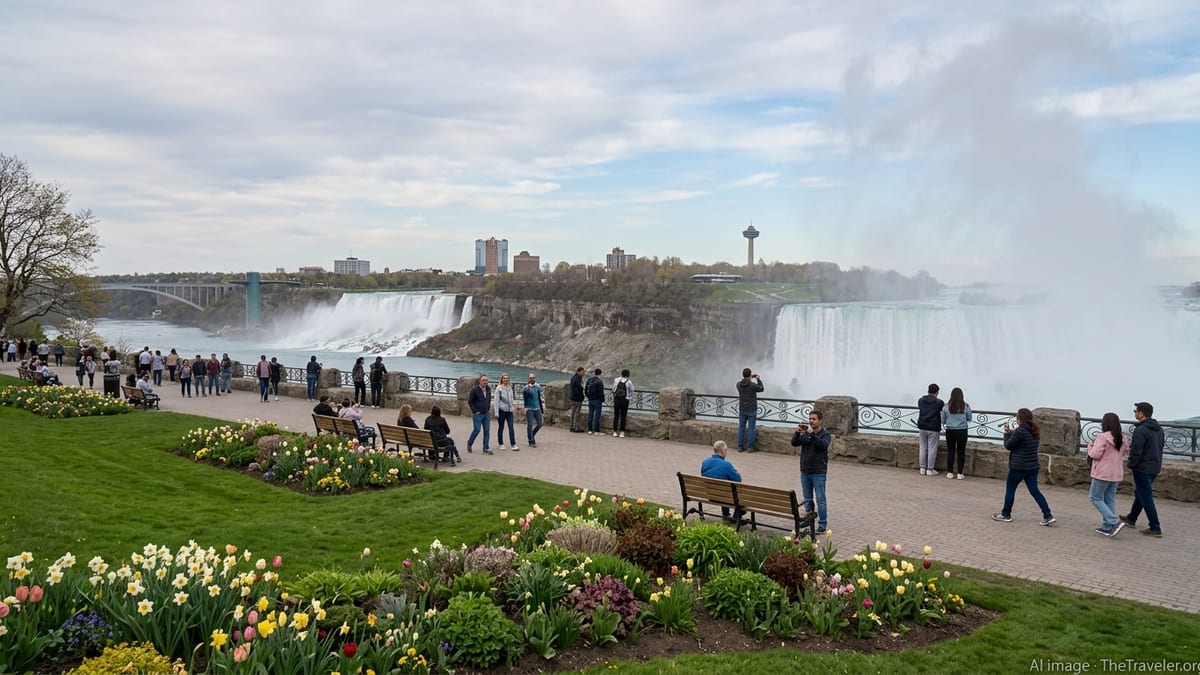
From a practical sightseeing standpoint, the main reason to spend time in Queen Victoria Park is the view. Along the park’s riverfront promenade, you get a near continuous panorama that takes in the American Falls directly across the gorge, the thinner Bridal Veil Falls to their right, and downstream, the plume of mist rising from the Horseshoe Falls. On a clear day, you can walk from the area below Clifton Hill south toward Table Rock and watch the perspective shift as the river bends and the Horseshoe comes into full sight.
Many travelers compare the view from Queen Victoria Park with the perspectives offered by paid observation decks such as Skylon Tower or the indoor platform at Table Rock Centre. While the elevated decks give a wider, more dramatic overview, the ground level vantage from the park has its own strengths. You are close enough to hear the constant roar, feel the vibration through the rail, and sometimes catch the spray on a breezy day. For photography, this lower angle lets you frame the falls with foreground elements like the park’s lawns, flower beds, and visitors walking the promenade.
In real terms, that means you could arrive in late afternoon, take a short WEGO bus ride or walk down from a Fallsview hotel, and spend an hour or two simply moving along the rail in the park, taking photos and watching the light change. On summer evenings, the falls are illuminated in shifting colors, and much of the crowd settles into the park’s benches and low walls to watch. If you are traveling with kids or relatives who might not enjoy long structured tours, the park’s open layout gives each person space to linger at their preferred viewpoint or retreat to a quieter bench under the trees.
Even in less ideal weather, the park remains one of the most practical sightseeing spots. On a drizzly spring day, for example, you may find that boat cruises are less appealing, while a slow walk through Queen Victoria Park with a hood or umbrella still delivers clear falls views and easy access to indoor refuges like Table Rock Centre’s food court and gift shops. Because you can dip in and out of the park so easily, it works well as the flexible backbone of your time at the falls, especially when the forecast is shifting.
Season by Season: When Queen Victoria Park Shines
Queen Victoria Park is marketed locally as celebrating every season, and that is not an exaggeration. In April and early May, more than half a million daffodils bloom across Niagara Parks properties, concentrated heavily on the riverbank lawns from Clifton Hill down through the park. Travelers arriving around late April often discover the park transformed into a yellow and white carpet, with photography enthusiasts lining up along the paths at first light to capture the flowers against the still misty falls in the background.
As spring moves into May, tulips and magnolias come into peak bloom. Large tulip beds appear around Oakes Garden Theatre at the north end of the park and in patterned beds along the Parkway, while mature magnolia trees near the river walk create pink and white canopies. Couples planning engagement photos or elopements often choose these weeks specifically to take advantage of the blossoms. If you visit during this window, it is worth planning a dedicated morning to wander the park before crowds arrive, pausing at benches that look directly over the floral displays to the gorge.
Summer shifts the focus from bulbs to beds. The horticulture team plants carpet bedding displays featuring annuals like cannas, coleus, and geraniums, often arranged into patterns or motifs related to anniversaries or local events. Visitors who arrive in July and August with limited time, perhaps on a GO Transit weekend package from Toronto, typically spend a hot afternoon here under the shade trees, using the lawns as a break between boat tours and Clifton Hill attractions. Because there is no entry fee, budget travelers can treat the park as their primary daytime destination, packing a simple picnic from a nearby grocery store and enjoying the expensive view at no additional cost.
In autumn, chrysanthemums and ornamental kale replace the summer plantings. The contrast between the deeper fall colors and the increasingly turbulent river below gives the park a quieter, more reflective feel. Weekdays in late September or October can be significantly less crowded than the school holiday peak, making this a particularly good season for travelers who dislike dense crowds but still want comfortable walking temperatures. Winter brings a different sort of spectacle: tree branches and shrubs near the falls often glaze with ice from the freezing mist, and the park participates in the broader Winter Festival of Lights, with illuminated displays threaded along the river walk. The falls themselves are lit nightly, and the combination of colored floodlights, snow on the ground, and frosted railings turns the park into a stark but photogenic landscape.
Events, Fireworks, and Nightlife Around the Park
One of the strongest arguments for making time in Queen Victoria Park is its role as the main public viewing area for Niagara’s fireworks. In the main summer season, there are frequent night-time fireworks shows over the falls, sometimes nightly and sometimes several times per week, as well as displays during the Winter Festival of Lights and on major holidays such as Canada Day, Independence Day, and New Year’s Eve. The park’s lawns and paved promenades fill well before showtime with both tourists and local families.
In practice, if you want a good fireworks viewing spot, you can arrive 30 to 45 minutes before the scheduled show and find a place along the railing between the area opposite the American Falls and the section just north of Table Rock. Travelers staying at hotels in the Fallsview district often walk down the Murray Street or Fallsview Boulevard hill, cut into the park, and simply follow the growing crowd toward the sound of the river. For those with small children or mobility issues, the grassy slopes closer to the river can be more comfortable than standing on concrete, as long as the weather is dry.
Beyond fireworks, Queen Victoria Park often hosts concerts, food and drink tents, and special programming on long weekends and festivals. New Year’s Eve events, for example, have historically included live music stages and family activities, with the park acting as a central gathering place before midnight fireworks. On summer weekends, you may find buskers, pop-up vendors, or wine and culinary events connected to the broader Niagara region. If you are the kind of traveler who likes to mix natural scenery with a bit of local atmosphere, checking the seasonal events calendar for Niagara Parks before your visit can help you time your evening walks through the park to coincide with these happenings.
Even on nights without formal events, the park functions as Niagara’s outdoor living room. Couples stroll after dinner at nearby restaurants, families get ice cream from kiosks near Clifton Hill and eat it on benches overlooking the gorge, and photographers set up tripods to capture the illuminated falls in long exposures. If you are staying only one night, plan to visit the park at least twice: once during the day for clear waterfall views, and once after dark to experience the lights and the nighttime energy.
Access, Transport, and Costs to Expect
Access to Queen Victoria Park itself is free, but reaching and moving around it involves some decisions. If you are staying in a hotel in the Fallsview district, the park is usually a 10 to 20 minute walk downhill, depending on your exact location. The return trip uphill can feel longer, especially in summer heat, so some travelers choose to ride the WEGO bus system, which runs along Niagara Parkway with stops near Table Rock, Clifton Hill, and the main viewpoints. WEGO offers 24 and 48 hour passes that allow unlimited rides within that period, which can be practical if you intend to visit attractions farther afield such as the Floral Clock or the Butterfly Conservatory in the same trip.
If you are driving in for the day, you cannot park directly inside Queen Victoria Park, but there are Niagara Parks pay and display lots nearby. Queen Victoria Place, at one of the main park entrances, has a paid lot that serves visitors walking directly into the park and along the river. Rates vary by season and special event, but you can expect to pay a moderate fee for several hours of parking in peak season, often structured as a flat day rate at central lots. Families often find it worthwhile to park once near the park and then rely on walking and WEGO buses instead of moving the car repeatedly among various attractions.
For travelers arriving by GO Transit from the Greater Toronto Area, seasonal train services to Niagara Falls typically include some form of local transportation connection. In recent years, certain GO packages have bundled WEGO access with train tickets, giving visitors unlimited WEGO use for 24 or 48 hours after arrival. In real terms, this can mean stepping off the GO train, collecting your WEGO pass at the bus terminal, and boarding a Green Line bus that takes you directly to Table Rock, a short walk from the heart of Queen Victoria Park. This arrangement allows car-free travelers to reach the main viewpoints, including all the best spots in the park, without needing taxis or rideshares.
It is worth factoring in the incidental costs around the park itself. Food and drink at concession stands, fast casual restaurants near Clifton Hill, or sit down venues with falls views can command higher prices than similar meals elsewhere in Ontario. Many budget-conscious travelers choose to eat breakfast and sometimes lunch away from the immediate falls area, then splurge on either a single meal with a premium view or on evening drinks at a terrace overlooking the park. Because the park offers extensive seating and lawns, packing snacks or a simple picnic is a practical way to manage costs while still spending several relaxed hours by the falls.
Who Will Love Queen Victoria Park (and Who Might Not)
Queen Victoria Park is an easy recommendation for most travelers, but how much you will appreciate it depends on your interests and tolerance for crowds. If you enjoy landscapes, photography, horticulture, or simply unstructured strolling with a view, the park can be a highlight of your Niagara visit. Garden enthusiasts in particular tend to linger over the carefully designed beds, often pairing a morning in the park with a later visit to the Niagara Parks Botanical Gardens and Butterfly Conservatory for a full day of horticultural sightseeing.
Families with children usually find the park a practical base. There is ample room for strollers, grassy areas where kids can burn energy between more constrained activities, and easy access to restrooms and food at nearby centers. On warm summer days, many families arrive in the late morning, do a boat cruise, then retreat to the park for shade and downtime before tackling evening fireworks. Because the main walkways are paved and relatively flat along the river, mobility device users can also enjoy many of the views, though some routes up and down from the Fallsview district are steep and may require planning around elevators or bus connections.
On the other hand, if you are a traveler who strongly dislikes crowds, peak afternoon and evening hours in high season can be challenging. During July and August, and on long holiday weekends, the park’s promenade can feel packed, especially in the hour before and after fireworks. In that case, you might still find the park worth visiting, but you may prefer off peak times. Early morning, even in midsummer, is notably quieter, with joggers, local dog walkers on the upper paths, and photographers setting up tripods, but far fewer tour buses. Shoulder seasons like late October or early November also see thinner crowds, though you will sacrifice some greenery and floral displays.
Travelers who prioritize high adrenaline experiences over scenery might treat the park more as a corridor than a destination. If your main goals are zipline trips, indoor waterparks, or casino gaming, you could feel that the time spent wandering the lawns is less compelling. Even then, it is difficult to ignore the convenience of the park as the most direct link between many attractions. A reasonable compromise is to allocate a single dedicated hour to simply sit on a bench and absorb the falls, treating the park as a necessary pause in an otherwise high energy itinerary.
Realistic Itineraries: How Much Time to Spend in the Park
For a first time visitor on a one day trip, planning to spend a total of two to three hours in Queen Victoria Park, spread across the day, is realistic. You might start with a 60 to 90 minute morning walk, beginning near Clifton Hill, moving south along the river through the park, then finishing at Table Rock in time for an early Journey Behind the Falls entry. Later, after a midday rest or other activities, you could return for another hour in the evening to watch the illuminations and fireworks.
On a two night stay, many travelers find that the park becomes the default route for multiple passes. You might, for instance, arrive on a Friday afternoon, drop your bags at a Fallsview hotel, and walk down to the park for your first close up view of the falls. After a sunset boat cruise, you would return through the park for the nighttime fireworks. Saturday could see you using the park as a corridor again, walking from a brunch near Clifton Hill through the gardens to catch a WEGO bus toward more distant sights like the Floral Clock or Whirlpool Aero Car. Sunday morning, before checkout, a final slow stroll through the park provides a quieter, reflective end to the trip.
Garden-focused travelers, photographers, or those visiting specifically during peak bloom may want to invest more concentrated time. It is not unusual for photography enthusiasts to spend an entire sunrise to mid-morning block in the park, moving from one composition to another as the light changes and crowds slowly build. Couples on romantic getaways may choose to carve out an hour in the afternoon to simply sit on the lawn or at an overlook, away from screens and schedules, listening to the constant roar of the water. Because there is no entrance closing gate in the traditional sense, it is relatively easy to fit these informal sessions into any broader sightseeing plan.
Cruise ship passengers or bus tour groups on very tight schedules sometimes have as little as 30 to 45 minutes of free time in the park itself, sandwiched between a boat tour and a photo stop elsewhere. Even this brief window can be meaningful if you walk purposefully from your drop off point to one or two key viewpoints. For these travelers, Queen Victoria Park is less about lingering and more about securing that one definitive image or moment to remember Niagara Falls by.
The Takeaway
So is Queen Victoria Park worth visiting at Niagara Falls? For nearly all travelers, the answer is yes, and in many cases it is essential. The park is the most accessible and cost effective way to experience the falls up close from the Canadian side, offering unobstructed views, seasonal gardens, and a front row seat for fireworks and illuminations without an entry fee.
Its strengths become especially clear when you consider real world constraints. If you are traveling on a budget, you can lean heavily on the park to provide your main scenic experiences, supplementing only with a carefully chosen paid attraction or two. If you are unsure about the weather, you can use the park as flexible, no commitment time that you can expand or shrink based on how conditions evolve. If you value atmosphere as much as checklists, the park delivers a sense of place that ties together the otherwise scattered attractions of Niagara Falls.
There are caveats. Peak crowds can be intense, food and parking around the park are not cheap, and travelers who only care for high adrenaline activities might not find lingering on lawns particularly compelling. Yet even those visitors usually pass through the park multiple times in the course of their stay. In that sense, Queen Victoria Park is less a separate attraction and more the stage on which your Niagara Falls experience plays out.
Plan at least a couple of deliberate visits, one in daylight and one after dark. Walk the full length of the riverfront promenade, pause at the benches facing the American and Bridal Veil Falls, and, if your timing allows, join the crowd on the grass to watch fireworks burst over the water. Those simple, low cost moments in Queen Victoria Park are often what travelers remember longest once they have left the roar of the falls behind.
FAQ
Q1. Is there an admission fee to enter Queen Victoria Park?
There is no admission fee to enter or walk around Queen Victoria Park. It is a public park managed by Niagara Parks, and you can access the lawns, paths, and riverfront promenade free of charge at any time of year.
Q2. How much time should I plan to spend in Queen Victoria Park?
Most first time visitors should plan to spend a total of two to three hours in the park over the course of a day, split between a daytime walk for clear waterfall views and an evening visit for illuminations and, if scheduled, fireworks. Garden enthusiasts or photographers may want to dedicate additional focused time.
Q3. What is the best time of day to visit Queen Victoria Park?
Early morning offers soft light, fewer crowds, and good photography conditions. Late afternoon into sunset provides warmer light on the falls, while evening is ideal for viewing the illuminated waterfalls and seasonal fireworks. If possible, experience the park at least once in daylight and once after dark.
Q4. Which season is best for visiting Queen Victoria Park?
Spring and summer are the most popular. In April and May, daffodils, tulips, and magnolias bloom, while summer brings elaborate carpet bedding displays and lush lawns. Autumn offers colorful plantings and smaller crowds, and winter delivers icy branches, nightly illuminations, and participation in the Winter Festival of Lights, though with fewer flowers.
Q5. Is Queen Victoria Park suitable for visitors with limited mobility?
The main riverfront promenade and many park paths are paved and relatively level, making them accessible to wheelchairs and strollers. Some routes between the park and the Fallsview hotel area are steep, so travelers with limited mobility may prefer to use the WEGO bus system or plan routes that avoid the steepest climbs.
Q6. Where can I park when visiting Queen Victoria Park?
There is no parking directly inside the park, but Niagara Parks operates pay and display lots nearby, including at Queen Victoria Place and Table Rock Centre. Expect to pay a seasonal parking fee, often structured as a flat day rate at central lots. From these lots, it is a short walk into the heart of the park.
Q7. Can I see the fireworks over Niagara Falls from Queen Victoria Park?
Yes, Queen Victoria Park is one of the prime viewing locations for Niagara Falls fireworks. On nights when shows are scheduled, many visitors gather along the railings and on the grassy slopes to watch the fireworks over the falls, often pairing the display with the nightly illumination of the waterfalls.
Q8. Are there food and restroom facilities near Queen Victoria Park?
While the park itself is primarily green space, it is surrounded by facilities. Nearby centers such as Table Rock and Queen Victoria Place offer restaurants, snack counters, and restrooms. Additional dining options are a short walk away on Clifton Hill and in the Fallsview area, though prices near the falls are generally higher than average.
Q9. Is Queen Victoria Park safe to visit at night?
Queen Victoria Park is a busy public space in the evening, especially during illuminations and fireworks, and is generally considered safe for visitors who take normal city precautions. Staying on well lit paths, remaining aware of your surroundings, and walking with companions where possible are sensible practices, as in any popular tourist area.
Q10. Do I need a WEGO bus pass to enjoy Queen Victoria Park?
You do not need a WEGO pass if you are staying within walking distance of the park. However, a 24 or 48 hour WEGO pass can be convenient if you plan to travel repeatedly between the park, your hotel in the Fallsview or Lundy’s Lane areas, and more distant Niagara Parks attractions like the Floral Clock or Butterfly Conservatory.