


More news on this day
Hundreds of passengers at San Francisco International Airport faced hours of disruption on July 3 as a cluster of cancellations and more than one hundred delays rippled across the schedule for Air Canada, United Airlines, American Airlines and their partners, disrupting major routes to Miami, Chicago, Washington, Baltimore, Charlotte and other key hubs.
Get the latest news straight to your inbox!
Six Key Departures Scrubbed as Weather and Congestion Collide
Publicly available tracking data and airport status boards for July 3 indicate that at least six mainline and codeshare departures from San Francisco International Airport were cancelled on short notice, including flights marketed by Air Canada, United and American Airlines on some of the airport’s busiest domestic corridors. The affected services included links to Chicago O’Hare, Washington area airports, the Baltimore and Charlotte region, and connections feeding traffic onward to Miami and other East Coast destinations.
The cancellations occurred against a backdrop of elevated congestion across the national airspace system, with federal traffic management summaries pointing to weather and volume constraints at multiple hubs. While no single ground stop or large-scale shutdown was reported at San Francisco at the time, a combination of thunderstorms in the Midwest and East Coast, air traffic flow programs and ongoing schedule compression at major hubs contributed to tightening margins for on time departures.
For passengers at San Francisco, the result was a series of rolling gate changes, rebookings and missed connections. Travelers bound for Miami, Chicago, Washington and connecting points such as Baltimore and Charlotte faced extended waits for scarce seats on later flights as peak summer demand left limited slack in airline networks.
Operational dashboards and historic schedule data show that routes from San Francisco to Chicago and the Washington region rank among the airport’s highest volume domestic services, meaning a small number of cancellations can quickly cascade into hundreds of disrupted itineraries when flights are close to full.
More Than 100 Delays Compound the Impact Across Carriers
Beyond the outright cancellations, delay statistics for July 3 show a broad pattern of late departures and arrivals at San Francisco, with well over one hundred flights operating behind schedule during the day. The pattern affected a cross section of airlines, but was particularly acute for large hub carriers such as United and American, as well as codeshare partners including Air Canada that rely on coordinated banked schedules.
Many of the longest delays were recorded on coast to coast and transcontinental services, where aircraft rotations are tightly sequenced. A late arriving jet from Chicago or Washington can force knock on delays for its onward leg to Miami or another East Coast hub, even if conditions at San Francisco itself are stable. With summer load factors high, carriers had limited flexibility to swap aircraft or consolidate flights without stranding additional passengers.
Industry performance data in recent months already show San Francisco trending as one of the more delay prone large U.S. airports, reflecting a combination of runway configuration, heavy long haul traffic and stricter federal spacing requirements on certain arrival streams. The July 3 disruptions fit into that broader pattern, but were sharpened by the simultaneous constraints at multiple downline hubs.
Passengers connecting off delayed flights at hubs such as Chicago O’Hare, Washington Dulles and Miami faced further challenges as local thunderstorms triggered ground delay programs and temporary volume restrictions, stretching connection times and forcing additional rebookings late into the evening.
Air Canada, United and American Routes to Key Hubs Disrupted
According to airline schedule filings and booking data, all three major carriers involved maintain important links from San Francisco to the affected cities, either directly or through codeshare arrangements. American Airlines operates nonstop service from San Francisco to Miami, Chicago and Charlotte, while United uses San Francisco as a major West Coast hub for flights to Chicago O’Hare, Washington Dulles and other East Coast points. Air Canada, through joint operations and codeshares, sells itineraries that rely on many of these same departures.
When multiple flights on these trunk routes are cancelled or significantly delayed on the same day, the impact can extend far beyond the local origin and destination markets. Miami and Chicago in particular function as connection points to Latin America, Europe and the eastern United States, meaning missed flights from San Francisco can strand travelers bound for a wide range of final destinations.
On July 3, passengers on Air Canada marketed flights operated by United out of San Francisco encountered schedule disruptions on services linking to Chicago and other hub airports. Similar patterns appeared on United’s own mainline departures toward Washington and Chicago, and on American’s eastbound schedule, where ground handling delays and inbound aircraft issues pushed back departure times from San Francisco.
As the day progressed, rebooked travelers began vying for limited seats on later departures to Chicago, Washington, Baltimore and Charlotte, while some Miami bound passengers were rerouted via alternative hubs such as Dallas, Houston or Phoenix. This introduced additional complexity as airlines attempted to keep multi segment itineraries intact amid shifting operational constraints.
Passenger Experience: Long Lines, Missed Connections and Limited Options
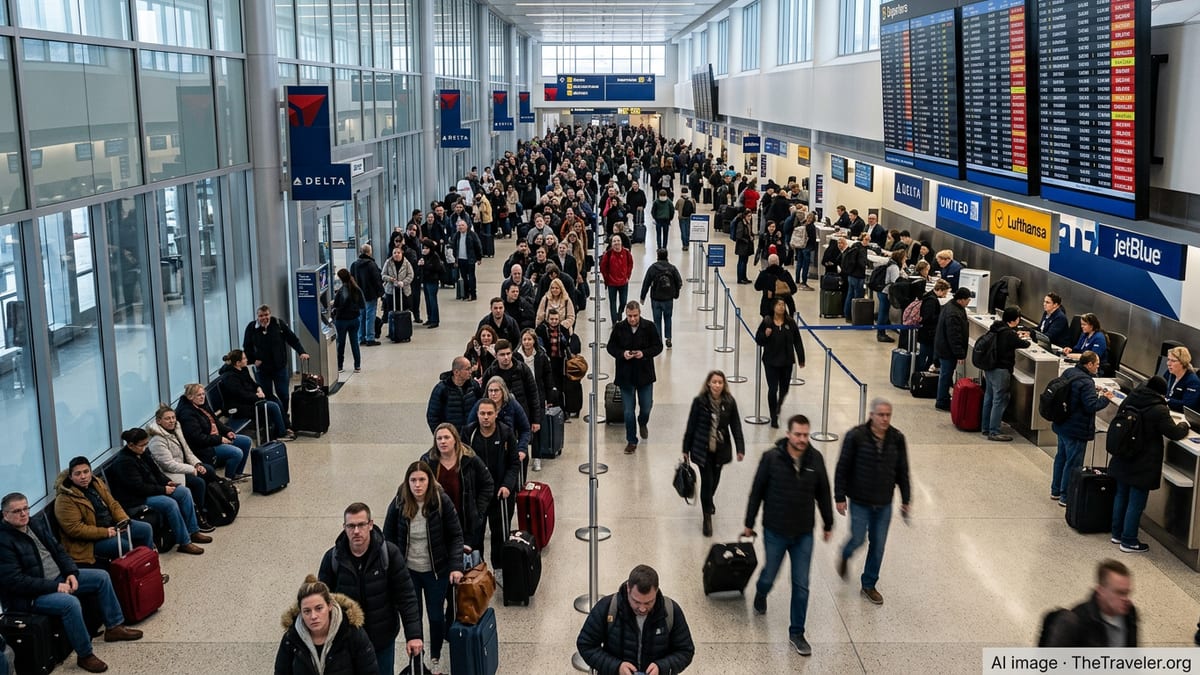
For travelers, the operational nuances translated into long queues at customer service counters, crowded gate areas and repeated calls to airline help lines. With six flights cancelled outright and more than one hundred delayed, even relatively modest individual disruptions added up to a substantial cumulative impact for people planning to begin holiday trips or return home before the July 4 weekend.
Reports from those traveling through San Francisco described lines stretching through parts of the terminals as passengers waited to be rebooked. Some travelers heading to Miami or the Washington region reported accepting next day departures or itineraries involving additional stops, reflecting the difficulty of finding same day alternatives on already busy holiday week flights.
Families and international travelers with onward connections in Miami, Chicago and Washington faced particular stress as minimum connection times evaporated and hotel stays became necessary. Travel insurance policies and credit card protections may help some passengers recover costs, but rebooking priority generally favored those with flexible tickets or elite status, leaving others with fewer immediate options.
Given the scale of the disruption, consumer advocates reiterate that affected passengers should retain boarding passes, receipts and written evidence of cancellations or long delays to support later refund or compensation requests, particularly in cases where airlines are required to offer reimbursements for unused segments.
Broader Questions Over SFO Resilience in Peak Travel Season
The events of July 3 add to growing scrutiny of reliability at San Francisco International Airport as the busy summer travel season reaches its peak. Recent performance analyses using federal on time statistics have highlighted San Francisco’s vulnerability to even modest weather or traffic control constraints, noting that delay averages have climbed in the wake of changes to landing procedures and increased traffic density.
Travel industry observers point out that the combination of heavy long haul schedules, complex banked connections and limited runway redundancy leaves little room for error on peak days. When conditions tighten simultaneously at downline hubs such as Chicago, Washington, Baltimore and Miami, carriers can be forced to trim departures or accept substantial delays to keep overall networks functional.
For travelers planning trips through San Francisco in the coming weeks, experts recommend building in longer connection windows, monitoring flight status early and often, and considering alternative routings via less constrained West Coast gateways when feasible. While most days still see the majority of flights operating close to schedule, the July 3 episode illustrates how quickly a handful of cancellations and a triple digit tally of delays can disrupt travel plans across the country.
As airlines adjust schedules for the remainder of the summer, attention will focus on whether incremental changes in departure times, aircraft utilization and contingency planning can improve resilience on key San Francisco routes to Miami, Chicago, Washington, Baltimore, Charlotte and beyond, reducing the chances of similar disruptions during upcoming holiday periods.