


Families evaluating a relocation to Thailand typically ask whether the country is safe not for a short visit, but for everyday life with children over several years. Overall, Thailand is regarded as moderately safe by global standards, but risk profiles vary sharply by location, lifestyle, and risk tolerance. This briefing focuses on the core safety dimensions relevant to families: crime and personal security, child-specific risks, transport and road safety, environmental and natural hazard exposure, and practical mitigation strategies for long-term residents.
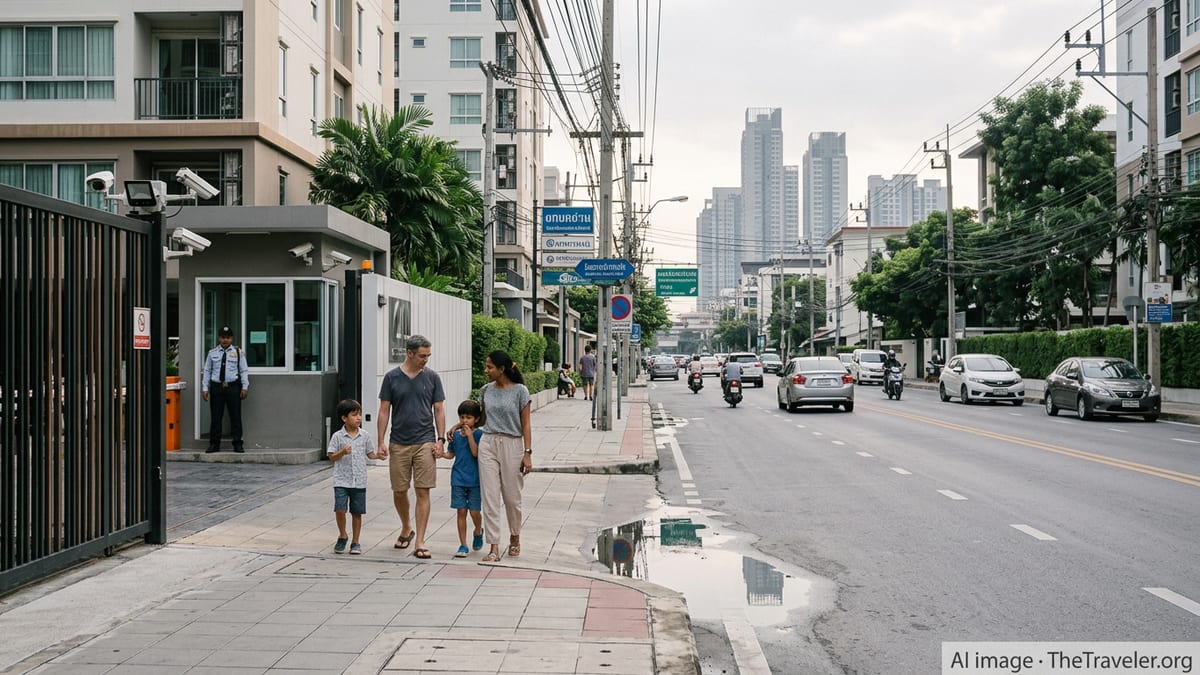
Overall Safety Profile for Relocating Families
Thailand presents a mixed but generally manageable safety profile for families relocating from other middle or high income countries. Violent crime rates are relatively low in most areas frequented by expatriates, and day to day street crime levels in many urban and suburban neighborhoods are typically lower than in large cities in North America or Latin America. At the same time, other categories of risk, particularly road safety and exposure to flooding and seasonal storms, are significantly higher than in many Western countries and require active management by relocating families.
Intentional homicide rates in Thailand are estimated in the low single digits per 100,000 inhabitants, placing the country well below high violence regions but above the safest parts of Western Europe and East Asia. Trends in recent years show a gradual increase in recorded homicides to an estimated national rate in the range of roughly 2 to 3 per 100,000 residents, which remains below or comparable to some Western countries but higher than regional low crime benchmarks such as Singapore or Japan. These averages, however, conceal important regional differences between urban centers, tourist zones, and more remote border provinces.
For most expatriate families living in established districts of Bangkok, Chiang Mai, or major regional hubs, the primary day to day safety concerns are opportunistic theft, traffic collisions, and occasional exposure to public disorder, rather than targeted violent crime. Families that understand and adapt to local risk patterns, select neighborhoods prudently, and apply basic security protocols generally report feeling secure in daily routines such as school runs, commuting, and evening activities.
Thailand’s institutional response capacity is mixed. Large cities have extensive policing coverage and emergency services, but response quality can be variable, particularly in secondary cities and rural areas. Corruption within some public institutions does affect perceptions of safety and justice, although this is more likely to influence post incident resolution than immediate personal risk for foreigners. Families should factor this into expectations around incident handling, especially in traffic and neighborhood disputes.
Crime, Personal Security, and Neighborhood Risk
From a relocation standpoint, Thailand’s crime landscape is characterized by relatively low random street violence against foreigners and moderate levels of property crime. National data and qualitative reporting suggest that drug related offenses, corruption, and interpersonal disputes account for a substantial share of serious crime. Crimes specifically targeting expatriate families such as home invasions or kidnappings remain rare, although isolated incidents do occur, particularly in higher income residential areas where visible wealth is concentrated.
Public spaces in business districts and established residential zones are generally safe in daytime and early evening, including for women and older children accompanied by adults. Petty theft such as bag snatching, mobile phone theft, and opportunistic pickpocketing occurs, especially in crowded commercial areas and transport hubs. Families that rely on personal vehicles or door to door transport tend to experience lower exposure to such crimes than those frequently using crowded public transport late at night.
Sexual harassment and gender based violence rates are difficult to quantify due to underreporting, but anecdotal reports indicate that incidents affecting foreign women do occur in nightlife and entertainment areas, particularly where alcohol is involved. Families who avoid nightlife districts at late hours, use trusted transport providers, and supervise older teenagers closely in such areas reduce their risk significantly. In most conventional residential districts and around international schools, the environment is broadly comparable to many mid sized cities worldwide.
Security standards of housing vary considerably. Gated compounds and condominium developments with guards, controlled access, and CCTV are common choices for expatriate families and help reduce property crime and unauthorized entry risks. Standalone houses on open streets, common in provincial towns, may have weaker physical security, such as basic locks, limited fencing, and inconsistent street lighting. Families opting for such housing should budget for additional measures such as improved locks, motion lighting, and possibly alarm systems.
Child and Adolescent Safety in Daily Life
For families, the key question is how safe children will be in day to day environments: commuting to school, using public spaces, and socializing independently. In larger cities, many expatriate children attend international schools with controlled campuses, perimeter security, visitor registration, and school bus systems that provide structured and relatively secure daily routines. These institutions generally maintain clear safeguarding policies and supervision standards aligned with international norms.
Public parks, malls, and community facilities in major cities are usually considered safe for supervised play. Reports of child targeted violent crime in these locations are rare, though instances of inappropriate contact, petty theft, or bullying can occur. Families often limit unsupervised outdoor play along busy streets due to traffic hazards and variable sidewalk quality rather than crime fears. In many neighborhoods, children socialize indoors, within condominium facilities, or in gated compounds where traffic is controlled.
Online and technology related risks are broadly similar to those in other developed markets, including exposure to online grooming, scams, and inappropriate content. Some Thai schools and service providers have begun to adopt clearer digital safeguarding frameworks, but regulation and enforcement are still evolving. Expatriate families commonly rely on their own parental controls, device management, and education to manage these risks for children and teenagers.
Adolescents face additional risks linked to nightlife, alcohol, and road use, particularly if they adopt local norms around motorbike use from an early age. Motorbikes are legally accessible to older teenagers and widely used, often with inconsistent helmet use. For many relocating families, a deliberate policy of delaying or prohibiting motorbike riding, enforcing strict curfews in nightlife districts, and insisting on helmet and seatbelt use is central to maintaining an acceptable safety profile for teenagers in Thailand.
Road Safety and Transport Risks for Families
Road safety represents the single highest safety concern for families relocating to Thailand. According to the World Health Organization’s most recent global road safety assessment, Thailand recorded an estimated road traffic death rate of approximately 25 deaths per 100,000 population, placing it among the highest in Asia and significantly above rates in Western Europe, Japan, or Australia. Road crashes are estimated to account for around 3 to 4 percent of all deaths in the country, with tens of thousands of fatalities and hundreds of thousands of injuries annually.
Motorbikes account for a large share of road casualties. National figures indicate that well over three quarters of traffic deaths in high risk periods involve motorcyclists, often riding without helmets, at speed, or under the influence of alcohol. Informal motorcycle taxis, which are common in cities, expose passengers to elevated risk compared with cars due to limited protective structures and inconsistent use of safety equipment. For relocating families, minimizing or entirely avoiding routine use of motorbikes is one of the most effective ways to reduce serious injury risk.
Driving standards, enforcement, and infrastructure quality are variable. Common risk factors include speeding, red light running, limited adherence to lane discipline, and occasional drunk driving, particularly during national festivals and holiday periods that see spikes in accident rates. Rural highways often lack barriers, lighting, and pedestrian infrastructure, while ongoing construction in some corridors has resulted in structural failures and accidents. Even in Bangkok, sinkholes, construction related collapses, and flooding have disrupted roads and contributed to injuries in recent years.
Families that adopt conservative transport strategies can substantially mitigate these risks. Common practices among long term expatriates include: using private vehicles with modern safety features and child seats; insisting on reputable taxi or ride hailing services; avoiding intercity travel at night; and planning around peak risk windows such as major holidays. For school commuting, dedicated school buses with seatbelts and professional drivers are preferable to informal arrangements or independent motorbike use by teenagers.
Environmental, Natural Hazard, and Infrastructure Risks
Thailand is moderately exposed to natural hazards, including seasonal flooding, storms associated with tropical systems, landslides in mountainous areas, heat waves, forest fires, and, to a lesser extent, earthquakes and tsunamis. Flooding is the most recurrent and widespread hazard. National and international assessments attribute a large portion of disaster related economic losses in Thailand to riverine and urban floods, with recent events affecting millions of residents in central and southern provinces and periodically disrupting transport, schooling, and public services.
For relocating families, flood risk is highly localized. Low lying districts in Bangkok and central plains, as well as certain southern provinces, are more prone to extended inundations during the rainy season. Flooding can contaminate water supplies, damage homes, and limit mobility, but modern high rise buildings and carefully sited housing in elevated areas usually experience less direct damage. Prospective residents should examine flood maps and historical flood records for target neighborhoods and prioritize buildings with raised ground floors and robust drainage systems.
Earthquake risk is regionally concentrated. Northern and western parts of the country lie closer to active faults, and past events, while infrequent, have caused fatalities and structural damage in cities such as Chiang Rai. Earthquakes originating in neighboring countries, such as Myanmar, are sometimes felt over wide areas in Thailand. Coastal areas along the Andaman Sea were severely impacted by the 2004 Indian Ocean tsunami, though subsequent investments in early warning systems and awareness campaigns have improved preparedness. The Gulf of Thailand coast tends to have lower tsunami risk but remains exposed to storm surge and coastal erosion.
Infrastructure reliability intersects with safety in several ways. Occasional collapses of elevated roads, construction cranes, and overpasses in and around Bangkok, as well as sinkholes linked to construction or drainage issues, highlight uneven safety standards in some projects. Power outages, water service disruptions, and temporary closure of public facilities during severe weather events are not uncommon. Families should inquire about the structural standards of residential buildings, backup power arrangements, and emergency procedures maintained by landlords or building management.
Safety Disparities by Region and Community Type
Thailand’s safety profile for families is not uniform. Bangkok and major urban centers offer stronger emergency services, more secure residential compounds, and better access to international standard schooling, but also higher exposure to traffic congestion, air pollution episodes, and construction related hazards. Provincial towns and rural areas often feel safer in terms of violent crime and crowd related risks, yet can present challenges around road standards, emergency medical response times, and exposure to seasonal disasters such as floods or landslides.
Tourist intensive coastal zones and nightlife districts exhibit distinct risk patterns, with higher prevalence of alcohol related incidents, scams, and occasional violent disputes. These areas can be managed safely when used primarily for short, supervised visits rather than everyday family life, but may be less suitable as residential bases for families with young children. Inland residential districts oriented around schools, offices, and shopping centers generally provide a calmer and more predictable environment.
Within cities, gated communities and modern condominium developments tend to offer more controlled safety conditions through on site security, access control, and building management. By contrast, older mixed use neighborhoods can be more affected by petty crime, informal construction, and infrastructure stress, especially during heavy rains. However, these patterns are not absolute, and localized factors such as the presence of schools, police stations, or significant commercial developments can improve or worsen safety outcomes within a relatively small area.
Ethnic, linguistic, and socio economic factors can also shape safety experiences. Some southern border provinces have experienced periodic political violence and security incidents, although these areas are not typical relocation destinations for international families. In most other regions, foreign families are not systematically targeted, but clear communication, cultural sensitivity, and integration into local communities can reduce the likelihood of misunderstandings or conflicts that escalate into safety issues.
The Takeaway
From a relocation risk perspective, Thailand can be considered reasonably safe for families willing to actively manage specific risk categories, particularly road safety and environmental exposure. Violent crime levels are moderate and, in many expatriate oriented neighborhoods, relatively low, while serious crimes directed specifically at foreign families remain infrequent. Day to day life for children and adults in major cities and established residential zones is generally secure when appropriate precautions are taken.
At the same time, Thailand’s elevated road traffic fatality rates, recurrent flooding, and uneven infrastructure safety record distinguish it from lower risk destination countries. These structural factors cannot be fully controlled at the household level and should be central to any relocation decision. Families with heightened risk aversion, very young children, or a strong preference for walking and cycling based lifestyles may find some aspects of Thailand’s safety environment challenging.
For many relocating households, an acceptable safety profile is achievable through a combination of careful neighborhood selection, use of secure housing, conservative transport choices, and thorough preparation for seasonal weather events. Employers and relocation providers can further improve outcomes by offering local safety briefings, vetted transport options, and support in assessing school and housing security. Ultimately, Thailand is neither among the world’s riskiest nor its safest family relocation destinations, but a country where informed, proactive risk management is essential.
FAQ
Q1. Is violent crime against foreign families common in Thailand?
Violent crime specifically targeting foreign families is relatively uncommon, especially in major cities and established expatriate districts, though isolated incidents do occur.
Q2. How serious is the road safety problem for children?
Road safety is a significant concern, with high national traffic fatality rates. Children are particularly vulnerable as pedestrians, passengers, and potential motorbike riders.
Q3. Are gated communities and condominiums noticeably safer?
Yes, gated compounds and modern condominiums usually provide better physical security, controlled access, and monitoring, which reduce risks of burglary and unauthorized entry.
Q4. How risky is it to use motorbike taxis with children?
Motorbike taxis carry substantially higher injury risk than cars. Using them with children is generally not recommended from a safety perspective.
Q5. Do natural disasters frequently disrupt family life?
Seasonal flooding and storms can periodically disrupt transport, schooling, and utilities in affected areas, but impact levels vary widely by region and neighborhood.
Q6. Are international schools in Thailand considered safe environments?
Most established international schools operate secure, controlled campuses with formal safeguarding policies and are regarded as safe daily environments for children.
Q7. Is it safe for teenagers to go out alone in Thai cities?
Teenagers can move around relatively safely in many areas, but risks increase late at night, in nightlife zones, and when using motorbikes or unregulated transport.
Q8. How does Thailand’s crime level compare with Western countries?
Overall crime and homicide rates are generally lower than in high crime countries but higher than in the safest Western European and East Asian states.
Q9. Are there areas of Thailand families should generally avoid living in?
Families usually avoid districts with high traffic accident rates, frequent flooding, or ongoing political unrest, including parts of the southern border region.
Q10. Can safety risks in Thailand be managed to an acceptable level?
Many expatriate families manage risks effectively through cautious transport use, secure housing, prudent area selection, and preparation for seasonal weather events.