


Rising from the Baltic Sea just off Helsinki, the island fortress of Suomenlinna is one of Finland’s most talked-about day trips. A working neighborhood, UNESCO World Heritage Site and locals’ picnic spot all at once, it can be hard to know whether it is a must-see or an overrated detour. For most travelers, however, Suomenlinna more than earns its place on the itinerary, combining affordable access with big views, layered history and a relaxed, lived-in atmosphere that feels very different from a traditional museum.
Get the latest updates straight to your inbox!
Why Suomenlinna Is Considered a Helsinki Essential
Suomenlinna’s appeal starts with its setting. The fortress stretches across several low rocky islands about 15 to 20 minutes by ferry from the Market Square in central Helsinki. On a clear summer day, the short boat ride alone can feel like a mini cruise, with views back to the white Helsinki Cathedral, the SkyWheel and the busy harbor as seabirds follow in the wake. Even in colder seasons, the crossing offers a sense of how closely Helsinki’s identity is tied to the sea.
Unlike many fortified sites that are preserved strictly as monuments, Suomenlinna is a living district of the city. Around 800 people reside on the islands, with several hundred more commuting in to work in cafes, workshops, museums and maintenance. You are not walking through a frozen 18th century set piece but through a neighborhood where laundry hangs in cottage gardens, children pedal to school, and locals walk dogs along the same walls once patrolled by soldiers.
The fortress has serious credentials for history enthusiasts. Construction began in the mid 18th century when Finland was part of the Swedish kingdom, later passing to Russian and then Finnish control. Today it is one of Finland’s earliest UNESCO World Heritage Sites and is often listed alongside Old Rauma and the Kvarken Archipelago in guides to the country’s most important cultural landscapes. For many travelers, that designation is enough to justify the trip, especially if they are collecting UNESCO sites.
At the same time, you do not need to be a military history buff to enjoy your visit. Visitors as varied as cruise passengers with only a few hours in port, solo travelers staying in Kallio, and Helsinki residents bringing visiting relatives frequently describe Suomenlinna as a “10 out of 10 in summer” and still a solid experience on crisp winter days, provided you dress for the wind and cold. The mix of open sea views, grassy ramparts, narrow tunnels and seaside cafes gives it wide appeal.
What Travelers Love Most Once They Arrive
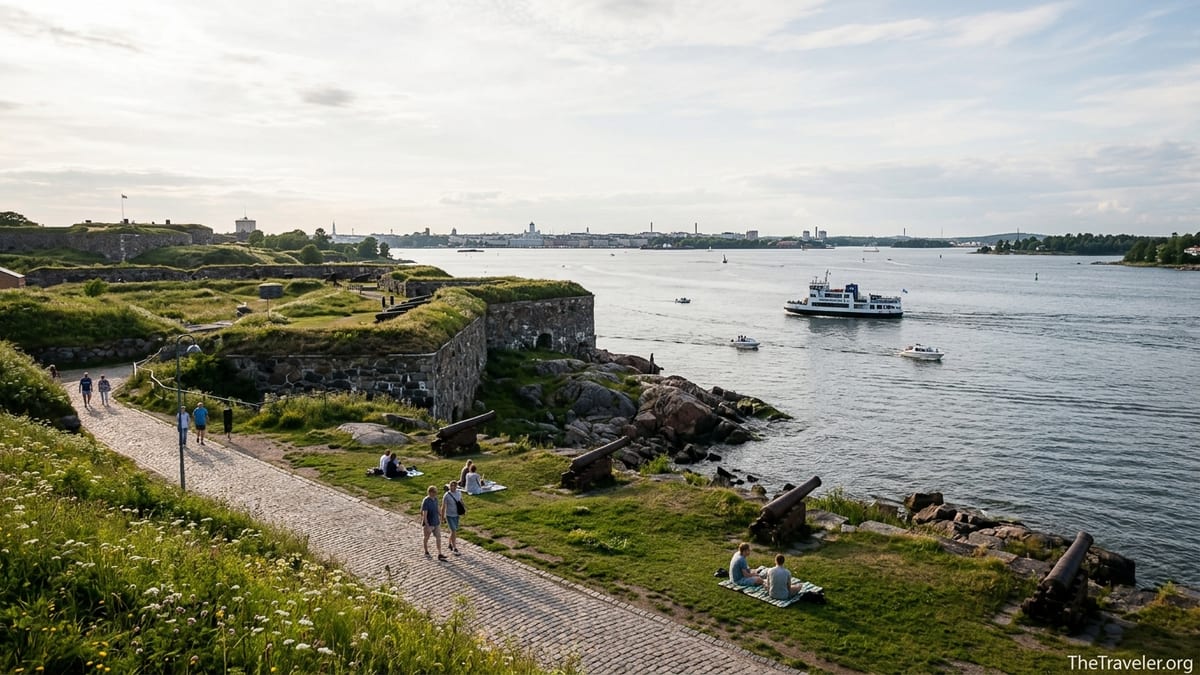
For many people, the most memorable part of Suomenlinna is simply wandering. Once you step off the ferry at the main quay, the cobbled King’s Gate route leads you past pastel wooden houses, granite storehouses and the Jetty Barracks that now host the visitor center. Paths branch out along the walls and ramparts, climbing to small hilltops where cannons still point toward the sea. It is easy to spend two or three hours just following your curiosity, stopping at viewpoints and ducking through stone arches.
Down toward the southern tip of the main island, a network of earthwork bastions and gun emplacements rises from the rock. Travelers often single out this area, close to the famous King’s Gate, as the place where Suomenlinna’s scale really sinks in. In summer, wildflowers and long grass wave between the low walls, and families spread blankets on the slopes to watch ferries and container ships slip in and out of Helsinki. On breezy evenings, locals bring thermoses of coffee or cans of Finnish craft beer and sit on the rocks until the late northern sunset fades.
The fortress also hides a surprising number of tunnels, vaults and casemates. Some are part of the official routes, with lighting and interpretive signs, while others remain dark and low, accessible only briefly or during special events. Travelers who enjoy a slightly atmospheric, offbeat experience often mention these tunnels as highlights, describing the echo of footsteps on stone and the cool, damp air as a contrast to the bright, open courtyards above.
There is a softer side, too. On warm days, small pocket beaches and smooth rocks along the shore become informal sunbathing and swimming spots, especially for locals who know the safest entries to the water. Visitors with children sometimes spend as much time at playgrounds and open lawns as at the historical sites, turning a half-day of sightseeing into a relaxed outdoor outing. The sense that you can move between “must-see” sights and simple island life is a big part of what people end up loving.
Costs, Ferries and How Long to Spend
One of the most common questions is whether Suomenlinna is worth it if you are traveling on a budget. The good news is that access to the fortress islands themselves is free. There is no entry gate, and you can walk the paths, sit on the ramparts and explore much of the area without paying anything beyond transport and any food or museum admissions you choose.
The most economical way to get there is via the public ferry operated as part of the Helsinki Region Transport system, which departs from the Market Square. A standard adult single ticket for the inner-city zones typically costs only a few euros, and many travelers opt for a day pass that covers buses, trams, metro and the Suomenlinna ferry together. Recent visitors regularly mention buying an HSL day ticket specifically so that their Suomenlinna crossing is included in the fare, making this one of the cheapest “boat trips” in the city.
In summer, a separate private waterbus service also connects the Market Square and sometimes other harbors with the islands, often at slightly higher prices but with more open-air deck space and routes that may include nearby islands such as Lonna. Recent price lists indicate that a return ticket on these seasonal services can be around the low double digits in euros for adults, with child discounts, which still keeps the total cost of a Suomenlinna visit modest compared with many European attractions.
As for timing, many guidebooks suggest allowing three to four hours for a relaxed visit, which aligns with typical traveler reports. If you are combining a picnic, a museum or two, and plenty of photo stops, half a day slips by quickly. Travelers on tight layovers sometimes squeeze in a two-hour loop, focusing on the main walking route to King’s Gate and back. In contrast, photography enthusiasts and history fans can easily spend a full day, especially if they join a guided tour and linger over exhibits at the main museums.
History, Museums and Guided Experiences
Suomenlinna’s history is complex enough that many visitors find a bit of structure helpful. The official guided walking tours, which usually run daily in high season and on selected days in shoulder seasons, are a popular choice. They are led by authorized guides who focus on both the Swedish and Russian periods of the fortress and on how island life functions today as a residential district, not just a museum. Tours often start near the visitor center in the Jetty Barracks and last about an hour, covering key viewpoints and stories that are easy to miss on your own.
The Suomenlinna Museum is the main interpretive hub. Here, multimedia exhibits walk through the fortress’s construction from the 1740s, the different periods of rule, the role of the sea defenses and everyday life for soldiers and workers. Visitors often remark that spending 45 to 60 minutes here at the start of the trip gives more context to everything they see outside, from the layout of bastions to the location of old dry docks.
Other museums add more specific perspectives. The Military Museum’s Manege and related exhibitions, located in historic barracks buildings on the island, tell the broader story of Finland’s defense forces across the 20th century. The Ehrensvärd Museum, housed in the former commander’s residence on the Great Courtyard, preserves interiors furnished in late 18th century style, with portraits and artifacts connected to Augustin Ehrensvärd and the Swedish era. These spaces are especially appreciated by visitors who enjoy small, focused museums that can be seen in under an hour.
All of these attractions charge modest admission fees, usually in the single-digit or low double-digit euro range, with combination tickets and discounts for children, students and seniors. Families sometimes comment that paying for one or two museums, while leaving the rest of the island as a free “open-air museum,” strikes a good balance. If you are visiting in shoulder seasons or around holidays, it is wise to check which museums are open, as hours vary and some sites close on certain weekdays or outside summer.
Atmosphere Through the Seasons
Whether Suomenlinna is “worth it” can depend heavily on the time of year and the weather. In summer, roughly from June to August, the islands are at their busiest and brightest. Ferries run frequently, lawns are green, and cafes open terraces where visitors sip berry juices or local lager in the long evening light. On sunny weekends, the main routes can feel crowded in places, but it is usually easy to find quieter corners simply by walking ten minutes off the most-traveled paths toward the less visited western or northern shores.
Spring and autumn bring a more subdued but often rewarding atmosphere. In May, lilacs and other flowers bloom around the courtyards, and Helsinki residents start to bring picnic blankets even if temperatures are still cool. September and early October can offer strikingly clear air and golden light, with fewer tour groups and a more thoughtful, contemplative feel. This shoulder season is often recommended by travelers who like photography or who prefer wandering without crowds, as long as they pack layers for changeable conditions.
Winter requires a bit more planning. Short daylight hours around December and January, combined with wind across the ice-fringed sea, can make the islands feel stark and raw. Regular visitors often stress the importance of warm clothing, including a hat, scarf and gloves, as well as footwear with good grip for potentially icy paths. On the positive side, snow on the ramparts and frozen coves create a uniquely atmospheric scene that some describe as otherworldly. For many, Suomenlinna in winter becomes less about ticking off every sight and more about understanding the harsh environment in which the fortress was built.
Regardless of season, it is worth remembering that Suomenlinna is an exposed maritime site. Weather can change quickly, and there is little shelter on some stretches between bastions. Many experienced visitors suggest checking the forecast before committing a whole afternoon, especially in late autumn and winter. If strong winds or heavy rain are predicted, you may prefer to shift your visit to a calmer day and focus on Helsinki’s indoor attractions instead.
Cafes, Food and Local Life on the Islands
Part of Suomenlinna’s charm lies in how everyday life coexists with tourism. Cafes and restaurants are scattered around the main island and its neighbors, often housed in former military buildings or traditional wooden houses. On busy summer days, you might start with a coffee and cinnamon roll at a cozy bakery-cafe near the main quay, later stopping at a more formal restaurant overlooking the water for a fish soup lunch, and ending with ice cream from a kiosk on the way back to the ferry.
Menus tend to celebrate simple Nordic flavors: salmon soup, smoked fish plates, rye bread sandwiches, and seasonal berry desserts feature prominently. Many places also offer vegetarian options, such as roasted root vegetables, salads with local cheese or hearty grain bowls. Expect downtown Helsinki prices rather than budget street food levels, although visitors often note that a single main course and coffee still feel reasonable compared with major Western European capitals.
Beyond the commercial venues, there are plenty of spots to enjoy a self-catered picnic. It is common to see families and groups of friends spread out on blankets with supermarket bread, cheese, cold cuts and cartons of juice. Some visitors pick up traditional market snacks from the stalls at the Market Square before boarding the ferry, such as salmon soup in takeaway containers or fried vendace in paper trays, then carry them over to eat on the ramparts with a sea view. This approach keeps costs down and is very much in line with how locals use the islands.
Because Suomenlinna is a residential district, visitors are asked to be mindful of noise and private yards. Walking routes pass close to homes and small community buildings, including a tiny public library. For many travelers, glimpsing laundry lines strung between old wooden houses, or locals chatting outside the island grocery store, is a reminder that this is not a theme park but a lived-in neighborhood whose character depends on respectful tourism.
Practical Tips and Sustainability Considerations
Suomenlinna’s popularity means that visitor numbers are high, especially in summer, and there is growing attention to managing tourism in a way that protects the fragile fortifications and the island environment. Authorities and local organizations encourage visitors to stick to marked paths on the ramparts, avoid climbing on sensitive earthworks and refrain from entering restricted tunnels or cliff areas where erosion and safety are concerns. Many signs around the islands quietly remind you to respect both the nature and the built heritage.
Facilities are generally good for a historic site, but expectations should be realistic. Public toilets exist at the main quay and near several attractions, yet there can be queues at peak times. The cobbled streets and steep paths between bastions can be challenging for travelers with mobility issues, although some routes are smoother and more accessible than others. Comfortable walking shoes are highly recommended, as surfaces range from uneven stone to dirt tracks and grassy slopes.
On the safety front, visitors should take the sea setting seriously. Swimming is only advisable in designated or obviously safe spots, and even then, currents and cold water temperatures require caution. Walking on winter sea ice around the islands is strongly discouraged by local authorities except in rare, officially marked situations. Even in summer, children should be supervised near rocky shorelines and old stone quays that drop directly into deep water.
From a planning perspective, bring or refill a water bottle, pack an extra layer, and consider a lightweight blanket or sit mat if you plan to spend time on the grass or rocks. Trash bins are available but not on every corner, so be prepared to carry your litter until you find one. These small habits contribute to keeping the islands pleasant for both residents and future visitors, aligning with long-term sustainability strategies that aim to balance heavy visitation with conservation of the landscape and historic structures.
The Takeaway
So is Suomenlinna worth visiting? For most travelers, the answer is yes, very much so, especially if you have at least half a day in Helsinki and enjoy being outdoors. The combination of a short scenic ferry ride, free access to a vast historic site, and the flexibility to shape your visit around quiet walks, detailed museum visits or laid-back picnics makes it a strong value. Unlike more formal attractions, there is room here to find your own pace and corner of the islands.
Suomenlinna is not perfect for every situation. On days of heavy rain, biting wind or very tight layovers, you may get more from indoor sights in the city center. Travelers who strongly dislike walking on uneven ground might also find parts of the fortress frustrating. Yet for anyone curious about Finland’s maritime history, interested in UNESCO sites, or simply eager to see a different, more spacious side of Helsinki, the islands tend to leave a lasting impression.
Ultimately, what visitors love most is not a single building or viewpoint but the layered experience: the feel of sea air on the ferry, the crunch of cobblestones underfoot, the quiet of a grassy rampart, the sound of children playing outside a wooden house, the echo in an old stone tunnel. Collectively, these details make Suomenlinna feel less like a box to tick and more like a place you have genuinely spent time in. If you plan for the weather, wear good shoes and allow a few unhurried hours, the fortress islands are very likely to become one of the highlights of your Helsinki trip.
FAQ
Q1. How do I get to Suomenlinna from central Helsinki?
The easiest option is the public ferry from the Market Square, which runs year-round and takes about 15 to 20 minutes each way.
Q2. Is there an entrance fee for Suomenlinna?
No, visiting the fortress islands is free. You only pay for transport and any museums, tours, food or drinks you choose to enjoy.
Q3. How much time should I plan for a visit?
Most travelers find that three to four hours allows for a relaxed walk around the main sights, a museum or two and a coffee or picnic break.
Q4. Is Suomenlinna suitable to visit in winter?
Yes, but it is colder and windier than the city center. Dress very warmly, expect shorter daylight and focus on the atmosphere rather than covering every sight.
Q5. Are there places to eat on the islands?
There are cafes and restaurants, especially near the main quay and along popular routes, though opening hours vary by season, so it is wise to check ahead.
Q6. Can I visit Suomenlinna with limited mobility?
Some areas are accessible, but many paths are cobbled or uneven, and there are hills. It is possible with care, though not fully barrier-free, and sturdy footwear helps.
Q7. Do I need to book a guided tour in advance?
Official public tours in peak season can often be joined on the day, but in shoulder seasons or for group tours it is sensible to confirm schedules in advance.
Q8. Is Suomenlinna a good place for kids?
Yes. Open lawns, small beaches, cannons and tunnels make it engaging for children, but close supervision is needed near steep drops and the shoreline.
Q9. What should I wear and bring for a visit?
Comfortable walking shoes, layers against wind and sun, a refillable water bottle and perhaps a picnic blanket or sit mat make the experience more enjoyable.
Q10. Can I stay overnight on Suomenlinna?
There are some accommodation options on the islands, but availability is limited. Most visitors base themselves in Helsinki and visit as a half-day or day trip.