


For many frequent flyers, American Express Centurion Lounges have become a key part of the premium travel experience. The distinctive blue doors promise stronger coffee than the concourse, real food instead of grab-and-go sandwiches, and a quiet corner to charge devices and catch up on email. But with annual fees on cards like the Platinum Card from American Express approaching four figures and access rules tightening, an important question has emerged in 2026: are Centurion Lounges still legitimately worth it for premium travelers, or has the reality fallen behind the marketing?
Get the latest updates straight to your inbox!
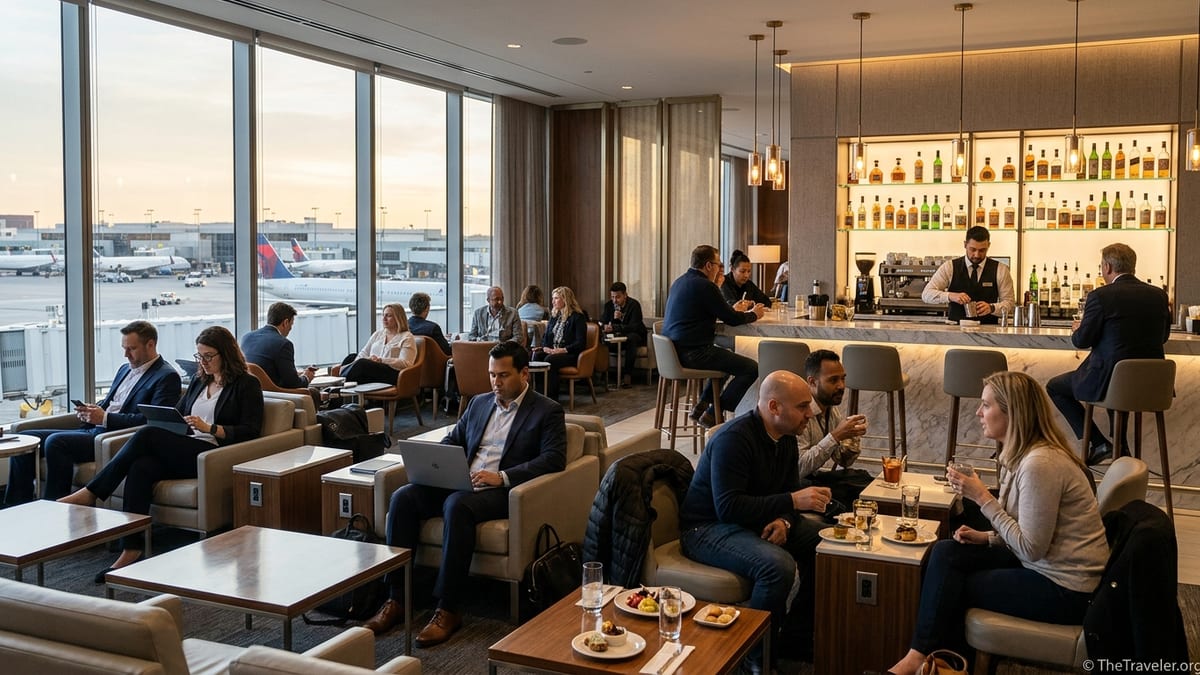
What Makes the Centurion Lounge Concept Different
When American Express opened its first Centurion Lounge in Las Vegas in 2013, it set out to build something more polished than a typical airline club. Instead of generic armchairs and snack mix, Centurion Lounges focused on chef-driven menus, a serious cocktail program, and design that felt closer to a boutique hotel lobby than an airport waiting room. Today, American Express operates more than 30 Centurion-branded locations globally, concentrated in major hubs like Dallas–Fort Worth, Miami, New York LaGuardia, San Francisco, and Hong Kong, plus a growing number of satellite concepts such as Sidecar by The Centurion Lounge in smaller or secondary terminals.
Unlike most Priority Pass lounges, which are run by third parties, Centurion Lounges are owned and operated directly by American Express. That gives Amex tighter control over everything from furniture layout and soundproofing to wine lists and bar staffing. Walk into the Denver lounge, for example, and you will often find hot dishes such as roasted chicken with seasonal vegetables alongside local Colorado beers, while the New York JFK lounge highlights New York inspired cocktails and a more urban design palette. This deliberate curation is central to the brand’s pitch to premium travelers: you are not simply escaping the concourse, you are stepping into an Amex-designed space that reflects the city you are flying through.
For premium cardholders, this positioning matters. The Platinum Card from American Express now carries an annual fee of about 895 dollars in the United States, and the ultra-exclusive Centurion Card charges a significantly higher fee, reported to be several thousand dollars plus an initiation cost. At those price levels, cardmembers increasingly judge Amex not only on points earning and statement credits, but on real, tangible experiences such as Centurion Lounge visits. The lounge network has therefore become a visible proof point of whether the brand still delivers premium value.
From a competitive standpoint, Centurion Lounges also serve as a direct answer to airline-operated spaces like United Polaris Lounges or Delta Sky Clubs and to bank-run lounges such as Capital One Lounges and the Chase Sapphire Lounge by The Club. For a frequent traveler choosing between a co-branded airline card and a general travel card, the promise of a consistently upscale space in multiple airports can be a deciding factor.
Who Actually Gets In and What It Really Costs
Access to Centurion Lounges is intentionally limited to a narrow group of cardholders. The primary U.S. gateway is the Platinum Card from American Express, including certain business and corporate Platinum products, along with the invitation-only Centurion Card. Select Delta SkyMiles Reserve cardmembers can enter when flying on same-day Delta flights at participating locations. There are no day passes for purchase, and simply holding a basic Amex credit card is not enough.
While entry itself is complimentary for eligible cardholders, the effective cost is baked into the high annual fees. A U.S. consumer Platinum Card now charges around 895 dollars annually after a fee increase announced for late 2025. In return, cardmembers receive a bundle of benefits that can theoretically offset that cost: airline incidentals credits, Uber Cash, hotel and retail statement credits, elite status with certain hotel chains, and access to multiple airport lounge networks, including Centurion, International American Express lounges, Delta Sky Clubs when flying Delta, and Priority Pass partner lounges on select products.
For a premium traveler, the value calculation hinges on realistic use. A consultant based in Chicago who flies twice a month and routinely connects through hubs with Centurion Lounges, such as Dallas–Fort Worth, Denver, or Las Vegas, might easily visit a lounge 15 to 20 times a year. If they assign even 20 to 30 dollars of value to each visit in food, drinks, and workspace compared to airport prices, the lounge access alone could cover a large portion of the annual fee before factoring in other credits. By contrast, a leisure traveler who flies once or twice a year and only occasionally passes through a Centurion-equipped airport will find it much harder to justify the cost on lounge value alone.
Guest access has also evolved into a meaningful cost factor. In recent years, American Express tightened policies so that many Platinum cardmembers no longer receive automatic free guests unless they meet a relatively high annual spending threshold. In practice, that means a frequent flyer who wants to bring a spouse and two children into the Centurion Lounge at Miami before a family vacation may face per-guest fees that add up quickly, especially on longer trips. For solo or business travelers, the stricter guest access rules have less impact and can even be a net positive if they reduce crowding, but for those who mainly travel with companions, the policy changes undercut some of the perceived value.
The Experience Inside: Food, Drink, and Design
The strongest argument that Centurion Lounges are still “legit” for premium travelers in 2026 lies in the core on-the-ground experience. In most locations, the gap between a Centurion Lounge and the average domestic airline club is still clear when you walk in. Hot buffet dishes tend to be more imaginative and less repetitive than the standard pasta or soup offerings elsewhere, and many lounges partner with local or celebrity chefs to design rotating menus. In San Francisco, for instance, travelers may find Asian-influenced dishes such as ginger chicken or seasonal vegetable stir-fries, while the Dallas–Fort Worth lounge leans into Texan flavors with items like braised meats and hearty sides.
At the bar, Centurion Lounges typically include a curated cocktail list developed with well-known bar consultants, plus a selection of wines and often one or two better-quality sparkling options. In practice, a traveler departing from LaGuardia on an evening flight might enjoy a classic Old Fashioned or a local craft beer with a small plate of charcuterie rather than paying out of pocket at a crowded concourse bar. Nonalcoholic options, including espresso-based coffee drinks, herbal teas, and infused waters, are widely available and can be especially valuable on early morning departures out of Denver or Charlotte.
Design remains another major differentiator. Many newer lounges, such as those in Denver and New York JFK, feature floor-to-ceiling windows, a mix of seating styles, plenty of power outlets, and sound-dampening materials that keep conversations from echoing. Art programs often highlight local artists and regional themes. For example, the Charlotte lounge incorporates decor inspired by North Carolina’s landscapes, while the Seattle–Tacoma space leans into Pacific Northwest textures and colors. For premium travelers who spend countless hours in transit, these thoughtful touches can make a work session before a flight feel more like sitting in a modern hotel lobby than in an airport corridor.
There are, however, variations. Travelers on online forums frequently report that some older or smaller locations, like parts of the Las Vegas or Houston lounges, feel more worn, and breakfast spreads in certain lounges can be less impressive than the lunch or dinner service. Premium travelers who have grown used to high-end airline lounges, such as the United Polaris Lounge at Newark or the Qantas First Lounge in Sydney, may find that Centurion Lounges sit in a middle ground: clearly superior to many domestic airline and Priority Pass spaces, but not at the level of the world’s top flagship first-class lounges.
The Persistent Problem of Crowding and Waitlists
If there is one consistent complaint about Centurion Lounges in the last several years, it is crowding. As the Platinum Card’s popularity surged, particularly after rich welcome bonuses and new statement credits were introduced in the early 2020s, the number of travelers with access rose far faster than the lounge network’s footprint. This led to scenes of long queues snaking outside some of the busiest locations, including the lounges at Dallas–Fort Worth, Miami, and Denver, particularly during Monday morning and Thursday evening business travel peaks.
In response, American Express introduced a three-hour rule prior to departure and tightened guest policies to limit the number of people entering on each card. More recently, additional adjustments set explicit limits on how far in advance layover guests can enter, and how long before a departing flight a traveler may access the lounge. For a traveler with a five-hour evening layover in Dallas, this can mean spending the first part of the connection elsewhere in the terminal before being allowed inside, which undermines some of the appeal of the space as an all-day refuge.
On-the-ground reports remain mixed. Some frequent flyers describe visiting the Centurion Lounge at airports like New York LaGuardia or Las Vegas around midday and finding it near capacity, with hosts placing them on a digital waitlist accessed through the American Express app. Wait times of 20 to 40 minutes during peak hours are not unusual at certain hubs. Others report that early morning visits to places like Denver or late-night stops in Houston can feel almost calm, with plenty of seating and quick access to food and drinks.
For premium travelers trying to decide whether the lounges are still worth it, crowding is the most unpredictable variable. If you primarily travel at peak leisure times, such as Friday mornings in summer or holiday weekends, you are more likely to encounter lines and a slightly harried atmosphere that feels only marginally better than the main concourse. Business travelers on midweek midday flights, or those who can time arrivals for off-peak windows, tend to get a much more premium experience from the same physical space.
Comparing Centurion Lounges to Airline and Competitor Bank Lounges
To judge whether Centurion Lounges are legitimate value for premium travelers, it helps to compare them with realistic alternatives. On the airline side, many U.S. carriers have invested heavily in their lounge products. Delta Sky Clubs in newer terminals, such as those in Los Angeles and New York JFK, now offer attractive design and solid food spreads, while United’s Polaris Lounges at hubs like Chicago O’Hare and San Francisco cater specifically to long-haul business and first-class passengers with table-service dining and spacious shower suites.
In the bank lounge space, Capital One has opened its own network that emphasizes made-to-order food and well-designed seating, and Chase has begun rolling out Sapphire Lounges in partnership with an established lounge operator. These spaces typically target holders of premium credit cards such as the Capital One Venture X or Chase Sapphire Reserve. At airports where a Centurion Lounge and, for example, a Sapphire Lounge operate side by side, reviews often note that the differences come down to details: the Centurion Lounge may have a slightly deeper cocktail list and more local art, while the competing bank lounge offers fresher made-to-order food and less crowding on certain days.
Pricing models also differ. Airline lounge memberships, such as an annual Delta Sky Club membership for general members, can run several hundred dollars per year and are separate from credit card fees unless bundled with a co-branded product. Priority Pass memberships, which grant access to a patchwork network of independent lounges, are often included with premium cards but can be inconsistent in quality. For a traveler who already holds the Platinum Card primarily for its earning rates and travel protections, the incremental cost of using Centurion Lounges is effectively zero. For someone starting from scratch and choosing between, say, a co-branded airline card with club access and a Platinum Card with Centurion access, it becomes a direct comparison of which lounge network they will realistically use more often.
In day-to-day practice, many premium travelers treat Centurion Lounges as one option in a broader ecosystem. A business traveler flying United out of Newark might choose the Polaris Lounge before an international flight, but rely on the Centurion Lounge in Denver when connecting home on a domestic route. A family flying Delta from Atlanta could compare the Sky Club and the Centurion Lounge in Concourse E and choose whichever has shorter lines and better seating at that moment. In this context, Centurion Lounges are less a singular deciding factor and more a valuable piece of a multi-lounge toolkit.
Which Travelers Get the Most Real-World Value
Not every premium traveler extracts the same value from Centurion Lounge access, and understanding which profiles benefit most is key to deciding whether the lounges are “legit” for you personally. Road warriors who fly at least once a month from or through airports with Centurion Lounges are clear winners. A management consultant commuting regularly between New York and Dallas, for example, can build a reliable routine around the lounges: breakfast and email at LaGuardia, then a light dinner and a quick shower in Dallas before a late return flight. Over a year, that routine can replace dozens of paid meals and create a noticeably calmer travel rhythm.
Another group that tends to see strong value is international business travelers who route through multiple hubs. Someone based in Los Angeles who regularly flies to Europe or Asia via connecting hubs may touch several Centurion locations in a single quarter: Los Angeles for pre-flight dinner, Dallas or Miami as a layover, and possibly London Heathrow’s dedicated Centurion space on arrival or departure. Even if they also have access to airline-operated lounges through their business-class tickets, the Centurion network adds flexibility and an additional option when one space is overcrowded.
By contrast, occasional leisure travelers who mainly take one or two big trips per year and live near airports without Centurion Lounges often struggle to justify the incremental cost of the Platinum Card on lounge value alone. A family flying once a year from a smaller regional airport that connects through a hub might only see a Centurion Lounge twice on a round-trip journey. In that scenario, paying close to 900 dollars in annual card fees for a couple of lounge visits and some statement credits has to be weighed carefully against simply buying food in the terminal or purchasing a day pass to an alternative lounge network when needed.
Finally, travelers who almost always fly in international first or business class and already receive access to top-tier airline lounges may view Centurion Lounges as a useful backup rather than a core benefit. For someone who spends most of their time in spaces like the Qatar Airways Al Mourjan Lounge in Doha or the Lufthansa First Class Terminal in Frankfurt, the Centurion product will feel solid but not extraordinary. It still has value on domestic legs or in U.S. hubs where airline offerings are weaker, but it is unlikely to be the primary reason they hold an American Express premium card.
The Takeaway
In 2026, American Express Centurion Lounges remain a genuinely premium product in the airport lounge landscape, but their value is more nuanced than it was a decade ago. On their best days, they deliver exactly what high-frequency travelers want: a well-designed space with strong Wi-Fi, quality food and drinks, and enough quiet corners to get work done or decompress between flights. A traveler walking into the Centurion Lounge at Denver for an early morning departure or settling into the new space at New York JFK before an evening transcontinental flight will generally find a clearly upgraded experience over the public terminal.
However, the combination of high card annual fees, tighter access rules, and persistent crowding at peak times means Centurion Lounges are no longer an automatic “yes” for every premium traveler. They are most legitimately valuable for frequent flyers who live near or regularly connect through Centurion-equipped airports, travel often enough to visit multiple times a year, and can time many of their visits outside the worst rush periods. For these travelers, the lounge network can meaningfully offset card fees and improve the day-to-day experience of life on the road.
For occasional travelers, those based far from Centurion locations, or those who mainly fly in cabins that already include access to excellent airline lounges, the calculus is more complicated. In those cases, Centurion access is a nice-to-have perk wrapped inside a broader package of card benefits, rather than the central reason to carry the card. Evaluating whether it is “legit” value means mapping your real routes, your typical travel times, and your willingness to navigate occasional waitlists against the total cost of your American Express annual fees.
Ultimately, Centurion Lounges are still a strong, tangible expression of the American Express premium promise. They are not perfect, they are not always serene, and they are no longer empty. But for the right traveler, used thoughtfully and realistically rather than idealized from glossy images, they continue to offer a meaningful edge over the main terminal and remain a relevant part of a modern premium travel strategy.
FAQ
Q1. What cards do I need to access an American Express Centurion Lounge?
Eligible versions of the Platinum Card from American Express, certain business and corporate Platinum products, and the invitation-only Centurion Card provide complimentary entry, and select Delta SkyMiles Reserve cards grant access when you are flying on a same-day Delta ticket at participating airports.
Q2. Are Centurion Lounges usually better than Priority Pass lounges?
In most major airports, Centurion Lounges offer higher quality food, more premium bar options, and more thoughtful design than the average Priority Pass lounge, though individual locations and times of day can vary.
Q3. How early can I enter a Centurion Lounge before my flight?
American Express generally limits entry to a few hours before your scheduled departure and sets specific rules for layovers, so you cannot use the lounge as an all-day office during very long connections.
Q4. Do Centurion Lounges have showers and quiet work areas?
Several larger locations, such as Dallas–Fort Worth, Miami, and New York JFK, offer shower suites, semi-private work pods, and small conference rooms, while smaller lounges may provide only standard seating and basic workspaces.
Q5. How crowded are Centurion Lounges in practice?
Crowding is highly time dependent: peak business and holiday travel periods can mean waitlists and limited seating, while early mornings, late evenings, and midweek off-peak times are often much calmer.
Q6. Is lounge access alone enough reason to get the Amex Platinum Card?
For very frequent flyers who regularly pass through Centurion airports, lounge access can justify a large portion of the annual fee, but most cardmembers need to combine it with other benefits and credits to fully offset the cost.
Q7. Can I bring family or friends into a Centurion Lounge for free?
Guest policies depend on your specific card and recent spending levels; some Platinum cardmembers receive complimentary guests while others must pay per person, and Centurion cardholders typically have more generous guesting privileges.
Q8. How does food in Centurion Lounges compare to airport restaurants?
While menus are not at fine-dining levels, many travelers find that chef-designed buffets and complimentary cocktails offer better value and quality than paying out of pocket at typical terminal restaurants or bars.
Q9. Are Centurion Lounges suitable for working between flights?
Yes, most locations provide reliable Wi-Fi, ample power outlets, and a mix of seating that works for laptops, though during busy periods noise and crowding can make focused work more challenging.
Q10. If my home airport does not have a Centurion Lounge, is the card still worth it?
The answer depends on how often you connect through Centurion airports and how much you use other card benefits; if you rarely see a Centurion Lounge, you should weigh the annual fee against credits, points earning, and alternative lounge access you already have.