


Across the Arctic north of Norway, Sweden and Finland, Sámi museums offer travelers one of the most direct ways to encounter the culture, history and present-day realities of Europe’s only Indigenous people. But are these museums actually worth building into a tight Lapland itinerary, especially if you are only passing through Inari in Finland or Karasjok in Norway for a day? In practice, a visit is far more than a gallery walk: it can reframe how you see the landscape you are traveling through, and the communities who live there.
Get the latest updates straight to your inbox!
Understanding What “Sámi Museum” Really Means
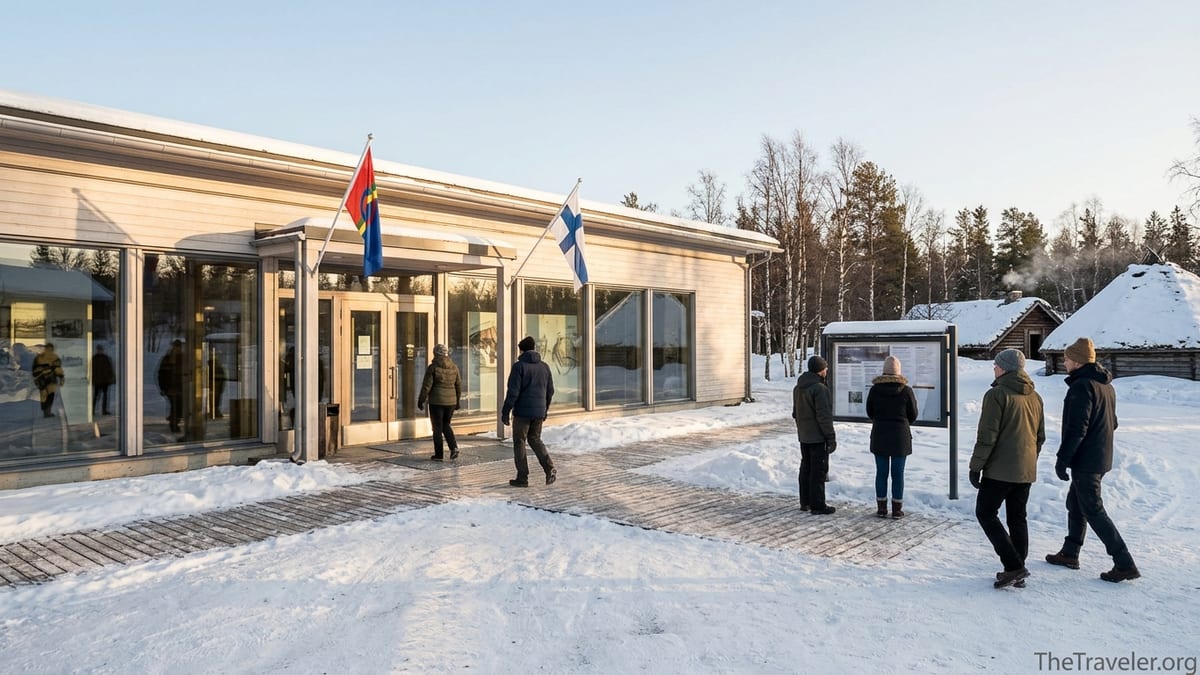
When travelers talk about “the Sámi Museum,” they usually mean one of two flagship institutions in the Nordic north: Sámi Museum Siida in Inari, Finnish Lapland, or Sámiid Vuorká Dávvirat / De Samiske Samlinger in Karasjok, Northern Norway. Both are cultural history museums with outdoor sections that preserve historic buildings and everyday objects from Sámi life. Siida, which re-opened after a major renovation and expansion completed around 2022, combines the Sámi Museum with the Northern Lapland Nature Centre in a single building on the shore of Lake Inari. Its main exhibition, renewed with contemporary design, presents Sámi culture alongside the subarctic environment, so visitors see reindeer, rivers and languages as part of one living system rather than separate topics.
In Karasjok, De Samiske Samlinger holds Norway’s largest Sámi collection, with over several thousand catalogued objects and an open-air museum of turf huts, boathouses and storehouses set among birch trees. The institution is part of the RiddoDuottarMuseat network, which looks after cultural heritage across the Norwegian side of Sápmi. For many visitors driving the E6 or exploring Finnmark, this is their first deep dive into Sámi culture beyond roadside souvenir shops or quick reindeer safaris.
Beyond these two, there are sister institutions across Sápmi, such as Ájtte in Jokkmokk in Swedish Lapland and the Museum of Northern Peoples in Troms and Finnmark. Together they form a loose constellation of museums that aim to tell Sámi stories from Sámi perspectives, often responding to a history in which outside researchers and collectors removed objects and controlled the narrative. Understanding this context helps explain why many locals describe these museums not only as attractions, but as cultural strongholds.
For travelers, that background matters. A Sámi museum visit is not comparable to ticking off yet another city art museum; it is closer to entering a community’s memory archive. Exhibitions are often explicitly about language loss, land rights and ongoing cultural revival. Walking through them can be emotionally demanding in a way that surprises visitors who expected something purely folkloric or nostalgic.
What You Actually See Inside: Exhibitions, Objects and Spaces
Step into Siida in Inari and the first impression is often the light. The renovation pushed all major exhibition rooms onto one level, with clean lines, pale wood and large windows that let in the low Arctic sun. The permanent exhibition, titled along the lines of “These lands are our children,” is built around the seasonal cycle that has structured Sámi life for centuries. In one room, you might find a full-size reindeer sledge harness with hand-decorated leather straps; in another, finely worked gákti (traditional clothing) from Inari, Skolt and North Sámi areas hanging side by side so you can spot how patterns and colors change between communities.
Interpretive panels in Siida are usually in at least three languages, typically Finnish, English and a Sámi language. Displays cover topics such as the siida system of traditional land use, spiritual worldviews centered on sacred sites like sieidi rock formations, and the introduction of residential schools. Audio stations play joik, the traditional Sámi vocal art, and short films show contemporary reindeer herders using snowmobiles and GPS collars. The combination underlines that the culture is not frozen in the past, even when you are looking at 19th century knives, beadwork or cradle boards.
De Samiske Samlinger in Karasjok offers a more intimate but equally dense experience. Inside the main building, vitrines hold silver jewelry, shaman drums repatriated or reproduced based on older records, tools for salmon fishing in the Tana river system, and everyday wooden cups and spoons carved from birch burls. A section often focuses on colonial-era racial research and Christian missionization, with photographs and documents that can be uncomfortable to see. Visitors frequently comment that this part of the exhibition changes the way they understand churches and government buildings they see elsewhere in Finnmark.
Both museums extend beyond their walls. Siida’s open-air museum, open year-round when conditions are safe, allows you to walk among reconstructed peat huts, turf-covered storehouses, traditional river boats and reindeer pens. In Karasjok, the outdoor area includes historic farmsteads and lavvu style tents, so you can stand inside structures built for a mobile life and feel how snug they are against wind and snow. These spaces make it much easier to picture how the clothing, tools and stories on the inside exhibitions were used in real landscapes.
What Travelers Learn: Culture, History and Difficult Truths
Travel marketing in Lapland often emphasizes reindeer sleigh rides, Northern Lights tours and “Santa” experiences. Without context, many visitors arrive with only a vague idea that Sámi people are reindeer herders who wear bright clothing. A museum visit complicates and enriches that picture. One of the first lessons most travelers take away from Siida or De Samiske Samlinger is that there is no single Sámi culture but many, spread across four countries and speaking several distinct languages with their own writing traditions and contemporary media.
Exhibition sections on colonial history tend to be among the most impactful. In Inari, panels discuss land seizures, forced relocations and the boarding school era when Sámi children were punished for speaking their languages. Karasjok’s museum, located in the same town that hosts the Sámi Parliament of Norway, addresses state policies that restricted traditional livelihoods and the ways Sámi organizations have fought back. For a traveler who has just driven past large hydropower dams or new wind farms built on traditional grazing areas, seeing this history laid out in local voices can fundamentally shift how they interpret the landscape.
Another key learning is environmental. Siida’s shared building with the nature center means that geology, climate, flora and fauna sit side by side with stories about reindeer migration routes and fishing grounds. Exhibits connect contemporary climate change, such as changing snow and ice conditions on Lake Inari, with reindeer herding challenges and berry harvests. This can be eye opening for visitors who previously saw the Arctic as an empty wilderness rather than a lived-in homeland where even small changes in freeze-up dates can disrupt food security and cultural practices.
Finally, museums foreground Sámi creativity. Temporary exhibitions might feature contemporary artists working in duodji (traditional handicrafts) or conceptual art that critiques stereotypes. A traveler who has only seen Sámi motifs on tourist-shop mugs in Rovaniemi or Tromsø may come away with a much richer picture of Indigenous art scenes, including collectives and festivals that stretch from Karasjok and Jokkmokk to urban centers like Oslo and Stockholm.
Is It Worth Your Time and Money? Practical Considerations
For many travelers, the question is not whether Sámi culture matters, but whether a museum visit fits into limited time and budget. As of 2026, adult tickets at Siida in Inari are around the upper teens in euros, with discounted rates for students and seniors and a family ticket that covers two adults and their children for roughly twice the single adult price. Children under school age typically enter free. Karasjok’s De Samiske Samlinger has similar mid-range pricing in Norwegian kroner, with family and group discounts. In practical terms, entrance for a couple or small family often costs less than a single organized snowmobile excursion or half the price of a bundled “reindeer and Northern Lights” tour.
Time-wise, most visitors report spending between 1.5 and 3 hours inside Siida, especially if they combine the indoor exhibitions with a walk through the open-air museum and a coffee in the on-site restaurant. In winter, when daylight is short, the museum’s reliable indoor environment can be a welcome anchor in a day otherwise structured around the weather. In Karasjok, the museum is smaller, and an in-depth visit might take 1 to 2 hours, leaving time the same day to visit the Sámi Parliament building on a guided tour or explore the adjacent Sápmi cultural park in summer.
Compared with other activities in Lapland, Sámi museums offer good value in terms of insight per euro or krone spent. A two-hour visit can equip you with context that deepens every subsequent experience, from talking with guides on a reindeer farm to noticing bilingual road signs along the E75. If your schedule in Inari or Karasjok is extremely tight, it can still be worth reshuffling plans so that at least one person in the group spends an hour inside and shares key points later, especially if you are traveling with children who will grow up seeing images of the Arctic online without much explanation.
There are situations where the visit might feel less essential. If you already have deep knowledge of Sámi history, perhaps through academic work or family background, you may find the permanent exhibitions cover familiar ground, though temporary shows can still be rewarding. And if you are passing through in the middle of the night on a winter bus, opening hours might simply make a visit impossible, in which case it is better to plan around museums earlier in your route, for example by visiting Ájtte in Jokkmokk or the Museum of Northern Peoples on the way north.
How a Museum Visit Changes the Rest of Your Journey
One of the strongest arguments for visiting a Sámi museum early in a trip is how it reframes everything that follows. Travelers who start in Inari often report that, after a morning in Siida, they notice details they would otherwise have missed: reindeer ear markings indicating ownership, the presence of Sámi flags outside private homes, or the subtle differences between North Sámi and Inari Sámi place names on maps. When they later join a reindeer feeding visit on a nearby farm, they ask more informed questions about grazing rights, climate risks and family histories rather than only requesting photos.
In Karasjok, a museum visit can shift how you approach the Sámi Parliament building and other institutions clustered in the village. Instead of seeing them simply as photogenic stops, you are more likely to recognize them as outcomes of decades of political organizing described in the exhibitions. This contextual knowledge can also change your behavior as a guest. Travelers who learn about the significance of sacred sites and traditional burial grounds are, for example, more likely to follow local advice about staying on marked trails and not stacking stones into cairns in sensitive areas.
The impact extends beyond Sápmi itself. Many visitors to Lapland come from countries grappling with their own colonial histories. Spending an afternoon in a Sámi museum can prompt reflections on Indigenous rights at home, whether that means drawing parallels with First Nations in Canada, Native American communities in the United States, or Aboriginal and Torres Strait Islander peoples in Australia. Several travelers describe leaving Siida or De Samiske Samlinger with reading lists, film recommendations and a new habit of checking who manages the lands they hike on elsewhere in the world.
On a smaller scale, museum visits can simply make a trip more memorable. Families often note that children who struggle to stay engaged on long winter drives through forested landscapes suddenly become fascinated by objects like a cradle slung inside a lavvu or colorful shoe bands woven from wool. Later in the trip, those same children may be the ones who remember to say giitu, thank you in North Sámi, when leaving a café decorated with local art.
Planning Your Visit: Seasons, Logistics and Accessibility
From a logistical standpoint, both Siida in Inari and De Samiske Samlinger in Karasjok are straightforward to include in a Lapland itinerary if you plan around opening hours. Siida typically opens daily in the main summer season from early June to late September, often from morning to early evening, and operates slightly shorter hours in winter, usually Monday to Saturday. Ticket sales usually stop about 45 minutes before closing. In shoulder seasons, there are scheduled maintenance closures of several days, so it is wise to confirm dates just before traveling. The outdoor areas are open year-round whenever conditions are deemed safe.
Karasjok’s museum has more limited hours, especially outside high season, but it is located centrally in the village, within walking distance of guesthouses and camping areas. Many travelers combine a stop there with a drive to or from Nordkapp, or on a longer loop that includes Kautokeino and Alta. In both Inari and Karasjok, winter roads are generally well maintained, but conditions in January and February can be challenging for drivers unfamiliar with snow and ice. If you are relying on buses, note that connections can be infrequent, and you may need to adjust your visit length to match the timetable.
Accessibility is an area where the museums have made visible efforts. Siida’s main building is step-free, with elevators and accessible restrooms, and exhibitions, the gift shop and restaurant are reachable by wheelchair. Personal assistants for disabled visitors can usually enter free of charge, and service dogs such as guide or support dogs are admitted to indoor spaces, although other pets are not allowed in the exhibition halls. The open-air museum paths can be uneven, particularly in winter, so visitors with mobility challenges may prefer to focus on the indoor sections. In Karasjok, the main collections are inside a low, accessible building, though some parts of the outdoor museum have grass or gravel surfaces.
For those traveling on a budget, it is useful to know that both museums have on-site cafés or restaurants where you can buy a simple lunch or coffee, but you can also keep costs down by eating before or after your visit at supermarkets or simpler eateries in the village. Gift shops at Siida and in Karasjok stock Sámi-made duodji such as silver brooches, knives and textile work. Prices can be higher than in generic souvenir shops, but purchases here support local artisans and, in some cases, museum programming. Even a small item like a woven keyring can be a more ethically grounded souvenir than a mass-produced “Lapland” mug imported from elsewhere.
The Takeaway
So is visiting a Sámi museum worth it? For most travelers, the answer is a clear yes. In a region where it is easy to skim the surface on packaged Northern Lights tours and cozy cabin stays, institutions like Siida in Inari and De Samiske Samlinger in Karasjok provide depth and continuity. They allow you to move beyond images of snow and reindeer to understand who has lived on this land, what they have endured and how they are shaping the future.
On a practical level, the museums are relatively affordable, manageable in a half day and accessible in terms of language and facilities. On a deeper level, they act as bridges between visitors and host communities. The stories you encounter inside their walls echo when you cross frozen lakes on skis, see herds moving along the tundra or hear joik sung in a roadside café. If your goal is to return home from Lapland with more than a camera roll of aurora photos, making time for a Sámi museum may be one of the most rewarding choices you can make.
FAQ
Q1. Which Sámi museum should I visit if I only have time for one?
If your route takes you through Finnish Lapland, Sámi Museum Siida in Inari is the most convenient and wide ranging. In Norway, De Samiske Samlinger in Karasjok offers a focused but powerful introduction to Sámi culture.
Q2. How much time should I plan for a visit?
Allow at least 1.5 to 2 hours for either museum, and up to 3 hours if you want to explore the open-air sections, watch videos and take a café break.
Q3. Are the exhibitions suitable for children?
Yes. Many children are drawn to traditional clothing, sledges and outdoor buildings, though some sections about past injustices can be heavy and may require parental guidance.
Q4. Do I need to book tickets in advance?
Outside peak holiday weeks you can usually buy tickets on arrival. During busy Christmas, New Year and midwinter seasons it is wise to check current advice and consider prebooking if available.
Q5. What languages are used in the museums?
Exhibitions generally include texts in at least one Sámi language, plus Finnish or Norwegian and English. Staff at reception usually speak good English and can answer practical questions.
Q6. Is photography allowed inside the Sámi museums?
Photography without flash is often allowed for personal use, but some sensitive objects or temporary exhibitions may have restrictions. Look for signs or ask staff before taking pictures.
Q7. Can I visit in winter when it is very cold and dark?
Yes. Both museums are open in winter with heated indoor spaces, and a visit can be an excellent daytime activity between evening Northern Lights excursions.
Q8. Are the museums accessible for visitors with reduced mobility?
The main buildings in Inari and Karasjok are generally wheelchair accessible, with ramps or elevators and accessible restrooms. Outdoor areas can be uneven or snowy, so indoor sections are usually the best option.
Q9. What is the dress code when visiting a Sámi museum?
There is no formal dress code. Wear comfortable, weather appropriate clothing and remove snow-covered boots if staff ask. If you arrive in traditional clothing yourself, it is polite to be mindful of ongoing events or ceremonies.
Q10. How can I support Sámi communities beyond paying the entrance fee?
You can buy duodji from verified Sámi artisans in museum shops, support Sámi owned tour companies, learn a few words in a Sámi language and seek out Sámi media and literature after your trip.