


High above the Arctic Circle, two cultural attractions stand out for travelers who want to understand the Indigenous Sámi people of northern Europe: the Sámi Museum in Karasjok, Norway, and the Sámi Museum and Nature Centre Siida in Inari, Finland. Both offer powerful introductions to Sámi history, language and land, but they deliver very different experiences. If your itinerary or budget means you can only choose one, the decision deserves a closer look.
Get the latest updates straight to your inbox!
Understanding the Two Museums in Sápmi
Before you choose between them, it helps to understand what each place actually is. In Karasjok, on Norway’s Finnmark plateau, the Sámi Museum is part of the RiddoDuottarMuseat network. The Karasjok collections, often referred to locally as De Samiske Samlinger, were established in the early 1970s as one of the first purpose-built cultural institutions dedicated to Sámi heritage in Sápmi. Today the museum focuses on traditional life, including reindeer herding, handicrafts and everyday objects from Sámi communities across northern Norway.
In Inari, on the shores of vast Lake Inari in northern Finland, Siida is both the national museum responsible for Sámi culture in Finland and a regional museum for the Sámi homeland. It combines the Sámi Museum with the Northern Lapland Nature Centre under one roof. Exhibitions are shared between culture and nature, so you get context on everything from Arctic ecosystems to Indigenous land rights in a single visit. A major renovation and expansion completed in 2022 brought a new permanent exhibition titled “These Lands Are Our Children,” which has since been recognized with awards in the Finnish museum world.
Both museums are located in communities that are key Sámi centers today. Karasjok is home to the Norwegian Sámi Parliament and several Sámi media and publishing houses. Inari is one of the principal Sámi villages in Finland and a hub for three different Sámi language groups. Choosing between the two is less about which one is “better” and more about which angle on Sámi life, and which travel setting, fits your trip.
Because the Sámi are a transnational people whose homeland stretches across Norway, Sweden, Finland and Russia, no single museum can tell the full story. The Karasjok museum leans toward Norwegian and coastal-inland perspectives, while Siida highlights the particular histories and languages of Sámi communities in Finland. If your goal is to understand Sápmi as a whole, it is useful to see either as a doorway rather than a complete picture.
Exhibitions and Storytelling Style
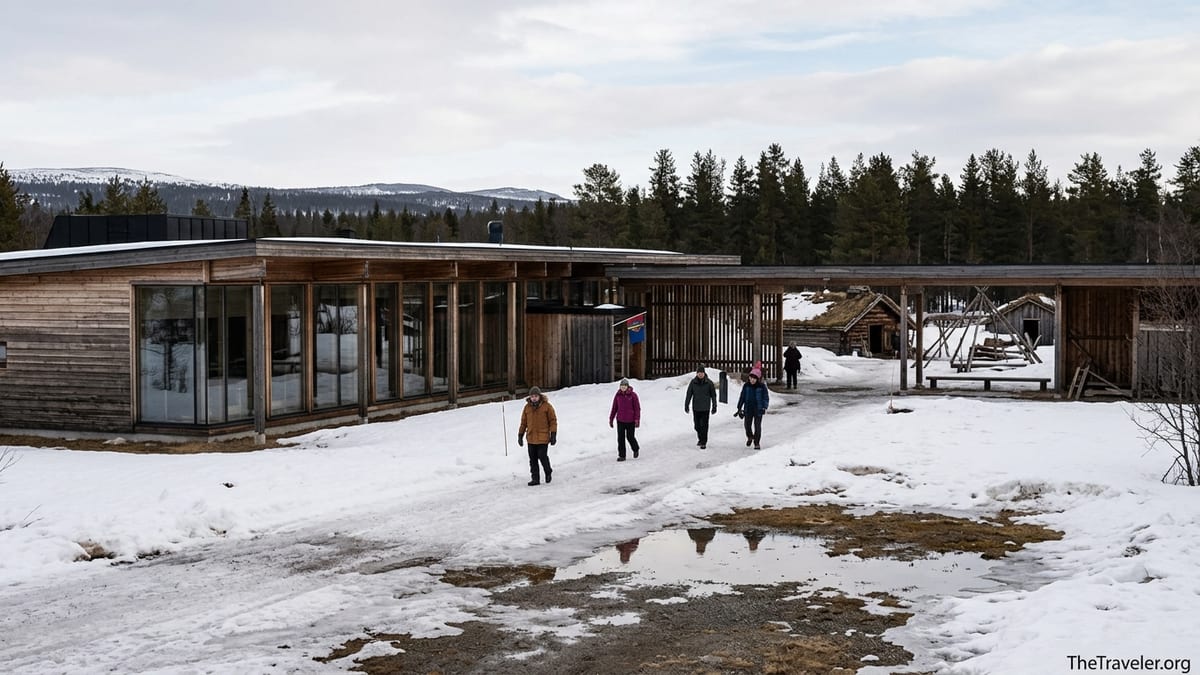
If you enjoy traditional open-air museums and historical reconstructions, the Sámi Museum in Karasjok may speak to you. Its exhibitions typically highlight older forms of housing, tools and clothing, often set in an outdoor landscape of turf huts, wooden storehouses and reindeer-related infrastructure. You might walk between reconstructed dwellings while learning how families moved with their herds or how seasonal fishing and hunting shaped settlement patterns. Labels and explanations tend to focus on material culture and historical continuity.
Siida, by contrast, is curated very much for a modern, international audience, with an emphasis on multimedia. The permanent exhibition “These Lands Are Our Children” weaves together films, soundscapes, archival images and contemporary Sámi voices. You might watch a short documentary of modern reindeer herders discussing climate change, then turn a corner to see centuries-old handicrafts displayed next to contemporary duodji, the Sámi craft tradition. The museum deliberately links the past to current political and environmental questions rather than treating Sámi culture as something frozen in time.
Another important difference is Siida’s integration of nature and culture. You can move from a room explaining how permafrost and lichen support reindeer herding to a gallery that explores spiritual relationships with the land, all within one narrative arc. Information on migratory birds, northern lights and changing snow conditions is presented as a living backdrop to Sámi life, not as a separate tourist curiosity. For many visitors this holistic approach feels more immersive and helps connect what they see in the museum to what they experience outdoors in Lapland.
On a practical level, Siida’s recent renewal means exhibits generally feel newer, with strong visual design, clear English-language texts and an intuitive route through the building. The Karasjok museum is gradually updating parts of its displays, but some sections can feel more traditional or museum-like in the older sense of the word. If interactive screens, contemporary art and dynamic lighting matter to you, Siida has a clear advantage. If you prefer a more low-tech, object-focused environment, Karasjok may be more appealing.
Location, Atmosphere and What You See Outside the Doors
Location is often what decides the choice. Karasjok lies in the interior of Finnmark in northern Norway, a few hours by road from Alta or Lakselv. The landscape here is open tundra and low forest, with a sense of vast space and big skies, especially in winter when snow covers the plateau. Many visitors fold Karasjok into a road trip between Tromsø, the North Cape and the Finnish border. Staying overnight in town puts you close to the Sámi Parliament building, which you can usually visit on a guided tour, and to several local shops specializing in duodji.
Inari sits on the southern shore of Lake Inari in Finnish Lapland, roughly three and a half hours by bus or car from Rovaniemi and about 40 minutes from Ivalo Airport. The atmosphere is different here: more lakes and islands, denser forest, and a compact village that functions as a crossroads between tourism and everyday life. From Siida it is a short walk to the lakeshore, where in summer you might step onto a local cruise boat, and in winter you can see snowmobiles, reindeer sleds and ice-fishing tents scattered across the frozen surface.
If your priority is combining cultural insight with outdoor experiences, Inari is particularly convenient. Within a short drive you have trailheads for Urho Kekkonen and Lemmenjoki National Parks, husky and snowmobile safaris, aurora-viewing areas with minimal light pollution and small-scale reindeer farms that accept visitors. Many local tour operators package a museum visit together with a lake cruise, a reindeer encounter or a northern lights excursion, which means you can structure a full day around Siida without much planning.
Karasjok, on the other hand, has a quieter feel. The village stretches along the river, with clusters of government and media buildings alongside small homes. It is less of an all-in-one tourist hub than Inari, but that can be precisely the attraction for travelers who prefer fewer souvenir shops and more everyday life. Winter nights are very dark, and if you stay in a guesthouse just outside town you may find northern lights overhead with almost no competing light sources. The landscape rewards slow exploration by car, skis or snowshoes rather than a packed schedule of guided activities.
Practicalities: Opening Hours, Prices and Accessibility
For most travelers, opening hours and ticket prices are the first practical differences they notice. Siida’s schedule is straightforward: in summer, typically from early June to late September, it opens every day from morning until early evening, while the winter season runs from autumn to the end of May with slightly shorter hours on weekdays and Saturdays. As of early 2026, an adult ticket is priced in the high teens in euros, with reduced rates for students, seniors and groups, and a modest fee for children aged 7 to 17. Children under school age usually enter free, and family tickets aim to keep costs manageable for two adults with multiple kids.
The Sámi Museum in Karasjok follows a more seasonal pattern, with longer hours in summer when Norwegian and international visitors are most numerous and shorter hours in the dark winter months. Ticket prices are generally comparable to small regional museums in Norway, often slightly higher than in Finland once converted from Norwegian kroner, but still in the range of a casual outing rather than a major budget item. Families driving through Finnmark will typically factor in museum admission alongside fuel and accommodation costs without it dominating the day’s expenses.
Accessibility is an area where Siida’s recent renovation shows. The building is designed with level routes, elevators and wheelchair-accessible facilities, and written information is typically available in Finnish, Northern Sámi and English. Audio-visual material often includes subtitles, and personal assistants for disabled visitors are commonly admitted free. The open-air section, which features traditional dwellings and structures outside, can be more challenging in winter conditions, but the main indoor loop is navigable year-round.
Karasjok’s museum buildings are more varied. Some of the older structures and outdoor exhibits can present obstacles for visitors with mobility challenges, though the main indoor exhibition spaces are generally on one level and staff are accustomed to adapting visits. In both places it is worth emailing ahead if you have specific accessibility needs, particularly if you travel in the shoulder seasons when parts of the grounds might be snow-covered, icy or under maintenance.
Depth of Sámi Cultural Experience
Travelers often ask which museum will give them the “deeper” Sámi experience. The answer depends on what you are looking for. In Karasjok, culture permeates the whole village. Road signs in Sámi, radio broadcasting in Sámi languages and the visible presence of Sámi institutions make the town feel, to many visitors, like an everyday cultural capital. Walking from the museum to the Sámi Parliament, then continuing to a local grocery store where you hear Sámi spoken, can be as instructive as any curated exhibit.
Siida, while more visitor-oriented, uses its national museum status to present a carefully structured overview. You will see how different Sámi language areas map onto the wider region, learn about early colonial policies from the Finnish and Swedish states, and encounter contemporary art that responds to issues such as mining, wind power development and land rights. For many first-time visitors to Sápmi, this broad, clearly presented context makes complex themes more digestible than if they encountered them only through town life or scattered interpretive signs.
Another distinction lies in how each museum brings in contemporary Sámi voices. Siida, especially after its renewal, has worked in partnership with local communities and nature authorities to keep its narratives current. Temporary exhibitions often feature contemporary artists, photographers and filmmakers, and the museum has collaborated with major art institutions elsewhere in Finland. The Karasjok museum, in turn, is part of a regional museum network that focuses on repatriation of Sámi objects, safeguarding traditional knowledge and supporting research. Its exhibits may lean more toward continuity and preservation, but they sit within a living local society where language revitalization and political debates are very much present.
If your time in Sápmi is short and this will be your main structured learning experience, Siida’s comprehensive, bilingual approach is hard to beat. If you are following a longer northern Norway route that already includes cultural stops in places like Kautokeino, Alta or Tromsø, then the Karasjok museum can deepen and localize what you have already picked up, placing objects and stories within the specific context of the Norwegian side of Sápmi.
Which One Fits Your Itinerary and Travel Style?
For a typical visitor starting in Helsinki and heading to Finnish Lapland by overnight train or domestic flight, Siida tends to be the simpler choice. You can fly into Ivalo, catch a bus or shuttle to Inari and walk to the museum from many guesthouses in town. Package tours often include a Siida visit by default, and independent travelers can easily combine it with hiking, snowshoeing or lake activities without renting a car. If you have only two or three days above the Arctic Circle in winter, basing yourself in Inari with one half-day at Siida is a straightforward plan.
Travelers approaching from the Norwegian coast, perhaps arriving by coastal ferry in Honningsvåg or by plane in Alta, may find Karasjok easier to include. The drive across Finnmark is a highlight in itself, especially in late summer when the tundra turns orange and red. Staying a night or two in Karasjok lets you balance museum time with aurora hunting, quiet walks along the river and a visit to the Sámi Parliament building, which often offers guided tours during weekdays.
Your preferred travel style also matters. If you like curated experiences with clear visitor infrastructure, Inari delivers: modern hotels and cabins, well-marked winter trails, established tour operators and a museum designed from day one to speak to an international audience. Budget-conscious travelers will appreciate that Inari offers a range of self-catering cabins and hostel-style rooms within walking distance of Siida, making it easier to keep meal costs down.
If, on the other hand, you seek a slightly rougher, less touristed feel, Karasjok may be more satisfying. There are fewer accommodation options and organized excursions than in major Norwegian coastal hubs, but that can translate into more contact with local life and fewer crowds even in high season. For photographers, the open landscape around Karasjok offers unobstructed northern lights compositions and long views across the plateau, in contrast with the more forested surroundings of Inari.
The Takeaway
So which cultural attraction should you visit, the Sámi Museum in Karasjok or Siida in Inari? If you are looking for a single, well-organized introduction to Sámi culture in Finland, integrated with information on Arctic nature and backed by a recently renewed exhibition, Siida will almost certainly give you more for your limited time. Its location next to Lake Inari, award-winning permanent exhibition and easy access by public transport make it an especially strong choice for first-time visitors and families.
If your journey takes you through northern Norway or you want to experience Sámi life in a village where national institutions, local radio and everyday commerce all operate in Sámi, then Karasjok is an equally valuable option. The museum there may feel more traditional, but it sits at the heart of a living community that has played a central role in modern Sámi politics and cultural revival. Combining a museum visit with a stop at the Sámi Parliament and a stroll through town can leave a lasting impression of Sápmi as a contemporary society, not just a historical subject.
In an ideal world, you would visit both: Siida for its comprehensive overview of Sámi culture and Arctic nature in Finland, and Karasjok for its grounded, village-scale perspective in Norway. If you must choose, let your route, travel style and interests decide. Whichever you pick, go with an open mind, take time to read the exhibit texts rather than rushing through, and remember that you are encountering just one expression of a diverse Indigenous culture that spans four countries and many languages.
FAQ
Q1. Is Siida suitable for a first-time visitor who knows nothing about Sámi culture?
Yes. Siida is designed precisely for visitors who are starting from scratch, with clear explanations in English and Finnish and a permanent exhibition that connects history, daily life and nature in a structured way.
Q2. Do I need a car to visit the Sámi Museum in Karasjok or Siida in Inari?
You can reach Siida without a car by taking a bus or transfer from Ivalo Airport or Rovaniemi to Inari, then walking to the museum. Karasjok is more easily visited with a rental car or as part of a tour, although regional buses do serve the village on certain routes.
Q3. How much time should I plan for each museum visit?
Most travelers find that two to three hours is enough to see the main exhibitions in both museums at a relaxed pace. If you like to read every panel, watch all the short films and explore outdoor sections, you might comfortably spend half a day.
Q4. Are the exhibitions child-friendly?
Both museums are generally welcoming to children. Siida’s multimedia displays, changing light and soundscapes and open-air museum area tend to keep kids engaged, especially when combined with a short walk to the lake. In Karasjok, outdoor structures and traditional dwellings can be fun to explore, though you may need to provide more of the storytelling yourself for younger visitors.
Q5. Can I see contemporary Sámi art at these museums?
Siida frequently hosts temporary exhibitions of contemporary Sámi art and photography alongside its permanent displays. The Karasjok museum also presents art, but in practice you may encounter more current work across multiple venues in town, including galleries and cultural centers associated with Sámi institutions.
Q6. Which museum is better if I am especially interested in Arctic nature?
Siida is the stronger choice for nature-focused travelers, because it combines the Sámi Museum with the Northern Lapland Nature Centre. Exhibitions explain local wildlife, seasonal changes, climate impacts and hiking opportunities in nearby protected areas alongside cultural content.
Q7. Is it possible to visit both museums on the same trip?
Yes, but it requires planning. Driving between Inari and Karasjok typically takes several hours and involves crossing the Finland–Norway border. Many road-trip itineraries through Lapland and Finnmark include both towns over several days, but it is uncommon to see both museums on the same day.
Q8. Are guided tours available in English?
Siida often offers guided tours for pre-booked groups and occasionally for the general public during peak seasons, usually available in English. In Karasjok, the museum can also arrange guided visits, and tours at the nearby Sámi Parliament are commonly conducted in Norwegian and English, sometimes with Sámi as well.
Q9. Can I buy genuine Sámi handicrafts at the museums?
Both museums have shops that prioritize locally made items, including jewelry, textiles and small wooden or horn objects. For higher-end duodji or custom pieces, you may find additional workshops or dedicated craft shops elsewhere in Inari or Karasjok, so it is worth exploring beyond the museum store if you are serious about collecting.
Q10. When is the best season to visit for cultural experiences?
Summer brings longer opening hours, milder weather and festivals across Sápmi, making it a good time for combining museum visits with outdoor activities. Winter, especially from December to March, offers snow-covered landscapes, aurora viewing and reindeer-related experiences, and museum visits become a cozy counterpoint to time spent outdoors in the cold.