


On the shores of Lake Inari in northern Finnish Lapland, the Sámi Museum and Nature Centre Siida is one of the most insightful places in the world to learn about Sámi life, past and present. More than a museum, Siida anchors a wider network of guided tours, open-air exhibits, and cultural activities across Sápmi, from reindeer farms and handicraft workshops to sacred landscapes. With a little planning, you can turn a simple visit into a rich, respectful encounter with Europe’s only Indigenous people.
Get the latest updates straight to your inbox!
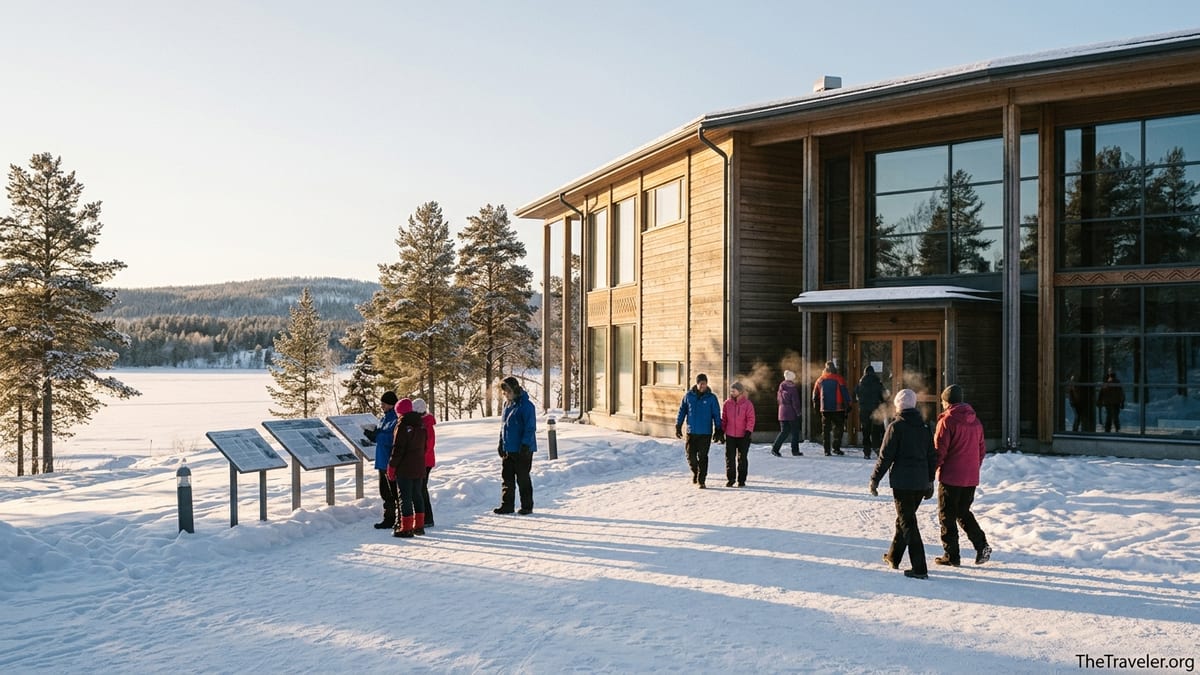
Understanding Siida and the wider Sámi museum landscape
Siida sits in the village of Inari, often described as the capital of Sámi culture in Finland. The museum combines two roles under one roof: it is both the national museum responsible for Sámi culture and the regional museum for the Sámi cultural environment in northernmost Lapland. Its permanent exhibitions weave together archaeology, everyday objects, oral history, and multimedia to show how Sámi communities have adapted to life in the Arctic and sub-Arctic over millennia.
The museum also houses the Northern Lapland Nature Centre, so you can explore cultural history alongside the ecology of fell, forest, and tundra landscapes. Displays on reindeer migration, snow conditions, and seasonal light make it easier to understand why Sámi livelihoods and spirituality are so tightly bound to the environment. This dual focus means that even an unguided visit can feel like a compact introduction to the entire region.
Beyond Siida itself, there are several other important Sámi museums and heritage collections scattered across Sápmi. In Norway, RiddoDuottarMuseat’s Sámi collections in Karasjok focus on traditional architecture, craft, spirituality, and reindeer herding, while Sapmi Park in the same town offers thematic exhibitions and performances that introduce visitors to Sámi stories and music. In Sweden, Ájtte, the Swedish Mountain and Sámi Museum in Jokkmokk plays a similar role, while smaller heritage houses preserve local traditions.
For most travelers, though, Siida is the most accessible starting point. It is served by regional buses and tour transfers from Ivalo, and it sits within walking distance of the Sámi Cultural Centre Sajos and Inari’s lakeshore, making it easy to connect a museum visit with other cultural stops in a single day.
Planning your visit: tickets, timing, and language options
Siida is open year-round with slightly longer hours in the summer high season. As of mid‑2026, adult tickets are typically in the range of 15 to 20 euros, with discounts for students, children, and seniors; family tickets that cover two adults and several children often work out cheaper than buying individually. Prices can change seasonally and when new exhibitions open, so it is worth checking the current rates when you plan your trip.
In winter, guided tours and transfers are frequently bundled into day trips sold through local operators in Ivalo and Inari. One common option includes transport from Ivalo, a guided visit through the main exhibition, and then a short walk or drive to a reindeer farm for feeding, stories around the fire, and a light lunch. These packages often start around 230 to 270 US dollars per person for a six‑hour experience, with warm clothing included for those who do not have Arctic‑grade gear.
Language is rarely a barrier. The core exhibitions at Siida use Finnish, English, and often one or more Sámi languages. Audio guides and printed booklets in additional languages may be available, and many scheduled guided tours run in English. For private tours, you can usually request a specific language when booking through the museum or a local tour company, though this may cost extra or depend on guide availability.
To avoid crowds, aim for the first hour after opening or the late afternoon slot, especially if you visit in December and January when Northern Lights tourism peaks in nearby Ivalo and Saariselkä. In shoulder seasons like late September or early April, you may find yourself almost alone in some galleries, which creates more space for unhurried conversations with guides and staff.
Joining guided tours inside Siida
A self‑guided stroll through the museum is rewarding, but a structured tour with a knowledgeable guide adds crucial context, especially around sensitive topics like assimilation policies, land rights, and cultural revival. Themed tours at Siida may focus on reindeer herding, Sámi dress and handicrafts, or spiritual relationships to the landscape. These typically run 60 to 90 minutes and can be booked for small groups, with per‑group prices often in the low hundreds of euros depending on duration and language.
On a typical introductory tour, your guide might begin with the prehistory section: stone tools from the shores of Lake Inari and early evidence of mobile hunting and fishing communities. You will then move into rooms that show the shift from nomadic and semi‑nomadic lifestyles to more settled villages, with reconstructed goahti (turf huts) and lavvu (tent structures). Seeing these spaces while hearing how families moved with their herds across seasonal pastures makes the exhibits feel far less abstract.
Guides also help decode details that are easy to miss. They might point out how the patterns and colors on gákti, traditional Sámi clothing, signal where the wearer’s family comes from, or explain why certain tools are crafted from bone rather than metal. In the nature galleries, they can connect the diagrams on snow types and ice conditions to real situations faced by herders today, such as how an icy crust after winter rain can prevent reindeer from accessing lichen.
Some tours are tailored to children and families, with scavenger‑hunt style questions, simple language, and more time in interactive sections. If you are traveling with kids, ask in advance whether a family‑friendly or school‑style tour is running during your visit. These often make complex political topics more approachable while still centering Sámi voices.
Exploring open‑air exhibits and satellite heritage sites
In summer, one of the most rewarding parts of a Siida visit lies outdoors. The museum’s open‑air area includes historic buildings and storage structures that have been relocated from around the Sámi homeland. Walking among turf‑roofed huts, storehouses, smoke saunas, and boats gives a tangible sense of how architecture and everyday objects were adapted to long winters and short growing seasons.
Many guided tours combine time inside the main galleries with a circuit through this open‑air section. A guide might demonstrate how a traditional root‑sewn boat was constructed without metal nails, or explain why food was stored in raised buildings to keep it safe from animals and damp. In fine weather, this is also where short storytelling sessions or song demonstrations sometimes take place, especially for group bookings.
Beyond Inari itself, the Sámi Museum operates the Skolt Sámi Heritage House in Sevettijärvi, roughly a couple of hours by road toward the Norwegian border. In summer 2026, the heritage house is scheduled to be open several days a week with free admission, and it showcases Skolt Sámi life through a preserved homestead, storehouse, smoke sauna, and traditional boat. The surrounding open‑air area is accessible year‑round, although paths are not maintained in winter, so snow conditions can affect accessibility.
Other regional experiences complement what you see at Siida. In Norway’s Karasjok, RiddoDuottarMuseat’s collections and the nearby Sapmi Park offer exhibitions and performances focused on northern Sámi culture, while smaller private initiatives like Sami Siida near Tromsø combine a compact museum, storytelling, and reindeer encounters. If you are traveling across borders, weaving several of these stops together helps reveal the diversity within Sámi communities, rather than treating them as a single, uniform culture.
Connecting the museum with reindeer farms and nature experiences
Many travelers choose to pair a visit to Siida with a guided excursion to a reindeer farm. Operators based in Ivalo and Inari often run full‑day programs that start with the museum and continue to a family‑run herding cooperative. Prices for these combined experiences tend to fall between 240 and 300 US dollars per person, including transport, museum admission, and a simple meal such as reindeer stew or vegetarian soup with bread.
At the reindeer farm, you might help feed the animals, sit in a lavvu around a fire, and listen as your host explains how modern herding works in practice. These conversations often cover practical topics like winter grazing challenges, GPS tracking of herds, and negotiations over grazing rights, which link back directly to themes introduced in Siida’s exhibits. In winter, some farms also offer short reindeer sled rides, typically at walking pace and over modest distances to prioritize animal welfare.
Lake Inari itself is an important cultural landscape. In summer, boat tours sometimes depart from near the museum’s harbor area toward Ukko Island, a rocky outcrop that was historically a sacred sacrificial site for local Inari Sámi. Reputable guides frame these visits with care, avoiding trivialization of spiritual practices. You may hear about historical offerings, but you will not find reconstructions of rituals or souvenir stands on the island. When booking, look for operators that emphasize respect and quiet observation rather than spectacle.
Some programs also bundle Siida with light nature activities such as short hikes to kota shelters for coffee cooked over an open fire. In winter, this might be done on snowshoes, while in summer it could be a simple forest walk. These small add‑ons give you a practical sense of how people move, cook, and socialize outdoors in all seasons, grounding the museum’s historical narratives in present‑day life.
Hands‑on cultural activities and handicraft encounters
While Siida itself focuses on exhibitions and interpretation, many visitors want a more tactile connection to Sámi culture. Handicrafts, or duodji, provide one of the most accessible avenues. In the broader Inari and Ivalo area, local businesses and accommodation providers sometimes arrange workshops where you can carve a small pendant from reindeer antler, sew a simple leather key fob, or decorate a wooden butter knife using traditional motifs, often under the guidance of Sámi artisans.
These sessions are typically capped at small group sizes and last two to three hours, with materials included. Prices often fall somewhere between 60 and 120 euros depending on the complexity of the item and the reputation of the maker. Experiences run by local companies in partnership with Sámi craftspeople, including those linked with Aurora‑focused resorts around Ivalo, emphasize natural materials like antler, birch, and wool and explain their cultural significance as part of the workshop.
Outside Finland, initiatives such as Sami Siida in northern Norway integrate a small private museum with activities like lasso practice (on wooden targets, not live animals), joik singing demonstrations, and storytelling about seasonal migrations. Some experiences include a meal of bidos, a traditional reindeer stew, or alternatives based on fish and root vegetables. While these are clearly designed for visitors, choosing small‑scale operations run by local families often results in more nuanced conversations than large bus‑tour venues.
Even if you do not join a workshop, museum shops at Siida and other Sámi institutions are a chance to encounter duodji in everyday objects like cups, knives, belts, and jewelry. Hand‑signed pieces made from natural materials and priced accordingly are far more likely to be authentic than souvenir‑shop items manufactured elsewhere. Staff are usually happy to explain how to recognize genuine Sámi handicrafts and which labels or cooperatives support Indigenous makers.
Visiting respectfully: ethics, authenticity, and what to avoid
As interest in Sámi culture has grown, so has the number of commercial experiences marketing themselves as authentic. Some are deeply rooted in local communities; others are more superficial. One practical way to navigate this is to start with established institutions like Siida, RiddoDuottarMuseat, or Ájtte and ask their staff for recommendations. They often know which local guides and farms prioritize cultural integrity and which focus primarily on volume tourism.
Ethical operators typically emphasize education over entertainment. On their websites and in their briefings, they talk about language preservation, land use debates, and contemporary Sámi life rather than only costumes and sled rides. Group sizes are kept small, and experiences are usually hosted by Sámi people themselves or in direct partnership with Sámi communities. There is also transparency about where your money goes, whether it supports a specific reindeer cooperative, handicraft collective, or youth program.
As a visitor, you can contribute by following a few simple principles. Ask before photographing people, especially children or ceremonial clothing. Listen more than you speak in storytelling sessions, and avoid pressing hosts to share personal political opinions unless they raise those topics themselves. When buying souvenirs, choose items where the maker or cooperative is clearly identified and avoid designs that mock or trivialize traditional symbols.
At the same time, it is important to remember that Sámi communities are not living museums. In places like Inari or Karasjok, many Sámi residents work in schools, shops, and municipal offices and may not identify with tourism at all. Experiences such as Siida’s exhibitions or hosted farm visits are structured spaces where cultural sharing is offered on local terms. Treating everyday streets and supermarkets as a stage for photographing strangers in traditional dress can feel intrusive, even when intentions are good.
The Takeaway
Siida is far more than a rainy‑day diversion on a Lapland holiday. It is a carefully curated space where Sámi people narrate their own history, from ancient hunting camps along Lake Inari to contemporary struggles and revivals in language, art, and land use. When you combine time in the museum with guided tours, outdoor heritage sites, and small‑scale cultural activities, you gain a layered understanding that no single reindeer sled ride can provide.
Thoughtful planning makes a significant difference. Arriving with enough time for a guided tour, connecting your visit with a reindeer farm or handicraft session, and choosing operators who work closely with Sámi communities all help ensure that your curiosity translates into meaningful support. In return, you are more likely to come away with memories of conversations, stories, and landscapes that stay with you long after the Northern Lights fade.
Whether you base yourself in Inari and branch out to places like Sevettijärvi and Karasjok, or fold Siida into a wider itinerary across Sápmi, the key is to approach the experience with patience and respect. Let the museum’s exhibits set the tone, listen closely to the voices you encounter, and give yourself space to reflect. In doing so, you honor both the depth of Sámi culture and the generosity of those who choose to share it.
FAQ
Q1. How much time should I plan for the Sámi Museum Siida?
Most visitors find that two to three hours is enough for the core exhibitions, but if you add a guided tour and the open‑air area, half a day is more comfortable.
Q2. Do I need to book a guided tour at Siida in advance?
For scheduled public tours in high season, advance booking is strongly recommended, and private tours almost always need to be arranged ahead of time, especially for specific languages.
Q3. Are the exhibitions suitable for children?
Yes. Many sections use models, multimedia, and reconstructions that children enjoy, and family‑oriented tours or activity sheets are often available on request.
Q4. Can I combine a visit to Siida with a reindeer experience in one day?
Yes. Several local operators offer day trips from Ivalo or Inari that include museum entry, a guided tour, and a visit to a nearby reindeer farm with a simple meal.
Q5. Is Siida open in winter, and how do I get there in snowy conditions?
Siida is open year‑round, and in winter you can reach it by regional bus, organized transfer, or rental car; roads are maintained, but allow extra time in snowy or icy weather.
Q6. What should I wear when visiting Sámi open‑air museums or reindeer farms?
Dress in layers suitable for Arctic conditions, including a windproof outer layer, hat, gloves, and warm footwear; many tour operators provide extra winter overalls if needed.
Q7. How can I be sure the Sámi experiences I book are respectful and authentic?
Look for experiences linked to recognized institutions such as museums, Sámi cultural centers, or named family herding cooperatives, and prioritize small‑group tours hosted or co‑hosted by Sámi people.
Q8. Are there vegetarian or non‑reindeer food options on cultural tours?
Usually yes. Many tours offer alternatives like vegetable soups or fish dishes, but you should inform the operator of dietary needs when booking so they can prepare accordingly.
Q9. Can I visit the Skolt Sámi Heritage House without a guide?
In summer, you can usually explore the Skolt Sámi Heritage House in Sevettijärvi independently during its opening hours, while the surrounding open‑air area is accessible year‑round, weather permitting.
Q10. Is it appropriate to wear or buy Sámi‑inspired clothing as a visitor?
Buying authentic duodji from Sámi makers is welcomed, but wearing full traditional outfits can be sensitive; many visitors choose smaller items like scarves, jewelry, or accessories that show support without copying ceremonial dress.