


Far above the Arctic Circle in the village of Inari, the Sámi Museum and Nature Centre Siida offers one of the most insightful introductions to Indigenous life in northern Europe. With its renewed permanent exhibition and atmospheric open-air museum, it can easily fill half a day or more. Knowing what to focus on before you arrive will help you make the most of limited time, especially if you are visiting as part of a Lapland road trip or winter tour.
Get the latest updates straight to your inbox!
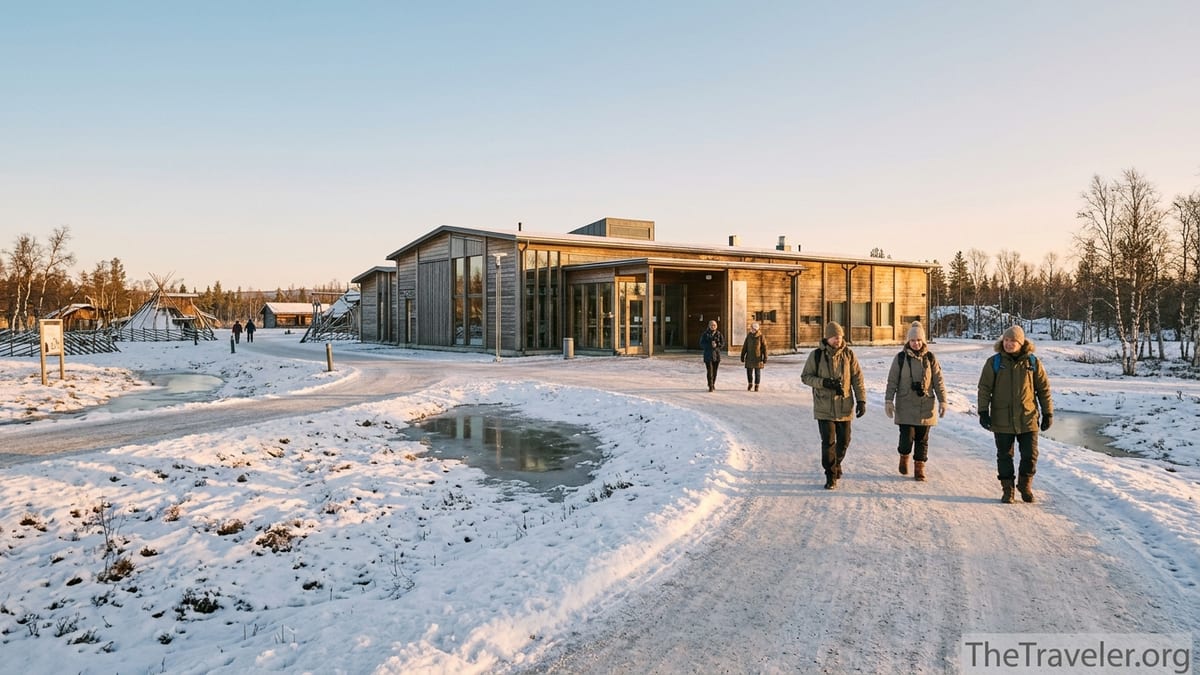
Understanding Siida Before You Go
Most travelers encounter Sámi culture for the first time at Siida in Inari, the main museum dedicated to the Sámi of Finland. The institution is both a cultural history museum and the Northern Lapland Nature Centre, so you will move between stories of people, reindeer and rivers, and in-depth displays on Arctic landscapes and wildlife. Recent renovations and a major exhibition renewal completed in 2022 mean that many reviews and guidebooks published a few years ago are already out of date in terms of layout and themes.
The main building sits a short walk from the lakeshore of Inarijärvi, opposite the village’s hotels and guesthouses. Most visitors arrive on foot from central Inari, or by rental car or Lapland tour bus that stops in the gravel parking area in front of the museum. Plan on at least two to three hours inside if you want to move beyond the surface level, and add another hour if you intend to walk the full open-air museum trail in summer.
Tickets are typically sold at a combined rate for the museum and nature centre, with reduced prices for students and children, and free entry for very young kids. While exact prices change over time, you can expect to pay roughly what you would for a major regional museum elsewhere in Scandinavia. Audioguides and printed information are generally available in English, Finnish and at least one Sámi language; labels in the new permanent exhibition tend to be trilingual, which is particularly helpful if you are traveling with multilingual companions.
Before you step into the galleries, it is worth pausing in the lobby to pick up the floor plan. The permanent exhibition "Enâmeh láá mii párnááh – These lands are our children" occupies the main route through the museum and is the core experience. Temporary exhibitions, the museum shop, restaurant and the door to the open-air museum branch off from this spine, so a quick scan of the map will help you decide where to linger and where to circle back later.
“These Lands Are Our Children”: The Core Exhibition
If you see nothing else at Siida, make time for the main permanent exhibition "Enâmeh láá mii párnááh – These lands are our children." The title comes from a poem by Inari Sámi writer Matti Morottaja and captures the close relationship between the Sámi people and their homeland. The exhibition is organized thematically rather than strictly chronologically, so you move through zones that connect land, language, seasonal movement and contemporary identity instead of marching through dates.
Early in the exhibition, you will encounter displays that explain what Sápmi is: a cultural region spanning parts of Finland, Norway, Sweden and Russia rather than a single nation-state. Large-scale maps and atmospheric landscape photographs anchor the story, while carefully chosen artifacts such as ancestral tools, clothing and fishing gear show how people have lived with tundra, forest and waterways for centuries. Travelers often remark that this section is where they first truly grasp that Sámi culture is diverse and contemporary, not a frozen relic of the past.
Further in, look for the sections on Sámi languages and place names. Exhibits here highlight the fact that several distinct Sámi languages are still spoken, each rooted in specific regions. You might see examples of road signs, children’s books and hymns in Northern Sámi, Inari Sámi and Skolt Sámi, along with listening stations where you can hear pronunciation and songs. For many visitors, especially those traveling with school-age kids, this is an eye-opening reminder that linguistic diversity survives in Europe’s far north despite centuries of assimilation policies.
The exhibition also addresses more difficult chapters, including boarding schools and past attempts to erase Sámi identity. These sections are powerful but measured, making them suitable for thoughtful family visits while still giving adults a clear sense of historical injustice. Photographs, archival letters and testimonies are presented alongside present-day portraits and art, underscoring that today’s Sámi activists, artists and scholars are reshaping how their culture is represented in national museums.
Traditional Dwellings and Everyday Objects
One of the most engaging parts of the museum for many travelers is the focus on traditional living environments. Inside the galleries you will find detailed models and reconstructions of goahti and lavvu, the turf-and-timber and tent-like structures that sheltered families and herders in different seasons. Cross-sections and scale models show how poles, birch bark and peat were layered to keep out wind and snow, while photographs from the early twentieth century depict entire families gathered around hearths.
Nearby cases display household utensils that are both beautiful and practical. Look out for carved wooden kuksa cups, decorated boxes made from birch burl, and reindeer antler handles etched with intricate patterns. Many of these objects fall under the category of duodji, traditional Sámi handicrafts that blend function and artistry. Seeing a coffee scoop carved from a single piece of burl or a knife sheath decorated with geometric designs helps visitors understand why duodji continues to be a living art form sold in modern Sámi craft shops across Lapland.
Fur clothing and footwear exhibits are particularly relevant for travelers who will head out on winter activities after visiting the museum. Displays explain how reindeer fur boots, multi-layered gákti clothing and accessories such as woolen leggings and mittens are assembled to keep wearers warm at temperatures far below freezing. Compared to the synthetic jackets and boots many visitors arrive in, these garments illustrate centuries of trial and error in staying alive and mobile during long polar nights.
Children often gravitate to the hands-on or visually striking items in this part of the museum. Miniature sleds, toy reindeer made from scraps of leather and antler, and simple fishing tools all tell stories of childhood in earlier generations. Parents planning a family visit might find it useful to use these objects as conversation starters, comparing them with today’s digital toys and discussing what it would be like to grow up following reindeer or traveling by boat between lake islands.
The Open-Air Museum Trail
Behind the main building, Siida’s open-air museum brings the indoor stories outside. An approximately 800 meter path, laid out roughly in the shape of a reindeer herder’s lasso, winds through almost fifty historic buildings and structures relocated from across the region. This area is typically open from late spring through autumn, and visiting it can feel like stepping into a living landscape of older Sámi lifeways.
The heart of the outdoor area is Tirro farm, a cluster of log buildings that illustrates the lifestyle of so-called "house-dwelling" Sámi in the 19th century. Here you can walk between a main dwelling, storage buildings and sheds, and imagine how families combined small-scale farming, fishing and reindeer keeping. While interiors are not always open to enter, peeking through doorways reveals details like stacked wooden dishes, hanging nets and traditional cradles.
Elsewhere along the trail, you will encounter reconstructed kotas, turf huts and various types of storage structures raised high on stilts to keep out animals. Simple wooden information panels explain what each building was used for and which Sámi group it represents. The lack of flashy digital screens outdoors encourages a slower pace: visitors pause to listen to the wind, study tool marks in the logs and notice how structures are oriented against prevailing weather, learning as much from the environment as from text.
Because the path is unpaved in places and can be snowy or muddy depending on the season, sturdy footwear is essential. In early summer, expect mosquitoes in the wooded sections; many locals carry a small bottle of repellent in a pocket. Photographers should plan for at least 45 to 60 minutes if they wish to capture details like smoke-blackened rafters or lichen-covered roofs without rushing back to the indoor galleries before closing time.
Reindeer, Seasons and the Arctic Environment
Reindeer husbandry is one of the threads that connect many of Siida’s exhibits, and it is also a key reason travelers come to Lapland, whether for a short sleigh ride near a resort or a multi-day trip to a herding cooperative. Inside the permanent exhibition, look for sections that explain the seasonal cycle of migration and work, showing how families once moved with their herds between winter forests and summer grazing grounds. Large wall graphics, traditional herding tools and archival photographs help demystify what can otherwise be reduced to tourist imagery of antlered animals in the snow.
These cultural displays flow naturally into the Northern Lapland Nature Centre’s sections on Arctic ecosystems. Here you will see dioramas and specimens of animals such as ptarmigan, wolverine and Arctic fox, as well as detailed information on how climate change is affecting snow conditions, vegetation and reindeer pastures. Travelers planning winter safaris or autumn hiking trips will find this particularly useful background, since it explains why ice and snow are becoming less predictable and how that impacts both tourism and traditional livelihoods.
The museum does not shy away from complex environmental issues. Panels discuss, in accessible language, how large infrastructure projects, forestry and mining concessions can fragment reindeer grazing areas. For visitors who might later drive past clear-cut forests or wind farms in northern Finland, these exhibits offer context and encourage more mindful choices, such as staying on marked snowmobile routes and supporting tour companies that work with local herding communities.
Families traveling with older children or teenagers often appreciate the tangible way these sections link schoolbook topics like climate change and Indigenous rights to a specific place they are standing in. After looking at graphs and maps inside, stepping out onto the lakeshore or the open-air museum trail and feeling the wind or early thaw underfoot tends to make the concepts far more real than any classroom lesson.
Duodji, Contemporary Art and Restitution Stories
Beyond historical artifacts, Siida showcases living culture through duodji and contemporary art. In dedicated cases and rotating displays you will find modern interpretations of traditional forms: silver jewelry with motifs inspired by rivers and mountains, brightly colored gákti dresses designed for both ceremony and everyday wear, and knives crafted by today’s master artisans. Many of the pieces are created by Sámi artists working in Finland and neighboring countries, and their biographies are often highlighted on labels.
The museum shop extends this experience into the realm of responsible purchasing. While some items are standard postcards and books, there is usually a selection of authentic duodji produced by Sámi craftspeople, from small beadwork pieces to higher-priced silver brooches. Prices vary widely, but even a modest purchase such as a handwoven wristband or a booklet of Sámi poetry can be a meaningful way to support local creators rather than buying generic souvenirs elsewhere.
In recent years, Siida has also been involved in restitution and repatriation efforts, in which Sámi cultural items held in national collections are returned to Sámi care. Exhibitions such as the "Homecoming" presentation in cooperation with the National Museum of Finland have explored the emotional and political dimensions of these returns. While specific displays change over time, you may encounter sections that explain how drums, ceremonial items and everyday objects collected in earlier eras are being catalogued, returned and reinterpreted in partnership with Sámi communities.
For travelers, these stories offer a chance to reflect on what it means to visit an Indigenous museum in the 21st century. Rather than treating objects as anonymous curiosities, Siida invites visitors to see them as part of ongoing family histories and community debates. If you are curious about this aspect, it is worth asking at the front desk whether any current temporary exhibitions touch on restitution or contemporary art, as these often provide some of the museum’s most thought-provoking moments.
Planning Your Visit: Practical Tips and Timing
Timing your visit can significantly shape your experience of Siida. In winter, particularly from December to March, many travelers arrive on day trips from Rovaniemi, Saariselkä or other Lapland hubs, combining the museum with activities like husky sledding or aurora hunting. Short daylight hours mean that it is often wise to visit the museum in the early afternoon, when you may appreciate the warm interior lighting and then step outside into blue twilight over frozen Lake Inari.
In summer, the midnight sun season from roughly June to July brings long days and milder weather. This is the ideal time to explore the entire open-air museum trail without rushing, and to combine your visit with a boat tour on Lake Inari or a hike on nearby nature trails. Crowds tend to be modest compared to major European museums, but late morning and early afternoon are still the busiest times, especially on days when cruise-style bus tours arrive.
Plan your budget to include at least a drink or snack at the on-site restaurant or café, which offers a chance to taste ingredients such as reindeer, lake fish or local berries depending on the menu of the day. Prices are in line with other Lapland eateries, so a light lunch and coffee might cost roughly what you would pay in a Helsinki café. The museum shop is also easy to lose time in, so factor in 20 to 30 minutes if you intend to browse books, crafts and children’s items.
Finally, consider pairing your museum visit with other Sámi-led experiences in the region. Local companies in and around Inari offer guided reindeer farm visits, storytelling evenings and handicraft workshops, many of them run by Sámi families. Spending a morning at Siida and an afternoon meeting herders on their own terms can give a far more rounded understanding of life in Sápmi than either activity on its own.
The Takeaway
Visiting the Sámi Museum and Nature Centre Siida is one of the most rewarding ways to deepen your understanding of northern Finland beyond the usual images of snow and northern lights. By focusing on a few key areas, you can ensure that even a short stop becomes a meaningful encounter with Indigenous culture rather than a quick photo opportunity.
Make sure you allow enough time for the "These lands are our children" exhibition, where layered stories of land, language and identity come together. Seek out the sections on dwellings, duodji and reindeer, which connect directly to the landscapes and activities you are likely to experience elsewhere in Lapland. If the season permits, walk the open-air museum trail to feel how architecture, weather and daily work shape each other in this subarctic environment.
Perhaps most importantly, remember that Siida is part of a living cultural landscape, not just a building full of objects. Treat your visit as the beginning of a longer conversation: ask questions, support Sámi makers in the shop, and carry the context you gain here into the rest of your travels across Sápmi. In doing so, you will not only enrich your own trip but also contribute, in a small but real way, to the respect and visibility of Sámi perspectives in the Arctic.
FAQ
Q1. Where is the Sámi Museum Siida located and how do I get there?
The museum is in the village of Inari in northern Finland. Most visitors arrive by rental car, regional bus from towns like Rovaniemi or Ivalo, or as part of organized Lapland tours.
Q2. How much time should I plan for a visit to Siida?
Plan at least two to three hours for the indoor exhibitions and an additional hour if you want to walk the full open-air museum trail during the summer season.
Q3. Is Siida suitable for children and families?
Yes. Hands-on elements, models of dwellings, animal exhibits and the open-air museum make it engaging for school-age children, while clear texts help adults go deeper.
Q4. Can I visit the open-air museum in winter?
The open-air area is usually fully accessible in the snow-free months. In winter, access may be limited or paths may be snowy and slippery, so check conditions when you arrive.
Q5. Are exhibits and information available in English?
Most key texts are provided in English and Finnish, and often in at least one Sámi language. Staff at the ticket desk also generally speak English and can answer questions.
Q6. Is photography allowed inside the museum?
Photography is usually permitted for personal use in most areas, but restrictions may apply to certain sensitive objects or temporary exhibitions. Look for signs or ask staff.
Q7. Does the museum have a café or restaurant?
Yes. There is an on-site café or restaurant where you can buy drinks, snacks and light meals, often featuring local ingredients such as reindeer or lake fish.
Q8. Do I need to book tickets in advance?
Outside of peak holiday periods, you can usually buy tickets on arrival. During busy winter and summer weeks, advanced booking may save time, especially for groups.
Q9. Is Siida accessible for visitors with reduced mobility?
The main indoor exhibitions are generally accessible by elevator or ramps, though some parts of the open-air museum have uneven paths that can be challenging.
Q10. Can I buy authentic Sámi handicrafts at the museum?
Yes. The museum shop typically sells duodji and other items made by Sámi artisans, along with books, music and souvenirs that reflect local culture.