


Tokyo has one of the world’s most intimidating reputations when it comes to travel costs. For many visitors, the name alone conjures images of sky-high hotel bills, eye-watering sushi prices and subway systems that seem like they belong to a billionaire city. Yet when you look closely at what you actually pay day to day, the picture is far more nuanced and, for many travelers, surprisingly gentle on the wallet.
The weak yen in recent years has made Japan cheaper in relative terms for visitors from North America and Europe, even as local inflation and record visitor numbers have pushed up certain prices. The result is a city where accommodation can be genuinely expensive, while a bowl of excellent ramen still costs less than a coffee and sandwich in many Western capitals. Understanding this split is the key to planning a Tokyo trip that feels comfortable rather than financially stressful.
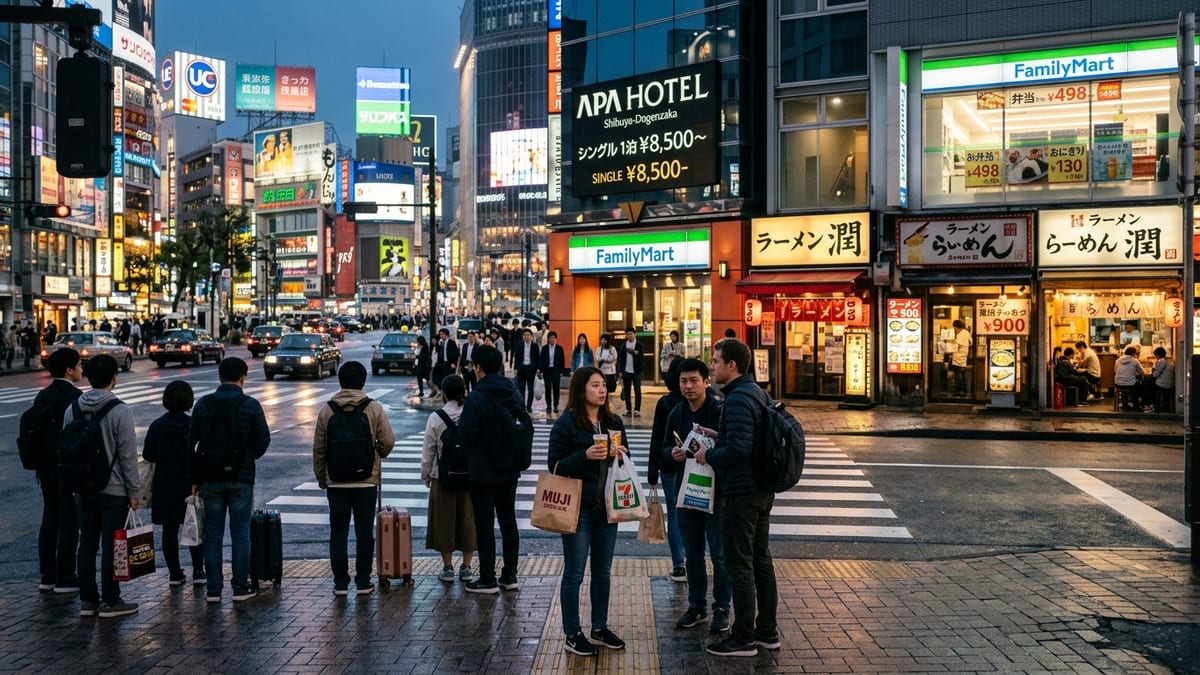
Why Tokyo Feels Expensive At First
The first sticker shock most people experience in Tokyo is accommodation. Mid-range hotel rooms in central areas such as Shinjuku, Shibuya or Ginza now often start around 18,000 to 25,000 yen per night for a standard double, and it is easy to see prices climb above 30,000 yen in busy seasons. When you convert that into dollars or euros, it can feel comparable to London, New York or Paris, especially if you are looking at well-known international brands.
Another early jolt comes from transit passes and long-distance travel. A single Tokyo Metro ride can look complex because the fare depends on distance, and travelers see a maze of numbers instead of a simple flat price. A JR rail pass for cross-country trips, or a one-day unlimited subway ticket, can run into several thousand yen and may feel steep when purchased in one go, particularly compared to tap-and-go daily caps in some Western cities.
The city’s glossy image also plays a role in perceived cost. Sleek department stores in Shinjuku and Shibuya, high-end sushi counters that charge tens of thousands of yen per person, and perfectly packaged snacks in basement food halls all signal luxury, even when there are cheaper options nearby. Visitors tend to notice the polished, premium side of Tokyo first, especially if they start their trip in dense, neon-filled central districts.
Finally, the way prices are displayed can create a sense of complexity that reads as “expensive.” Train maps have detailed fare charts, restaurant menus may show multiple course set options, and capsule hotels sometimes advertise by the hour or by the night. Until you get used to the numbers and the exchange rate, it is easy to overestimate how much you are really spending.
What Actually Costs More Than Expected
Accommodation is the single category where Tokyo genuinely feels expensive by global standards, especially in popular central neighborhoods. Recent years have seen hotel prices rise sharply, with average mid-range rooms often exceeding 20,000 yen per night. Business hotels that once felt like bargains now regularly charge what used to be considered upscale rates, particularly around weekends, cherry blossom season and autumn foliage.
Space is at a premium in Tokyo, and that affects what you get for your money. A room in a Shibuya business hotel for 20,000 yen might be just 15 to 18 square meters, with a compact bathroom and limited storage. For travelers coming from the United States or parts of Europe where mid-range hotel rooms are larger, the combination of high price and modest size can feel like poor value, even if the room is spotless and well equipped.
Some types of dining can also be more expensive than many visitors expect. High-end omakase sushi counters, wagyu tasting menus and kaiseki dinners commonly start around 15,000 to 30,000 yen per person, with the most coveted seats going far higher. Even mid-level sit-down meals in tourist-heavy parts of Asakusa or around Shibuya Crossing can easily reach 3,000 to 4,000 yen per person once you add drinks and dessert, especially at restaurants that primarily target visitors.
Alcohol and specialty coffee are other areas where costs add up quietly. A craft cocktail in a stylish bar in Shinjuku or Roppongi often runs 1,200 to 1,800 yen, and cover charges in some bars or jazz spots can add several hundred yen per person on top. Third-wave coffee shops in trendy neighborhoods such as Daikanyama or Shimokitazawa frequently charge 600 to 800 yen for a latte, which begins to resemble prices in major Western cities.
Where Tokyo Offers Surprising Value
Food is where many travelers realize Tokyo is not nearly as expensive as they feared. A hearty bowl of ramen at a local chain such as Ichiran or at a small neighborhood shop typically costs around 900 to 1,200 yen, and a filling set lunch of grilled fish or tonkatsu with rice, miso soup and pickles in a casual restaurant often falls in a similar range. Simple but satisfying conveyor belt sushi chains offer plates starting at around 120 to 200 yen each, which means a casual sushi meal can come in under 1,500 yen if you are moderate.
Convenience stores are another revelation. At a 7-Eleven, FamilyMart or Lawson, you can pick up an onigiri rice ball for roughly 150 to 200 yen, a freshly made sandwich for 300 to 400 yen, and a hot coffee for about 150 to 250 yen. Putting together a quick breakfast or light lunch can easily stay under 600 or 700 yen, with food quality that many visitors find superior to budget options at home. For travelers used to paying several times that amount for a basic takeaway meal, the value is striking.
Everyday public transport also offers very strong value when you look at cost versus coverage and reliability. A typical subway ride within central Tokyo often falls in the 180 to 260 yen range, and rechargeable IC cards make payment seamless. Considering the frequency, cleanliness and reach of the network, paying the equivalent of only a few dollars for cross-city travel starts to feel like a bargain, especially compared with taxi fares or ride-hailing costs in many Western cities.
Many cultural experiences are either low cost or completely free. Major Shinto shrines and Buddhist temples such as Meiji Jingu or Sensoji do not charge for entry to the main grounds, and even paid observation decks and museums often stay under 2,000 yen. Neighborhood wandering in places like Yanaka Ginza, Kichijoji or Nakameguro costs nothing beyond a train fare and the occasional snack, yet often becomes the most memorable part of a Tokyo trip.
Why The Perception Gap Exists
A large part of Tokyo’s “expensive” image comes from its long-term reputation rather than current reality. In the 1980s and 1990s, Japan was frequently described as one of the most expensive countries in the world, and stories about 1,000 yen apples or sky-high land prices stuck in the global imagination. Many travelers still carry that narrative, even though currency shifts and changes in global living costs have altered the picture dramatically.
Exchange rates create another layer of confusion. With the yen relatively weak against the dollar and euro in recent years, someone from New York or Berlin may find that restaurant meals and city transport feel cheaper in Tokyo than at home. At the same time, they are booking hotels that are priced in yen but displayed in their own currency on international platforms, which makes the accommodation line item stand out as particularly painful.
Cultural differences in pricing also affect how value is perceived. In Tokyo, there is a strong emphasis on quality and consistency in even the most ordinary shops and restaurants. A 1,000 yen set meal in a no-name neighborhood diner often has careful seasoning, balanced portions and freshly cooked rice, which would typically command a higher price in many Western cities. Visitors sometimes interpret the low price as “cheap” in the sense of low quality until they actually taste the food.
Finally, tourist behavior tends to skew the spending picture. Many first-time visitors concentrate their hotel searches in ultra-central, heavily marketed areas like Shibuya or around Tokyo Station, choose globally familiar restaurant brands, and focus on headline attractions. This naturally leads to higher bills. Travelers who are willing to stay one or two train stops away from the main hubs, eat where office workers and students eat, and look for neighborhood-level attractions often experience a far more affordable Tokyo.
What A Realistic Daily Budget Feels Like
For a budget-minded traveler staying in a hostel or very simple business hotel, a realistic daily spend often feels surprisingly manageable. You might pay around 6,000 to 9,000 yen per night for a bed or basic room if you avoid the most in-demand neighborhoods and book ahead. Breakfast can come from a convenience store for a few hundred yen, lunch might be a ramen bowl or curry rice for under 1,000 yen, and dinner at an izakaya sharing small plates could land around 1,500 to 2,000 yen if you keep drinks modest.
Add in daily transport costs of perhaps 600 to 1,000 yen for a handful of subway or JR rides, and a paid attraction or two at roughly 1,000 to 2,000 yen each on days when you choose to visit something specific. On a typical sightseeing day, this kind of traveler might find themselves spending in the ballpark of 10,000 to 13,000 yen, not counting major shopping or nightlife splurges. The day feels active and full rather than constrained, as long as you consciously avoid premium dining and late-night bar hopping every evening.
A mid-range traveler who prefers a comfortable business hotel or small boutique property in a central but not ultra-luxury area might be paying 18,000 to 25,000 yen per night. Meals shift toward sit-down restaurants and cafes, with a hotel breakfast or local coffee shop in the morning, a 1,200 to 1,800 yen lunch set, and an evening meal that can run 2,000 to 3,000 yen with a drink or dessert. This visitor is more likely to buy a few mid-priced souvenirs, pay for observation decks, and perhaps take a short day trip on a private railway.
For this style, daily spending excluding accommodation often feels like 8,000 to 15,000 yen, depending on how many paid attractions, drinks and shopping stops you build in. When combined with hotel costs, the all-in daily total typically sits somewhere between 25,000 and 40,000 yen. The city feels comfortable and enjoyable rather than cheap, but those who come from other major global cities frequently comment that they get excellent food and reliable services for what they pay.
Luxury travelers who favor international five-star brands in central Tokyo, frequent taxis, high-end omakase meals and private experiences can easily spend far more. A single dinner can reach the same level as an entire day’s budget for a more frugal visitor, especially once wine or sake pairings are included. In that sense, Tokyo is similar to other global capitals: spending can scale almost without limit if you consistently choose premium options, but day-to-day essentials do not have to be costly.
How To Read Tokyo Prices Like A Local
One of the most useful skills you can bring to Tokyo is the ability to quickly judge whether a price reflects local value or tourist mark-up. A busy ramen shop near a commuter station charging around 900 to 1,100 yen for a bowl is in the local comfort zone, especially if you see office workers eating alone at the counter. A restaurant two blocks from a major temple advertising “special set menus” for 3,000 to 4,000 yen with multiple languages on the sign is clearly aiming at visitors and pricing accordingly.
The same principle applies to coffee and snacks. A convenience store coffee for around 150 to 200 yen or a bakery pastry for 200 to 300 yen fits the everyday local pattern, while a themed cafe near Akihabara or Harajuku charging 900 to 1,200 yen for a drink is selling an experience more than just the beverage. Neither is inherently bad value, but understanding the difference helps you spend intentionally instead of drifting into higher prices by default.
When you look at transport, think in terms of total daily movement rather than each individual fare. If you ride the subway four or five times in a day at around 200 yen per trip, the total outlay of roughly 800 to 1,000 yen feels reasonable given how much ground you can cover. Compare that to taking two short taxi rides in central Tokyo, where each ride can easily start around 500 to 700 yen before distance charges, and the value calculation becomes clearer.
Accommodation is where thinking one step beyond the obvious locations pays off. A compact business hotel near a slightly quieter station on the Yamanote Line, or in neighborhoods like Kinshicho or Otsuka, often offers better room rates than highly marketed areas while staying very convenient. If you treat “being on a useful train line” as more important than “being in the most famous district,” Tokyo’s accommodation prices start to feel more flexible and less intimidating.
FAQ
Q1: Is Tokyo more expensive than other major cities like New York or London?
In practice, many visitors from New York, London or other large Western cities find that accommodation costs in central Tokyo are comparable while food and public transport often feel cheaper. High-end experiences can match or exceed prices in those cities, but everyday meals and subway rides tend to be notably more affordable, especially when the exchange rate is favorable.
Q2: How much should I budget per day in Tokyo on a tight budget?
A traveler staying in a hostel or very basic hotel, eating mainly at convenience stores, ramen shops and casual diners, and focusing on free or low-cost attractions can often keep daily spending around 10,000 to 13,000 yen. This assumes moderate use of public transport, minimal alcohol and limited shopping, but still allows for varied and enjoyable days in the city.
Q3: Why are Tokyo hotel rooms so expensive and small?
Tokyo has extremely high land values and limited space, particularly in central districts, which pushes developers toward compact room designs and drives up prices. At the same time, strong demand from both domestic and international travelers means that even small, efficiently designed rooms in convenient areas command high nightly rates, especially during busy seasons.
Q4: Is food in Tokyo really as cheap as people say?
Food in Tokyo is not universally cheap, but many everyday options are excellent value for money compared with equivalent quality in Western cities. Simple dishes like ramen, curry rice, donburi bowls, set lunches and convenience store meals are relatively low cost while offering high quality ingredients and care in preparation, which makes overall food spending feel very reasonable when you choose these options frequently.
Q5: Are Tokyo transport costs high for tourists?
Individual subway and train fares in Tokyo are distance-based, which can appear complicated at first glance, but the actual prices for typical rides are modest. Most visitors find that they spend less per day on city transport than they would using taxis or ride-hailing apps back home, especially because the rail network allows you to cross large distances quickly without needing more expensive options.
Q6: Do I need a rail pass just for Tokyo?
For most visitors, a long-distance rail pass designed for nationwide travel is not necessary if you are staying only in Tokyo and taking short day trips. A rechargeable IC card such as Suica or Pasmo, or a one-day subway pass on days with heavy sightseeing, typically offers better value within the city than a more expensive nationwide pass that you will not fully use.
Q7: Which parts of a Tokyo trip are easiest to overspend on?
Travelers most often overspend on accommodation in ultra-central districts, on high-end dining such as omakase sushi or wagyu courses, and on nightlife that combines cocktails with cover charges. Shopping in department stores and themed attractions can also push budgets higher if you treat every stop as an opportunity for souvenirs rather than choosing a few meaningful purchases.
Q8: Can I enjoy Tokyo on a very low budget without feeling deprived?
Yes, if you are willing to stay in hostels or budget business hotels, eat mainly at local diners and convenience stores, and prioritize free neighborhood wandering over paid attractions, Tokyo can be deeply enjoyable on a modest budget. The city’s safety, abundant public spaces and rich street life mean that you can have vivid experiences simply by walking, people-watching and exploring local food without spending heavily.
Q9: Are convenience store meals in Tokyo actually good quality?
Convenience store food in Tokyo is widely considered to be of surprisingly high quality, especially compared with typical convenience offerings in many other countries. Items like onigiri, bento boxes, sandwiches and salads are refreshed frequently, and many travelers find that these meals are fresh, tasty and balanced enough to rely on for at least one meal per day without feeling like they are compromising.
Q10: When during the year are Tokyo prices highest for travelers?
Hotel rates and airfares tend to be highest during cherry blossom season in late March and early April, during Golden Week holidays in late April and early May, and again in the peak of autumn foliage around November. Visiting in the shoulder periods around these peaks, or in less busy months like late January or early February, often results in noticeably lower accommodation prices while still allowing a full Tokyo experience.