


More news on this day
Japan’s Mitsui Ocean Cruises has confirmed that its new 458 guest luxury ship, Mitsui Ocean Sakura, will be named and enter service as a Japanese flagged vessel in September 2026, with inaugural sailings from Yokohama designed to reach smaller ports and remote islands that larger cruise ships cannot access, a development that materially expands higher end cruise options around Japan’s coastline for international and domestic travelers.
Get the latest news straight to your inbox!
The Confirmed Launch: Dates, Ship Details and Fleet Strategy
Mitsui O.S.K. Lines, through its subsidiary MOL Cruises, has formally scheduled Mitsui Ocean Sakura to begin commercial service in September 2026, following a naming ceremony in Yokohama on 16 September and a debut voyage currently scheduled from Yokohama on 19 September 2026. Company materials describe the vessel as a Japanese flagged ship operated under the Mitsui Ocean Cruises brand, joining Mitsui Ocean Fuji to create a two ship luxury fleet dedicated to Japanese itineraries.
Official specifications indicate that Mitsui Ocean Sakura is a compact all suite ship of about 32,477 gross tons with capacity for approximately 458 guests. The ship is being introduced as the successor to long serving Japanese cruise vessel Nippon Maru, which MOL says will retire from service in May 2026 before Sakura enters service under the Japanese flag in September. The transition is intended to keep Mitsui’s cruise offering focused on relatively small ships while modernizing onboard facilities and accommodations.
Mitsui Ocean Fuji, a sister ship of similar size, began operating Japan focused cruises for Mitsui Ocean Cruises in December 2024, after being acquired and refurbished. With Fuji already in service and Sakura due to follow, Mitsui is shifting from a single ship operation to a small dedicated fleet, which allows more continuous deployment around Japan while individual ships undertake maintenance or repositioning. The cruise brand is marketed domestically and overseas as offering a “beautiful Japanese cruise experience” with a relatively intimate scale compared with large international mega ships.
Itineraries Built Around Smaller Ports and Remote Islands
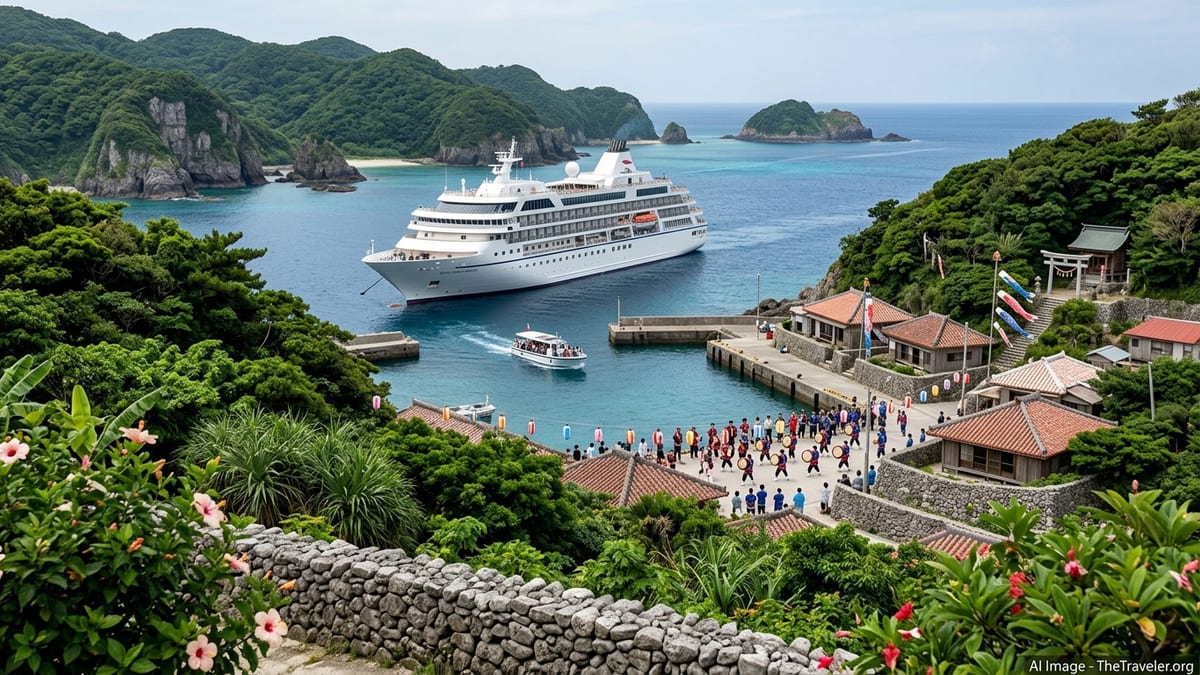
The central operational change for travelers is Mitsui’s plan to use Mitsui Ocean Sakura’s sub 200 meter length to call at ports that are too small or shallow for standard large cruise vessels. Corporate statements highlight that Sakura, like Nippon Maru before it and like Mitsui Ocean Fuji today, is intended to visit a mix of large and small Japanese ports, explicitly including remote islands in Okinawa and Hokkaido. Japan’s national tourism organization similarly describes Mitsui’s two ship fleet as using compact hulls to open up a wider variety of itineraries.
In practice, that means itineraries are being planned that combine major gateways such as Yokohama or Kobe with smaller island or regional ports where cruise infrastructure is limited. Mitsui has indicated that Sakura’s program will focus on short and medium length cruises that both depart from and return to various Japanese ports, rather than long, around the world style voyages. The line has flagged themes such as seasonal festivals, cherry blossom viewing, fireworks, regional cuisine and local music as organizing principles for many sailings.
Press materials for the new ship further state that Sakura is intended to offer cruises featuring local festivals and events along the Japanese archipelago, with calls at islands in the Ryukyu chain and northern waters around Hokkaido. Detailed day by day itineraries for Mitsui Ocean Sakura’s first full season from 2027 onward have been prepared and, according to the company, are to be sold alongside Mitsui Ocean Fuji’s schedules, giving travelers a choice of routes and dates within a broadly similar luxury concept.
Onboard Concept: Japanese Flag, Suites and New Facilities
Mitsui Ocean Cruises presents Mitsui Ocean Sakura as an evolution of the design used on Mitsui Ocean Fuji, with every stateroom described as an oceanfront suite and public spaces oriented around Japanese aesthetics and hospitality. Company descriptions emphasize the idea of “Funatabi” or a “beautiful Japanese cruise,” combining traditional motifs with contemporary interiors, and position the ship for travelers seeking an upscale but not ultra formal environment.
Compared with Fuji, Sakura is set to introduce at least two notable new features: a dedicated sushi bar named Shiosai and an outdoor foot bath integrated into the main pool area. These facilities are highlighted in both Japanese and English language materials as differentiators that respond to strong interest in Japanese wellness and dining experiences among both domestic and overseas guests. Otherwise, Sakura’s layout is expected to broadly mirror Fuji’s, including multiple restaurants, lounges and entertainment spaces sized for fewer than 500 passengers.
Marketing documents and independent cruise reviews of Fuji indicate that the ship class is positioned as a small luxury product rather than a mass market vessel, with suites significantly larger than typical cruise ship cabins and with a service style rooted in Japanese omotenashi hospitality traditions. For travelers, that suggests a quieter onboard atmosphere and less crowding than on the large foreign flagged ships that regularly visit Japan, at the cost of generally higher fares per night.
What Changes for Travelers: Access, Booking Timeline and Practical Limits
For prospective passengers, the single most concrete change is the addition of several hundred luxury berths focused almost entirely on Japanese coastal cruising from late 2026 onward, plus a broader spread of departure ports over time as Sakura joins Mitsui Ocean Fuji. Travelers who previously relied on foreign operators for Japan focused sailings will gain another domestically based, Japanese flagged option that spends most of the year in Japanese waters and can reach ports not commonly visited by large international lines.
Official English language announcements specify that Mitsui Ocean Sakura’s initial itineraries were due to be announced and offered for sale in early 2026, with the debut voyage from Yokohama on 19 September 2026 acting as a starting point. The line has subsequently published itineraries extending into 2027 for both Fuji and Sakura. This means that, as of late 2026, travelers can already search and book specific sailings for the ship’s first full calendar year, although availability and pricing vary by departure date and cabin category.
Potential passengers should also note several limitations. First, as a small luxury ship, Mitsui Ocean Sakura carries far fewer guests than a mainstream vessel, which can restrict last minute availability, especially on itineraries that include rare remote island calls or coincide with major Japanese festivals. Second, some information around exact port combinations and shore excursion details on remote islands may only be finalized closer to departure, reflecting local port capacity and weather considerations in exposed island regions. Finally, while the new ship increases capacity in Japan’s premium cruise segment, it does not guarantee lower prices; instead, it broadens the choice of upscale, Japan centric itineraries available to travelers willing to pay for a more intimate ship and access to lesser visited islands.
Next Steps: Timeline Through 2027 and What Travelers Should Watch
Looking ahead, Mitsui’s published plan is for Nippon Maru to complete its final cruise season and retire from regular service in May 2026, for Mitsui Ocean Fuji to continue operating as the company’s primary ship in the intervening months, and for Mitsui Ocean Sakura to officially enter commercial service in September 2026 following her Yokohama naming events. From that point, Mitsui Ocean Cruises intends to operate a two ship program, with both Fuji and Sakura deployed on Japanese routes and sharing port calls, depending on seasonal themes and maintenance schedules.
For travelers considering bookings, the key milestones are the confirmation of Sakura’s inaugural and early voyages, the publication of detailed itineraries into 2027 and beyond, and any subsequent adjustments Mitsui may make in response to demand, port capacity or regulatory conditions. Because smaller Japanese ports and island harbors can be weather sensitive and subject to local constraints, itineraries that feature multiple remote calls may see port substitutions or timing changes announced closer to departure. Passengers interested in specific islands or regional festivals should therefore check the latest itinerary updates and any advisories from Mitsui Ocean Cruises before locking in travel arrangements such as international flights.
If Mitsui Ocean Sakura’s initial seasons attract strong demand, additional sailings featuring remote islands in Okinawa and Hokkaido, or shoulder season festival themed cruises, could be added in subsequent years. That remains a possibility rather than a confirmed program, but the company’s published materials and the design of the ship make clear that using Sakura’s compact size to reach smaller Japanese ports is a core part of its long term strategy. For now, the verified development for travelers is the launch of a new, small luxury ship under the Japanese flag from September 2026, offering bookable itineraries that include ports beyond the usual big city cruise calls.