


More news on this day
Seasonal schedule changes by Qantas and its transpacific partners are converging with a packed calendar of winter festivals across the United States, altering how and where international visitors experience the colder months.
Get the latest news straight to your inbox!
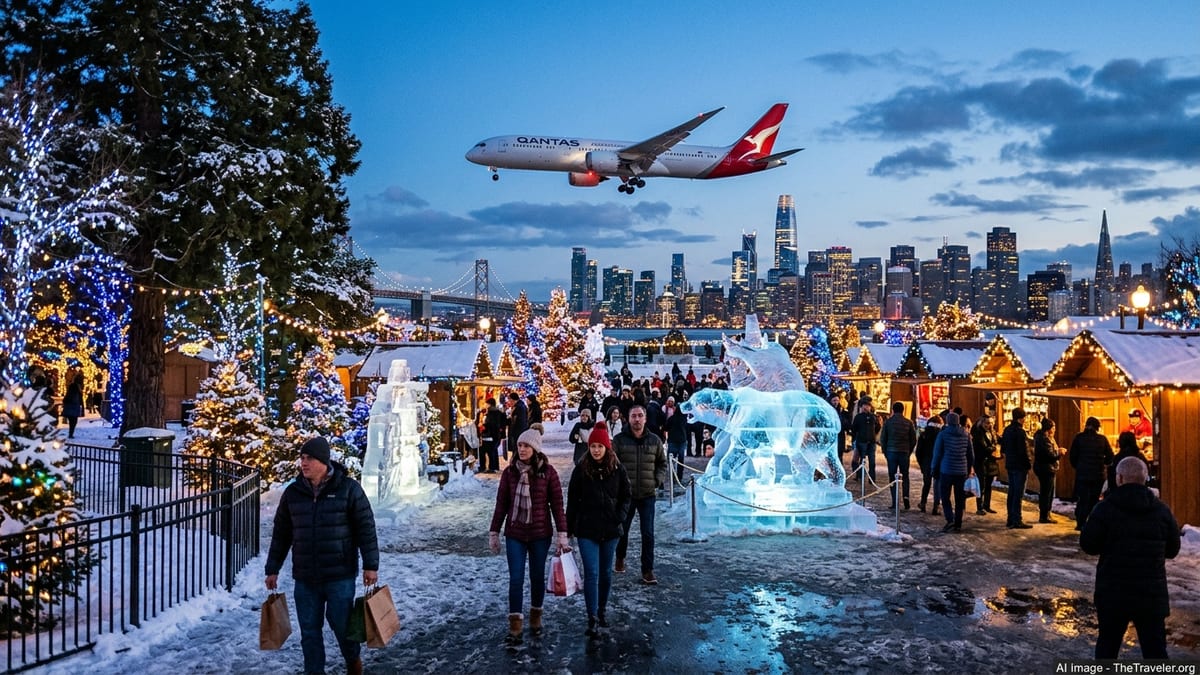
Seasonal capacity boosts link Australia with U.S. winter hotspots
Qantas and American Airlines are adjusting their joint transpacific schedules for late 2025 and early 2026 in ways that align closely with peak winter travel and festival periods in the United States. Publicly available filings and airline announcements show that Brisbane to Los Angeles services will operate daily across the busy Northern Hemisphere winter, with four weekly Boeing 787 flights by Qantas and three by American Airlines during December 2025 and January 2026. These flights feed into one of the largest domestic aviation hubs in the country, giving Australian travelers one-stop access to many of the United States’ most prominent winter events.
Regulatory documents lodged with competition authorities indicate that the carriers’ joint business will temporarily overlap on the Brisbane to Los Angeles route during the 2025 to 2026 Northern winter, underlining how critical this period is for long-haul demand between Australia and North America. At the same time, Qantas schedules published for 2026 continue to highlight year-round services into Los Angeles and seasonal or partner-supported access to other key gateways such as San Francisco, Chicago and New York. Together, these routes form an important bridge for inbound visitors heading for winter festivals from California to the East Coast.
Airline planners typically tilt capacity toward demand peaks, and the Northern Hemisphere winter is increasingly recognized as an opportunity rather than a lull. With more Australians seeking snow experiences, holiday markets and major cultural events, added transpacific seats during these months position Qantas and its partners to capture traffic that would otherwise flow via competing hubs in the Middle East or Asia. The timing of these flights means more visitors can align their travel with specific festival dates, from New Year celebrations to late-winter arts programs.
Winter festivals deliver growing economic dividends across the U.S.
While airlines such as Qantas adjust schedules around forecast demand, destination data shows why winter now matters so much. Economic impact studies from universities and state tourism offices report that festivals and cold-season events have become major revenue generators for host communities. Research on the World of Winter festival in Grand Rapids, Michigan, for example, found that the 2026 edition drew nearly 4 million visits and generated an estimated tens of millions of dollars in local economic output over its two-month run, as spending on accommodation, dining and retail climbed year on year.
Similar findings have been reported in the Upper Midwest and Northeast, regions that traditionally rely on summer tourism. Analysis compiled by university extension programs notes that festivals across the northern states can attract millions of attendees a year, including significant numbers of out-of-town visitors. Even relatively small events with fewer than 25,000 participants are estimated to create multimillion-dollar local impacts when on-site sales, lodging and secondary spending are included. For cities and resort towns, winter festivals have shifted from being community celebrations to strategic tools for diversifying visitor economies.
In warmer climates, winter events are equally important. In Palm Beach County, Florida, a study of the Winter Equestrian Festival reported economic impacts exceeding half a billion dollars for a single 13-week season, underscoring the spending power associated with sports tourism during the U.S. winter. State-level reporting from tourism agencies in Florida and Massachusetts similarly highlights record or near-record tax revenues tied to year-round visitor activity, with holiday and early-year events helping flatten the traditional off-season curve.
These numbers frame the opportunity for international carriers. By delivering visitors directly into states that invest heavily in winter programming, airlines participating in the transpacific market connect not only major cities but also the secondary destinations and regional events that rely on strong long-haul access.
Gateway cities position winter events for long-haul arrivals
Los Angeles and San Francisco sit at the center of this shift, functioning as primary entry points for Qantas customers heading to winter festivals around the country. Official airport data for San Francisco International shows robust passenger growth in 2025, while the route maps of Qantas and its partners highlight frequent services into the Bay Area and Southern California. From there, travelers connect onward to mountain resorts, desert festivals and city-based arts programs that peak between November and March.
Further east, American Airlines’ hubs in Dallas, Chicago and New York extend the reach of joint services into nearly every major winter destination in the continental United States. Minneapolis, Denver, Boston and Washington, D.C., which all promote extensive cold-season programming, are among the cities that can be reached in a single connection from Australia. In some cases, local festival organizers explicitly market long-haul access, pointing to the ability of visitors from Australia and Asia to arrive via West Coast or Texas gateways and then continue on domestic flights.
Research from the University of Minnesota has emphasized that winter weather and outdoor recreation are integral to that state’s tourism economy, with events, festivals and snow-based activities driving significant visitor spending even in years when temperatures or snowfall deviate from historical norms. For airlines, this creates a relatively reliable base of winter demand into northern states that might once have been considered purely seasonal. A similar pattern is evident in ski regions across Colorado, Utah and Wyoming, where peak visitation coincides with the period when Qantas and its partners are adding seats to North American routes.
Urban destinations are also capitalizing. City tourism offices in places such as Washington and New York are promoting Christmas markets, holiday light trails and cultural festivals timed around the year-end holidays. Many of these events are clustered close to major airports and transit networks, allowing visitors arriving from Australia to experience winter attractions without long overland journeys.
Strategic scheduling aligns with shifting travel preferences
Underlying these developments is a broader change in traveler behavior. Published tourism analyses from organizations such as the Organisation for Economic Co-operation and Development note that the United States is rebuilding international arrivals while seeking to spread demand more evenly throughout the calendar year. Rather than concentrating travel in the northern summer, more visitors are choosing off-peak windows, including the December to March period, to avoid crowds and secure better value.
For Australians, the draw is twofold: the chance to leave the Southern Hemisphere summer for a Northern Hemisphere winter experience, and the ability to align trips with major sporting, cultural and shopping events. Travel planners point to a growing interest in experiences such as winter light festivals, ice sculpture trails, equestrian competitions and indoor food events, all of which cluster in the months when Qantas and American Airlines are coordinating their largest seasonal boosts in capacity.
Schedule filings and network announcements illustrate how carefully airlines now calibrate these moves. Seasonal adjustments on competing carriers, including reductions or cancellations on some Pacific routes during the same winter periods, create space for Qantas and its joint-business partner to emphasize their own connectivity to U.S. gateways. By timing aircraft redeployments so that Brisbane and other Australian cities retain strong links into Los Angeles and connecting hubs, the carriers effectively tie their fleet strategies to the winter festival calendar unfolding across the United States.
Winter festivals and aviation policy move in tandem
The growing importance of winter festivals has not gone unnoticed by policymakers and regulators reviewing transpacific partnerships. Competition filings involving Qantas and American Airlines detail how seasonal route overlaps and capacity increases are concentrated around Northern winter, and evaluators examine whether these adjustments improve or limit consumer choice during peak holiday periods. Public versions of these documents outline schedules, aircraft types and frequencies that are closely aligned with the travel windows most relevant to festivalgoers.
At the same time, state and local governments in the United States are treating winter festivals as pillars of their annual tourism strategies. Economic impact reports from agencies in Florida, Massachusetts and the Upper Midwest feed into broader discussions about infrastructure, event funding and marketing priorities. These conversations intersect with aviation decisions, as destinations argue that sustained or increased international air service supports not only summer tourism but also the cold-season festivals that now anchor their visitor economies.
For travelers crossing the Pacific on Qantas services, the result is a landscape in which flight schedules, domestic connectivity and event calendars are increasingly synchronized. As more U.S. communities quantify the value of their winter festivals, and as airlines refine seasonal capacity in response, the colder months are becoming a defining period for transpacific tourism rather than a quiet stretch between peak seasons.