


More news on this day
Israel’s National Security Council has highlighted a rising global terror threat to Israelis and Jewish communities abroad ahead of the Jewish High Holidays, urging citizens to avoid travel to Egypt’s Sinai Peninsula and neighboring Jordan as both destinations remain at the highest warning level.
Get the latest news straight to your inbox!
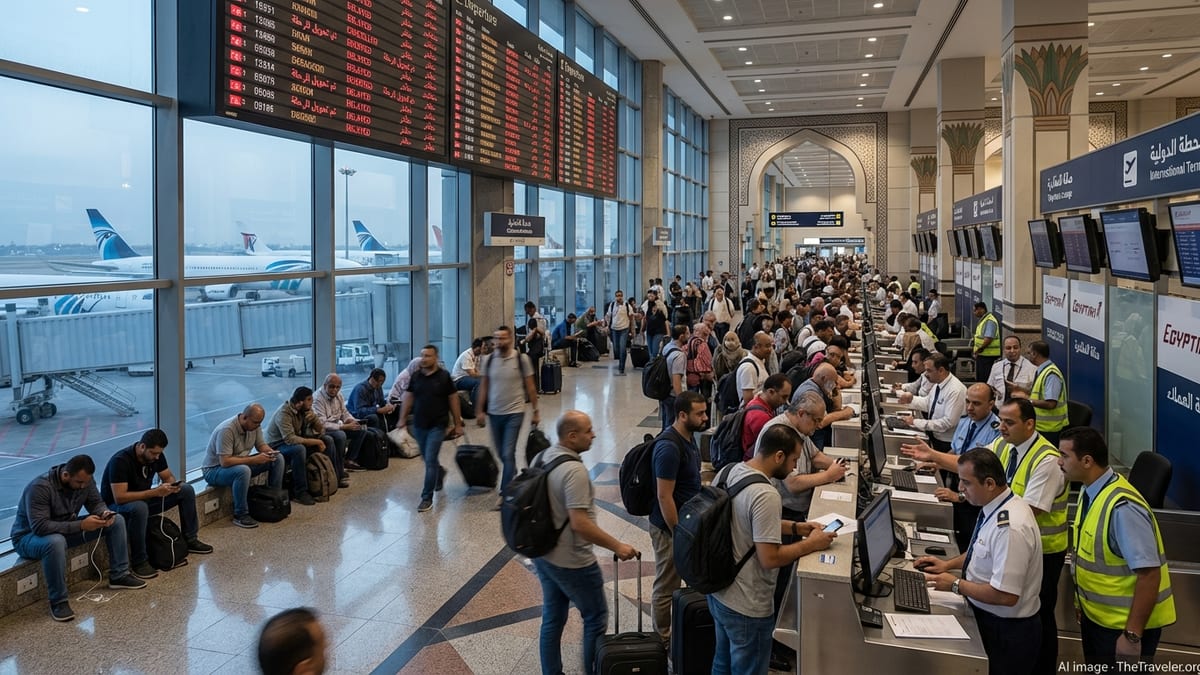
High holiday period drives renewed security assessment
According to publicly available information, Israel’s National Security Council (NSC) issued its latest global travel assessment on 6 September 2026, focusing on risks facing Israelis during the busy Tishrei holiday season. The review points to increased efforts by terrorist organizations and lone attackers to target Israelis and Jewish institutions overseas at a time when outbound travel from Israel typically surges.
Published coverage indicates that the NSC continues to classify Egypt’s Sinai Peninsula and Jordan under its most severe Level 4 travel warning, which is defined as a life-threatening risk and includes a recommendation to refrain from visiting these destinations, including for short stopovers or transit purposes. ([jpost.com](https://www.jpost.com/diaspora/article-907674?utm_source=openai))
The updated assessment does not introduce new countries into the highest-risk category but consolidates earlier advisories, underscoring that Iran and allied groups remain central drivers of plots against Israelis and Jews abroad. The NSC note is framed as a summary of global intelligence and terrorism trends rather than the announcement of fresh, destination-specific alerts. ([jpost.com](https://www.jpost.com/diaspora/article-907674?utm_source=openai))
The warning comes as Israeli airports prepare for peak seasonal traffic and as many residents seek alternatives to flying directly through Ben Gurion Airport, sometimes exploring land routes through neighboring states that are now explicitly discouraged in the latest guidance. ([israel.com](https://israel.com/security/national-security-council-clarifies-for-the-israeli-public-wishing-to-leave-or-enter-the-country-not-through-ben-gurion-airport/?amp=1&utm_source=openai))
Sinai and Jordan placed in highest Israeli warning tier
In its breakdown of country-specific risks, the NSC assessment singles out Egypt, including the Sinai Peninsula, and Jordan, alongside Qatar and Somaliland, as destinations that “must be strictly avoided,” placing them in the Level 4 bracket. This category reflects a combination of terrorism concerns, regional instability, and the potential for rapid changes in local security conditions. ([israelnationalnews.com](https://www.israelnationalnews.com/news/432760?utm_source=openai))
Israel’s long-standing caution regarding Sinai stems from a record of militant activity in the peninsula, with various jihadist factions historically exploiting the region’s rugged terrain and relatively sparse security footprint. Previous Israeli documents have described the threat level in Sinai as very high and pointed to cooperation among extremist groups seeking to target Israelis on the beaches and at popular resorts. ([in.bgu.ac.il](https://in.bgu.ac.il/en/rector/SiteAssets/Pages/abroad/Updates%20to%20National%20Security%20Council%20travel%20warnings.pdf?utm_source=openai))
Jordan’s inclusion at the same top alert tier reflects concerns about broader regional tensions and the risk that Iran-linked actors or other hostile organizations could see Israeli travelers as potential targets. Reports on the NSC guidance specify that the recommendation extends even to connecting flights and short land crossings through Jordan, advising Israeli nationals to avoid routing trips via Amman or other Jordanian border points wherever possible. ([israelnationalnews.com](https://www.israelnationalnews.com/news/432760?utm_source=openai))
The current Israeli stance mirrors earlier clarifications issued in March 2026, when the NSC advised travelers using alternative gateways not to remain in Egypt or Jordan beyond the minimum time required to reach border crossings and to treat both countries as transit corridors only under exceptional circumstances. ([israel.com](https://israel.com/security/national-security-council-clarifies-for-the-israeli-public-wishing-to-leave-or-enter-the-country-not-through-ben-gurion-airport/?amp=1&utm_source=openai))
Foreign governments echo concern over regional security
While Israel’s travel warning framework is specifically tailored to its own citizens, guidance from other governments underlines overlapping concerns about security conditions in Jordan and the wider region. The United States maintains a Level 3 advisory of “Reconsider travel” for Israel due to terrorism and unrest, and a lower but still cautious posture toward Jordan, urging travelers to exercise increased caution because of terrorism and other risks. ([travel.state.gov](https://travel.state.gov/content/travel/en/international-travel/International-Travel-Country-Information-Pages/IsraeltheWestBankandGaza.html?utm_source=openai))
The United Kingdom’s foreign travel advice for Jordan, updated on 5 September 2026, advises against all travel to certain border areas and warns that land crossings between Jordan and Israel or the West Bank may close without notice. The same advisory notes that tensions linked to regional conflict and the possibility of drone or missile debris require travelers to remain alert to official announcements and sudden changes in airspace status. ([gov.uk](https://www.gov.uk/foreign-travel-advice/jordan?utm_source=openai))
Australia’s Smartraveller service similarly recommends that travelers reconsider their need to visit Jordan, citing an unpredictable security environment and the threat of terrorism. Recent updates highlight ongoing testing of Jordan’s national public warning systems and reference broader regional instability as a factor in the heightened risk profile. ([smartraveller.gov.au](https://www.smartraveller.gov.au/destinations/middle-east/jordan?utm_source=openai))
Taken together, this foreign government guidance paints a picture of a region where security conditions can shift quickly, with Jordan often described as more stable than some neighbors but nonetheless exposed to spillover risks from conflicts beyond its borders.
Implications for travelers planning regional trips
The reinforced Israeli warnings regarding Sinai and Jordan have immediate implications for travelers contemplating multi-stop itineraries that combine Israel with neighboring countries. Published assessments indicate that Israeli authorities now advise against using Amman or Sinai as backup gateways in the event of flight disruptions at Ben Gurion Airport, a strategy some travelers previously considered to increase flexibility. ([israel.com](https://israel.com/security/national-security-council-clarifies-for-the-israeli-public-wishing-to-leave-or-enter-the-country-not-through-ben-gurion-airport/?amp=1&utm_source=openai))
Travel industry observers note that many national advisories stop short of blanket bans on tourism to Jordan, instead emphasizing careful route planning, situational awareness, and readiness for last-minute schedule changes. However, Israeli citizens face substantially stricter guidance, with Sinai and Jordan both flagged as destinations where the perceived risk to Israelis is considered significantly higher than to the general tourist population. ([israelnationalnews.com](https://www.israelnationalnews.com/news/432760?utm_source=openai))
Security notices from Western embassies in the region stress that terror attacks can occur without warning and may target transportation hubs, tourist sites, hotels, restaurants, places of worship, and other crowded public spaces. Travelers are encouraged to monitor local news, follow any shelter-in-place instructions in the event of missile or drone incidents, and maintain contingency plans for exiting affected areas if the situation deteriorates. ([travel.state.gov](https://travel.state.gov/content/travel/en/international-travel/International-Travel-Country-Information-Pages/IsraeltheWestBankandGaza.html?utm_source=openai))
For Israelis and members of Jewish communities abroad, the NSC’s latest review underscores the importance of coordinating travel plans with up-to-date advisories and of reviewing security arrangements at hotels, community centers, and holiday gatherings. The heightened focus on the upcoming High Holidays and the October anniversary of the October 7 attacks reflects a concern that symbolic dates may attract particular attention from groups seeking to carry out attacks. ([jpost.com](https://www.jpost.com/diaspora/article-907674?utm_source=openai))
Balancing travel demand with evolving risk
The persistent popularity of regional destinations has created tension between demand for cross-border trips and the cautionary tone of official advisories. Sinai’s beaches and resorts remain attractive to price-conscious holidaymakers, while Jordan’s cultural and historical sites, including Petra and Wadi Rum, continue to draw visitors from Europe, North America, and the Gulf. At the same time, the latest Israeli assessment and corresponding foreign government advice highlight how quickly perceived safety can be affected by developments far beyond the immediate tourist zones. ([gov.uk](https://www.gov.uk/foreign-travel-advice/jordan?utm_source=openai))
Israel’s NSC frames its Level 4 classification for Sinai and Jordan as a tool for risk communication rather than as a legal prohibition, yet the language used in the most recent publications leaves little ambiguity about the strength of the recommendation to avoid these destinations. The emphasis on Iran-linked threats, calls by armed groups to target Israelis abroad, and the cumulative toll of recent attacks on Israelis and Jews outside Israel all contribute to a risk calculation that diverges sharply from that applied to many other nationalities. ([jpost.com](https://www.jpost.com/diaspora/article-907674?utm_source=openai))
For now, travel advisories affecting Sinai and Jordan remain subject to periodic review, and published guidance encourages travelers of all nationalities to check for updates immediately before departure. With the security picture closely tied to wider regional dynamics and ongoing conflicts, any significant shift in conditions could see warnings either tightened or eased in relatively short order.
For the latest official guidance, travelers should consult their own government’s travel advisory pages and, in the case of Israeli citizens, review the NSC’s dedicated travel warning portal before booking routes that might transit or include stays in Sinai or Jordan.
Israel National News: NSC warns of increased efforts to target Israelis abroad
Jerusalem Post: Israelis, Jews abroad face growing terror threat ahead of High Holy Days
U.S. State Department global travel advisories