


More news on this day
Israel’s National Security Council has issued its toughest guidance in recent years for citizens planning trips abroad, citing an intensified campaign by Iran and allied groups to target Israelis and Jewish communities overseas during the coming holiday period.
Get the latest news straight to your inbox!
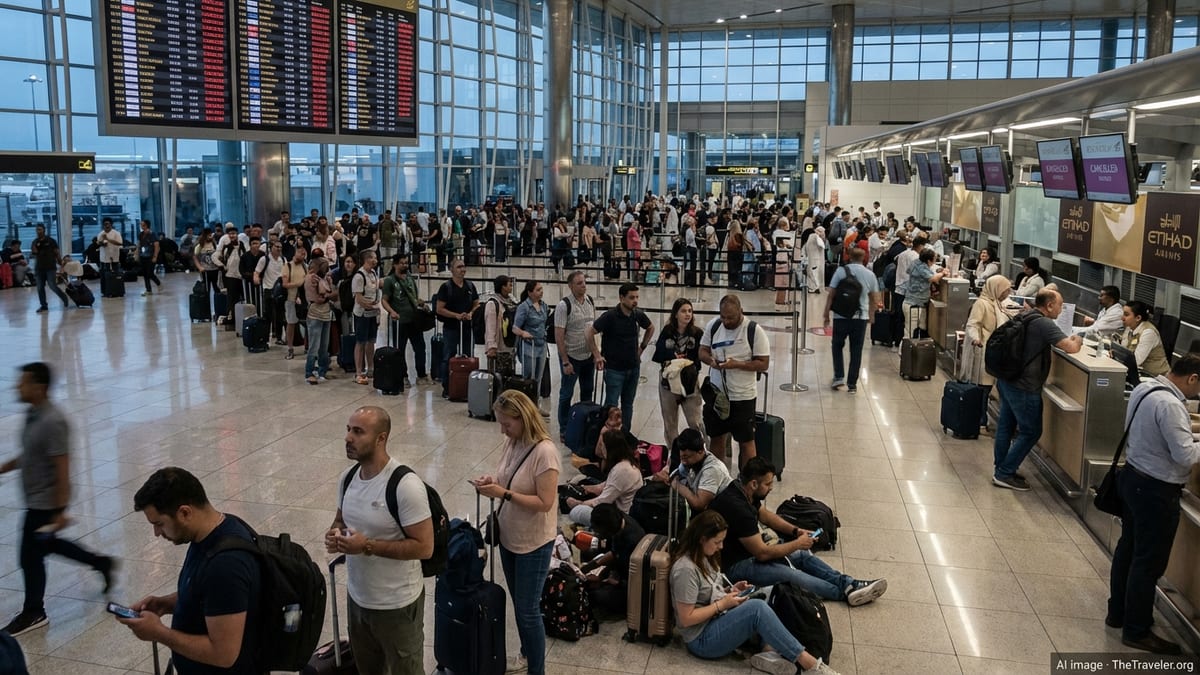
Escalating warnings as Iran-linked plots expand overseas
Publicly available assessments from Israel’s National Security Council (NSC) describe Iran and its network of proxy organizations, including Hezbollah and Hamas, as the principal drivers of a growing threat to Israelis and Jews outside the country. The latest advisory, released ahead of the Jewish High Holidays, highlights a pattern of attempted and successful attacks on Israeli and Jewish targets in recent months and characterizes the current risk as unusually severe.
Coverage by regional and international outlets indicates that Israeli officials view Iranian operational cells abroad as increasingly active in planning attacks not only against Israeli government interests, but also against private citizens, dissidents and journalists. Recent briefings reported by Iran-focused media describe stepped up efforts by Tehran to pursue opponents and Israelis on foreign soil, particularly during politically and symbolically sensitive dates such as religious holidays and anniversaries linked to the Gaza war.
The NSC’s updated threat picture mirrors broader concern in Western capitals over Iranian activity overseas. Government advisories from countries such as the United Kingdom point to a rise in Iranian-linked plots, including surveillance and intimidation of diaspora communities, and warn that regional confrontations involving Israel, Iran and their respective partners are spilling over into international arenas that travelers often consider relatively safe.
Against this backdrop, Israel’s latest warning frames the risk to ordinary travelers as part of a larger global contest with Iran, in which embassies, community centers, sporting events and tourist locations associated with Israel or Judaism may be treated as potential targets.
High-risk destinations and the logic of Israel’s threat levels
Israel’s NSC maintains a tiered system of travel warnings, with Level 4 reserved for locations defined as presenting a particularly high and concrete threat to Israelis. According to recent NSC publications, this most severe category already covers long-standing “enemy states” such as Iran, Syria and Lebanon, as well as countries where global jihadist organizations and local militant networks are assessed to have both intent and capability to strike Israeli or Jewish targets.
In its latest holiday period notice, the council reiterates that some destinations under Level 4 should be entirely avoided for non-essential travel. Countries in this category have been associated in recent years with plots against Israeli diplomatic missions, attempts to kidnap or harm Israeli citizens, and attacks on Jewish communal sites. Separate advisories ahead of earlier holiday seasons noted that such plans have emerged in Europe, the Middle East, Africa and parts of Asia, underlining the wide geographic distribution of the threat.
Other locations are rated at slightly lower levels, but the NSC still advises caution and in some instances recommends that travelers reconsider non-essential trips. Published guidance emphasizes indirect risks, such as the possibility that local unrest, anti-Israel protests or attacks directed at Western interests could quickly extend to places frequented by Israelis, including airports, hotels, nightlife districts and religious sites.
The structure of Israel’s warning system is meant to support individual risk calculations rather than impose a formal ban on travel. However, the language used in recent advisories, and the growing number of countries listed at the highest alert level, indicate a perception that Iranian and allied actors are more willing than in previous years to operate far from the Middle East.
Holiday travel under scrutiny as Israelis reconsider plans
The timing of the latest advisory underscores particular concern around the Jewish High Holidays, when large numbers of Israelis traditionally travel abroad. Reports on the new NSC update note that the assessment was released with an explicit focus on this period, and that it follows similar warnings issued before Passover and other holidays since the start of the war in Gaza.
According to figures cited in recent NSC and diplomatic communications, dozens of Israelis and Jews have been killed or injured in attacks abroad since the outbreak of the conflict, including incidents in Europe and other regions frequented by leisure travelers. In addition to organized plots, Israel’s security assessments reference lone-wolf attacks and mob violence targeting visibly Jewish or Israeli groups, such as sports fans and tour parties.
As a result, travelers are being urged in public advisories to review the NSC’s country-by-country alerts before booking flights and to reconsider participation in large gatherings that can be easily identified with Israel or Judaism, especially in countries where the threat level is already elevated. Past guidance has highlighted religious services, cultural festivals and holiday meals at well-known community venues as potential focal points for hostile activity.
Travel industry observers note that such messages are likely to influence tourism flows out of Israel during what is typically a peak season. While the NSC does not directly address commercial implications, its recommendation that citizens weigh security considerations at the planning stage, and avoid connections through high-risk countries where possible, suggests that airlines and tour operators may see increased demand for routes perceived as safer.
Precautionary measures for Israelis and Jewish communities abroad
The heightened travel warning is accompanied by detailed behavioral guidance that aims to reduce the visibility and vulnerability of Israelis and Jews overseas. Recent advisories encourage travelers to minimize outward displays of national or religious identity in public spaces, avoid routine patterns such as regularly returning to the same venues at the same times, and remain alert in crowded tourist areas and transportation hubs.
Public documents from Israel’s foreign ministry and NSC also stress the importance of basic preparedness, including knowing local emergency numbers, keeping close contact with family members, and registering with consular services when staying for extended periods. Some advisories suggest that community institutions abroad review physical security arrangements and coordinate with local law enforcement as needed, particularly during major holidays when attendance peaks.
International travel advisories from other governments similarly reflect a broader environment of concern. The United States and United Kingdom, among others, warn their own citizens about the risks of regional escalation and note that tensions involving Iran and Israel can trigger short-notice changes to aviation routes, airport operations and border procedures. This wider context reinforces Israel’s message that travelers should monitor news developments and be prepared for disruptions, even in destinations not normally associated with security crises.
The cumulative effect of these guidelines is to shift responsibility for safety partly onto individual travelers and community leaders, who are expected to stay informed and adapt their behavior in line with evolving threat assessments. For Israelis planning trips abroad, the latest NSC update presents a sobering picture of a world in which day-to-day tourism intersects increasingly with geopolitical rivalries centered on Iran.
Global tourism grapples with a fluid security landscape
Israel’s sharpened travel warning comes at a time when many destinations are seeking to revive or expand tourism despite recurrent political shocks. Industry analysts observe that while the vast majority of international trips remain incident-free, headline-grabbing plots and attacks can have an outsized impact on traveler perceptions, especially when governments signal that specific nationalities face targeted risks.
The case of Israel and Iran illustrates how tensions between two states can reshape the experience of their citizens far beyond their borders. Advisories urging Israelis to avoid certain transit hubs, modify travel behavior and reconsider non-essential trips point to a more fragmented global travel map, in which geopolitical alignments and security partnerships influence everything from flight paths to insurance coverage.
For host countries that value Israeli and Jewish tourism, the latest NSC guidance may prompt renewed attention to visible protective measures, information sharing and community outreach. At the same time, the emphasis on Iranian plots abroad is likely to feed into ongoing debates in Western capitals over how to respond to Tehran’s activities on their soil, including surveillance, intimidation and alleged preparations for attacks.
How long this elevated risk environment will last remains uncertain, but recent conflict timelines and advisory patterns suggest that holiday periods, major sporting events and politically charged anniversaries will continue to attract particular scrutiny. For now, Israel’s most severe warnings in years underline that, for its citizens abroad, routine travel has become closely entangled with the shifting front lines of its confrontation with Iran.
Times of Israel coverage of NSC holiday-period threat update
Israel Hayom report on Israeli travel warnings and Level 4 destinations
Israeli Ministry of Foreign Affairs NSC terrorism threat update
Iran International analysis of intensified Iranian overseas plots
UK Foreign Office travel advice referencing Iranian overseas activity